
Review · SPAIN CAVE TOURS
Guided Tour of Toledo Underground
Toledo’s best stories are not all above street level. This two-hour walk takes you below the city to five underground sites, including Arab baths, a Jewish mikvah, Roman baths, a water cistern, and the only preserved dungeons of the Holy Brotherhood. It is a smart way to see how Muslim, Jewish, Christian, and Roman life shaped the city.
I like the small, focused route and the fact that several spaces require an accredited guide for entry. I also like the practical water story at the Pozo del Salvador, where you learn why a well and a cistern were not the same thing. The main drawback is clear: the tour is in Spanish, and the underground stops are not suitable for wheelchair users or people with mobility impairments.
Key points to know
- Five underground stops in two hours: You visit medieval dungeons, an Arab hammam, a water site, a Jewish mikvah, and Roman baths.
- The guide matters: Official guide Mónica has earned praise for a clear voice, strong historical storytelling, and an engaging style.
- A walk through Toledo’s Three Cultures: The route connects Roman, Muslim, Jewish, and Christian life through ordinary concerns such as bathing, water, worship, and punishment.
- Good value at $15: Entry to five sites and a live accredited guide make this a reasonably priced way to see places you may not enter on your own.
- Spanish only: Some material is presented in its original language, so basic Spanish or a translation tool will help.
- Arrive early: Meet at Plaza de Zocodover 15 minutes before departure and look for the green flag.
Toledo below the pavement
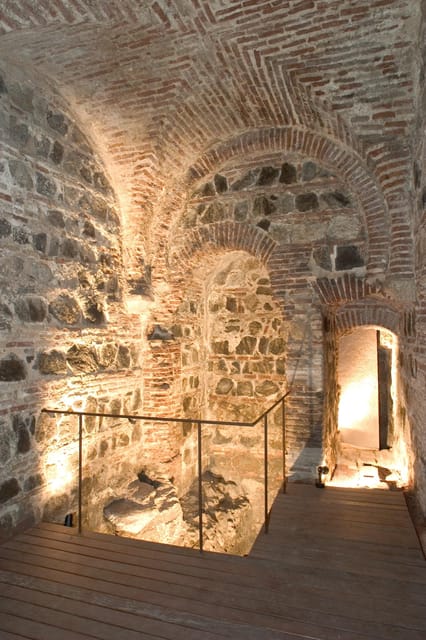
Toledo is famous for its cathedral, synagogues, mosques, and narrow lanes. Yet the city’s underground spaces often explain daily life better than its grand monuments. Below the present-day streets, you find places built for bathing, worship, water storage, imprisonment, and public life.
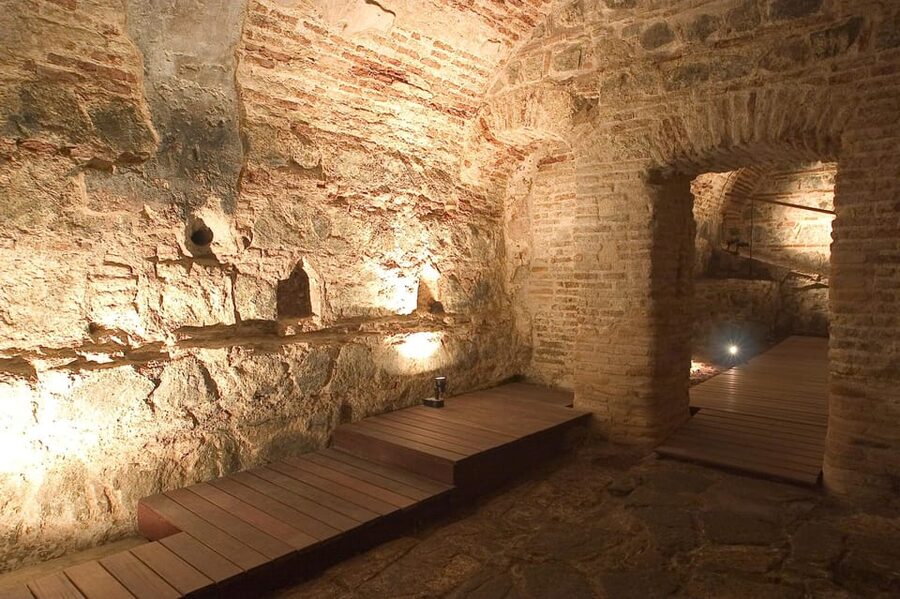
This is not a general city walk with one quick basement stop. The route is built around five archaeological spaces, each tied to a different part of Toledo’s past. You move from the Middle Ages to Muslim Tulaytula, then to Jewish Toledo and Roman Toletum.
I like that practical focus. You are not simply looking at old stone. You are asking basic questions: Where did people wash? How did they find drinking water on a high rocky site? What did religious purification involve? How were prisoners kept? Those questions make the past easier to picture.
The tour is especially useful if you have at least one night in Toledo. It adds a second layer to the city, and you can connect what you see underground with the streets and buildings above.
Guided tours within reach of Spain:
- From Valencia: Caves of San José Guided Excursion and Ticket
★ 4.6 · 1,717 reviews - Nerja: Caves of Nerja Entry Ticket with Audio Guide
★ 4.6 · 1,616 reviews - Palma: Caves of Genova Ticket & Digital Audio Guide
★ 3.9 · 820 reviews
Starting at Plaza de Zocodover
The meeting point is Plaza de Zocodover, Toledo’s central gathering place. Arrive 15 minutes early and look for the guide carrying a green flag. That detail matters because the square can be busy, and you do not want to spend the first few minutes scanning every passing guide.
From here, the route continues on foot through the old city. The tour lasts about two hours, with roughly 20 minutes at each listed stop. That gives you enough time to hear the main story and look around, but it does not leave much room for a slow archaeological study.
The walk connects several parts of central Toledo. You should expect old streets, changes in level, and underground access points. The activity is not suitable for wheelchair users or people with mobility impairments, so consider that before booking.
A minimum of four people is required for the tour to operate. That is worth checking when you choose your date, particularly if you are building a tight Toledo schedule.
The Posada de la Hermandad and its medieval prisoners
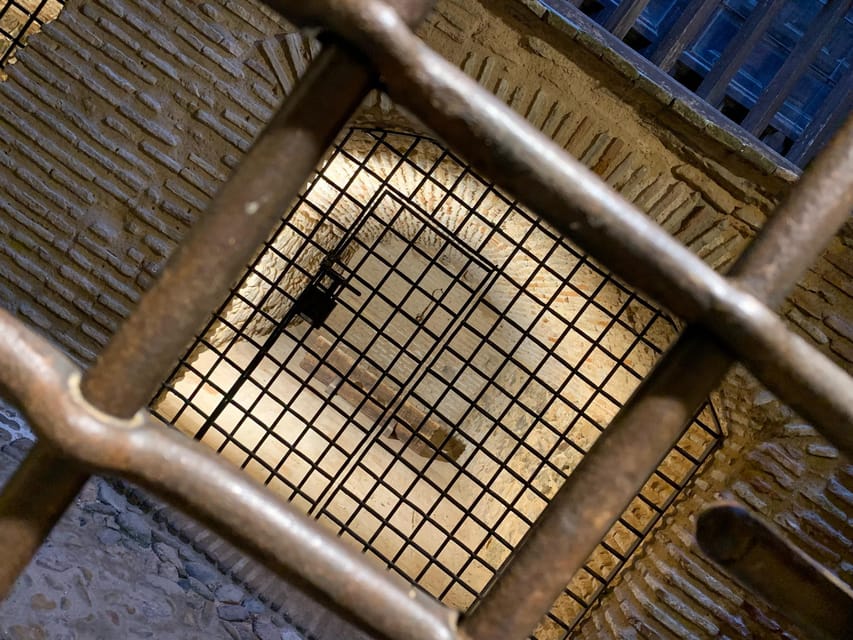
The first stop is the Posada de la Hermandad, home to the dungeons of the Holy Brotherhood. These are described as the only dungeons of the brotherhood still preserved in Toledo.
This is a strong opening because it moves the tour away from royal and religious grandeur. You begin with confinement and punishment, along with the ordinary routines of prisoners and jailers. The guide also introduces the Mangas Verdes, the well-known jailers connected with the site.
The value here comes from scale. A cathedral can overwhelm you with its size, but a dungeon forces you to think about a few people in a tight space. You can better picture the human side of medieval justice and the daily work of those who guarded prisoners.
You should not expect a large museum or a long visit. The scheduled stop is about 20 minutes, so the guide has to keep the story moving. That suits this tour: each site supplies one clear piece of Toledo’s past before you continue.
The Cenizal Baths and Muslim Toledo
Next comes the Baños Árabes del Cenizal, an Arab bathhouse linked to the 10th century. This stop takes you into Tulaytula, the Muslim-era Toledo.
A hammam was more than a place to wash. Bathing connected hygiene, religious practice, and social life. The guide explains how people used the space and what bathing meant within Muslim society. You get a better sense of how a public bath worked as part of city life, not as a modern spa.
This is one of the most useful stops for understanding the Three Cultures. Toledo’s Muslim past can be easy to overlook if you focus only on its Christian monuments. The Cenizal Baths put that period at the center of the route.
The underground setting also helps. Instead of seeing a restored façade from outside, you are looking at the structure where bathing took place. The space may feel simple compared with Toledo’s grand churches, but that is part of its appeal. It deals with a basic human need and shows how a society organized it.
The tour allows about 20 minutes here. Listen closely to the guide’s explanation of religious rituals and daily hygiene, since the site itself may not tell you the whole story at a glance.
More Cave Tours in Spain:
- Porto Cristo: Caves of Hams Entry Ticket
★ 4.2 · 6,548 reviews - Mallorca: Caves of Drach Day Trip & Optional Caves of Hams
★ 4.3 · 2,720 reviews - From Málaga: Caves of Nerja, Nerja and Frigiliana Day Tour
★ 4.7 · 2,187 reviews - Mallorca: Kayaking, Sea Cave, Cliff Jumping & Snorkel Tour
★ 4.8 · 1,447 reviews
The Pozo del Salvador and Toledo’s water problem
At Plaza del Salvador, the route turns to water. The Pozo del Salvador helps explain the difference between a well and a cistern, two systems that mattered greatly in a city built high on a rocky site.
That distinction is easy to miss. A well draws water from an underground source, while a cistern stores water collected from elsewhere. In a city facing drought and water shortages, the two served different purposes.
I particularly like this stop because it turns infrastructure into history. You see how Toledo’s residents handled a problem that was not glamorous but was vital. A city could have fine buildings and busy markets, but it still needed a dependable supply of drinking water.
The stop lasts about 20 minutes. It is a good point to pay attention to the guide’s explanation rather than expecting a dramatic chamber. The story is the attraction: how people adapted to the city’s height, stone, and dry periods.
This is also a reminder that underground Toledo was not only for worship, bathing, or punishment. It was a working system that helped the city survive.
The Casa del Judío and a 14th-century mikvah
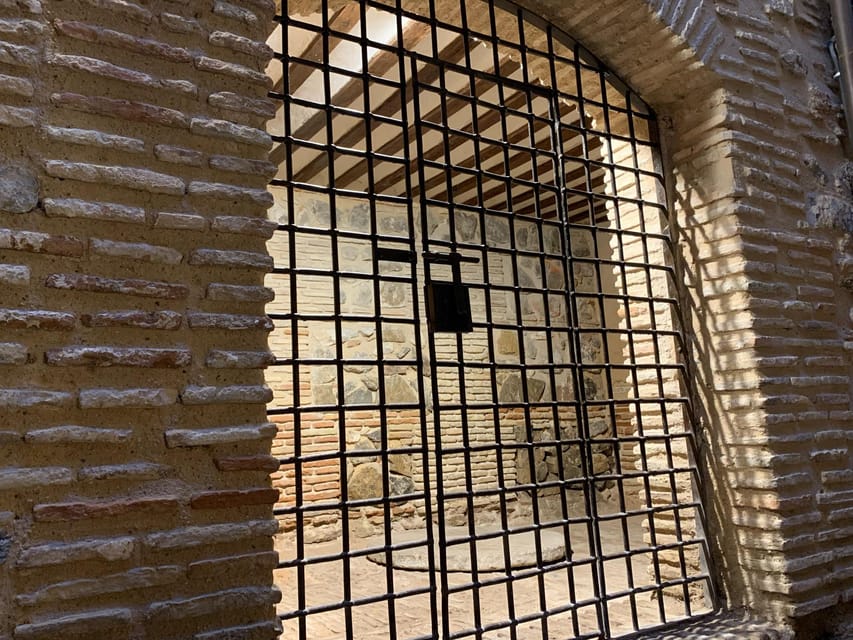
The fourth site is the Casa del Judío in Toledo’s Jewish Quarter. Here you see a mikvah dating from the 14th century.
A mikvah is used for ritual bathing in Jewish tradition. That makes the site different from the Arab hammam, even though both involve water and purification. The tour gives you a chance to compare the religious meaning of water in Jewish and Muslim life without treating the two traditions as interchangeable.
The Casa del Judío also brings the route into the life of Toledo’s Jewish community. The site mixes documented history with local legends, and the guide helps separate the two as you look at the space.
This stop works best if you think about the city as a place where communities lived close together while maintaining distinct customs. The route does not present the Three Cultures as a vague slogan. It gives you specific places tied to specific practices.
Again, the visit is about 20 minutes. That is enough for a focused explanation, but not for every detail of Jewish Toledo. If this is the part of the city that interests you most, allow extra time after the tour to explore the quarter on your own.
The Roman Baths of Toletum
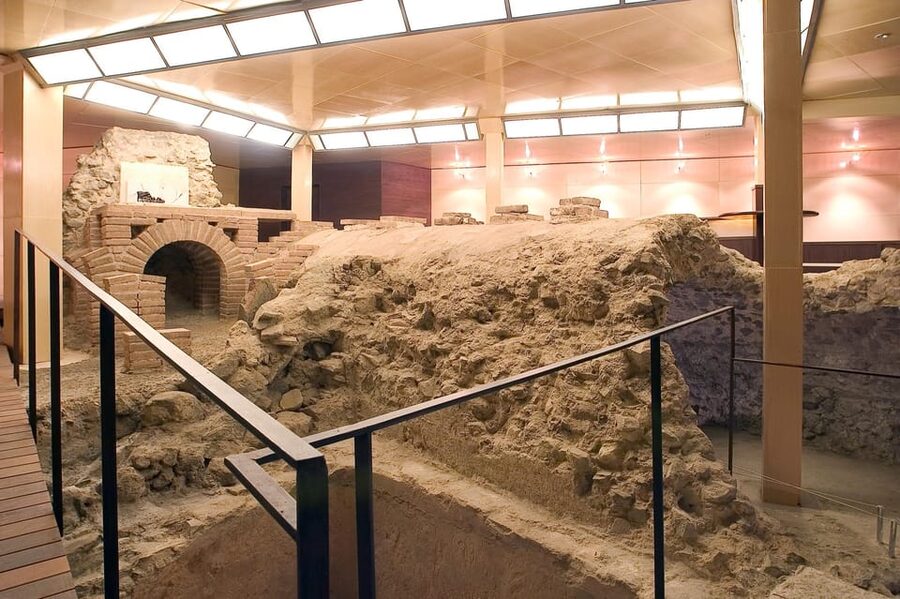
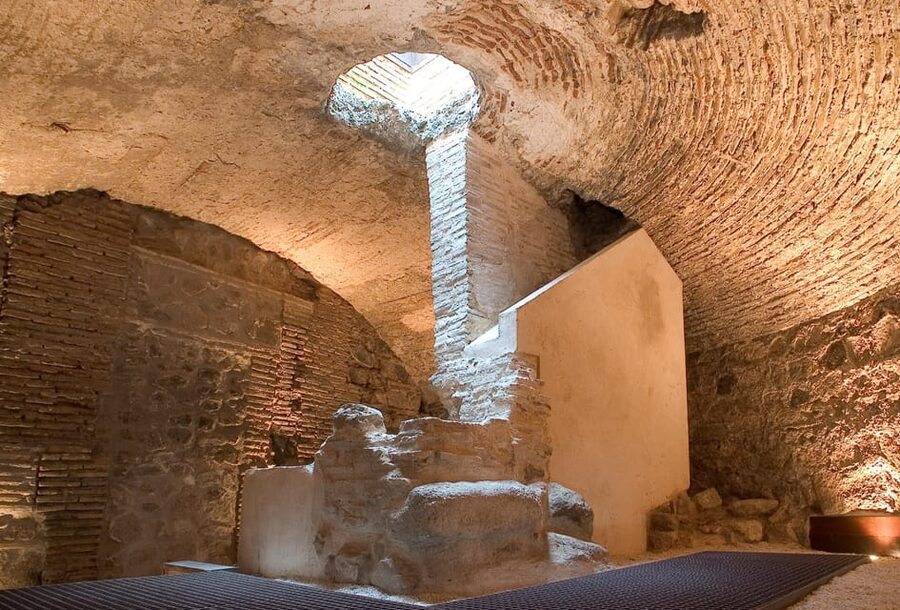
The final underground stop is the Roman Baths of Toletum, described as one of the largest Roman bath complexes in Hispania. This brings the story back to the city’s Roman period and gives the route a long historical reach.
Roman baths served bathing, exercise, conversation, and social contact. They were important public spaces, not simply rooms with hot water. The guide helps you picture the scale and function of the baths and the part they played in Roman city life.
Ending here makes sense. You have already seen later uses of water in Muslim and Jewish communities, so the Roman complex gives you an earlier point of comparison. Toledo’s underground spaces are not one single story. They belong to different periods and served different groups.
The Roman Baths are also likely to be the most expansive archaeological setting on the route. Still, keep the timing in mind. The tour gives each stop about 20 minutes, so you will receive an introduction rather than an exhaustive archaeological lecture.
The walk ends at Plaza Amador de los Ríos. That is useful because you finish in the old city rather than returning to the original meeting point. Plan your next stop from the finish, not from Plaza de Zocodover.
A guide-led experience in Spanish
The quality of this tour depends heavily on the guide. The five sites are worthwhile, but many are not self-explanatory. A good guide supplies the connections between architecture, ritual, water, and daily life.
Mónica has received especially strong praise for a clear and pleasant voice, professional delivery, and the ability to create an emotional story around the layers beneath Toledo. That matters in spaces where there may be little written interpretation. Her style is described as lively and easy to follow, with enough historical detail to make the places memorable.
The tour is conducted in Spanish. Some content is shown in its original language. If you are comfortable in Spanish, this should be a direct and rewarding way to hear the stories. If you are not, you may still appreciate the spaces, but you will miss much of the explanation unless you use a translation aid.
Audio recording is not allowed. You should plan to listen and take mental notes rather than record the guide for later.
Is $15 a fair price?
At $15 per person, this is good value if all five underground sites are open as planned and you want guided context. You are paying for access to five locations, an official accredited guide, and a route that links them into one story.
The price is especially fair for visitors who would otherwise walk past these places without knowing what they are. An underground doorway or stone chamber can seem ordinary without an explanation. Here, the guide tells you why the space mattered and how it fit into Toledo’s society.
The value is lower if you want a slow, highly detailed archaeological visit. Two hours divided among five sites means the pace is brisk. You also need Spanish to get the full benefit, and the tour requires at least four participants to run.
You can reserve now and pay later, which helps if your Toledo plans are still moving around. Cancellation is free up to 24 hours before the activity for a full refund.
Who should book this walk?
I would choose this tour if you have already seen Toledo’s main monuments or want a different way to understand the city. It suits history-minded visitors who enjoy ordinary details such as bathing, water storage, religious practice, and imprisonment.
It is also a good choice for anyone staying overnight. The route adds depth to the streets you walk afterward, especially in the Jewish Quarter and around Plaza del Salvador.
You should think twice if you need step-free access, use a wheelchair, or dislike moving through several underground spaces in a short time. You should also skip it if you need an English-language guide, since the live tour is in Spanish.
Families and mixed-interest groups may find the subject matter varied enough to hold attention, but the guide’s delivery will matter. Mónica’s reported strengths, especially her clear voice and lively storytelling, are a real advantage if she leads your departure.
Final advice: book it for the layers
Book the Guided Tour of Toledo Underground if you want more than a surface look at the city and can follow Spanish. The five stops cover a wide span, from Roman public life to Muslim bathing, Jewish ritual, medieval imprisonment, and the practical fight for water.
At $15, it is an efficient way to see restricted spaces with an accredited guide. Just arrive early at Plaza de Zocodover, find the green flag, allow for uneven access, and remember that the tour ends at Plaza Amador de los Ríos. If those conditions fit your plans, this is a useful and memorable addition to a Toledo visit.
FAQ
Where does the Toledo Underground tour begin?
The tour begins at Plaza de Zocodover in Toledo.
How do I find the guide at Plaza de Zocodover?
Look for a guide carrying a green flag.
How early should I arrive?
Arrive 15 minutes before the scheduled departure time.
How long does the tour last?
The tour lasts two hours.
Which underground sites does the tour visit?
You visit the dungeons of the Holy Brotherhood at Posada de la Hermandad, the Baños Árabes del Cenizal, the Pozo del Salvador, the Casa del Judío and its mikvah, and the Roman Baths of Toletum.
What language is the tour conducted in?
The live tour guide speaks Spanish. Some content is shown in its original language.
Is an accredited guide included?
Yes. The activity includes a guided tour with an official accredited guide.
Where does the tour finish?
The tour finishes at Plaza Amador de los Ríos.
Is the tour suitable for wheelchair users?
No. The tour is not suitable for wheelchair users or people with mobility impairments.
Can I cancel for a refund?
Yes. You can cancel up to 24 hours in advance for a full refund. You can also reserve now and pay later.
Just added around Spain
- San Antonio Marine Reserve & Cave: Kayak Beyond the Extraordinary★ 4.5 · 16 reviews
- Kayak Paradise: Cala Portixol Snorkel, Cave & Cliff Jumping Tour★ 5.0 · 279 reviews
- Cova dels Orguens: Cave Exploring Kayak & Snorkel Tour in Javea★ 5.0 · 91 reviews
- Uncharted Marine Reserve Cave, Snorkel & Cliff Jumping Kayak Tour★ 4.5 · 251 reviews
- Kayak Dénia “Cova Tallada” + Snorkeling + Speleology★ 5.0 · 282 reviews
- Alicante: Canelobre Caves & Busot with Local Guide & Transport★ 5.0 · 64 reviews
- Canelobre Caves and Busot Tour with Transfer from Alicante★ 5.0 · 100 reviews
- Carboneras: Cabo de Gata Caves and Los Muertos Sailing Tour★ 4.9 · 64 reviews
Spain Cave Tours, compared.
Caves of Drach Day Trip & Optional Caves of Hams
Read the review →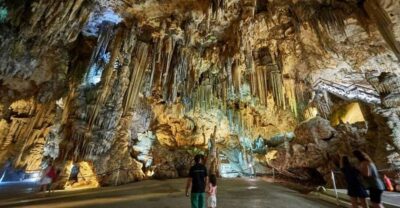
From Málaga: Caves of Nerja, Nerja and Frigiliana Day Tour
Read the review →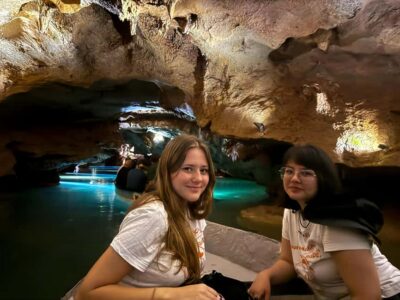
From Valencia: Caves of San José Guided Excursion and Ticket
Read the review →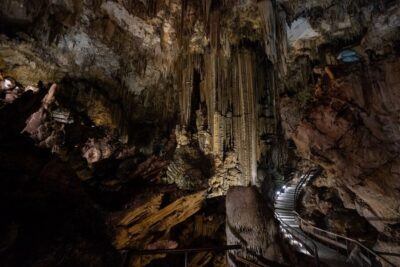
Nerja: Caves of Nerja Entry Ticket with Audio Guide
Read the review →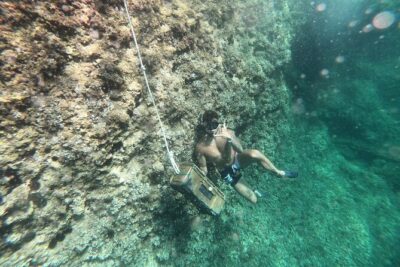
Kayaking, Sea Cave, Cliff Jumping & Snorkel Tour
Read the review →
Snorkeling and SUP Paddle, Beach and Cave Tour
Read the review →
Dinosaurland and Caves of Hams Combined Ticket
Read the review →Browse the lists this tour appears in