
Review · AUSTRALIA CAVE TOURS
Jewel Cave Fully-guided Tour (Located in Western Australia)
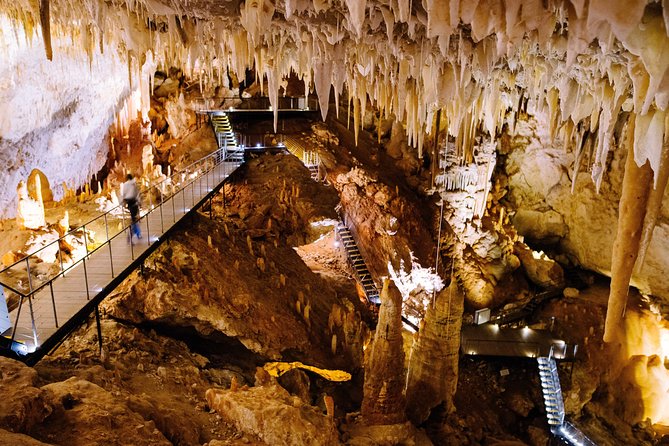
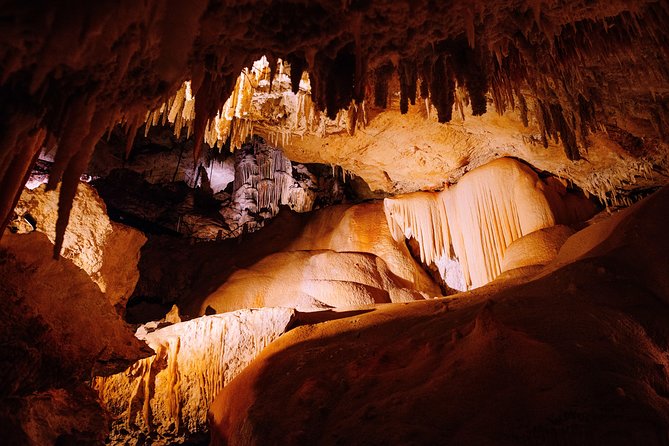
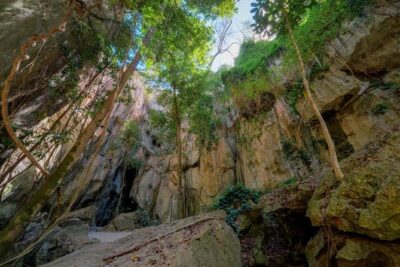
Jewel Cave is not a small crawl through a cramped tunnel. It is a vast underground chamber filled with crystal formations, hanging decorations, flowstone, shawls, helictites, and cave coral. The scale becomes clear as you descend, with the cave opening out around you.
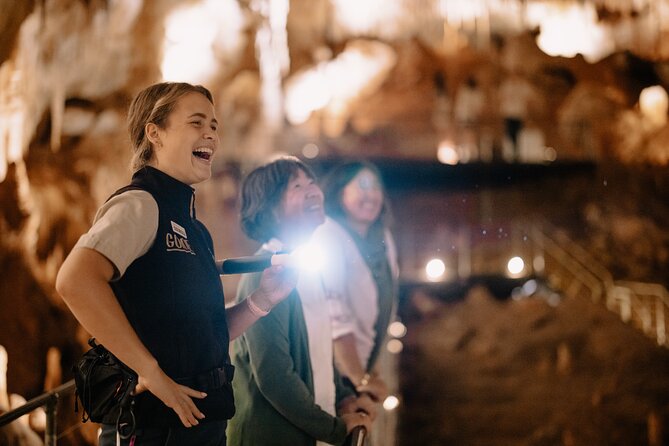
I like the way the tour combines strong natural scenery with useful geology, rather than asking you to admire rocks without context. I also like the guides’ personal style. Josh, Peter, Jodee, Sue, Lisa, Tia, Teddy, Digby, and others are praised for explaining the cave clearly while keeping children and adults interested.
The main catch is the long climb back up. The tour takes about an hour, but you need moderate fitness for hundreds of stairs. The steps have railings and you can take your time, yet this is not the right outing if stairs are a serious concern.
Key points to know before you go
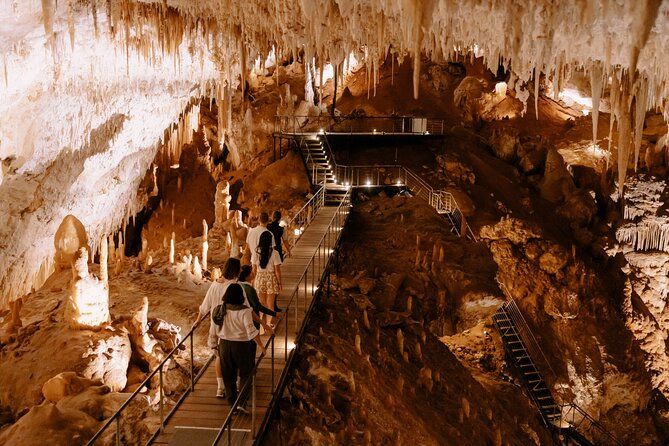
- A huge underground cave: Jewel Cave feels much larger than many people expect, with tall chambers and formations spread across the interior.
- One hour with a guide: Admission and the fully guided cave tour are included, with geology, discovery stories, and local history along the route.
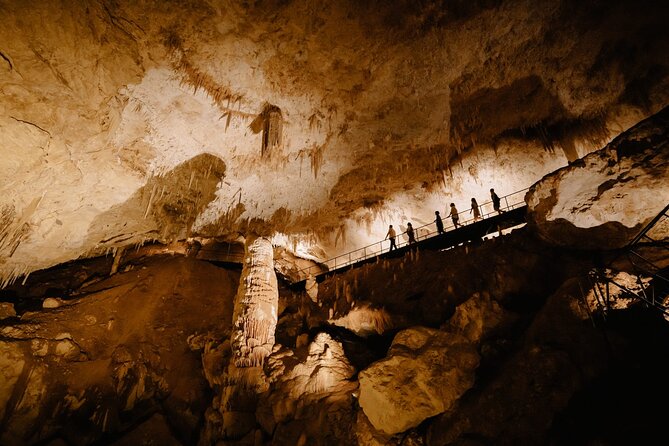
- Hundreds of stairs: Reports describe roughly 250 to 500 steps, including a steep return climb from the cave floor.
- Subtle lighting: Carefully placed lights help show off the formations without taking away from the underground mood.
- A good family outing: Guides make the information lively, and the tour suits children, young adults, and older visitors who can manage the steps.
- Optional forest time: After the cave, you can take a self-guided walk through the bushland above it.
Why Jewel Cave feels bigger than expected
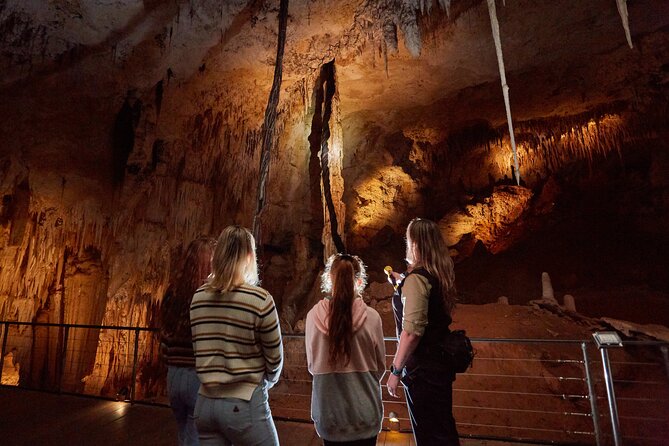
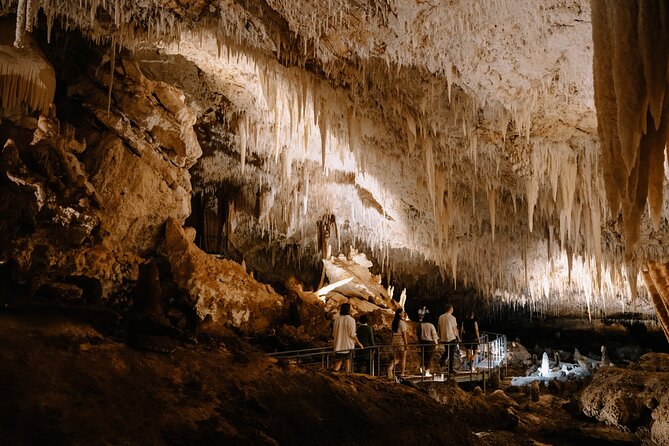
The first surprise is scale. Jewel Cave is presented as one of Western Australia’s largest caves, and that size matters once you are inside. This is not simply a narrow passage with a few stalactites. You see broad spaces, tall crystal growth, hanging decorations, and tunnels that continue beyond the main viewing areas.
The name fits the setting. Crystal formations catch the lighting in different ways, while shawls and flowstone spread across rock surfaces like folded fabric. Helictites twist in unusual directions, cave coral adds texture, and thin decorations hang from the ceiling like vines or cobwebs.
I find this variety more rewarding than a cave with one famous formation and little else. You keep seeing different shapes, and the guide gives you a reason to look closely instead of walking past everything as the same pale rock.
The cave also has a quiet sense of age. These formations took thousands of years to develop. That changes the way you read the walls. A small drip or mineral ridge is not a quick decoration. It is the result of water, minerals, and time working together over a very long period.
Guided tours within reach of Australia:
- Margaret River: Lake Cave Fully-Guided Tour
★ 4.9 · 290 reviews - Augusta: Jewel Cave Fully-Guided Tour
★ 4.9 · 281 reviews - Self-Guided Ngilgi Cave Ancient Lands Experience
★ 4.5 · 154 reviews
The one-hour route below the bushland
The tour begins at Jewel Caves Road in Deepdene, in the Busselton area. You meet at the cave site and return to that same point when the activity ends. Transportation is not included, so you need to arrange your own way there.
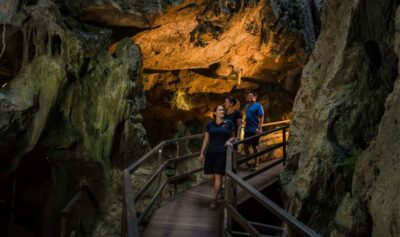
Inside, the guide leads the group through the accessible sections of Jewel Cave. The route includes towering formations, ceiling decorations, flowstone, shawls, helictites, and cave coral. The point is not speed. You move between viewing areas, stop to look at the formations, and hear how the cave developed.
The lighting is one of the quiet strengths of the visit. It is described as subtle, with enough illumination to reveal the rock without turning the cave into a brightly lit attraction. That gives you better views while keeping a sense of being below the bushland.
One practical note: the word accessible here should not be confused with step-free. The route includes a large number of stairs. Some accounts describe about 320 steps straight down, while others refer to 250 steps on the return or around 500 across the whole route. The exact count may vary with how people count landings and sections, but the message is consistent: you will be walking up and down for much of the visit.
The steps are reported as safe, with railings to help. Guides do not rush the group, and you can pause when needed. Still, I would treat the climb as part of the tour, not as a minor detail at the end.
A cave tour with more than pretty rock
The guide’s role makes a real difference here. The tour explains geology, but it also covers the cave’s human story. You see the natural entrance used by determined explorers in the 1950s, then learn about the difficult task of opening the cave for public visits.
That detail adds weight to the visit. Modern visitors use a prepared route and installed lighting, while the early explorers faced a far rougher journey through the cave. Seeing the natural entrance helps you picture that effort.
The cave also has an unusual connection to extinct Tasmanian tigers. The animals fell into the cave and died there, and their remains form part of the story told during the tour. This gives the visit a link to natural history beyond the formations themselves.
The best guides mix facts with a little humor. Josh is praised for being lively and good with children. Peter is described as witty and clear. Jodee, Sue, Lisa, Tia, Teddy, and Digby are also singled out for making the tour friendly and easy to follow.
Guide quality can vary from one departure to another, but the repeated pattern is encouraging. You are not simply handed a route map and left to stare at the walls. The guide helps you understand what you are seeing, how the cave was found, and why it matters.
The stairs are the real test
You should prepare for the physical side before booking. A moderate fitness level is advised, and that is fair. The cave is reached by a substantial descent, followed by a climb back to the surface. Even people who manage the route may want to stop, breathe, and drink water afterward.
The climb is not described as technical or dangerous. The railings are useful, and the guides allow people to move at their own pace. The issue is stamina, not difficult footing.
Wear comfortable shoes with a firm grip. This is especially important because the route includes many steps and walking through a cave environment. Several people also point out that the cave can feel cool, while the climb and humidity may make you warm. A light jacket is sensible, but you may want to remove it during the return climb.
If you have children, explain the stairs before you arrive. Younger children may enjoy the formations and stories, but a long climb can test their patience. The guides work to keep children involved, which helps, yet no guide can remove the physical effort.
I would also avoid treating the one-hour duration as a measure of how easy the outing will be. One hour is a short tour by sightseeing standards, but the stairs make it more demanding than a flat walk of the same length.
More Cave Tours in Australia:
- Capricorn Caves Cathedral Cave Tour
★ 5.0 · 536 reviews - Capricorn Caves, Australia: 45-Minute Cathedral Cave Tour
★ 4.8 · 470 reviews - Brisbane: Rainforests, Waterfalls and Glow Worm Cave Tour
★ 4.7 · 376 reviews - Margaret River, Caves, Wine and Cape Leeuwin Lighthouse Tour from Perth
★ 4.0 · 368 reviews
What happens above ground afterward
The cave tour is the main event, but you can continue above ground with a self-guided forest walk. This gives you a chance to see the natural setting around the cave without another scheduled tour.
I like this option because it slows the visit down. You first see what lies below the bushland, then return to the surface and explore the surroundings on your own. It is also a useful way to recover from the stairs before heading back to your car.
The forest walk is optional, so you do not need to add it if your group is tired or working to a tight schedule. If you have allowed extra time, it helps turn a one-hour cave visit into a fuller stop in the area.
Is $17.93 good value?
At $17.93 per person, this is a reasonably priced paid attraction. The fee includes entrance and a one-hour fully guided tour, so you are paying for both access to the cave and the explanation that gives the formations meaning.
The value is strongest if you appreciate interpretation. You could look at cave formations without a guide, but you would miss much of the geology, discovery story, and history of exploration. The guides also help you notice details that are easy to overlook, such as helictites and cave coral.
The price is less appealing if you cannot manage the stairs. In that case, the main attraction may be physically out of reach, and the optional forest walk alone may not justify the cost. I would make the fitness decision first, then judge the price.
The group can reach a maximum of 40 people. That is not a private tour, and busy departures may feel social rather than quiet. Still, the group size allows the guide to speak to a proper audience while keeping the tour organized.
What you may not see
One point needs clear handling. A visitor was disappointed not to see the jewellery casket. The supplied details do not promise that every group will view it, so do not book this tour assuming that feature is guaranteed.
The safest approach is to ask about it before you commit if it is important to you. The main tour is built around Jewel Cave’s formations, geology, history, and route through the cave. Those are the elements you should expect.
This is also not a transport-inclusive excursion. You need to reach Jewel Caves Road, Jewel Caves Road, Deepdene, on your own. The location is useful for people already exploring the Busselton, Margaret River, or Augusta area, but it is not a door-to-door activity.
Who will enjoy this most?
I would recommend Jewel Cave to families with children old enough to handle a long stair route, couples who like natural attractions, and anyone interested in geology or local exploration stories. It also suits people looking for a reasonably priced stop that offers more than a photo opportunity.
Young adults tend to have no trouble with the route, but fitness levels vary. One useful point is that even a less-fit person may complete the climb by moving slowly and taking breaks. That is encouraging, but you should still be honest about your own stamina.
This is less suitable for anyone who needs a step-free route or wants a gentle, flat activity. It may also disappoint you if you expect a dark, wild cave with no built features. The cave has safe walkways, railings, and lighting, which make it easier to visit but less rugged.
The experience works particularly well as part of a day in the southwest. You can pair the cave with time above ground, then continue through the surrounding Busselton, Margaret River, or Augusta region.
Booking and cancellation details
The experience is operated by Capes Foundation. Confirmation is provided when you book, service animals are allowed, and the group size is capped at 40 people.
Free cancellation is available if you cancel at least 24 hours before the scheduled start time. Cancellations or changes made within 24 hours are not refunded or accepted, so check your plans carefully before that cut-off.
Should you book Jewel Cave?
Yes, if you want a guided cave visit with impressive scale, varied formations, and a strong local story at a modest price. I especially like that the tour connects the crystals to geology, the natural entrance to 1950s exploration, and the cave to the story of extinct Tasmanian tigers.
Book with realistic expectations about the stairs. Wear proper shoes, bring a light layer, allow time for the optional forest walk, and expect to take the return climb slowly. If you can manage that, Jewel Cave offers a memorable hour below the bushland and a worthwhile stop in Western Australia’s southwest.
FAQ
Where is the Jewel Cave tour located?
The meeting point is on Jewel Caves Road in Deepdene, Western Australia, in the Busselton area.
How long does the Jewel Cave tour take?
The fully guided cave tour takes approximately one hour.
Is admission included in the price?
Yes. Entrance to Jewel Cave and the one-hour fully guided tour are included.
How many stairs are there?
The route includes hundreds of stairs. Descriptions provided for the route range from around 250 to 500 steps, including the descent and climb back to the surface.
Do I need to be fit for the tour?
You should have a moderate level of physical fitness. The stairs are safe and have railings, but the return climb can be tiring.
Is transportation included?
No. You must arrange your own transportation to and from the cave.
Can I cancel for a full refund?
Yes, if you cancel at least 24 hours before the experience starts. Cancellations made less than 24 hours before the start time are not refunded.
Just added around Australia
- Chillagoe Caves and Outback Day Trip from Cairns★ 5.0 · 206 reviews
- Self-Guided Ngilgi Cave Ancient Lands Experience★ 4.5 · 154 reviews
- Springbrook andTamborine Rainforest Tour Incl Natural Bridge and Glow Worm Cave★ 4.5 · 309 reviews
- Hop on Hop off – Tamborine Rainforest Skywalk + Glow Worm Caves★ 4.5 · 32 reviews
- Yallingup: Ngilgi Cave Ancient Lands Experience★ 4.9 · 41 reviews
- Margaret River: Self-Guided Audio Tour of Mammoth Cave★ 4.7 · 48 reviews
- Margaret River: Lake Cave Fully-Guided Tour★ 4.9 · 290 reviews
- Hobart: Tahune Airwalk, Hastings Cave, Thermal Springs Tour★ 4.5 · 69 reviews
Australia Cave Tours, compared.
Capricorn Caves, Australia: 45-Minute Cathedral Cave Tour
Read the review →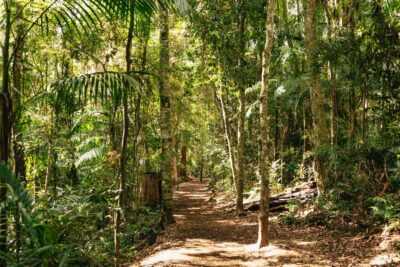
Brisbane: Rainforests, Waterfalls and Glow Worm Cave Tour
Read the review →
Margaret River, Caves, Wine and Cape Leeuwin Lighthouse Tour from Perth
Read the review →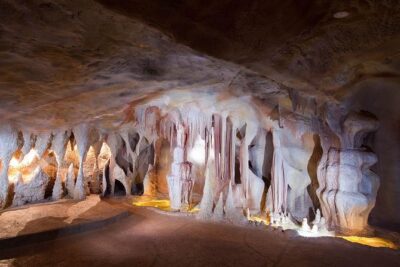
Springbrook andTamborine Rainforest Tour Incl Natural Bridge and Glow Worm Cave
Read the review →
Brisbane: Daytime Glow Worm Caves Hop-on Hop-off Bus Tour
Read the review →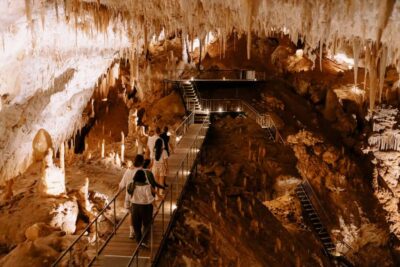
Browse the lists this tour appears in