
Review · ICE CAVE TOURS
Skaftafell: Blue Ice Cave & Glacier Hike on Vatnajökull
The best part of this four-hour adventure is not simply seeing blue ice. You walk across Vatnajökull, Europe’s largest glacier, then enter a natural cave that may have changed or vanished by the time you arrive. The ice shifts, melts, and reforms, so every visit has its own character.
I like the small groups of no more than 12 per guide and the easy 20-minute 4×4 ride from Skaftafell. Guides such as Ola, James, and Albin are often singled out for making beginners feel calm and for taking good photographs. The main catch is that the cave may be small, and poor weather can cover the glacier in snow or change the planned cave.
Key points at a glance
- A real, changing ice cave: The cave is selected for safety and conditions, so its size and shape vary.
- 2.5 hours on Falljökull: Expect crampon practice, blue ice, crevasses, ridges, moulins, and photo stops.
- Small groups matter: One guide handles no more than 12 people, allowing a relaxed pace and closer supervision.
- Useful gear is supplied: Crampons, helmet, walking ice axe, and harness are included.
- Boots are not included: Sturdy ankle-support hiking boots are mandatory, with rental options available for a fee.
- A strong first glacier experience: The walk is generally manageable, but you need reasonable fitness, warm clothing, and steady footing.
What the Skaftafell glacier day is really like
You meet at the Arctic Adventures hut near the Skaftafell visitor centre in Vatnajökull National Park. Allow a little time to find the right parking area, since two nearby car parks can make the base camp location less obvious. Once there, the setup is direct: collect any rented gear, meet your English-speaking guide, and get fitted with the equipment needed for the ice.
The tour price is $163 per person, which is not cheap, but it covers the guide, specialist glacier gear, and off-road transport. You are paying for access to terrain that should not be explored alone, plus the planning and safety work that makes a glacier visit possible for first-time walkers.
Your guide supplies glacier crampons, a helmet, a walking ice axe, and a harness. You bring the clothing and boots. This division makes sense, but do not arrive in casual trainers and hope for the best. Ankle-support hiking boots are required, and crampons are available only for shoe sizes 35 to 50 EU.
More Ice Cave Tours in Iceland:
- From Vik: Katla Ice Cave and Super Jeep Tour
★ 4.6 · 2,110 reviews - Jökulsárlón: Vatnajökull Ice Cave Guided Tour
★ 4.2 · 2,046 reviews - Skaftafell: Ice Cave Tour and Glacier Hike
★ 4.5 · 1,746 reviews
The 20-minute ride from Skaftafell to Falljökull
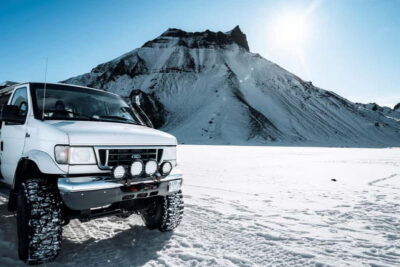
The transfer to the glacier takes about 20 minutes in a 4×4 bus. It is a short ride, but it saves you from a long approach walk and puts the main part of the morning where you want it, on the ice.
As you travel toward Falljökull, your guide provides the first views and safety information. The point is not sightseeing from a comfortable coach for hours. The vehicle is practical transport to the glacier’s foot, where the real work begins.
At this stage, listen carefully to the instructions about crampons and walking technique. Several people with no prior ice experience found the equipment easy to use once shown how. The first steps can feel awkward, but crampons give you a firm grip when you place your feet carefully.
Learning to walk on the glacier
The glacier section lasts about 2.5 hours. That includes the walk to the cave, time for photographs and explanations, exploration of the ice, and the return route.
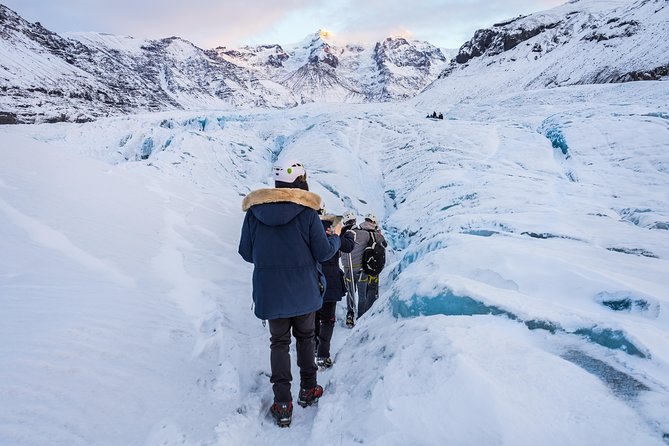
Falljökull is not a flat sheet of white. You move over ridges, hollows, blue cracks, and uneven frozen surfaces. The guide chooses the safest route, which means the exact path depends on current conditions. Snow can hide the ice, rain can alter cave entrances, and new cracks can open or change shape.
I like the way this makes the outing more than a quick stop at a blue opening. You are learning how to move through an active glacier. Guides explain features such as moulins, the deep shafts where water travels into the ice, as well as crevasses and jagged ridges.
The pace is usually relaxed rather than athletic. One person with a knee problem managed the walk with a small group and a slower rhythm, while another became dizzy after skipping breakfast. Eat before you go, carry water, and speak up if you need a short pause. The guide’s job is to keep the group together, not to rush you.
Inside the natural blue ice cave
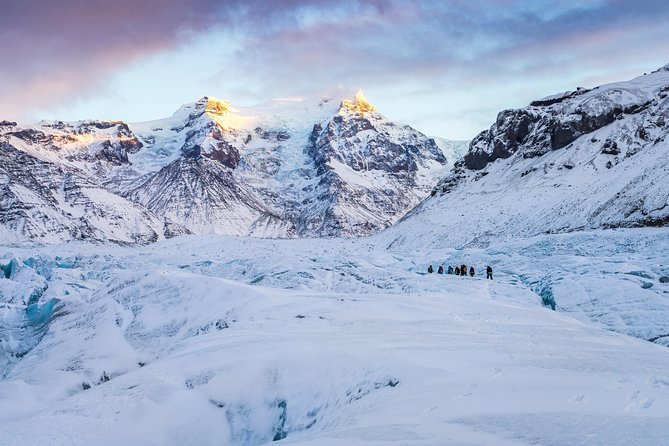
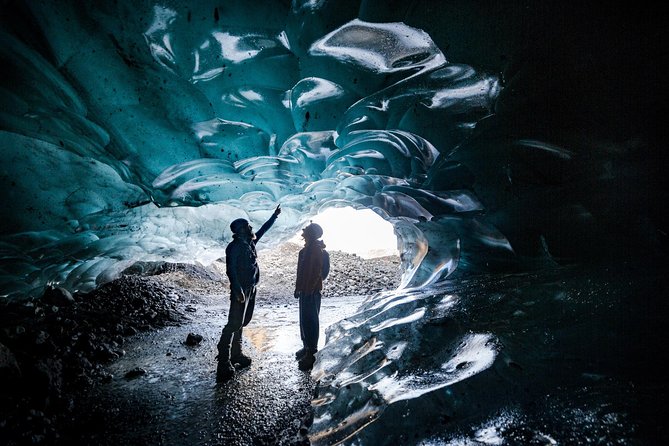
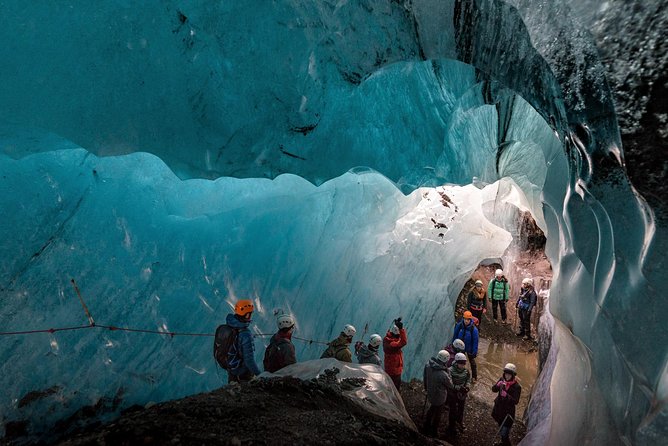
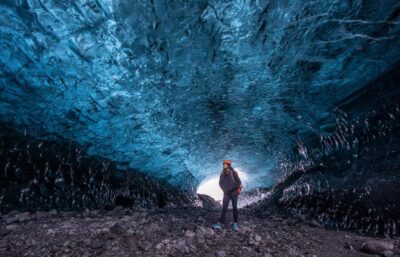
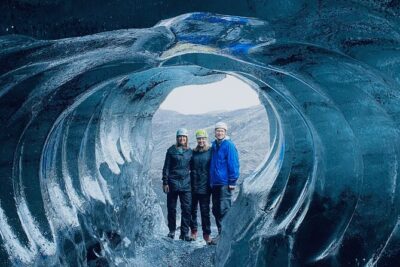
The cave is the visual prize, but it is important to set your expectations correctly. This is not a permanent attraction with a fixed entrance and a large chamber. It is a natural formation in moving ice, selected according to safety and current conditions.
Some departures reach a tiny cave or ice tunnel only a few steps long. One person found the cave underwhelming but loved a nearby crevasse instead. Another described the cave as small but said the blue ice in its cracks was spectacular. That contrast is useful: the glacier walk is the dependable part, while the cave itself is a bonus shaped by nature.
When the light reaches compressed glacier ice, it can appear intensely blue. The colour is not painted or installed. It comes from the way dense ice absorbs and scatters light. You get time to look closely at the walls and take photographs, though the guide decides where it is safe to stand.
The cave may be different from the pictures used to promote the activity. It may even be replaced or adjusted if rain, melting, or movement makes it unsafe. That uncertainty is part of the deal. If you need a guaranteed large blue chamber, this is not the right product. If you like seeing a temporary feature before it changes, the uncertainty adds meaning.
Hikes and treks within reach of Iceland:
- Matacanes : Canyoning + Hiking + Water Jumps + Rappel + Caves
★ 5.0 · 1,497 reviews - Peniche: Berlengas Island Trip, Hiking and Cave Tour
★ 4.7 · 1,473 reviews - Etna Sunset Tour: Volcano trek, Cave & tasting from Catania
★ 4.8 · 1,290 reviews - Halong Bay Full Day with Kayaking, Hiking viewpoint, Cave – Deluxe To Luxury
★ 5.0 · 884 reviews
Why the guide makes such a difference
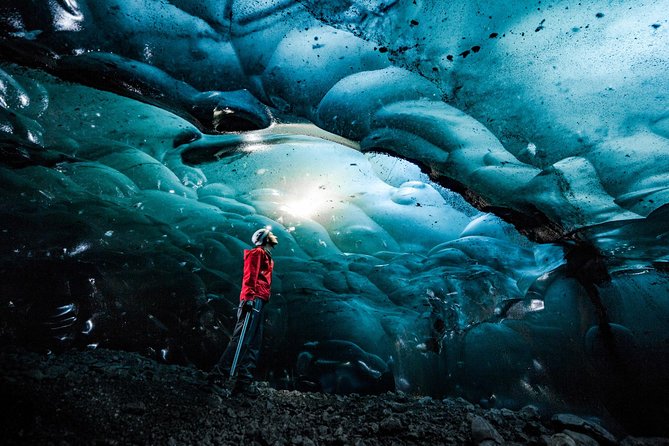
The guide controls the route, explains what you are seeing, checks equipment, and watches the group. That matters on ice, where a pretty photograph can hide a real drop or unstable surface.
Names praised in past departures include Ola, James, Albin, Ivo, Annie, Maya, and Marketa. Their common strengths are clear instruction, humor, patience with beginners, and close attention to safety. One guide even tried to explain things in Italian and Korean as well as English, which shows the practical value of a good communicator in a mixed group.
A maximum of 12 people per guide is a useful limit. It does not mean you will have a private excursion, but it gives the guide a fair chance to keep an eye on everyone. It also makes it easier to stop for pictures without creating a long queue.
The guide may take photographs for the group, as Ola and Ivo did on some departures. Treat that as a welcome extra, not a guaranteed photography service. Bring your own phone or camera, and keep it secure in waterproof protection.
The views beyond the cave
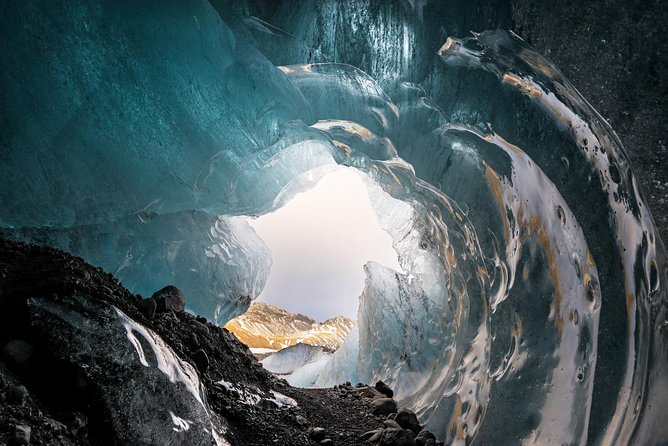
The best images may come after you leave the cave. You see the glacier as a broad, broken field of ice, with ridges and crevasses leading toward the larger frozen mass of Vatnajökull.
Walking between the cracks gives you a better sense of scale than viewing a glacier from a roadside lookout. You feel the uneven surface under your boots and watch the guide use an ice axe as part of normal glacier travel. The experience has a quiet geological lesson built into it: this is not just pretty blue ice, but a moving body of frozen water.
Weather changes the mood. On a clear day, the ice can look sharp and bright against the sky. After heavy snow, the glacier may appear softer and whiter, with less exposed blue ice. That can reduce the photographic drama, but it does not make the outing pointless. It can also mean fewer people and a quieter route.
The return walk gives your guide another chance to explain how glaciers form and how they are changing. The subject is not treated as a distant science lesson. You are standing on the evidence, surrounded by ice that is constantly shifting.
Gear, clothing, and physical effort
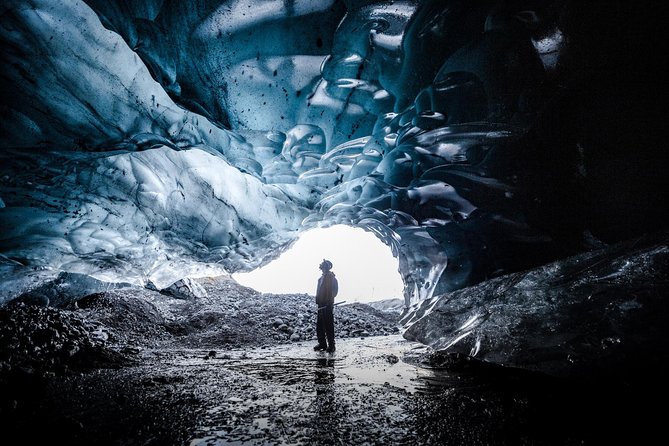
The supplied crampons, helmet, ice axe, and harness cover the specialist safety equipment. You still need to arrive ready for Icelandic weather.
Bring:
- Warm, waterproof jacket and trousers
- Sturdy hiking boots with ankle support
- Hat and gloves
- Water and a snack
- A phone or camera protected from wet weather
You can rent warm outerwear and hiking boots for a fee, but check the arrangements before arrival. Open-toed shoes, high heels, and unsuitable footwear are not allowed.
The minimum age is 8 years, and the minimum shoe size is 35 EU. Crampons are available only in sizes 35 through 50 EU. If your shoes fall outside that range, you cannot join this activity, so confirm before paying.
The walk is described as easy by many people, but easy does not mean effortless. You need to step over uneven ice, stay balanced, and walk for much of the glacier portion. This suits active children aged eight and above, fit older adults, and first-time glacier visitors who are comfortable outdoors. It is a poor match for anyone unable to walk steadily on rough ground.
Is $163 good value?
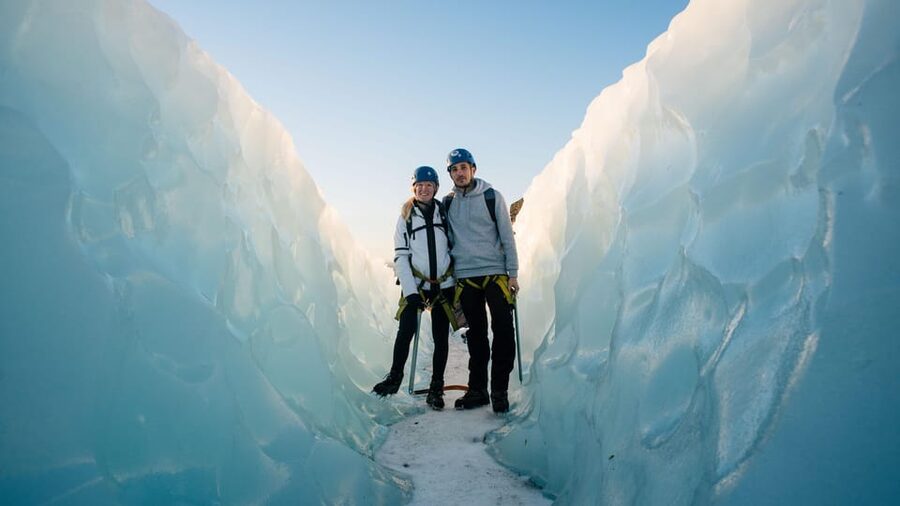
At $163, this is a premium half-day activity. You could visit Skaftafell’s viewpoints for far less, but you would not walk on Falljökull, use crampons, enter a natural ice cave, or have a trained guide managing the route.
The value is strongest if you want hands-on access to the glacier rather than a distant view. The small group limit also helps. A cheaper, larger outing might get you to the same general area, but the quality of instruction and time spent on the ice could be different.
The price does not include meals, drinks, warm clothing, or hiking boots. Pack your own food and water, and budget for rentals if needed. The four-hour length is another point in its favor. It is long enough to feel like a real adventure, but short enough to fit into a day exploring the Skaftafell area.
Who should book this experience
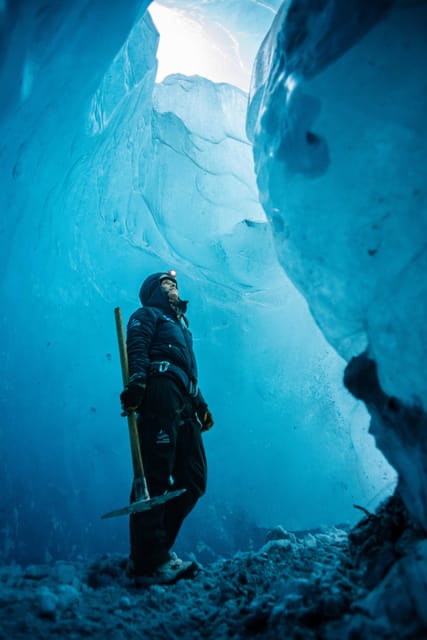
I would choose this for a first glacier walk, a couple wanting a strong outdoor highlight, or a family with children old enough to follow instructions. It also works well for people who want a guide-led introduction rather than a demanding mountaineering trip.
You should book it if your priority is walking on the ice and seeing whatever natural cave is safe that day. You should think twice if your only goal is a huge, perfectly blue cavern. The cave may be small, and weather can cover the ice or alter the route.
The activity is conducted in English, with a maximum of 12 participants per guide. Free cancellation is available up to 24 hours before departure, and you can reserve now and pay later, useful when Iceland’s weather makes a rigid schedule hard to trust.
Should you book the Falljökull glacier hike?
Yes, if you want a well-supported, four-hour introduction to glacier travel and can accept that nature controls the cave. The strongest part is the complete package: a short 4×4 transfer, proper equipment, a manageable walk, close guide supervision, and time among crevasses and blue ice.
Book it with sturdy boots, warm waterproof clothing, breakfast in your stomach, and realistic expectations about the cave. The cave may be small, but the glacier itself is the lasting experience. For many people, that is where the $163 earns its keep.
FAQ
How long does the Skaftafell glacier hike take?
The full activity lasts four hours, including two 20-minute 4×4 bus rides and about 2.5 hours on Falljökull Glacier.
Where does the activity start?
You meet at the Arctic Adventures hut near the Skaftafell visitor centre in Vatnajökull National Park.
Is transport to the glacier included?
Yes. Off-road 4×4 transport from Skaftafell to the foot of the glacier is included.
What equipment is provided?
The activity includes glacier crampons, a helmet, a walking ice axe, and a harness.
Do I need to bring hiking boots?
Yes. Sturdy hiking boots with ankle support are mandatory. Boots may be available to rent for an additional fee.
What clothing should I bring?
Bring a warm, waterproof jacket and trousers, hiking boots, headwear, and gloves. Warm clothing can be rented for a fee.
Is the ice cave guaranteed to be large and blue?
No. The cave is a changing natural feature. Its size and shape vary, and the guide selects a cave based on current safety and conditions.
What is the minimum age?
The minimum age is 8 years old.
What shoe sizes can use the glacier crampons?
The crampons are available for shoe sizes 35 to 50 EU. People outside that range cannot participate.
Is the tour suitable for beginners?
Yes. No glacier experience is required, and the guide provides safety instruction and equipment. You still need to walk steadily across uneven ice and wear suitable boots.
Just added around Iceland
- From Vik: Myrdalsjokull glacier and Katla Ice Cave Tour★ 4.6 · 212 reviews
- From Reykjavik 2-Day South Coast Tour with Blue Ice Cave★ 4.7 · 239 reviews
- Ice Cave Tour in the National Park of Vatnajökull★ 4.5 · 410 reviews
- Crystal Ice Cave Adventure★ 5.0 · 255 reviews
- Frozen Wonders : Small Group Ice Cave Tour★ 5.0 · 358 reviews
- Blue Ice Cave Adventure★ 5.0 · 418 reviews
- From Vik: Katla Ice Cave Small-Group Tour★ 4.5 · 616 reviews
- Reykjavik: South Coast and Katla Ice Cave Small Group Tour★ 4.7 · 625 reviews
Ice Cave Tours, compared.
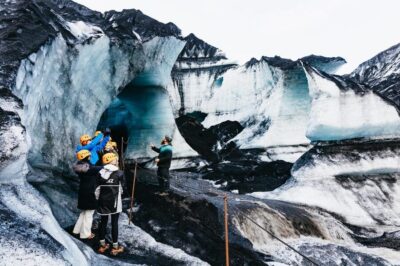
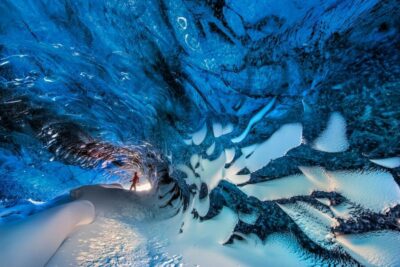
Jökulsárlón: Vatnajökull Ice Cave Guided Tour
Read the review →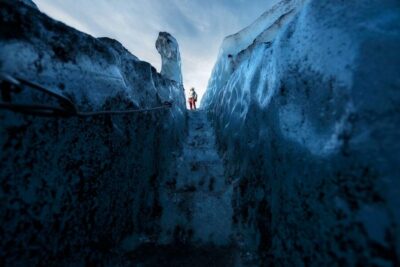
Jökulsárlón: Crystal Ice Cave Super Jeep Tour
Read the review →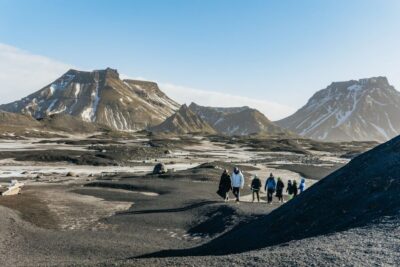
Ice Cave by Katla Volcano Super Jeep Tour from Vik
Read the review →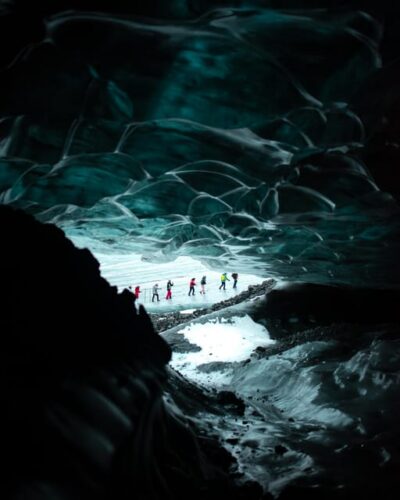
From Jökulsárlón: Vatnajökull Glacier Blue Ice Cave Tour
Read the review →Browse the lists this tour appears in