
Review · LECCE CAVE TOURS
Lecce guided tour with underground discoveries
Lecce’s most surprising story is not only carved into its honey-colored Baroque facades. It also lies beneath the city, in the Faggiano Archaeological Museum, where excavations revealed older layers of daily life. I like that this tour joins the grand monuments with a smaller, more personal archaeological site. You get both the city’s showpiece architecture and a glimpse of what was buried below it.
I also like the strong guiding on this route. Fabio Grasso is praised for explaining architecture and urban design in clear English, while Elena, Ilenia, Antonella, Francesca, and Fabrizio have each been singled out for warmth, patience, or enthusiasm. The main caution is the title: most of the walking tour is above ground, and the underground portion is a museum visit rather than an extensive subterranean expedition.
Key points to know before booking
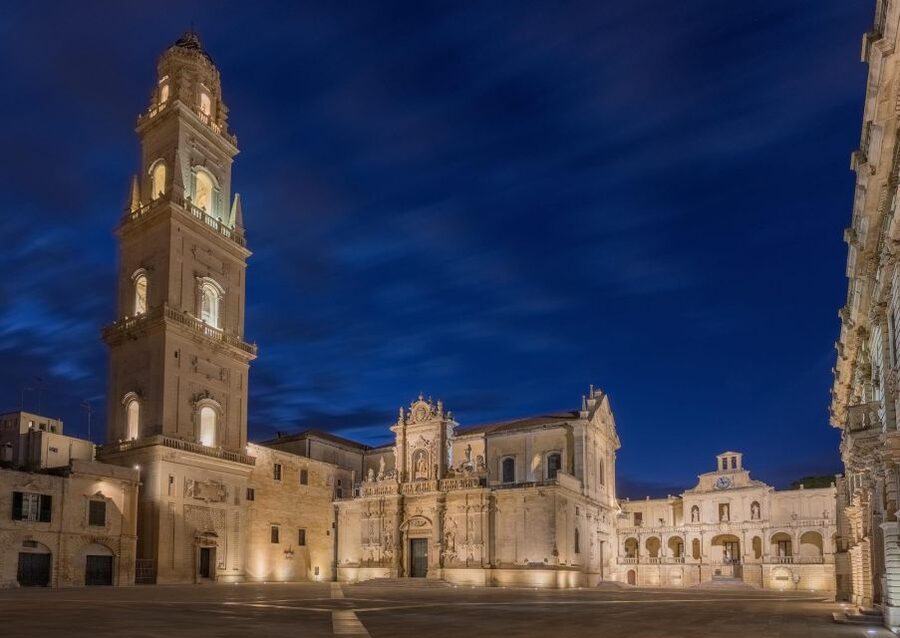
- Piazza Duomo sets the Baroque mood: See Lecce Cathedral and its bell tower in one of the city’s most impressive squares.
- Santa Croce rewards close attention: A guide can explain the symbols and small figures that are easy to miss on the elaborate facade.
- The Faggiano Museum adds older layers: Your included ticket leads to archaeological remains beneath a private historic building.
- The route is useful on a short stay: Two hours gives you a focused introduction to central Lecce without taking up half a day.
- Guide quality is a major strength: Fabio Grasso, Elena, Ilenia, Francesca, and others have earned praise for clear explanations and patient answers.
- Paid church entries are extra: The tour includes the Faggiano Museum ticket, but not admission to churches that charge separately.
Why this Lecce tour works well
Lecce is easy to admire and surprisingly easy to misunderstand. At first glance, the old center can seem like one long parade of curls, columns, angels, and carved stone. A good guide gives those details a place in the city’s story, explaining how religion, noble families, local stone, and civic pride shaped the streets you see today.
This two-hour walk is built for that first layer of understanding. You move through the historic center on foot, passing major squares, churches, palaces, and decorated facades. The route is compact enough for a morning or afternoon sightseeing plan, yet it covers the landmarks most people hope to see in Lecce.
I particularly value the way the experience combines art with archaeology. Piazza Duomo shows you Lecce at its grandest. The Faggiano Museum then shifts the scale from monumental churches to foundations, corridors, household remains, and buried traces of earlier life. That contrast makes the city easier to picture across time.
The tour costs $41 per person. That is a fair price if you want a guide who can explain what you are seeing and the museum ticket is useful to you. The value is less compelling if you only want a quick walk past the main monuments, since Lecce’s center is pleasant to explore independently. You are paying for interpretation, structure, and the archaeological entry, not transportation or a long museum visit.
Guided tours within reach of Italy:
- Naples: Naples Underground Entry Ticket and Guided Tour
★ 4.4 · 21,781 reviews - Naples: Catacombs of San Gennaro Entry Ticket & Guided Tour
★ 4.6 · 7,941 reviews - Naples: Spanish Quarters Underground Guided Tour
★ 4.8 · 5,064 reviews
Piazza Duomo and Lecce’s grandest view
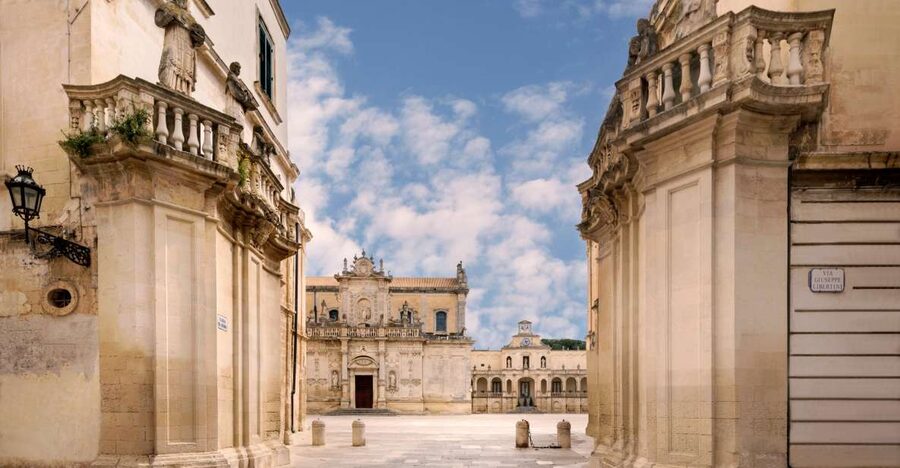
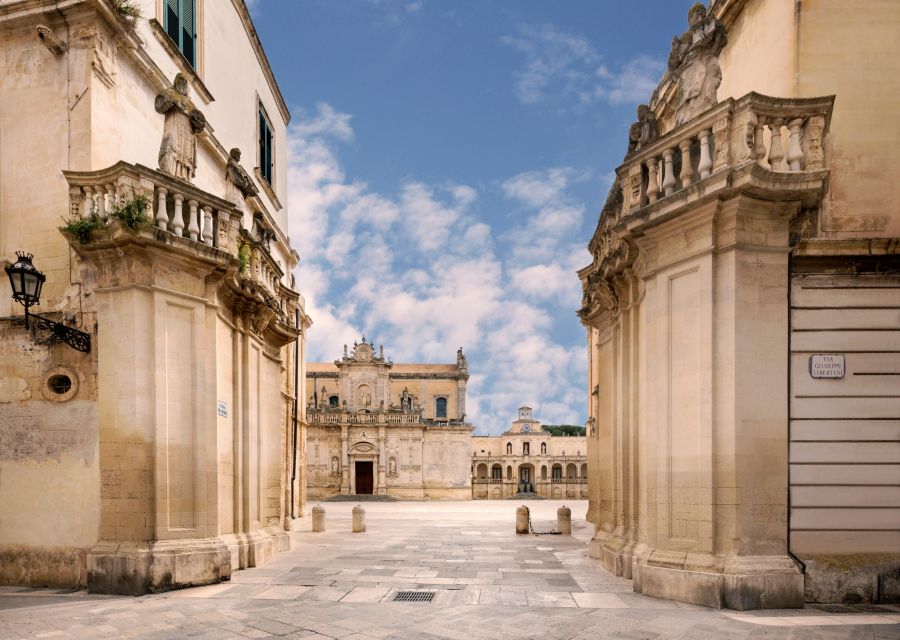
Piazza Duomo is the natural place to begin understanding Lecce’s Baroque style. The square gathers several major religious buildings into one composed view, including Lecce Cathedral and its tall bell tower. The setting feels more enclosed than an ordinary city square, so the architecture has room to command your attention.
Your guide can point out how the facade, tower, and surrounding buildings work together. This matters because Baroque architecture is not only about individual decoration. It is also about creating drama through height, movement, shadow, and the way a building appears from the street.
Take time here to look upward. The bell tower is one of the most recognizable features in Lecce, and its scale helps you understand the city’s ambitions during the period when much of the center took its present form. A guide can also help separate what you are seeing from the broad label of Baroque, showing how local craftsmanship gives Lecce its own look.
The square is an excellent early stop because it gives you a visual vocabulary for the rest of the walk. After seeing columns, carved figures, scrollwork, and layered facades here, you will notice similar ideas in smaller streets and buildings later in the tour.
Santa Croce and the details above eye level
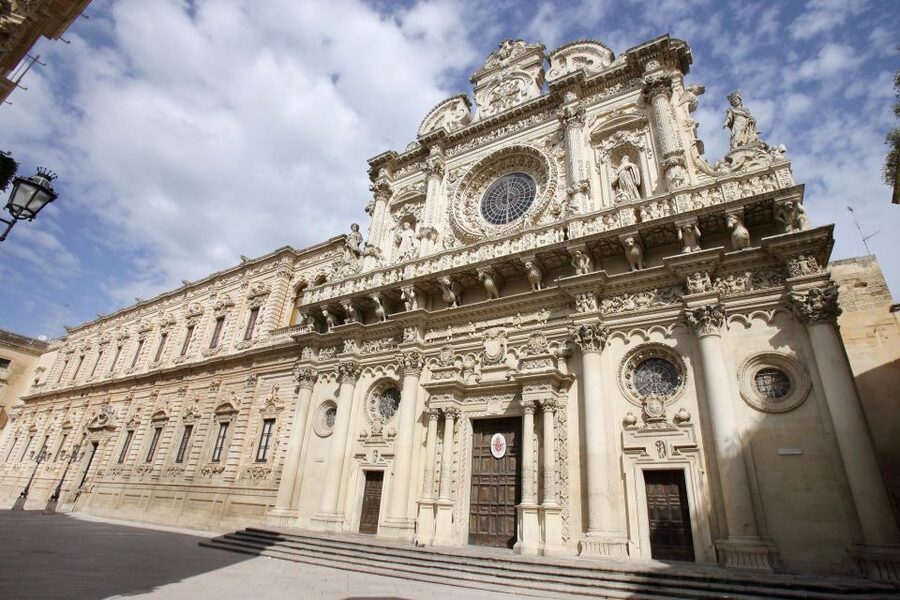
The Basilica of Santa Croce is one of the places where a guide adds real value. Its facade is crowded with sculpted decoration, and it rewards slow looking more than a quick photograph. Without explanation, you may simply see an elaborate surface. With context, the figures and symbols begin to feel like part of a visual language.
Several people who took the tour singled out the explanations of Santa Croce’s facade. That is a useful clue for deciding how to spend your attention. Do not rush past the church while trying to keep up with the group. Listen for the meaning behind the details, then look back at the stone and see how the explanation changes your view.
The experience may include discussion of churches and palaces from the outside, but entry into paid churches is not included. That distinction is important. If you want to go inside every church along the way, budget separately for admission and check the opening arrangements for the day of your visit.
For many visitors, the outside architecture is enough to make this route worthwhile. Lecce’s decoration is not confined to one famous building. It appears on doorways, balconies, cornices, and corners throughout the old center. The guide helps you spot the difference between a building that deserves a passing glance and one that deserves several minutes.
Corso Vittorio Emanuele and the everyday city
The walk through Corso Vittorio Emanuele gives the tour a different rhythm. Rather than focusing only on a single monument, you move through a central street where historic facades form part of the daily city scene. This is where Lecce feels less like an open-air gallery and more like a lived-in town.
I like this part of the route because it connects the major sights. You begin to understand how the old center is laid out, how one square leads to another, and how grand religious buildings sit beside ordinary streets and active businesses. The guide’s comments about city design can be especially helpful here.
Fabrizio has been praised for explaining how Lecce developed, while Fabio Grasso has been noted for discussing buildings, monuments, art, and the design of the historic center. Those strengths fit this section of the walk particularly well. You are not just collecting names and dates. You are learning how the pieces relate.
The cobbled streets require comfortable footwear. The tour is only two hours, but it is a walking experience on historic paving, with time spent outdoors and sometimes standing while the guide speaks. On a hot day, the route may feel more demanding as the afternoon wears on. On a rainy or windy day, the open-air stops can also be less comfortable.
More Cave Tours in Italy:
- Colosseum: Underground and Ancient Rome Tour
★ 4.7 · 12,691 reviews - Matera: Sassi Tour with Cave House and Rupestrian Church
★ 4.7 · 6,618 reviews - Rome: Capuchin Crypts and Catacombs Tour with Transfers
★ 4.6 · 6,456 reviews - Expert Guided Tour of Colosseum Arena OR Underground, and Forum
★ 4.5 · 5,041 reviews
Piazza Sant’Oronzo and Lecce’s public face
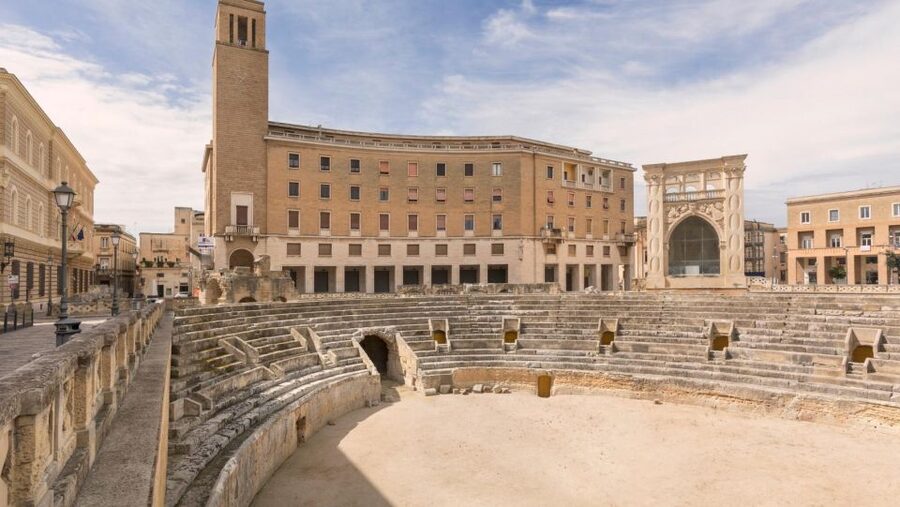
Piazza Sant’Oronzo is another important stop, and it helps broaden the story beyond churches. This is one of the city’s main public spaces, a place where monumental architecture and civic life meet. Your guide can explain the importance of the square and place its buildings within Lecce’s wider development.
This stop works best as a pause in the visual flow of the tour. By now, you have seen the concentrated religious drama of Piazza Duomo and the detailed facade of Santa Croce. Piazza Sant’Oronzo gives you a larger urban setting in which to think about how Lecce presents itself to residents and visitors.
The route covers roughly half a dozen significant sites, according to one detailed description of the experience. That is a sensible pace for two hours. You get enough stops to form a clear picture of the center without spending the entire visit listening to a long lecture at one location.
The exact balance can depend on the guide and the group. The strongest guides, including Fabio, Elena, and Francesca, have been praised for inviting questions and checking that everyone can follow the explanation. That matters in a group walk, especially when architectural terms or historical references become dense.
The Faggiano Archaeological Museum underground
The Faggiano Archaeological Museum is the unusual part of this experience. Its story begins with excavation beneath a historic building, where work exposed archaeological remains and evidence from earlier periods. Instead of seeing only Lecce’s polished Baroque face, you get a sense of the layers below the present city.
The museum ticket is included in the $41 price. Inside, you may see artifacts, remnants, ancient corridors, and chambers connected with earlier daily life. The appeal is not simply the age of individual objects. It is the chance to picture how a modern building can sit above traces of many different periods.
This is a smaller and more intimate kind of archaeological visit than a major national museum. That can be an advantage if you prefer a focused site with a direct connection to the building above it. It also means you should keep your expectations realistic. The underground section offers an intriguing look at excavated remains, but it is not an enormous network of tunnels or a long subterranean adventure.
The tour name may lead you to expect a walk through underground Lecce with your guide. In practice, the outdoor route takes up most of the two hours, and the museum portion may provide only a limited introduction to the underground findings. One experience description indicates that the guide may leave you at the museum at the end, rather than escorting you through a lengthy underground section.
That is the clearest drawback of the experience. If the museum is your main reason for booking, confirm how much time is allocated inside and whether the guide remains with the group. If your main goal is to understand Lecce’s Baroque center and add an archaeological stop, the arrangement makes more sense.
What the guides add
The guiding is the strongest part of this tour. Fabio Grasso receives repeated praise for his command of architecture, history, and urban design. He is also described as clear and approachable in English, with time for questions. That combination is useful in Lecce, where the buildings can be visually overwhelming.
Other named guides bring different strengths. Elena is described as enthusiastic and personable, Ilenia as highly informed and patient, Antonella as especially clear and easy to hear, Francesca as responsive and engaging, and Fabrizio as strong on architectural history and the development of the city. The exact guide depends on the date and availability, so you should not book on the assumption that one particular person is guaranteed.
Group size also affects the experience. One group had around 10 to 12 people and found that comfortable, with the feeling that a much larger group would have been less effective. A smaller group makes it easier to hear explanations, ask questions, and gather around a facade without blocking the street.
English and Italian are available. If you choose English, the guide should be able to explain the main architecture and history clearly, but individual speaking styles can differ. The repeated emphasis on clear English from several guides is encouraging, especially for a tour built around verbal explanation.
Timing, cost, and practical expectations
At two hours, this is a useful orientation rather than a full-day study of Lecce. I would place it near the beginning of a stay if you have time, since the guide can help you recognize details when you walk the center again on your own. It also works well for a short visit when you want an organized introduction without surrendering the rest of your day.
The $41 price includes the guide and the Faggiano Museum ticket. Paid church entry is not included, so you may spend more if you want to enter additional sites. The tour does not include transportation, which is not a serious issue because the route takes place in the historic center.
You can cancel up to 24 hours ahead for a full refund, and the reserve-now, pay-later option gives you some flexibility. Starting times vary, so check availability when booking. The tour also offers skip-the-ticket-line access, which is useful at the included museum if there is a queue.
Wear shoes suited to cobbled streets and plan for outdoor standing. The information provided does not promise a particular accessibility setup, so anyone with mobility concerns should ask for current route details before paying. The same advice applies if weather is poor. One account describes a rainy, windy day when the guide did not make many changes for comfort, so this is not a tour I would choose without checking the forecast.
Who should book this experience?
I would recommend it to a first-time visitor who wants a clear introduction to Lecce’s Baroque center. It suits anyone who enjoys architecture but wants help reading facades, and it is especially useful if you have only a few hours in town.
It is also a good match for people who want more than pretty streets. The Faggiano Museum adds an archaeological angle, even though the underground section is modest. Families and mixed-interest groups may appreciate the change from grand churches and palaces to excavated corridors and artifacts.
I would be more cautious if your priority is an extensive underground tour. The title suggests a larger subterranean experience than the actual format may provide. I would also think twice if you dislike guided pacing, since much of the value comes from listening at set stops rather than wandering freely.
Should you book the Lecce guided tour?
Book it if you want the city’s Baroque architecture explained by a strong English-speaking guide, with the Faggiano Archaeological Museum added to the route. The repeated praise for Fabio Grasso, Elena, Ilenia, Francesca, Antonella, and Fabrizio suggests that the quality of the guide is a dependable part of the experience, even though the individual guide is not guaranteed.
Go in expecting a two-hour above-ground walking tour with a short archaeological component, not a major underground expedition. At $41, it offers solid value for a compact introduction, especially on a short visit. If that balance suits you, this is an efficient and enjoyable way to get your bearings in Lecce before exploring the old center at your own pace.
FAQ
Where does the tour take place?
The tour takes place in Lecce, in the historic center of Apulia, Italy.
How long does the tour last?
The guided tour lasts two hours.
What places are included in the route?
The route includes Piazza Duomo, Corso Vittorio Emanuele, Piazza Sant’Oronzo, churches and palaces, and the Faggiano Archaeological Museum with its underground remains.
Is the Faggiano Museum ticket included?
Yes. The ticket for the Museo Faggiano is included in the tour price.
Are church entry fees included?
No. Entry tickets for churches that charge admission are not included.
What languages are available?
The tour is available in English and Italian.
Is a live guide included?
Yes. A live tour guide is included.
Which guides may lead the tour?
Guides named in the available information include Fabio Grasso, Elena, Ilenia, Antonella, Francesca, and Fabrizio. The assigned guide can vary.
Does the tour include a large underground exploration?
The tour includes the Faggiano Museum and access to its underground discoveries, but the main walking route is above ground. The underground section is more limited than the title may suggest.
Can I cancel the booking?
Yes. You can cancel up to 24 hours in advance for a full refund. You can also reserve now and pay later.
Just added around Italy
- Capri Adventure Cruise: Sea Caves, Coastline & Blue Grotto Visit★ 5.0 · 18 reviews
- Blue Grotto and Capri Boat Tour with Aperitivo Swim and Snorkel★ 4.5 · 47 reviews
- Kayak tour in Capri between caves and beaches. Photos included.★ 5.0 · 302 reviews
- Capri Island and Blue Grotto Small Group Day Tour from Capri Port★ 5.0 · 62 reviews
- Capri Private Boat Tour from Capri (3 Hours) with Blue Grotto★ 4.5 · 42 reviews
- Blue Grotto and Capri by Private Boat Tour★ 5.0 · 26 reviews
- Capri: Boat Tour, Priority Tickets & Blue Grotto (Optional)★ 4.0 · 63 reviews
- Blue Grotto Visit and Capri Semi-Private Boat Tour★ 5.0 · 53 reviews
Lecce Cave Tours, compared.
Baroque Architecture and Underground Walking Tour
Read the review →
Small group tour of the caves of Santa Maria di Leuca
Read the review →
3 Hour Group Tour by Boat to the Caves of Santa Maria di Leuca
Read the review →
Mini-cruise tour to the Caves of Santa Maria di Leuca
Read the review →Browse the lists this tour appears in