
Review · CATACOMBS & UNDERGROUND CITY TOURS
Naples: Catacombs of San Gennaro Entry Ticket & Guided Tour
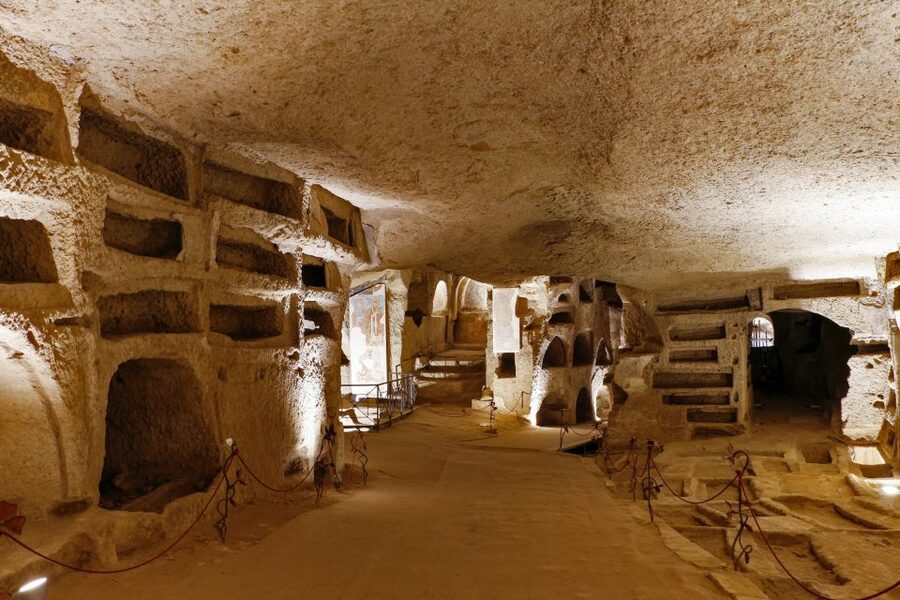
Beneath Naples, the Catacombs of San Gennaro open into huge underground chambers, early Christian basilicas, and paintings far older than most visitors expect. I like the way the tour connects ancient art with the modern renewal of the Sanità district, and I like that your $15 ticket also covers San Gaudioso and Santa Maria della Sanità for up to 12 months. The main drawback is the climb and the steps down, so this is not an easy stop for anyone with mobility problems.
The guides are a major part of the experience. Nello, Emmanuel, Antonia, and other English-speaking guides are known for clear explanations, humor, and a warm welcome. Just arrive 15 minutes early, and remember that photography is not allowed, which may disappoint anyone hoping to record the frescoes.
Key points to know before you go
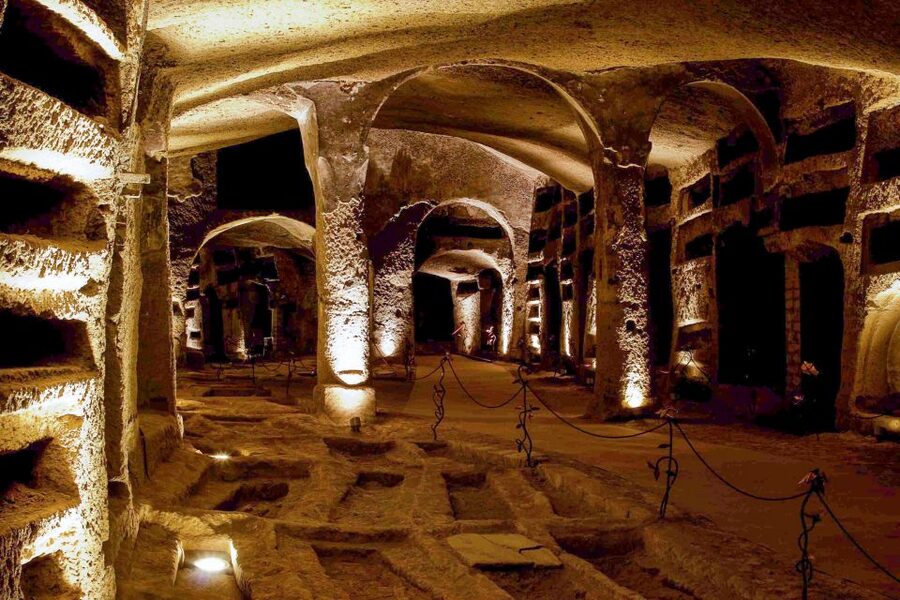
- The chambers are much larger than expected: This is not a small tunnel with a few tombs, but an extensive early Christian burial site beneath Naples.
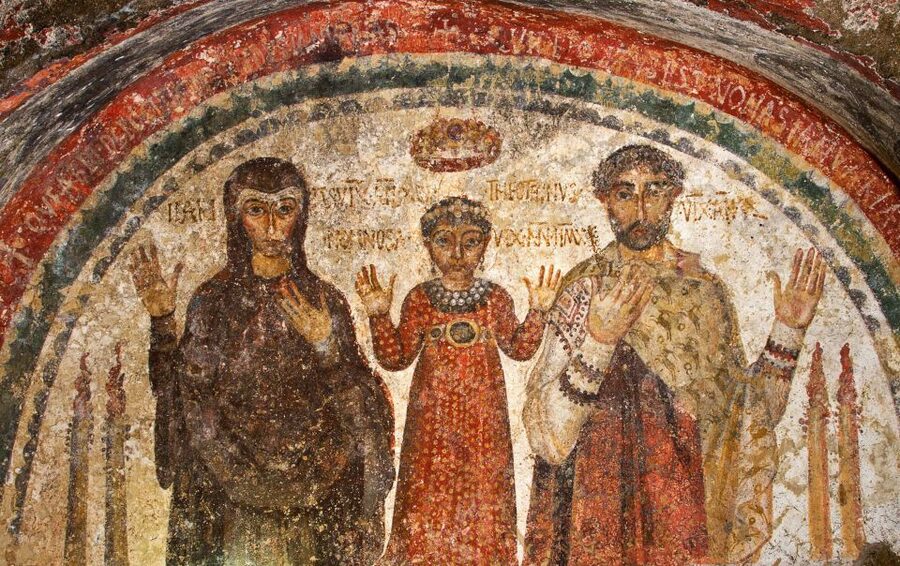
- Ancient art is the main event: Look for 3rd-century Pompeian-style paintings, 9th and 10th-century Byzantine works, and 5th-century mosaics.
- The guide shapes the visit: English and Italian tours explain both the catacombs and the wider story of Naples and the Sanità district.
- Your ticket goes further: Admission also includes the Catacombs of San Gaudioso and the Basilica di Santa Maria della Sanità.
- Plan for stairs: You descend several flights before reaching the tour area, and the walk from the old town is uphill.
- Your money supports local renewal: Ticket sales help fund the redevelopment of Rione Sanità and projects involving local young people.
Why the Catacombs of San Gennaro feel different
Many underground burial sites are narrow, dim, and easy to rush through. San Gennaro is different. Its galleries open into broad chambers and grand subterranean basilicas, giving the place a surprising sense of scale.
The story begins more than 2,000 years ago, but the strongest focus is the growth of Christianity in Naples. Your guide explains how the site changed from a burial place into a center of worship, and how the city’s bond with its patron saint developed over time.
That local connection matters. This is not simply an archaeological stop detached from modern Naples. The catacombs are tied to the Sanità neighborhood above them, an area that has worked to change its public image through art, culture, and community projects.
I especially like the way the guides connect what you see underground with churches elsewhere in Naples. After learning how early Christians used images, tombs, chapels, and symbols, you may look at the city’s Duomo and other churches with sharper eyes.
The tone is generally lively rather than solemn. Guides such as Nello have been praised for mixing serious detail with humor, while Emmanuel, Antonia, Antonio, and others bring their own clear and personable style. The result is a lesson that does not feel like a lecture.
More Catacombs and Underground City Tours in Italy
- Rome: Capuchin Crypts and Catacombs Tour with Transfers
★ 4.6 · 6,456 reviews - The Original Roman Crypts and Catacombs Tour with Transfers
★ 4.5 · 4,896 reviews - Rome: Catacombs of St. Callixtus Entry Ticket & Guided Tour
★ 4.6 · 3,037 reviews
Starting at Via Capodimonte
You meet at the reception desk of the Catacombs of San Gennaro at Via Capodimonte 13. The ticket office opens at 9:30 in the morning, and you should arrive at least 15 minutes before your booked time.
The location sits above the central part of Naples, near the Capodimonte area. From the old town, expect an uphill walk. One visitor described the route from the port as a major walk, so give yourself plenty of time if you are arriving on foot or from a cruise ship.
The address is easy enough to enter into a map, but the area’s stairs and steep routes can cause confusion. After the visit, some people have found navigation apps suggesting awkward stairways or dead ends. Ask the staff for the simplest route back before leaving, especially if you need to return to the port or a parked car.
The tour lasts about 45 minutes, with the detailed itinerary describing roughly 50 minutes. That makes it easy to fit into a half-day around Sanità, but you should allow extra time for arrival, the descent, and questions at the end.
The upper catacomb and its 3rd-century paintings
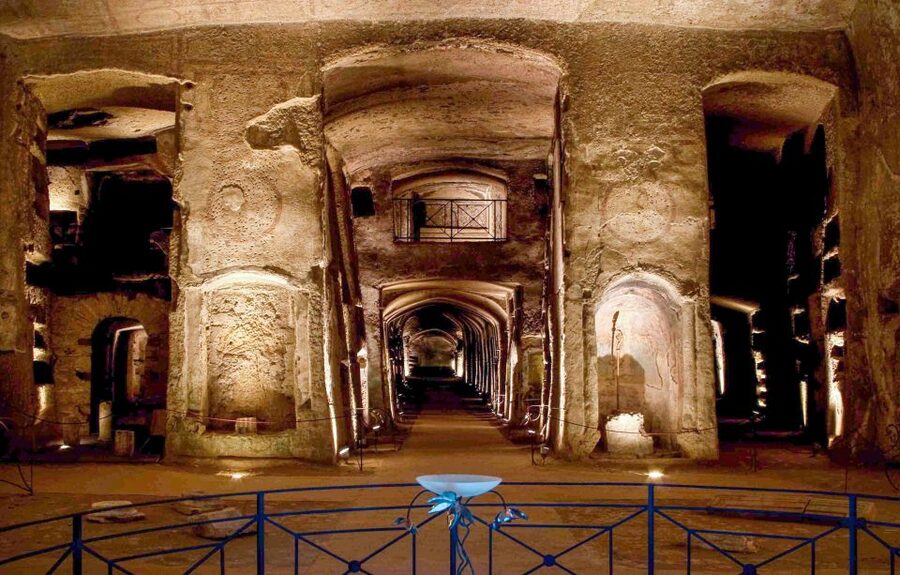
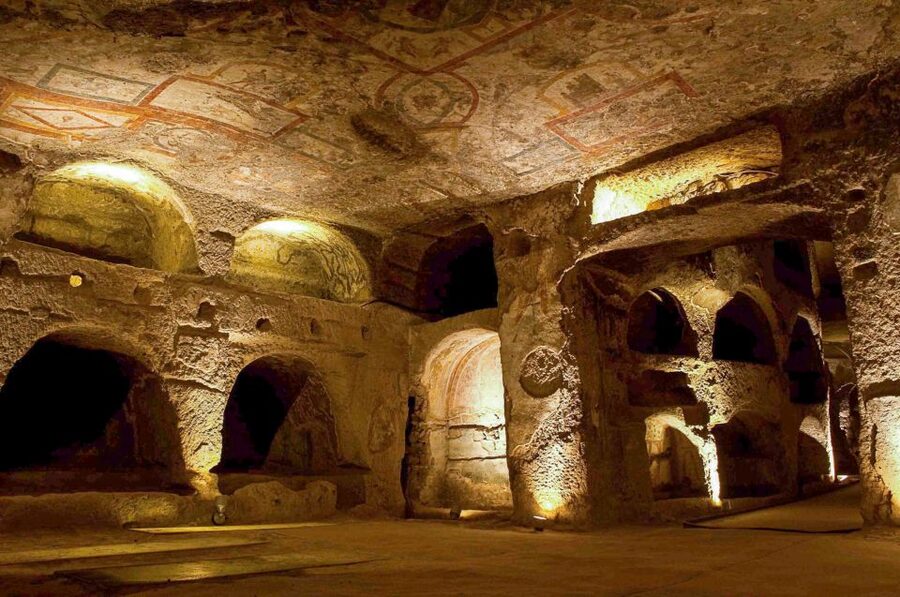
Once inside, the tour begins to reveal how large the underground site really is. The upper catacomb includes decoration from the 3rd century, painted in what is called the Pompeian style.
These are among the earliest Christian paintings in Italy. Their value is not only visual. They show how early Christian communities used familiar Roman artistic habits while expressing new religious ideas.
Your guide provides the context you need to make sense of the rooms. Without that explanation, you might see faded walls and assume the site is mainly about bones or tombs. With a guide, the paintings become clues to changing beliefs, burial customs, and the growth of Christian worship.
The walk is helped by a carpet-like surface on the ground, which makes the route easier to manage. Still, this is an underground historic site rather than a polished museum. Watch your footing, take the steps at your own pace, and do not expect every passage to feel wide or level.
Photography is not permitted. That rule is a real disappointment for some people, especially because the painted surfaces and old stonework are visually striking. It also means you should slow down and look carefully instead of treating the visit as a quick photo stop.
St. Agrippinus and the underground basilica
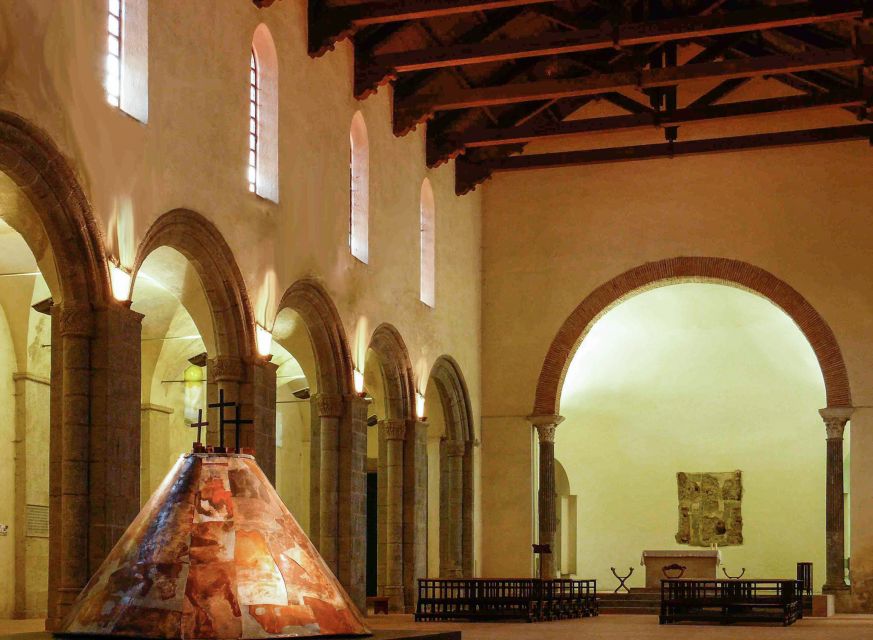
A major turning point came in the 4th century, when the remains of St. Agrippinus were transferred to the site. An underground basilica was dedicated to him, and the catacombs expanded around this religious focus.
This helps explain why San Gennaro feels larger and more ceremonial than a simple burial complex. The site grew as a place of worship as well as a place connected with the dead.
The basilicas are among the strongest parts of the visit. Their scale gives you a better idea of how important these spaces became to the early Christian community in Naples. Your guide explains the relationship between the burial areas, the churches, and the city’s devotion to its saints.
The subject can be solemn, but the guides generally keep the pace moving. They leave room for questions and explain difficult points in plain language. That is useful if you know little about early Christianity or Roman-era Naples.
Same stretch of coast and karst, a different entrance:
- Naples: Naples Underground Entry Ticket and Guided Tour
★ 4.4 · 21,781 reviews - Colosseum: Underground and Ancient Rome Tour
★ 4.7 · 12,691 reviews - Matera: Sassi Tour with Cave House and Rupestrian Church
★ 4.7 · 6,618 reviews - Naples: Spanish Quarters Underground Guided Tour
★ 4.8 · 5,064 reviews
The baptismal font linked to Bishop Paul II
Another memorable stop is the baptismal font commissioned by Bishop Paul II. In the 8th century, he took refuge in the catacombs during the period of iconoclastic struggles.
This detail gives the site a second layer of meaning. The catacombs were not only places associated with the past. At times, they offered safety and shelter during religious and political conflict.
The font also shows how the underground complex continued to serve active Christian communities long after its earliest burials. Your guide can help you connect the object with the wider history of Christian practice, rather than seeing it as an isolated stone feature.
This is one reason I recommend taking the tour instead of visiting only a historic church above ground. The catacombs give you the setting, the sequence of events, and the human choices behind the remains.
The Crypt of the Bishops and 5th-century mosaics
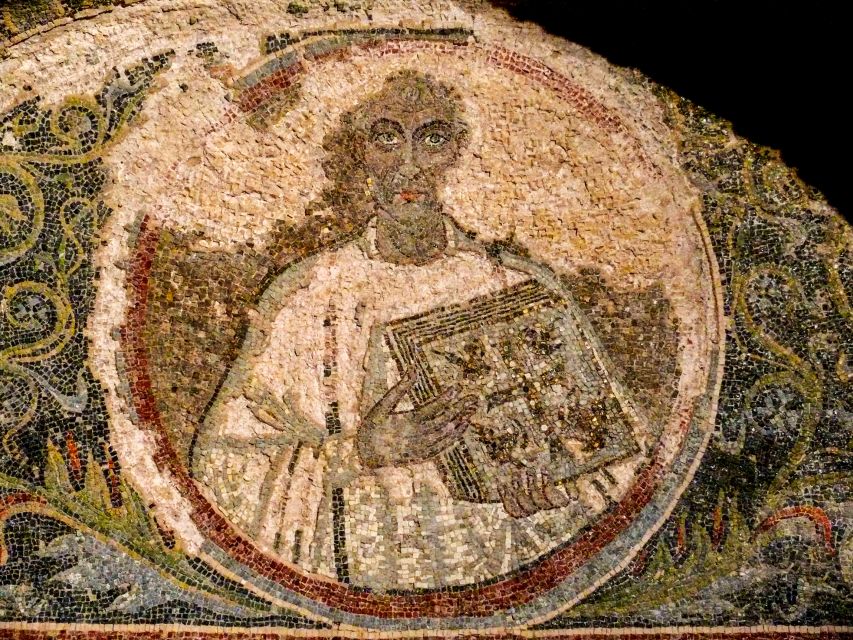
The Crypt of the Bishops contains some of the most important artwork on the route. Its 5th-century mosaics include an image of St. Quodvultdeus, the Bishop of Carthage.
The mosaics matter because they show the wider network of early Christianity. Naples was not an isolated town with a local religious tradition. People, ideas, and artistic styles moved across the Mediterranean.
The image of St. Quodvultdeus adds a human face to that connection. Your guide explains the people represented and helps you understand why bishops and saints were placed within this sacred setting.
I found the mosaics especially worthwhile for visitors who have already seen Naples’ later churches. The city is famous for Baroque interiors and lavish decoration, but these older works show a far earlier stage of Christian art. They are simpler in appearance, yet they carry a strong sense of age and purpose.
A guided visit that stays lively
The quality of the guiding is one of the tour’s safest strengths. English and Italian are available, and the English guides generally explain the history clearly.
Nello is known for a friendly, funny style and for adding background about Naples and Sanità. Emmanuel has a lively delivery, while Antonia has been praised for making the story interesting without overloading visitors with detail. Other guides, including Antonio, Valentina, Serena, and Claudia, have also led visits.
Guide assignments can change, so you should not book expecting one particular person. The important point is that the tour depends on a live explanation rather than a recorded device. You can ask questions, pause over details, and get help understanding the layout.
The pace suits most adults. It is not so dense that every date blurs together, but it gives you enough information to understand what you are seeing. If you have a strong interest in ancient art, you may wish the guide could linger longer at certain paintings and mosaics.
Small children may struggle with the quiet atmosphere and the historical subject. One report described young children becoming disruptive even though they behaved normally for their age. I would choose this for older children who can listen, rather than very young ones.
What your $15 ticket really buys
At $15 per person, the San Gennaro visit is good value on its own. You receive entry to a major historic site and a live guided tour lasting about 45 to 50 minutes.
The extra admissions make the price even more appealing. Your ticket also grants access to the Catacombs of San Gaudioso and the Basilica di Santa Maria della Sanità, with validity stated as 12 months.
You do not have to treat the second catacomb as an immediate add-on. If your schedule allows, visiting San Gaudioso on the same day creates a useful comparison. If your Naples plans are packed, you can return later during the stated validity period.
San Gaudioso is farther down the hill toward the city, making it a sensible follow-up after San Gennaro. The two sites offer different stories and settings, so the additional admission is not just a token bonus.
The ticket also supports the organization working on the renewal of Rione Sanità. That gives your visit a practical local purpose. You are paying for access, guiding, and preservation, while also helping fund cultural work in the neighborhood.
Practical details that can make or break the visit
The biggest issue is timing. The ticket is tied to the day and time you purchase, and late arrival may mean missing the tour. Arrive 15 minutes early, not at the advertised start time.
The ticket office opens at 9:30 in the morning. Check the available departure times when booking, especially if you are coming from the port or planning to connect the visit with another Naples sight.
You should also plan for a series of steps before the tour begins. The catacombs are not a good choice if you cannot manage stairs, and the uphill approach from the old town adds effort before you even enter.
Free parking spaces have been found near the meeting point, but parking should not be treated as guaranteed. Public transport details are not specified here, so check your route carefully rather than relying on a last-minute map suggestion.
The underground setting may feel cooler than the streets above, but no specific temperature is provided. Comfortable walking shoes are the sensible choice because you will be moving over historic surfaces and steps.
Cancellation information needs careful attention. The booking terms state that cancellation up to 24 hours in advance can receive a full refund, while the important information also says tickets are nonrefundable. Check the exact terms attached to your chosen booking before paying.
Who will enjoy San Gennaro most
I would choose this tour if you like ancient history, religious art, archaeology, or the less polished side of Naples. It is also a smart choice if you want to understand how the city developed instead of spending all your time on famous churches and viewpoints.
The experience suits adults and older children who can handle stairs and listen to a guide. It works well for a first visit because the guide gives you useful context for other churches and museums in Naples.
You may want to skip it if you need a step-free attraction, want to take many photographs, or prefer to explore alone at your own pace. The no-photo rule and fixed departure time are genuine limits.
The tour also makes sense for repeat visitors. You may have walked through the historic center already, but the catacombs show a different Naples, one below street level and tied closely to the Sanità district.
Should you book the Catacombs of San Gennaro?
Yes, if you can manage the stairs and prefer a guided look at Naples’ early Christian past. The combination of large underground basilicas, ancient paintings, 5th-century mosaics, and the bonus San Gaudioso entry makes $15 a strong value.
I would book it as part of a wider Sanità day, leaving enough time for the uphill approach and the second catacomb. Just arrive early, keep your camera away, and listen closely. The most memorable parts are easy to miss if you treat the visit as a quick underground stop.
FAQ
Where is the Catacombs of San Gennaro tour meeting point?
Meet at reception at the Catacombs of San Gennaro, Via Capodimonte 13, 80136 Naples.
How long does the tour last?
The activity is listed as 45 minutes, while the detailed itinerary describes a guided visit of about 50 minutes.
How much does the tour cost?
The listed price is $15 per person.
Which languages are available?
Live guided tours are available in English and Italian.
What does the ticket include?
The ticket includes the guide and entry to the Catacombs of San Gennaro. It also includes entry to the Catacombs of San Gaudioso and the Basilica di Santa Maria della Sanità.
How long is the extra admission valid?
Entry to the Catacombs of San Gaudioso and the Basilica di Santa Maria della Sanità is valid for 12 months.
Do I need to arrive before the scheduled time?
Yes. You should arrive at the ticket office 15 minutes before your booked time. Late arrival may prevent you from joining the tour.
Is photography allowed inside the catacombs?
Photography is not allowed during the visit.
Is the tour suitable for people with mobility problems?
The route includes several steps down before reaching the tour area, so it is not suitable for people who have difficulty with stairs.
Just added around Italy
- Boat tour of Ortigia Island and sea caves★ 5.0 · 407 reviews
- Boat tour Giardini Naxos Taormina Isola Bella Blue Grotto★ 4.5 · 541 reviews
- Syracuse: Ortigia Island & Sea Cave Boat Tour with Prosecco★ 4.7 · 418 reviews
- Private Tour of Catacombs and Ancient Appian Way (hotel pick up)★ 4.5 · 120 reviews
- Hidden Gems & Rome Catacomb Semi Private Tour by golf cart★ 5.0 · 114 reviews
- Private Guided Tour of Colosseum Underground OR Arena and Forum★ 5.0 · 111 reviews
- Exclusive Capri, Anacapri & Blue Grotto Private Tour from Naples★ 5.0 · 121 reviews
- Private Capri Island and Blue Grotto Day Tour from Naples or Sorrento★ 5.0 · 311 reviews
Catacombs & Underground City Tours, compared.
Capuchin Crypts and Catacombs Tour with Transfers
Read the review →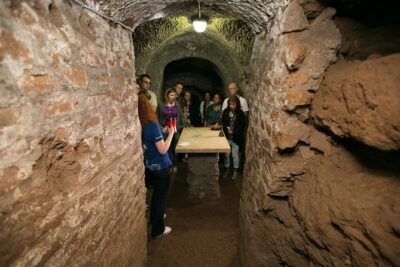
The Original Roman Crypts and Catacombs Tour with Transfers
Read the review →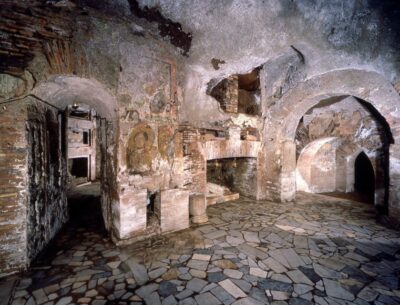
Catacombs of St. Callixtus Entry Ticket & Guided Tour
Read the review →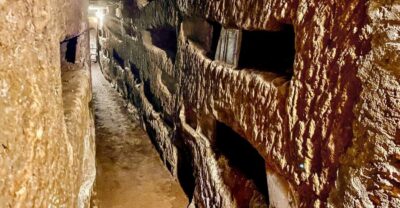


Rome EBike Tour: Appian Way, Catacombs & Roman Aqueducts
Read the review →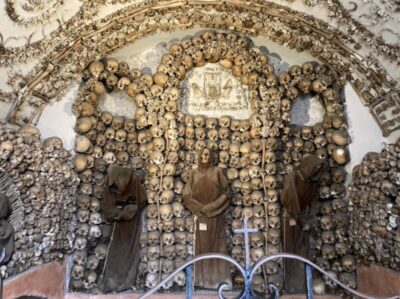
Catacombs and Capuchin Crypt Guided Tour with Transfer
Read the review →
Appian Way & Aqueducts E-Bike Tour (Catacombs & Food)
Read the review →Browse the lists this tour appears in