Review · CATACOMBS & UNDERGROUND CITY TOURS
Rome: Catacombs of St. Callixtus Entry Ticket & Guided Tour
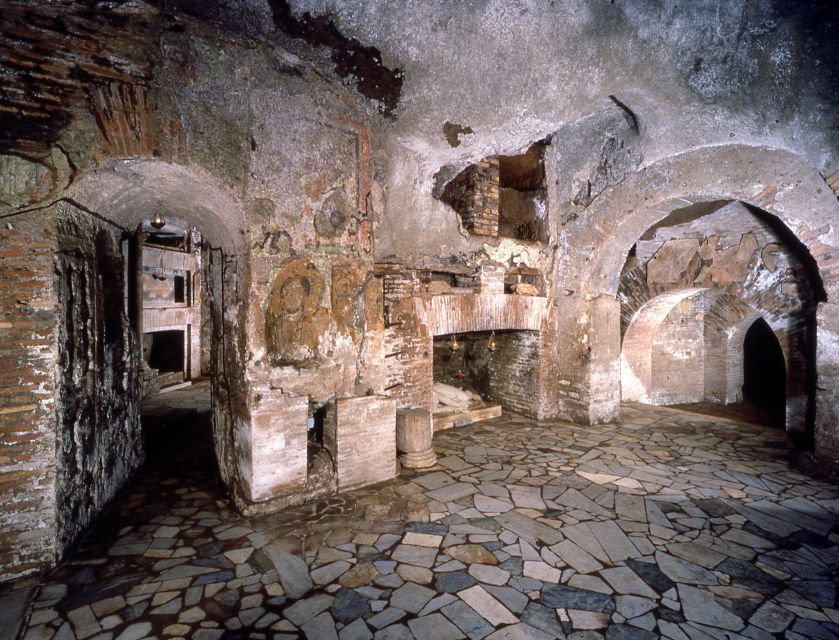
The Catacombs of St. Callixtus take you below Rome’s Appian Way into a maze of burial chambers used by the city’s early Christian community. The short tour covers the Crypt of the Popes, the Crypt of St. Cecilia, old wall paintings, and the burial customs of a community that eventually numbered hundreds of thousands.
I like the way the tour puts serious history into a compact visit, and I like the cool, quiet setting beneath the city. Guides such as Francesca, Sam, Fr. Peter, and Don Sam have been praised for making the subject clear and engaging. The main drawback is the journey: the catacombs sit outside central Rome, and 30 minutes underground may feel brief if you want a long archaeological visit.
Key points to know before you go
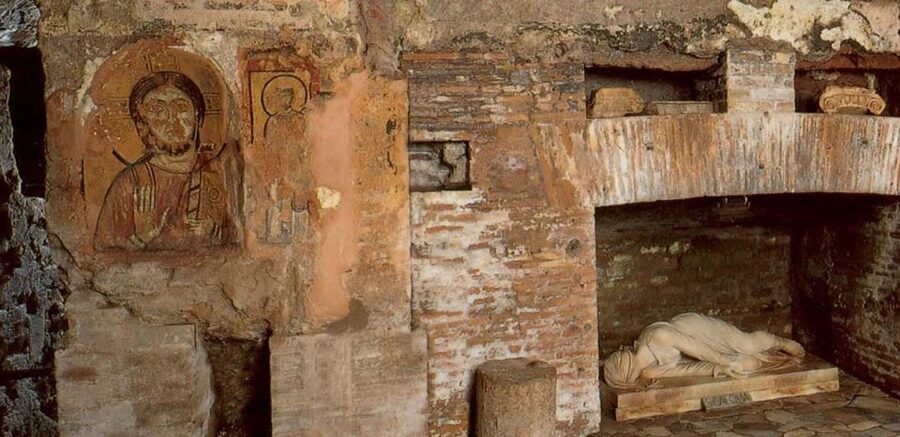
- The Crypt of the Popes: See the burial place of nine popes and three bishops from Rome’s early Christian era.
- A fully guided visit: You stay with the group, so this is not a self-guided walk through the tunnels.
- A cool underground setting: The chambers are around 15°C, making a light sweater useful even in summer.
- No bones on this route: You see burial spaces, inscriptions, and artwork rather than exposed skeletons.
- Allow extra travel time: Public buses reach the site, but the ride and stop-finding require planning.
- A short tour with strong value: At $16 per person, the price is modest, though the visit lasts about 30 minutes.
Why the Catacombs of St. Callixtus matter
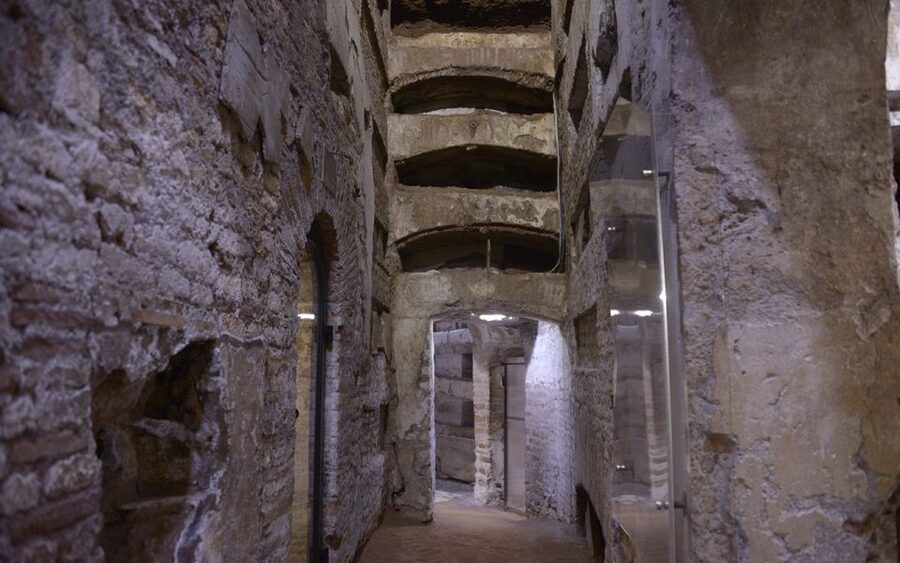
Rome’s ancient monuments usually rise above street level. The Catacombs of St. Callixtus pull you in the opposite direction, below the road and into a place built for memory, ritual, and burial.
This was the oldest official cemetery of Rome’s Christian community. The complex became one of the city’s most important Christian burial grounds, with an estimated half a million Christians laid to rest here over time. That number helps explain the scale, even though the part open to the public is much more limited than the full underground network.
The catacombs are not a dramatic horror attraction. They are a religious and archaeological site. You see narrow corridors, burial chambers, wall paintings, and places where the dead were laid into the soft rock. The tone is quiet and respectful, and your guide provides the context that makes the spaces meaningful.
I find that context especially useful here. Without a guide, a corridor or small chamber can look like a simple hole in the ground. With an explanation of who used it, why it was built, and how the Christian community cared for its dead, the same space becomes far easier to understand.
More Catacombs and Underground City Tours in Italy
- Rome: Capuchin Crypts and Catacombs Tour with Transfers
★ 4.6 · 6,456 reviews - The Original Roman Crypts and Catacombs Tour with Transfers
★ 4.5 · 4,896 reviews - Rome: Guided Roman Catacombs Tour with Transfers
★ 4.6 · 1,830 reviews
Meeting your guide at the Appian Way
You go directly to the catacomb ticket office and show your voucher at least 10 minutes before the scheduled departure. The entrance is in front of you when you arrive at the Fosse Ardeatine bus stop.
Pay close attention to the meeting instructions. The ticket office is not always obvious from the nearby parking area, and the actual meeting point may be roughly 100 meters away from where some directions place it. You may also need to exchange your voucher for an entry ticket at the office.
From Termini Station, take Metro A in the direction of Anagnina to San Giovanni. From there, take bus 218 toward Ardeatina and get off at Fosse Ardeatine.
Another option is Metro B to Colosseo or Circo Massimo. From the Terme Caracalla or Porta Capena bus stop, take bus 118 toward Appia or Villa Dei Quintili and leave at Catacombe di San Callisto.
Public transport works, but give yourself time. Bus waits can add 20 minutes, and the site is far enough from the historic center that a rushed connection could make you late. Several visitors found the bus easy in one direction but less convenient when returning. A taxi or ride-hailing service is a practical choice if you want to simplify the journey, especially when traveling alone or with children.
The first descent into Rome’s Christian cemetery
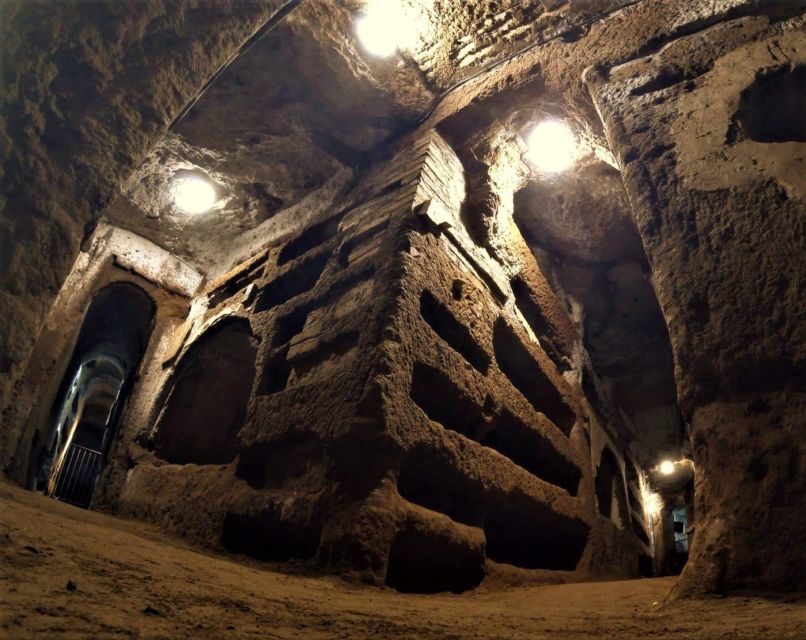
Once the group is assembled, the guide leads you underground. The tour is fully guided, and you remain with the group rather than wandering independently.
That arrangement suits the site. The passages and chambers are not laid out like a conventional museum, with labels at every stop. Your guide gives the orientation, points out details that are easy to miss, and keeps the group moving through the burial areas.
Expect a cool temperature below ground. The chambers are around 15°C, so pack a light jacket or sweater even if Rome is hot above ground. Comfortable shoes are important because you are walking through an underground archaeological site rather than a smooth modern gallery.
The catacombs can feel enclosed. The tour is not suitable for people with claustrophobia or significant mobility impairments. Baby carriages are not allowed, and the underground setting may be difficult for anyone who needs wide, level paths.
The Crypt of the Popes
The Crypt of the Popes is the central stop for many people on this tour. Nine popes and three bishops were buried here, making the room one of the clearest places to connect the catacombs with the structure of the early Christian church.
Your guide explains the role of the space and the people associated with it. The chamber is not lavish in the way later Roman churches can be. Its importance comes from its age, its function, and the fact that it preserves a direct link to an early Christian community.
This is where a good guide makes a real difference. Guides including Sam, Fr. Peter, Francesca, and Don Sam have been praised for clear explanations and thoughtful answers. The language choices are English, Italian, French, and German, so check the available departure language when booking.
The Crypt of the Popes also helps put Rome’s Christian story into a broader setting. The faith was practiced by ordinary members of the community as well as church leaders, and the cemetery reflects both groups. You are not simply looking at a famous tomb. You are seeing how a community organized burial and remembrance.
More Catacombs and Underground City Tours in Rome
- Rome: Catacombs Guided Tour with Transfer
★ 4.2 · 1,808 reviews - Rome EBike Tour: Appian Way, Catacombs & Roman Aqueducts
★ 5.0 · 1,766 reviews - Rome: Catacombs and Capuchin Crypt Guided Tour with Transfer
★ 4.6 · 1,606 reviews - Rome: Appian Way & Aqueducts E-Bike Tour (Catacombs & Food)
★ 4.9 · 1,498 reviews
The Crypt of St. Cecilia
The adjoining Crypt of St. Cecilia adds a more personal element to the visit. St. Cecilia was a Roman matron remembered for helping ensure that martyrs received proper burials.
Her story gives the guide a chance to explain the role of burial in early Christian life. The catacombs were not only places where bodies were placed. They were tied to care for the dead, respect for martyrs, and the identity of a growing religious community.
You will also hear how the complex got its name and how it expanded. The site is large, and the visible rooms represent only part of the full network. One of the useful lessons here is that the catacombs were not improvised hiding places. They were organized burial grounds that served the Christian population of Rome over a long period.
Frescoes and the Sacraments area
The tour continues through some of the oldest frescoes found in Rome’s catacombs. These paintings are not large, polished church murals. They are early Christian images preserved on the walls of underground burial spaces.
The artwork is valuable because it shows how early Christians expressed belief and remembrance before later church decoration became familiar. Your guide helps explain what you are seeing and why the paintings matter.
In Area I, you visit the cubicles of the Sacraments. These small burial chambers provide another look at how families or groups used the catacombs. Their size can make the visit feel intimate, but it also reinforces one practical point: this is not a broad underground avenue built for crowds. It is a network of corridors and rooms shaped around burial.
Lighting can be limited in places. One useful tip is to watch your footing and stay close enough to the guide to hear the explanation. The route is not designed for independent photography, and photography inside is not allowed.
What you will not see underground
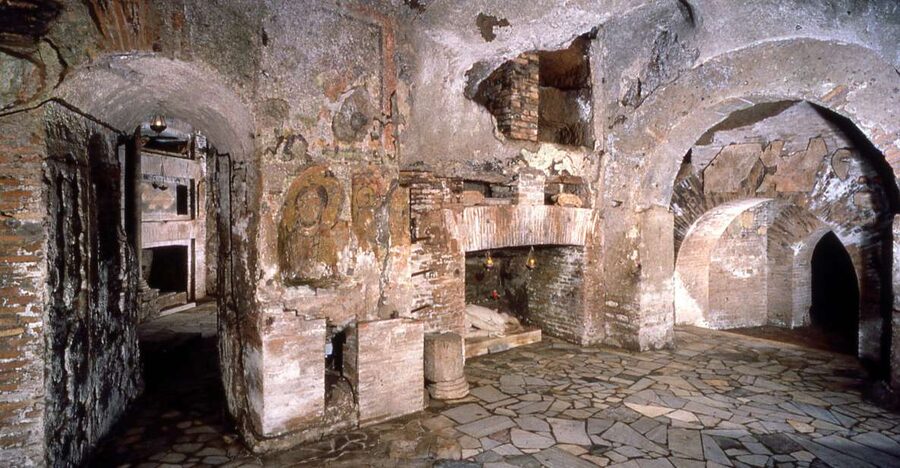
If you expect rows of exposed bones, this is not the right Roman attraction. The tour shows burial places, chambers, inscriptions, and art, but no visible skeletons on this route.
That distinction matters. Some people may find the absence of bones disappointing if they are looking for a dramatic macabre experience. I think the restraint is part of the site’s value. The catacombs present burial as a historical and religious practice rather than as spectacle.
You should also avoid expecting a long, flexible exploration. The visit lasts about 30 minutes, and you stay with the guide. Some tours run slightly longer, especially when the guide takes questions, but you should plan on a compact visit rather than a half-day archaeological outing.
How much time should you allow?
The underground tour itself takes 30 minutes. In practice, you need much more time because of the journey from central Rome, the need to arrive at least 10 minutes early, and the possibility of waiting for a bus.
I would allow at least two hours for the complete outing from the center, depending on your starting point and transport. That leaves room to find the ticket office, check in, take the tour, and return without turning the visit into a race.
The surrounding grounds are peaceful and well maintained, which gives you a little breathing room before or after the underground portion. Still, the main reason to come is the catacomb tour itself. If you are already visiting the Appian Way or nearby ancient sites, the catacombs fit naturally into your day.
Is $16 a good value?
At $16 per person, this is one of the more affordable guided history experiences in Rome. The entry ticket and live guide are included, and you avoid waiting in the regular ticket line when you follow the voucher instructions correctly.
The value depends on what you want from the visit. If you appreciate Roman history, early Christianity, archaeology, or unusual sites away from the main center, the price is easy to justify. The guide adds information that would be hard to get from simply looking at the corridors.
If you want a long tour with plenty of time for photographs, the value may feel less impressive. The tour is short, photography is forbidden, and the transport takes longer than the time spent underground. I would book it for the subject and the guided explanation, not because it fills an entire afternoon.
Free cancellation up to 24 hours before the scheduled visit and the reserve-now, pay-later option make it easier to fit into a changing Rome itinerary. These policies are useful, but the key practical issue remains getting there on time.
Who will enjoy this tour most?
You will probably enjoy the catacombs if you like:
- Early Christian history and religious archaeology
- Ancient burial customs
- Quiet sites away from Rome’s busiest monuments
- Short guided visits with a clear narrative
- Unusual settings that feel different from churches and museums
- History-focused activities suitable for older children and teenagers
Families with older children can do well here, especially if the guide keeps the story lively. One strong guide used humor to explain the history, while others made time for questions after the tour. That can help teenagers stay engaged during a subject they might initially consider too solemn or old-fashioned.
This is less suitable for toddlers, people using baby carriages, anyone with serious mobility limits, or anyone uncomfortable in confined spaces. It is also not the best choice if you mainly want to see human remains.
Practical ways to improve the visit
Book an earlier departure if you want more room for transport delays. Check the language before you confirm, and arrive at the ticket office at least 10 minutes before the scheduled time.
Wear shoes you can walk in and bring a light layer. The underground temperature is a pleasant break from summer heat, but it can feel chilly after you have been outside in the sun.
Keep your voucher ready on your phone, but do not assume you can walk straight into the tunnels. Go to the ticket office first and ask where to exchange the voucher if the location is unclear.
Do not plan to take photographs inside. If recording memories matters to you, enjoy the surrounding grounds and save your camera for other parts of the Appian Way. Underground, pay attention to the guide. The explanations are the main reason this short visit works.
Should you book the Catacombs of St. Callixtus?
Book this tour if you want a concise, affordable look at an important part of Rome that most visitors never see. The Crypt of the Popes, the Crypt of St. Cecilia, the old frescoes, and the Sacraments area give the 30 minutes real substance.
Skip it if you dislike underground spaces, need full accessibility, expect visible bones, or want a long self-guided visit. For everyone else, I think the $16 price is fair, provided you treat the catacombs as a focused historical stop and allow extra time for the trip beyond central Rome.
FAQ
How long does the Catacombs of St. Callixtus tour last?
The scheduled tour duration is 30 minutes. Some visits may last slightly longer if the guide allows extra questions.
What is included in the price?
The $16 price includes entry to the Catacombs of St. Callixtus and a guided tour.
Which languages are available?
Guided tours are available in English, Italian, French, and German.
Do I need to arrive early?
Yes. Go directly to the catacomb ticket office and show your voucher at least 10 minutes before the scheduled tour.
Where do I meet the guide?
The meeting point is at the catacomb ticket office. Follow the directions to the office rather than stopping at the nearby parking area, since the meeting point may be about 100 meters away from some map references.
Can I take photographs inside?
No. Photography is not allowed inside the catacombs.
Are human bones visible on the tour?
The route shows burial spaces, wall paintings, and historical features, but no skeletons are visible on this tour.
Is the tour suitable for people with mobility impairments or claustrophobia?
No. The activity is not suitable for people with mobility impairments or claustrophobia. Baby carriages are also not allowed.
How can I reach the catacombs from Termini Station?
Take Metro A toward Anagnina to San Giovanni, then bus 218 toward Ardeatina and get off at Fosse Ardeatine. You can also take Metro B to Colosseo or Circo Massimo, then bus 118 toward Appia or Villa Dei Quintili and get off at Catacombe di San Callisto.
Just added around Rome
- Private Guided Tour of Colosseum Underground OR Arena and Forum★ 5.0 · 111 reviews
- Private Tour of Catacombs and Ancient Appian Way (hotel pick up)★ 4.5 · 120 reviews
- Hidden Gems & Rome Catacomb Semi Private Tour by golf cart★ 5.0 · 114 reviews
- Ancient Rome and Colosseum Private Tour with Underground Chambers and Arena★ 4.5 · 184 reviews
- Rome Catacombs & Capuchin Crypts VIP Group Tour with Transfers★ 4.5 · 652 reviews
- Rome: Appian Way & Catacomb Sunset E-bike Tour with Aperitif★ 4.5 · 682 reviews
- Rome: Catacombs of St. Sebastian Entry Ticket & Guided Tour★ 4.6 · 669 reviews
- Rome Catacomb & Appian Way Small-Group Tour by Golf Cart★ 5.0 · 681 reviews
Catacombs & Underground City Tours, compared.
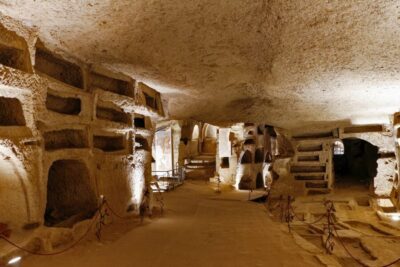
Catacombs of San Gennaro Entry Ticket & Guided Tour
Read the review →
Capuchin Crypts and Catacombs Tour with Transfers
Read the review →
The Original Roman Crypts and Catacombs Tour with Transfers
Read the review →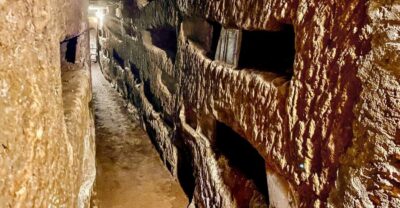


Rome EBike Tour: Appian Way, Catacombs & Roman Aqueducts
Read the review →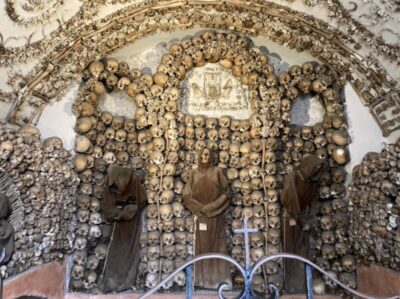
Catacombs and Capuchin Crypt Guided Tour with Transfer
Read the review →