Review · CATACOMBS & UNDERGROUND CITY TOURS
Rome EBike Tour: Appian Way, Catacombs & Roman Aqueducts
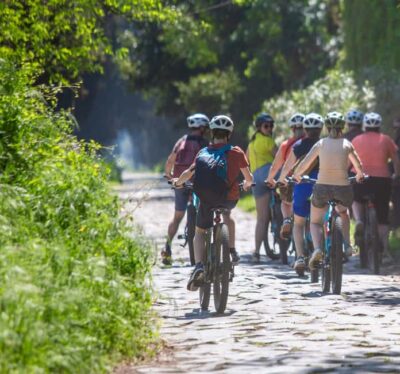
Rome’s ancient roads and aqueducts are spread far beyond the usual sightseeing circuit. This e-bike tour reaches them with less effort, carrying you from central Rome into open fields, ruined villas, catacombs, and the old Appian Way. The ride covers about 17 miles, with roughly 60 percent on park paths and rough historic roads.
I like the chance to see a quieter side of Rome, and I like how the electric assistance keeps a mixed-ability group together. Guides such as Cas, Carmen, Fabio, and Nami have earned praise for careful street crossings, clear directions, and lively history lessons.
The main caution is simple: this is still a serious bike ride. City traffic makes up about 40 percent of the route, and the Appian Way can be rocky, dusty, and tricky. The four-hour option may also skip the catacomb visit, especially on Wednesdays.
Key Points at a Glance
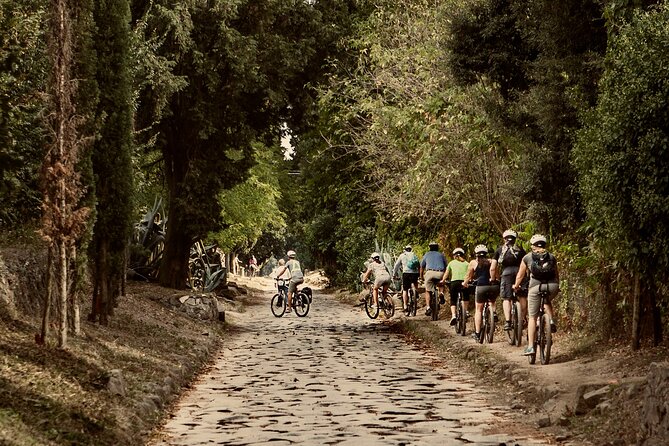
- Ride the ancient Appian Way: Follow part of the Regina Viarum, the road that once linked Rome with southern Italy and Brindisi.
- Cover 17 miles by e-bike: Pedal assistance helps, but you still need basic bike control and moderate fitness.
- Choose your catacomb experience: The six-hour tour includes a 45-minute guided visit, while the four-hour tour offers only a short pause and may omit the stop on Wednesdays.
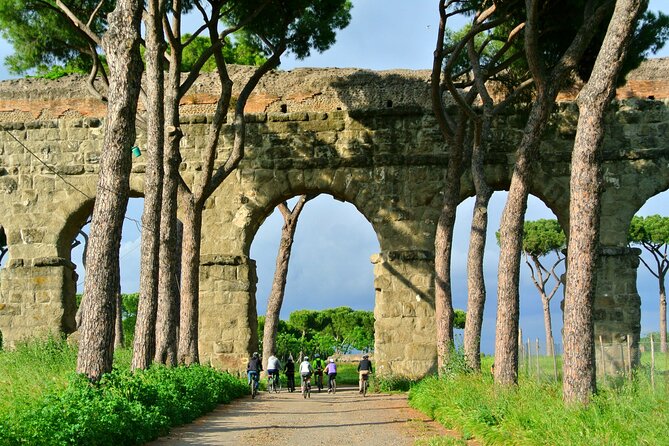
- See Rome’s aqueducts in open countryside: The Park of the Aqueducts offers broad views and narrow paths through fields and tall grass.
- Travel in a small group: The maximum is 10 people, with a minimum of four required for the tour to run.
- Expect a useful change of pace: This outing trades crowded city streets and indoor monuments for fresh air, ruined villas, farm animals, and old stone roads.
Why This Bike Ride Shows You a Different Rome

Rome is easy to experience on foot, but walking does not work as well for the Appian Way and the aqueduct parks. These sites sit outside the compact historic center, and the distances between them are too great for a comfortable walking day.
An e-bike solves that problem. You ride from the meeting point on Via Labicana toward the edge of the city, then out into the Appian Way Archaeological Park. The electric motor helps on longer stretches and lets people with different cycling speeds stay together.
The ride is not a sightseeing parade with one monument every few minutes. You spend time moving through the countryside, stopping at ruins, and listening while your guide explains how the roads, tombs, baths, and water systems fit together. That makes this a good choice after several days of crowded museums and busy piazzas.
You will be outside for four to six hours, so the tour also gives your feet a break. You still need to work, especially on rough ground, but the Cannondale bikes have comfortable saddles, anti-puncture tires, and pedal assistance. Helmets are provided and required.
More Catacombs and Underground City Tours in Italy
- Rome: Capuchin Crypts and Catacombs Tour with Transfers
★ 4.6 · 6,456 reviews - The Original Roman Crypts and Catacombs Tour with Transfers
★ 4.5 · 4,896 reviews - Rome: Catacombs of St. Callixtus Entry Ticket & Guided Tour
★ 4.6 · 3,037 reviews
From Via Labicana to Porta San Sebastiano
The tour begins at Via Labicana 49, a central location near public transportation. Allow time to get fitted with your bike, helmet, and handlebar bag. Water in a biodegradable bottle is included, but lunch and other food are not.
The first major stop is Porta San Sebastiano, one of the best-preserved gates in Rome’s third-century defensive walls. It gives you an immediate sense of scale. Ancient Rome was not just a group of temples and forums. It was a fortified city with long walls, controlled gates, and roads that carried soldiers, merchants, and officials across Italy.
The group rides carefully through selected city streets before reaching the archaeological park. This city section matters when planning your expectations. The route is designed to limit traffic, but it cannot avoid traffic completely. You need to be comfortable riding near cars and crossing streets as part of a group.
The guides receive especially strong praise for managing this part of the outing. Cas, in particular, is noted for being attentive and patient, while Carmen is praised for giving clear directions and keeping the group together. Guide quality can vary by date, but attentive street management is a key part of the experience.
Riding the Appian Way, Rome’s Queen of Roads
The Ancient Appian Way dates to 312 BC. In its early form, it stretched for roughly 538 kilometers between Rome and Brindisi, making it one of the Roman Republic’s most important roads.
Today, you ride only a section, but the setting makes the past feel close. Large paving stones, low ruins, greenery, and open land replace the dense streets of central Rome. This is not a smooth modern cycleway. Some sections are rough dirt or stone, and narrow paths can run through grass and open fields.
That surface is the tour’s biggest physical challenge. If you are a confident cyclist, the rough ground adds character. If you rarely ride or feel uneasy on uneven paths, you may want to walk short sections. One useful detail from the experience is that even riders new to e-bikes often manage well, while people with little general bike experience may find the stones more demanding.
The e-bike helps with distance and hills, but it does not steer for you. You still need to brake, balance, watch the path, and follow instructions. Wear clothes and shoes that can handle dust. The route can leave you a little dirty, especially after dry weather.
Catacombs of San Callisto or San Sebastiano
The catacombs are the major difference between the four-hour and six-hour versions.
On the six-hour tour, you get a 45-minute guided visit to the Catacombs of San Callisto on most days. These second-century underground burial tunnels became the resting place of an enormous number of people, including early Christian communities. Inside, your guide explains Roman burial customs and the role these underground spaces played over time.
The visit is atmospheric rather than flashy. It can feel narrow, dark, and slightly eerie. Photography is not allowed inside, so leave your camera ready to stay in your bag. The value is in the setting and the explanation, not in collecting pictures.
On Wednesdays, the six-hour route visits the Catacombs of San Sebastiano instead of San Callisto. The route can also run about 30 minutes longer that day, making the six-hour tour closer to six and a half hours.
The four-hour tour does not include the guided catacomb visit. It has a brief pause at the catacombs, and on Wednesdays this stop is not included. If the underground visit is one of your main reasons for booking, choose the longer option and check the day carefully.
This is also the part of the outing most likely to disappoint someone who books the shorter tour without reading the difference. The Appian Way and aqueducts are excellent on their own, but the catacombs are not guaranteed in the four-hour format.
More Catacombs and Underground City Tours in Rome
- Rome: Guided Roman Catacombs Tour with Transfers
★ 4.6 · 1,830 reviews - Rome: Catacombs Guided Tour with Transfer
★ 4.2 · 1,808 reviews - Rome: Catacombs and Capuchin Crypt Guided Tour with Transfer
★ 4.6 · 1,606 reviews - Rome: Appian Way & Aqueducts E-Bike Tour (Catacombs & Food)
★ 4.9 · 1,498 reviews
Circus of Maxentius and the Tomb of Cecilia Metella
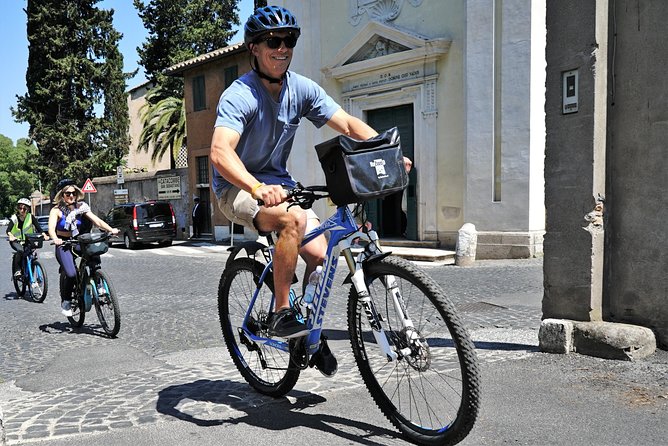
The route continues to the Circus of Maxentius, part of a large imperial villa complex from the early fourth century AD. The circus was a private chariot-racing track, so you get a glimpse of elite Roman life beyond the public arenas usually featured in guidebooks.
The stop itself is brief, listed at about five minutes. Think of it as a focused look and a short history talk rather than a long visit inside the complex. The same is true at the Mausoleum of Cecilia Metella and the nearby Castrum Caetani.
Cecilia Metella’s tomb is the largest mausoleum on the Ancient Appian Way. It was built for a young noblewoman in the first century AD and later became part of a fortified complex. Its size tells you something about Roman family status and the importance of being remembered along a major road.
These stops work well by bike because you can pause near several sites without dealing with long transfers or a large vehicle. The downside is that the five-minute stops may feel short if you want detailed exploration. The guide’s explanation carries much of the value.
Villa dei Quintili on the Six-Hour Route
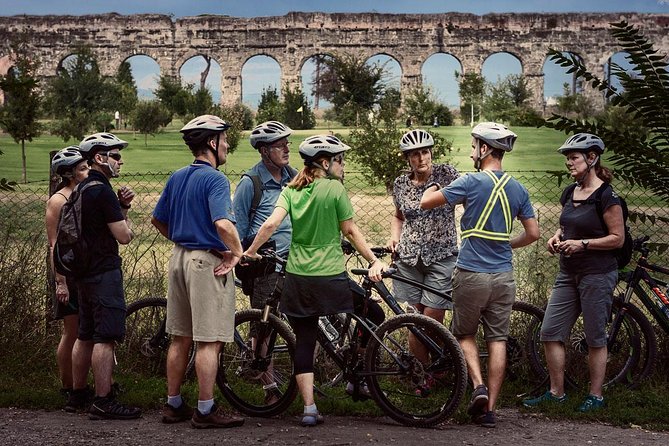
The longer tour adds Villa dei Quintili and Santa Maria Nova. This sprawling second-century villa later attracted the envy of Emperor Commodus, which says plenty about its size, comfort, and position.
The ruins offer another view of Roman power. Instead of seeing only public monuments, you get a sense of how wealthy Romans lived outside the city center. The villa is part of the Appian Way archaeological area, and its broad remains fit naturally into a ride through open land.
This stop is included only on the six-hour route. If you want the fullest archaeological experience, the longer version gives you more than just extra time. It adds the catacombs and this villa, while also allowing a more complete ride through the park.
The Park of the Aqueducts
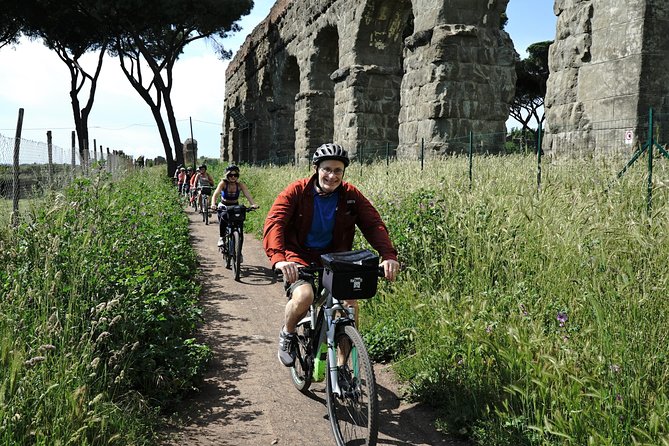
The aqueduct park is the visual high point for many people. Ancient arches cross open fields, and narrow paths run through tall grass beneath or beside the massive structures. You are not looking at a small museum fragment. You are riding through a broad outdoor area where the aqueducts still dominate the view.
The Romans built aqueducts to bring water from distant sources into the city. Their arches had a practical purpose, but they also create one of the most striking settings in the tour. The open space makes a sharp contrast with Rome’s crowded center.
You may spend more time here than at some of the smaller ruins. That is a benefit if you want room for photos, quiet, and a close look at the masonry. It can feel less satisfying if you prefer a rapid sequence of famous monuments. The paths can also be dusty and uneven, so the aqueduct section is scenic rather than effortless.
The ride through the park is one reason an e-bike makes sense. You can cover more ground and reach viewpoints that would be awkward by car. A van might get you near the park, but it would not give you the same contact with the paths, fields, and old structures.
Caracalla Baths and the Roman Countryside
The six-hour option also includes a view over the Baths of Caracalla, one of ancient Rome’s largest bath complexes. The stop is short, but it places the outdoor route in context. Roman public bathing was not a small private ritual. These complexes were huge social and engineering projects.
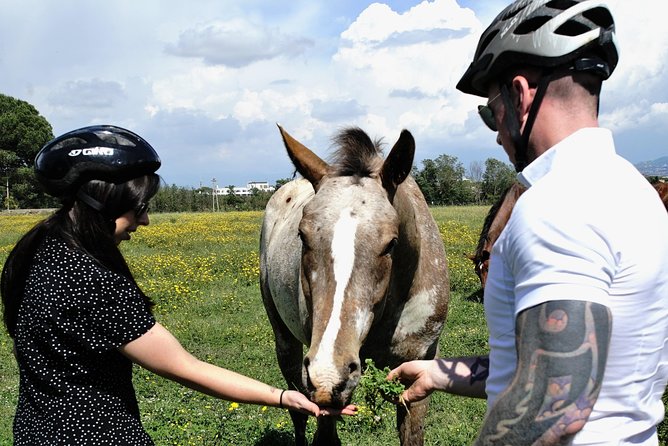
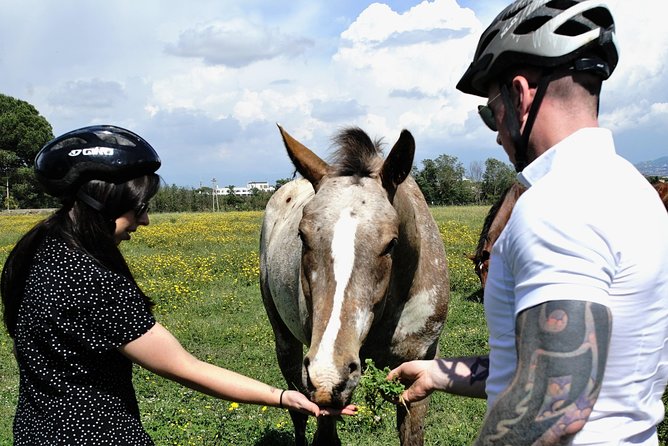
Between the archaeological sites, you ride through a patch of countryside inside the modern city. Expect green fields, rustic animal farms, and stretches of open land. This rural setting is part of the appeal. You see a Rome that feels far removed from the Colosseum crowds, even though the city is still close by.
The return to central Rome completes the loop at the original meeting point. There is no hotel pickup or drop-off, so you arrange your own way to Via Labicana before and after the tour.
How Hard Is the 17-Mile Route?
The operator rates the route as intermediate. That is fair. The e-bike reduces the effort needed to cover the distance, but it does not remove the need for cycling skill.
About 40 percent of the ride is on city streets. The remaining 60 percent takes place in parks, where there is no traffic but the surface can be rocky, dusty, or uneven. You should be comfortable riding for several hours and controlling a bike on changing surfaces.
Child seats and child extensions make the ride harder, and the tour specifically describes the route as difficult with those additions. The bikes have a weight limit of 300 pounds, or 136 kilograms.
Several people in their 50s, 60s, and 70s have managed the ride well, including a regular cyclist who was new to e-bikes. That does not mean the tour suits every older rider or every beginner. Your comfort on a bicycle matters more than your age.
The guides stop to regroup and offer directions, but this is not a slow sightseeing walk with a bike. If you have not ridden since childhood, practice first or choose another way to see the Appian Way.
Price, Group Size, and What You Receive
At $102.79 per person, the tour is not the cheapest way to reach the Appian Way. It can be good value if you want transportation, a bike, a guide, safety equipment, water, and several archaeological areas in one outing.
You also avoid arranging separate transport to the aqueducts and Appian Way. That matters because the sites are spread out and public transport does not create the same continuous route through the countryside.
The maximum group size is 10 people. That is small enough for the guide to give riding instructions and answer questions without the feel of a coach tour. A minimum of four participants is required, and the tour can be canceled if that number is not reached. In that case, you receive an alternative or a full refund.
The tour is offered in English and includes a mobile ticket. Free cancellation is available up to 24 hours before the start time. Rain can affect the experience, and the operator has shown flexibility by offering cancellation, rescheduling, or a refund when conditions are poor.
What to Bring and How to Choose Your Tour
Bring clothes that can get dusty, closed shoes suitable for cycling, sunscreen, and a little extra water or money for food. Food is not included, although the route has places where you can buy something during an appropriate break.
Choose the four-hour tour if you want the Appian Way and aqueducts but prefer a shorter outing. Choose six hours if the catacombs, Villa dei Quintili, Caracalla Baths, and a fuller route matter to you.
Check the date carefully. Wednesdays bring a route change and can add about 30 minutes. The catacombs are closed on Easter Sunday, April 5, 2026, so the six-hour tour will not operate that day. The route may also run about 30 minutes longer from January 14 through February 11, 2026.
Should You Book This Rome E-Bike Tour?
Book it if you want ancient Rome with open air, exercise, and a sense of place. The combination of the Appian Way, catacombs, and aqueducts is hard to duplicate in one half-day outing, and the e-bike lets you reach sites that are too far apart for a comfortable walk.
I would choose the six-hour option for a first visit if you have the stamina. The guided catacomb visit adds real substance, and the extra sites make the higher time commitment worthwhile.
Skip it if you dislike cycling, feel nervous on rough roads, or want long indoor visits at each monument. For everyone else, this is one of the better ways to leave central Rome behind for a few hours and see the ancient city in its wider setting.
FAQ
Where does the Rome e-bike tour begin and end?
The tour begins at Via Labicana 49 in Rome. It ends back at the same meeting point.
How long is the tour?
You can choose a tour lasting about four or six hours. Wednesdays can add roughly 30 minutes because of a route change.
Does the tour include the catacombs?
The six-hour tour includes a 45-minute guided visit to the Catacombs of San Callisto on most days. On Wednesdays, it visits San Sebastiano instead. The four-hour tour does not include the guided visit, and the catacomb stop is not included in that version on Wednesdays.
How far do you ride?
The route covers about 17 miles, or 27 kilometers. About 60 percent is off-road in parks, while about 40 percent uses city streets.
Do I need cycling experience?
You need moderate physical fitness and should feel comfortable riding a bicycle for several hours. Some paths are rocky or uneven, and city traffic is unavoidable in parts of the route.
Is food included?
No. The tour includes water, but not lunch or other food and drinks. You can buy food or drinks at certain points along the route during a suitable break.
What happens if the tour does not reach the minimum group size?
The tour requires at least four participants. If it is canceled because the minimum is not reached, you are offered another date or experience, or a full refund.
E-bike rides within reach of Rome
- Rome: Appian Way & Catacomb Sunset E-bike Tour with Aperitif
★ 4.5 · 682 reviews
Bike rides within reach of Rome
- Rome: Appian Way, Catacombs, & Roman Aqueducts E-bike Tour
★ 4.9 · 1,421 reviews - Appian Way Aqueducts Bike Tour (Catacombs & Lunch Option)
★ 5.0 · 975 reviews - Appian Way, Catacombs and Aqueducts Park Tour with Top E-Bike
★ 5.0 · 735 reviews - Rome: Appian Way E-Bike Tour Catacombs, Aqueducts & Picnic
★ 4.6 · 727 reviews
Just added around Rome
- Hidden Gems & Rome Catacomb Semi Private Tour by golf cart★ 5.0 · 114 reviews
- Private Guided Tour of Colosseum Underground OR Arena and Forum★ 5.0 · 111 reviews
- Private Tour of Catacombs and Ancient Appian Way (hotel pick up)★ 4.5 · 120 reviews
- Ancient Rome and Colosseum Private Tour with Underground Chambers and Arena★ 4.5 · 184 reviews
- Rome Catacombs & Capuchin Crypts VIP Group Tour with Transfers★ 4.5 · 652 reviews
- Rome Catacomb & Appian Way Small-Group Tour by Golf Cart★ 5.0 · 681 reviews
- Rome: Appian Way & Catacomb Sunset E-bike Tour with Aperitif★ 4.5 · 682 reviews
- Rome: Catacombs of St. Sebastian Entry Ticket & Guided Tour★ 4.6 · 669 reviews
Catacombs & Underground City Tours, compared.
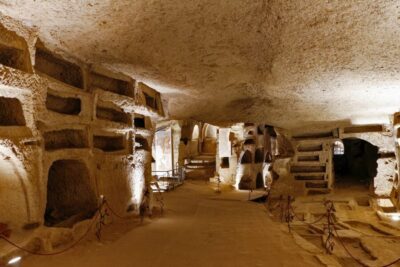
Catacombs of San Gennaro Entry Ticket & Guided Tour
Read the review →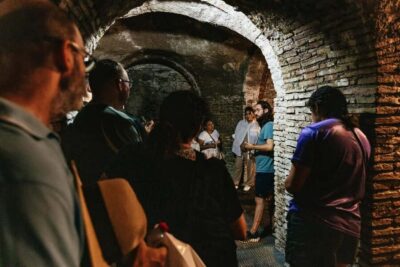
Capuchin Crypts and Catacombs Tour with Transfers
Read the review →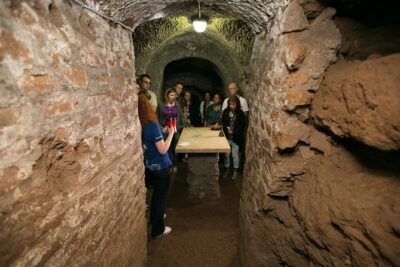
The Original Roman Crypts and Catacombs Tour with Transfers
Read the review →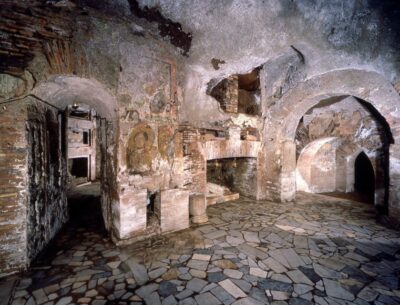
Catacombs of St. Callixtus Entry Ticket & Guided Tour
Read the review →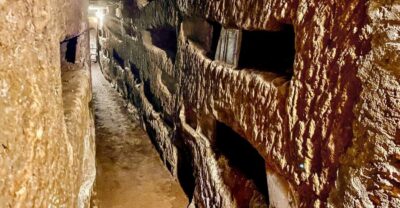
Catacombs and Capuchin Crypt Guided Tour with Transfer
Read the review →