
Review · UK CAVE TOURS
London: Secrets of the London Underground Walking Tour
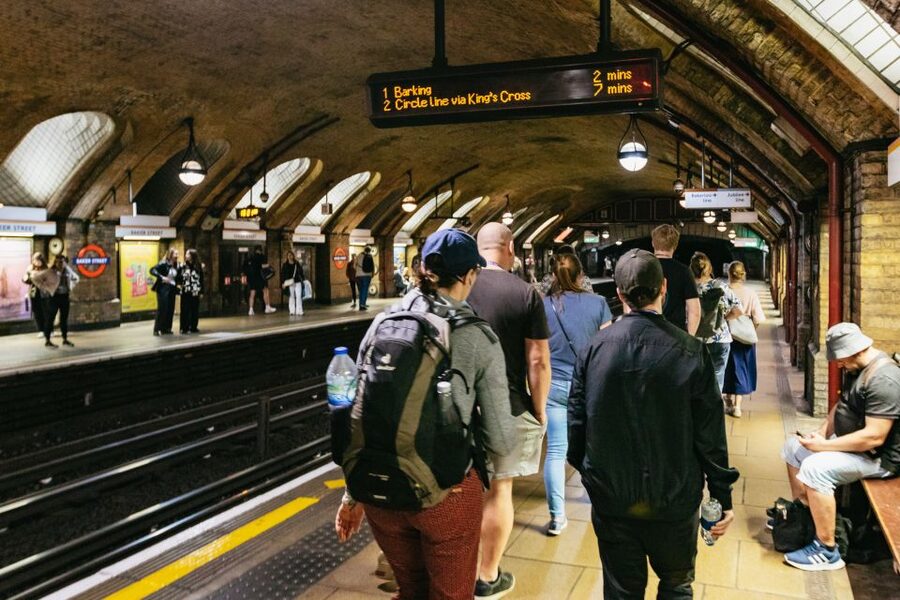
The London Underground began as a bold Victorian experiment, and this tour shows you where that story started. From Baker Street, one of the original 1863 stations, you follow the Tube’s growth from steam trains and hand-built tunnels to the electric network London depends on today. I like the way the tour turns ordinary station details into clues, and I like the wartime stories about Tube shelters, aircraft production, and British Museum treasures.
The guides, including John, Aaron, Angela, and Peter, are praised for clear, lively storytelling and for answering questions. The main catch is expectation: you hear about disused and haunted stations, but you generally do not enter abandoned platforms. You also need to pay for your own Tube travel and manage a fair number of stairs.
Key points to know before you book
- Start at the Sherlock Holmes statue: Meet outside Baker Street Station, close to one of the Underground’s original stops.
- See the Tube as history in use: The tour combines walking through active stations with short rides on London’s public transport.
- Hear the strange stories: Tales include a station above 1,000 bodies, wartime shelters, a Pharaoh’s daughter, and a ghostly nun.
- Expect a history-focused tour: You will learn about tunnel construction, electrification, abandoned stations, and the famous roundel symbol.
- Bring a Zones 1-2 travel card or Oyster card: Your tour ticket does not cover Tube fares.
- Plan for steps and walking: Baby strollers, large bags, wheelchairs, and people with reduced mobility are not suited to this route.
Baker Street and the birth of the Underground
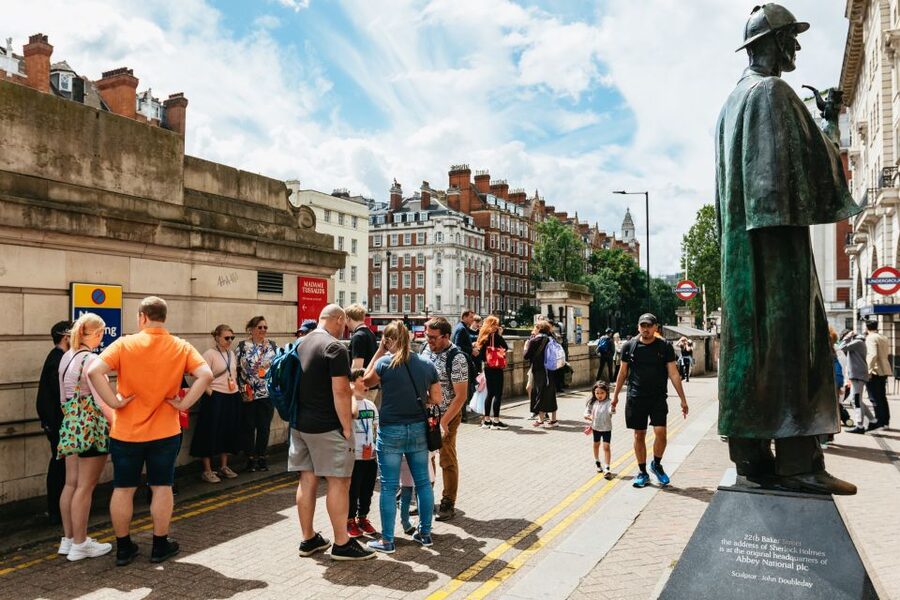
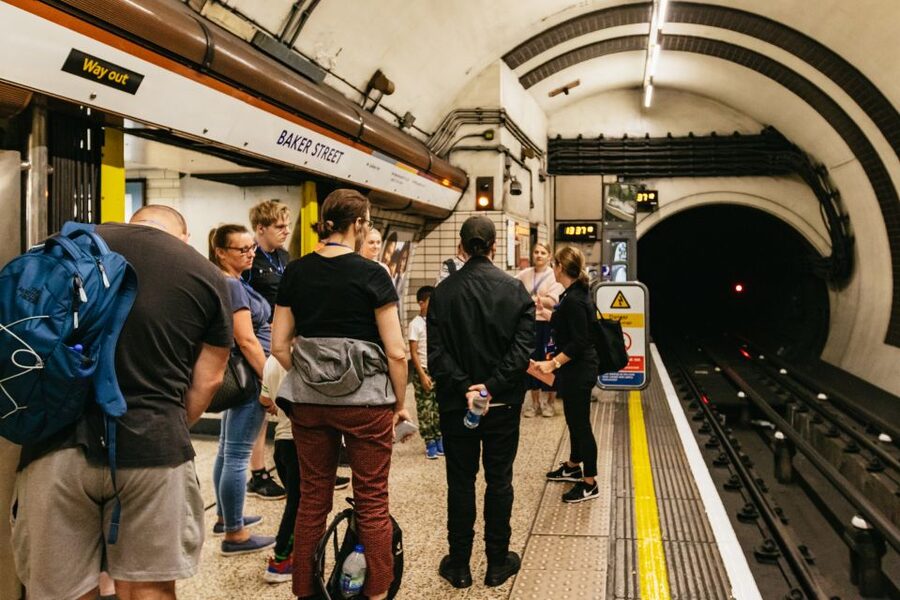
Your tour begins at the Sherlock Holmes statue outside Baker Street Station. This is a useful meeting point in a busy part of London, and it puts you beside one of the most important places in transport history.
Baker Street was part of the Metropolitan Railway, which opened in 1863 as the world’s first underground railway. The early railway did not look much like the modern Tube. Steam locomotives hauled trains through cut-and-cover tunnels, and engineers had to solve basic problems of ventilation, construction, and urban disruption as they built beneath a growing city.
That makes the opening stop more than a photo opportunity. You are standing beside the starting point of a system that changed how London worked. The guide explains how the first tunnels were built and how the railway changed from steam-powered trains to electric rails.
I especially like this beginning because it gives you a way to read the rest of the tour. A tiled wall, a platform shape, an old sign, or an unusual station plan can suddenly make sense once you understand when and why it was built.
The guide also uses the area around Baker Street to connect the Underground with the streets above it. That approach is one reason the tour suits people who already use the Tube. You may have passed through London stations for years without noticing the surviving details.
More Cave Tours in the UK:
- Edinburgh: Underground Vaults Tour
★ 4.6 · 11,758 reviews - The World Famous Underground Ghost Tour
★ 4.5 · 9,272 reviews - Underground Vaults Walking Tour in Edinburgh Old Town
★ 4.5 · 8,506 reviews
Looking for clues in active Tube stations
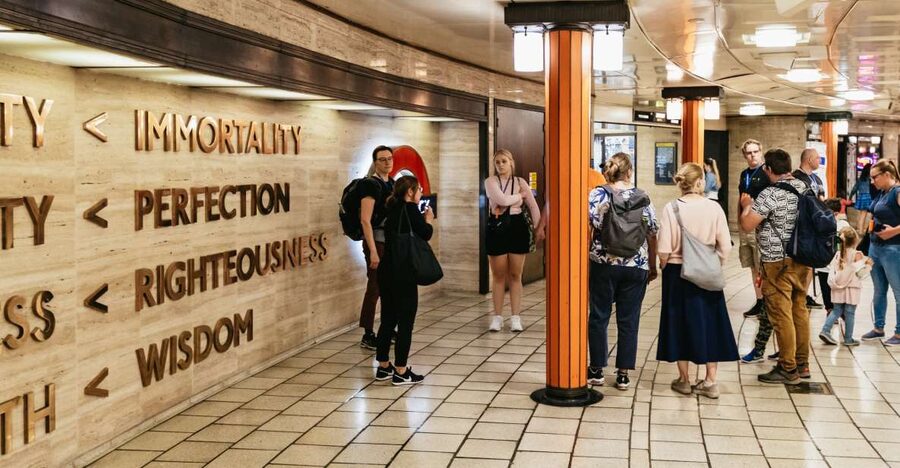
This is not a museum tour conducted behind a rope. Much of the experience takes place in working stations, where trains continue to arrive and commuters continue to hurry past. You walk, listen, pause for explanations, and use public transport as part of the route.
The included audio headset matters here. Underground stations are loud places, and a guide speaking to a group can easily be lost beneath announcements and trains. The headsets have been praised for making the narration easier to follow, especially below ground. One practical note: they may sound crackly above ground, while working better inside the stations.
You will spend about two and a half hours moving between locations. The exact route can change because of service delays, closures, or strikes. One guide, Aaron, had to alter the plan during a disrupted service and use a longer walk between stations. That flexibility is useful, but it means you should not expect a perfectly fixed sequence.
The public transport section is listed as about 10 minutes, though the overall tour includes more walking and Tube use. Your guide handles the route, but you still need a valid travel card. A day travel card for Zones 1 and 2 or an Oyster card is recommended. A contactless bank card may also involve a higher charge for some visitors, so check your fare choice before meeting the group.
Steam, electricity, and the engineering story
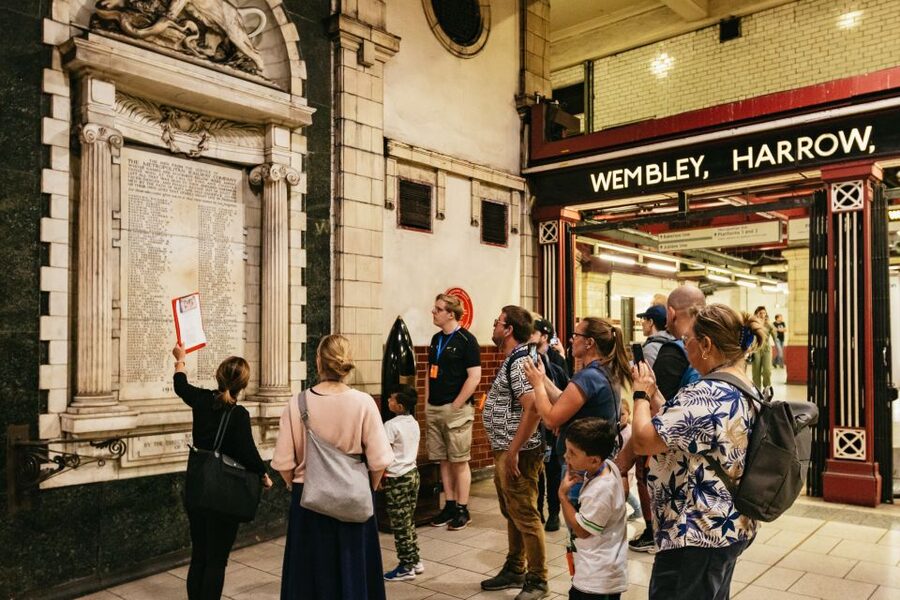
The Underground’s history is not only about ghosts and secret rooms. The practical engineering story is one of the strongest parts of the tour.
You learn how early underground lines were constructed and why some tunnels sit close to the surface while others run much deeper. The change from steam locomotives to electric trains was a major step. It made deeper routes more workable and helped create the network that now reaches across London.
The guide explains this in plain language rather than treating the Underground as a list of dates. You get a sense of the problems engineers faced, the way new lines expanded the city, and why stations differ so much in design.
The famous roundel symbol also gets its moment. It is now one of the clearest visual signs in London, but the tour explains how it became connected with the Underground. You will start noticing it as a piece of design and public communication, not just a sign pointing to the nearest train.
I would choose this tour over a simple transport-themed stroll if you want a broad explanation of how the system developed. It gives you the basic structure first, then adds the stranger stories.
Abandoned stations and the limits of access
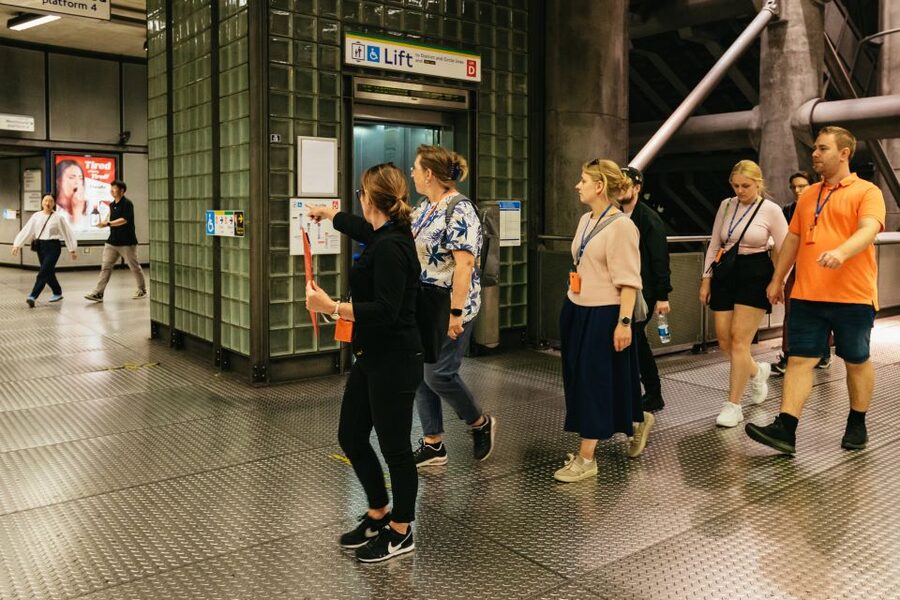
More than 40 Underground stations have been abandoned or left out of regular service. The tour explains why stations were closed, replaced, or made unnecessary as routes changed.
This is where you should set your expectations carefully. The route may let you spot a disused station or see traces of one from an active location, but it is not a full underground exploration of abandoned platforms. You will hear about places that are normally closed to the public rather than roam through them.
That distinction matters because the word secrets can suggest restricted access. Some people booking the tour expect to go inside a disused station, and that is not normally what happens. One person who enjoyed the tour still felt disappointed about not entering one. Another appreciated seeing a ghost station as part of the wider route.
I still think the subject works well because the guide shows you how to notice what has been left behind. A sealed entrance, an odd platform arrangement, or a station that no longer appears on the usual route can tell you a great deal about London’s changing transport plans.
If your main goal is access to closed tunnels, this is not the right product. If you want the story behind abandoned stations and a chance to see related traces during a normal public tour, it is a more realistic choice.
Same stretch of coast and karst, a different entrance:
- Edinburgh: Haunted Underground Vaults and Graveyard Tour
★ 4.6 · 6,607 reviews - Edinburgh: Late-Night Underground Vaults Terror Tour
★ 4.6 · 4,162 reviews - Edinburgh: Evening Underground Ghost Tour
★ 4.4 · 3,092 reviews - Edinburgh: Multi-Sensory Haunted Underground Tour
★ 4.5 · 2,721 reviews
Wartime shelters, factories, and hidden uses
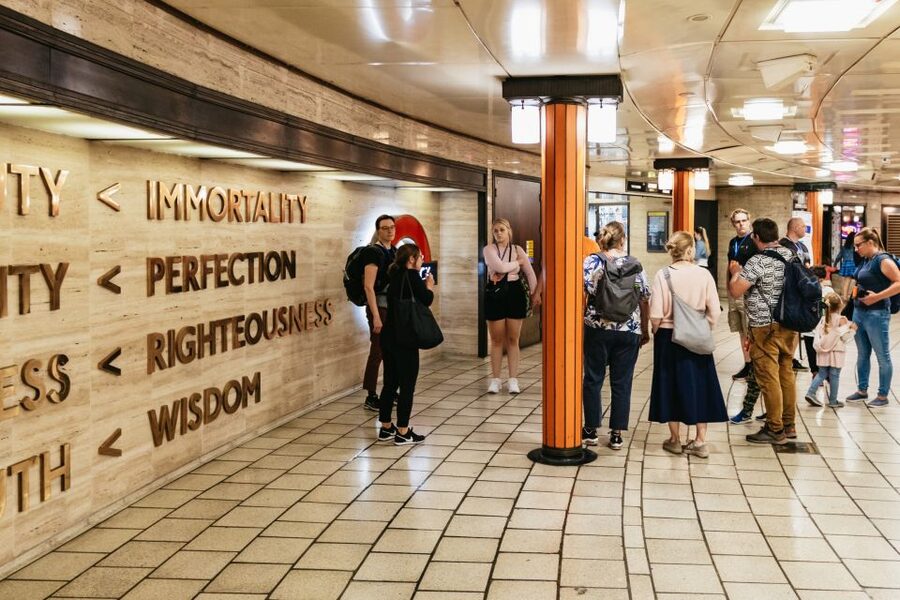
The Underground took on roles far beyond daily commuting. During the Blitz, stations were used as shelters for people seeking protection from bombing. The tour explains how these spaces became part of London’s wartime life.
You also hear about the Tube being adapted as an aircraft factory and about storage for treasures from the British Museum. These details show how a transport network could be repurposed in an emergency. The tunnels were not just holes beneath the streets. They became useful protected spaces, workplaces, and storage areas.
This part gives the tour emotional weight without turning it into a military history lesson. You are still walking through active stations, but you begin to picture them in very different circumstances. A platform that feels routine today once served a city under attack.
The guide’s storytelling style makes a difference. John is repeatedly praised for being entertaining as well as well informed, and Aaron is described as bringing the Underground’s story to life. Those qualities matter on a tour built around spoken explanation, since much of what you gain comes from the narration rather than a special-access display.
The Underground’s ghosts and darker tales
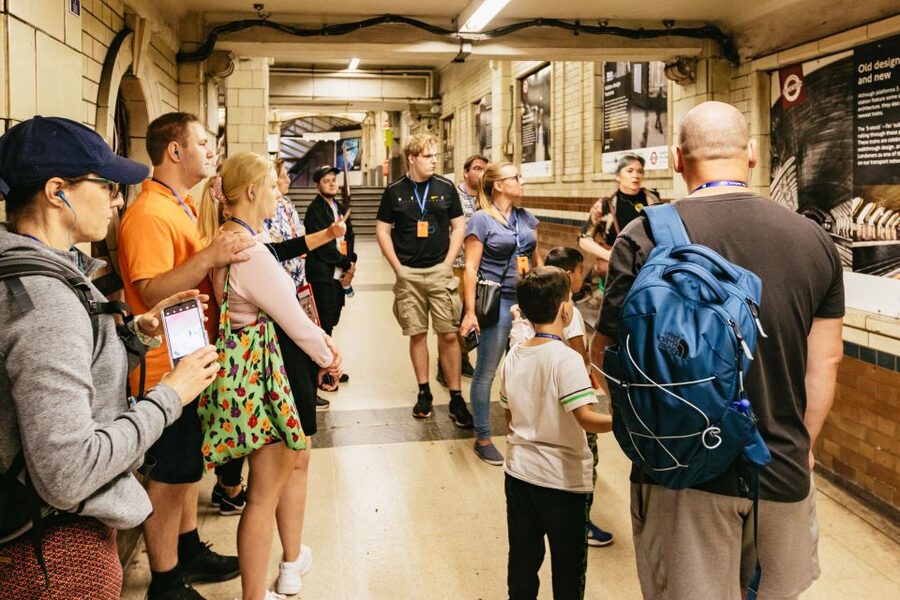
The tour includes the stories that give the Tube its eerie reputation. You hear which station is associated with the remains of 1,000 bodies, along with tales of a Pharaoh’s daughter and a nun said to haunt an Underground location.
These stories are presented alongside the real history of construction, station closures, and wartime use. That mix keeps the tour from becoming a ghost walk with a few transport facts added on. You get folklore, but you also get the context needed to judge what you are hearing.
There is a connection to broader London stories, including Jack the Ripper, which one guide used as part of the historical material. If you enjoy the city’s darker stories, this adds a welcome edge. If you prefer engineering and architecture, you can still focus on the practical parts of the tour.
The supernatural material is best treated as local legend rather than proof of hauntings. The value is in seeing how stories attach themselves to old public places and how the Underground has become part of London’s imagination.
The London Transport Museum finish

The route includes a visit to the London Transport Museum and finishes at 10B Bridge Street near Westminster. The museum adds a useful final layer because it gives you a more organized setting for the transport story after you have been following it through working stations.
Your guide helps connect what you have seen below ground with the wider development of London transport. The museum stop also gives the tour a natural ending rather than leaving you on a random platform after the final story.
The supplied details do not specify how long you spend inside the museum, so you should not book this expecting a full museum visit with time for every exhibit. Think of it as one part of a guided route, not a separate half-day museum program.
Finishing near Westminster is convenient for continuing your day. You can plan a meal, a river walk, or another central London sight afterward, though you should leave yourself time to complete the route without rushing.
Guides, headsets, and group comfort
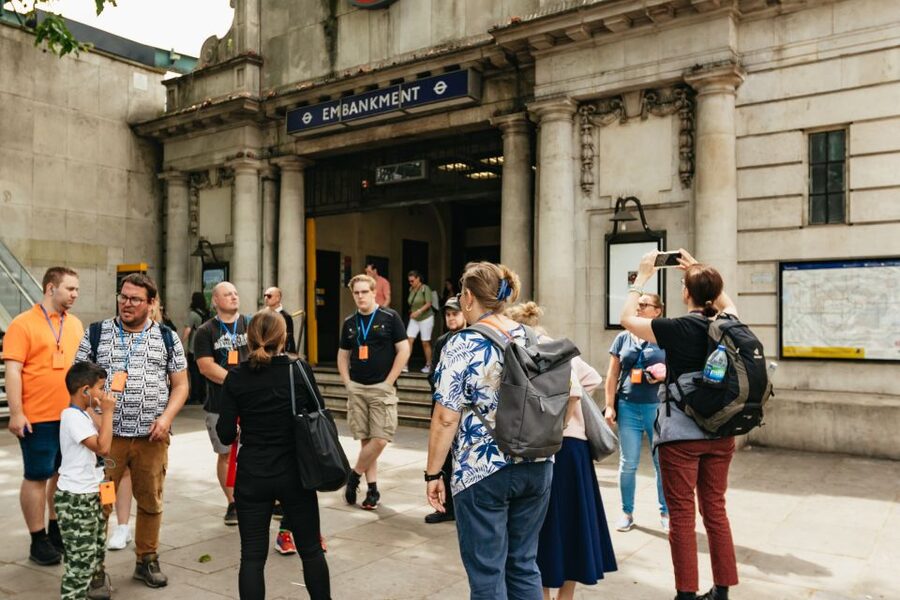
This tour depends heavily on the person holding the microphone. The guide names most often praised include John and Aaron, with strong comments also made about Angela, Peter, and others. The recurring strengths are clear explanations, humor, patience, and the ability to answer questions.
John is described as entertaining and particularly good with children’s questions. Aaron is praised for his facts, route handling, and enthusiasm. Angela is noted for being engaging and for keeping the group together. These details suggest a tour where the guide’s personality can shape the experience, though you cannot usually choose a specific guide when booking.
The audio equipment is a real advantage. It allows you to keep walking without crowding tightly around the guide. It also helps when a group is spread out in a station or when trains are passing nearby.
The pace is moderate, but this is still a walking tour. You will use stairs in the Underground, walk outdoors between some locations, and remain on your feet for much of the two and a half hours. One person found the duration a little long, while others liked the pace and the amount covered.
Wear comfortable shoes and avoid bringing luggage or a large bag. Baby strollers are not allowed, and the tour is not suitable for wheelchair users or people with reduced mobility.
Is the $40 price good value?
At $40 per person, the tour is reasonably priced if you want a guided explanation rather than a simple Tube ride. The fee covers the guide and audio headset, but not your Underground fare, food, drinks, hotel transfers, or museum extras beyond the stated visit.
The extra transport cost is easy to overlook. Buy a Zones 1-2 day travel card or arrange an Oyster card before you arrive. Paying for Tube travel separately is normal, but it means the real cost is higher than the headline price.
I see the value in the tour for first-time visitors who want London’s transport system explained in context. It is also useful for repeat visitors who already know the basic routes but have never paid attention to station architecture, abandoned lines, or wartime uses.
The value is weaker if you want exclusive access, a small private group, or a tour focused only on ghosts. You are paying for research, interpretation, and route planning within the public network. That is a fair exchange, but it is different from paying to enter restricted tunnels.
Free cancellation up to 24 hours before the start and a reserve-now, pay-later option make the booking less rigid. Starting times vary, so check availability around your other London plans.
Who will enjoy this Underground tour?
I would recommend it to anyone curious about how London works beneath street level. History fans get engineering and wartime stories. Design-minded visitors get the roundel, station details, and architecture. Families with older children can use the ghost stories and unusual facts to keep the subject lively.
It is also a good choice for people who have used the Tube many times. The tour gives you reasons to look up, slow down, and notice parts of familiar stations that are easy to ignore.
You should think twice if stairs are difficult, if you dislike guided walking, or if you need a stroller or wheelchair. You should also choose another experience if entering abandoned stations is your main goal.
Should you book it?
Book this tour if you want the London Underground explained through real stations, short Tube rides, engineering stories, wartime history, folklore, and details hiding in plain sight. The guides are the strongest part, and the headsets help you hear them in a noisy setting.
Do not book it expecting a behind-the-scenes expedition into closed platforms. Bring your Zones 1-2 travel card or Oyster card, wear good walking shoes, leave large bags behind, and arrive ready for stairs. With those expectations, the $40 fee buys a lively and useful look at one of London’s most important inventions.
FAQ
Where does the London Underground walking tour start?
It starts at Baker Street Station, at the Sherlock Holmes statue outside the station.
Where does the tour finish?
The tour finishes at 10B Bridge Street, Westminster, London SW1A 2JR.
How long does the tour last?
The tour lasts approximately two and a half hours.
Is the London Underground ticket included?
No. You need to buy your own public transport ticket. A Zones 1-2 day travel card or an Oyster card is recommended.
Does the tour include the London Transport Museum?
Yes. The route includes a visit to the London Transport Museum.
Is the tour conducted in English?
Yes. The live tour guide speaks English.
Are abandoned Underground stations entered?
The tour explains the history of disused stations and may show related features, but entry into a closed station is not promised.
Is the tour suitable for wheelchair users or people with limited mobility?
No. The tour involves a moderate amount of walking and many Underground steps, and it is not suitable for wheelchair users or people with reduced mobility.
Just added around the UK
- Torquay: Guided Wildlife, Bushcraft, Sea Cave Kayak Safari★ 4.6 · 32 reviews
- Torquay: Kents Cavern Prehistoric Cave★ 4.8 · 24 reviews
- London: Postal Museum Entry Ticket and Underground Rail Ride★ 4.6 · 363 reviews
- London: Jack the Ripper Tour and Underground Prison in Spanish★ 5.0 · 15 reviews
- Liverpool: The Beatles and Cavern Quarter Walking Tour★ 4.7 · 133 reviews
- Liverpool: City and Cavern Quarter Walking Tour★ 4.9 · 36 reviews
- Edinburgh: The Lost Close Underground Scotch Whisky Tasting★ 4.7 · 474 reviews
- Edinburgh: Underground Vaults and Graveyard Evening Tour★ 4.4 · 393 reviews
UK Cave Tours, compared.

Underground Vaults Walking Tour in Edinburgh Old Town
Read the review →
Haunted Underground Vaults and Graveyard Tour
Read the review →
Underground Vaults Evening Ghost Tour with Whisky
Read the review →
Browse the lists this tour appears in