
Review · ICE CAVE TOURS
Sólheimajökull: Glacier Hike and Blue Ice Cave Tour
Sólheimajökull is not a walk-up photo stop. It is a working glacier, full of crevasses, ridges, meltwater channels, and shifting ice. This tour gets you onto it with an ice axe, crampons, harness, and helmet, then takes you inside a naturally formed blue ice cave.
I like the small group of eight and the strong guide presence. I also like that the tour teaches you what you are seeing instead of treating the glacier as a giant blue backdrop. The main drawback is weather: the cave visit can be changed or canceled, and you need a decent level of fitness for several hours on uneven ice.
Key points at a glance
- A real glacier hike: You walk on Sólheimajökull rather than viewing it only from the roadside.
- A naturally formed blue cave: Meltwater creates the tunnel, and its color can range from clear blue to darker black ice.
- Experienced guides: Jan and Oscar have been praised for careful instruction, technical skill, and explanations of geology and glacier physics.
- Small groups matter: With no more than eight people, the guide can help with crampon fitting and watch your footing.
- Plan for changing conditions: The cave may not be accessible in poor weather, but the glacier hike can still include worthwhile climbing or rappelling.
- Simple base-camp comforts: Coffee, tea, toilets, equipment fitting, and the meeting point are all at the glacier edge.
Starting at the Sólheimajökull base camp
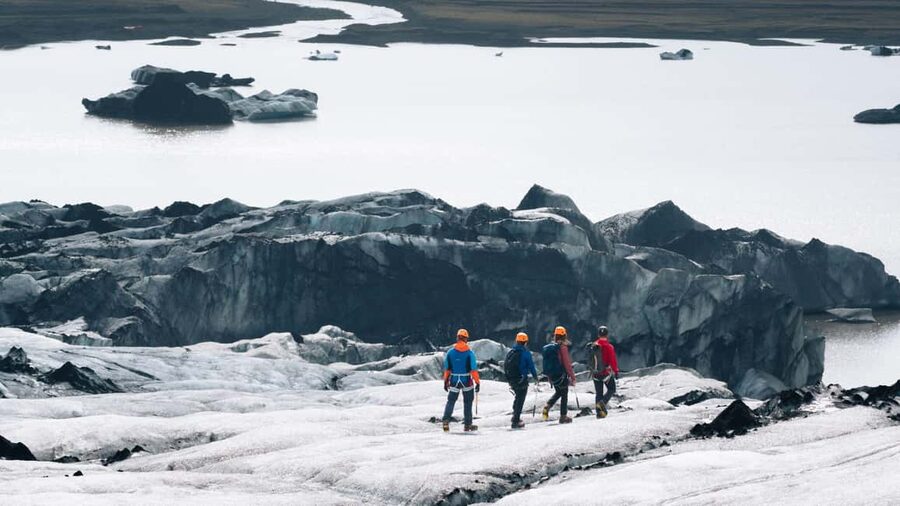
Your tour begins at the Icelandic Mountain Guides Base Camp at the end of Road 221, also called Sólheimajökulsvegur. You turn off Iceland’s Ring Road between Skógar and Vík, then follow the marked road to the only building at the end.
That simplicity helps. You do not need to hunt for a mountain trailhead or guess which building is yours. Look for the Icelandic Mountain Guides logo and arrive 20 minutes early. The staff need time to fit the equipment, especially the crampons, which must match your shoe size.
The base camp also has toilets and coffee or tea. Those are small details, but they matter in Iceland, where cold wind and sudden weather can make a warm drink feel like part of the adventure rather than a minor extra.
You should arrive in warm clothing and proper hiking shoes. Open-toed shoes are not allowed, quite reasonably. Bring weather-appropriate layers, and do not assume that a sunny parking lot means calm conditions on the glacier.
More Ice Cave Tours in Iceland:
- From Vik: Katla Ice Cave and Super Jeep Tour
★ 4.6 · 2,110 reviews - Jökulsárlón: Vatnajökull Ice Cave Guided Tour
★ 4.2 · 2,046 reviews - Skaftafell: Ice Cave Tour and Glacier Hike
★ 4.5 · 1,746 reviews
Getting fitted with glacier gear
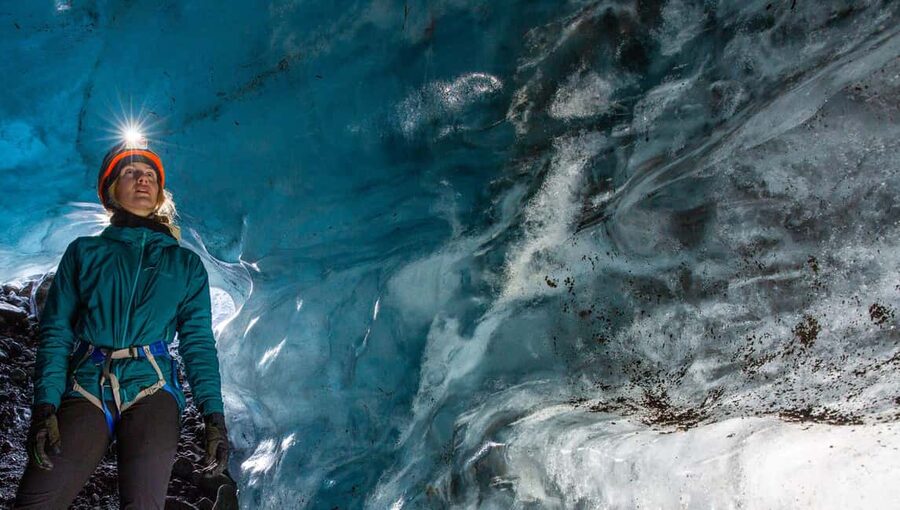
Before you start walking, the guide explains and fits the safety equipment. The listed equipment includes an ice axe, crampons, harness, and helmet. These are not costume props. Crampons give your boots grip on hard ice, while the helmet and harness are part of the protection needed in glacial terrain.
The fitting stage is worth taking seriously. Poorly adjusted crampons can make every step awkward, and a loose harness will distract you. This is one reason arriving early helps. You want to begin the hike focused on the ice, not still trying to fix a strap.
One recent participant also said boots were provided at the meeting point. Since the main tour information specifically asks you to bring hiking shoes, I would still arrive prepared with sturdy footwear and confirm the boot arrangement when booking.
The gear makes the tour possible for people who have never walked on a glacier, but it does not remove the physical work. You still need balance, steady footing, and enough stamina for a three-and-a-half-hour outing.
Walking across a moving glacier
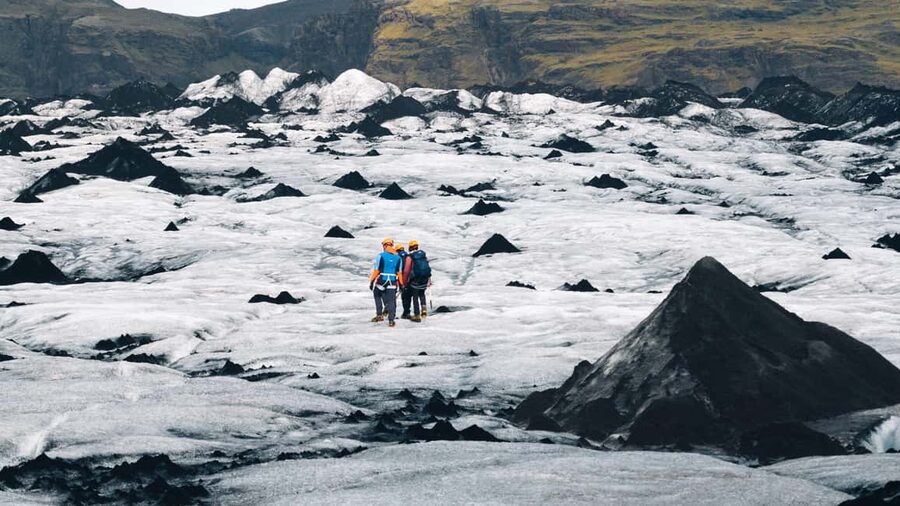
From the base camp, you head toward Sólheimajökull and begin the glacier section with your guide. The first impression is likely to be less postcard-perfect than you expect. Glaciers can carry dark volcanic dust and debris, especially in Iceland. That mix of black and blue is part of the character of Sólheimajökull.
The guide points out the ice formations as you go. You may see crevasses, ridges, channels, and uneven folds created by the glacier’s movement and meltwater. These features are not just scenery. They explain why you need to stay with the group and follow instructions closely.
I like this part of the tour because it turns a difficult surface into something you can read. A ridge is not merely a ridge. A crack is not merely a dramatic line in the ice. Your guide explains how the glacier forms and changes, giving you a better sense of the forces beneath your feet.
The small group size is useful here. With a maximum of eight participants, the guide has a better chance of noticing when someone is struggling with footing, equipment, or pace. It also keeps the experience from becoming a long line of people waiting for the person ahead to move.
Finding the blue ice cave
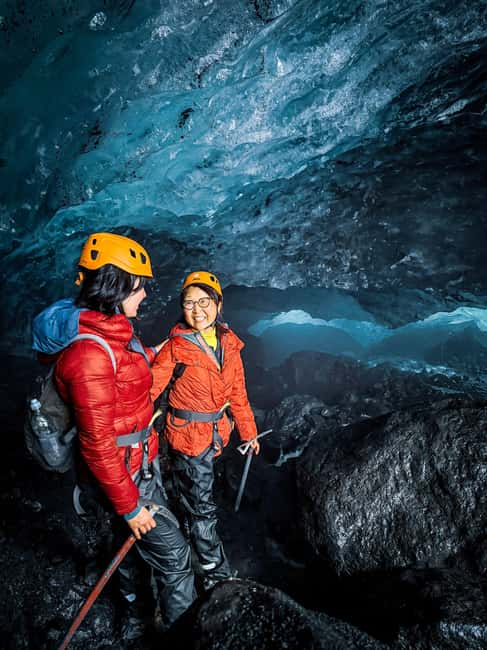
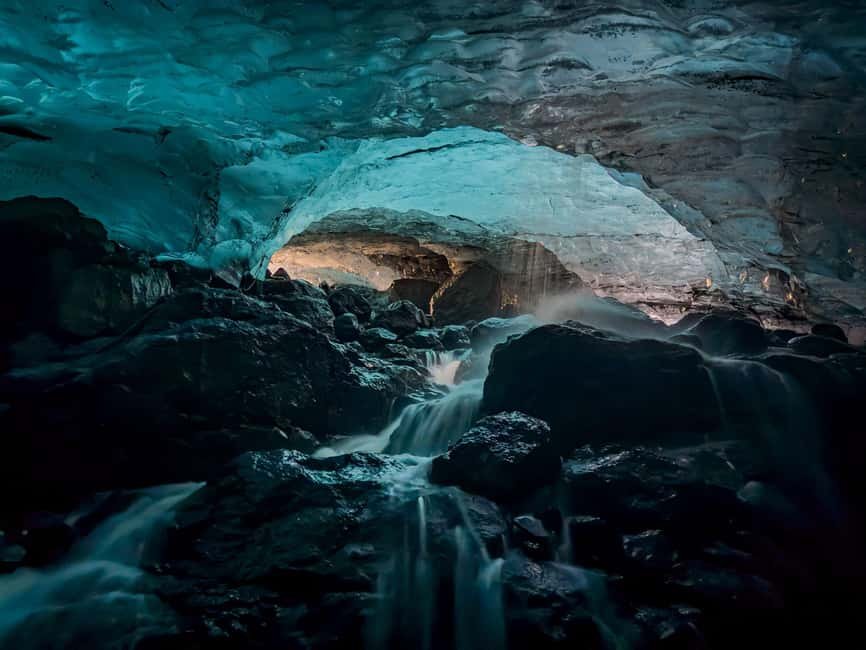
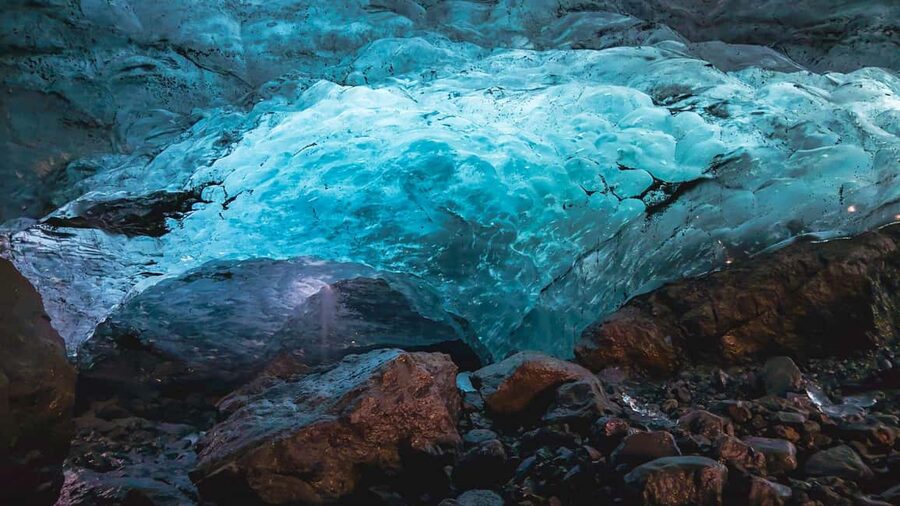
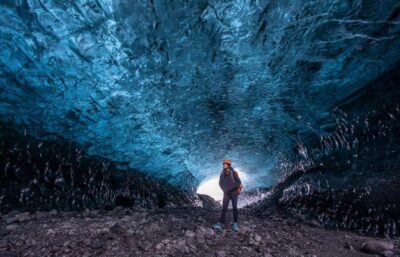
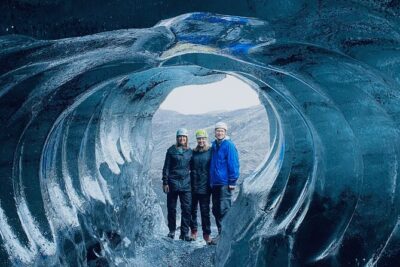
The tour’s special target is a newly discovered blue ice cave. The cave forms when summer meltwater moves through the glacier, cutting a tunnel into the ice. The result is a passage where the walls can appear clear, blue, or almost glasslike.
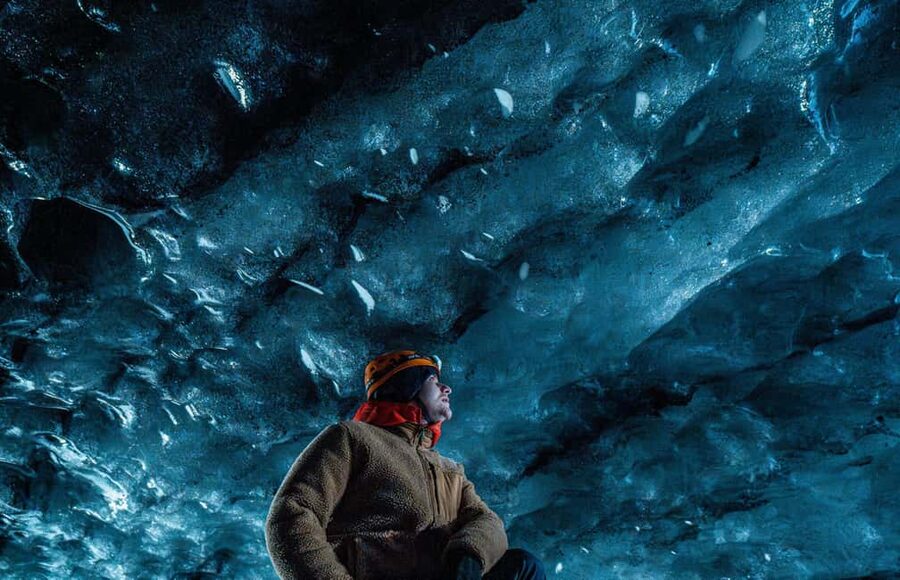
The color comes from the way dense ice handles light. Older, compacted ice absorbs more of the red part of the light spectrum, leaving more blue for your eyes to see. You do not need a science lesson to enjoy the cave, but understanding the reason for the color makes the sight more interesting.
The cave may be small. One participant described a black ice cave as beautiful but not large, while another found the blue cave better than expected. That is useful context. This is not an enormous underground hall where you walk for half an hour. It is a natural tunnel inside a glacier, and its appeal comes from the ice, the setting, and the fact that it is temporary.
You spend time inside before returning across the glacier. The exact shape and condition of the cave can change as meltwater continues to move through the ice. That is part of the appeal, but it also explains why a guide must make the final call about safety.
Hikes and treks within reach of Iceland:
- Skaftafell: Blue Ice Cave & Glacier Hike on Vatnajökull
★ 4.7 · 643 reviews - Jökulsárlón: Glacier Hike to a Remote Ice Cave
★ 5.0 · 220 reviews - Sólheimajökull: Glacier Hike and Ice Cave Tour
★ 4.7 · 21 reviews - Matacanes : Canyoning + Hiking + Water Jumps + Rappel + Caves
★ 5.0 · 1,497 reviews
When weather changes the plan
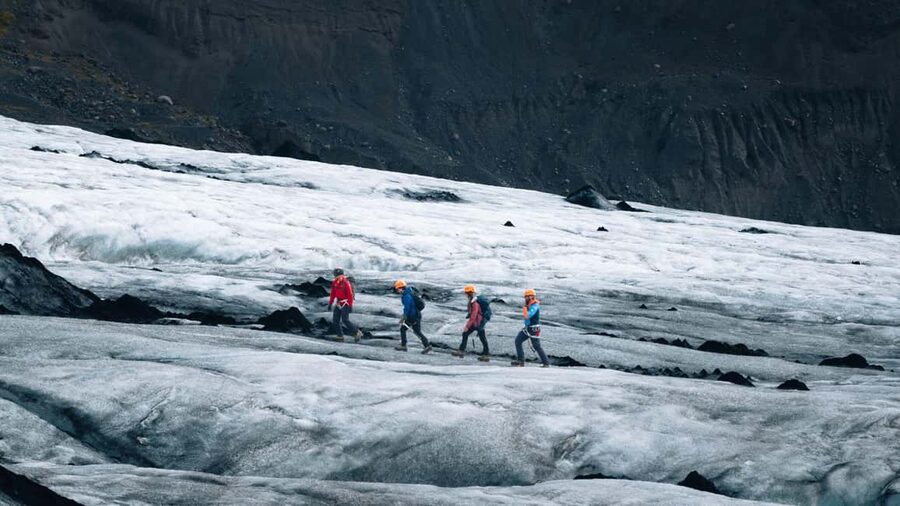
Icelandic weather can alter the cave portion of the tour. One participant had no cave visit because of the weather, but the guide, Jan, adapted the outing with climbing and rappelling on the glacier. That is an important point when deciding how to value this experience.
You are paying for a guided glacier day that includes a blue ice cave when conditions permit, not for a guaranteed cave entrance under all conditions. If the cave cannot be used, the glacier itself can still provide the main event, depending on the guide’s plan and the weather.
Guides Jan and Oscar have received particular praise for combining care with technical and scientific explanations. Oscar, in particular, has been described as explaining glacier geology and physics while leading the group to scenic points. That mix suits people who want more than a quick walk and a photograph.
The tour is conducted in English. If you ask questions, the guide can explain the formations and the geology as you encounter them, rather than giving one long lecture at the beginning.
What the three-and-a-half hours feel like
The advertised duration is 210 minutes. That includes equipment fitting, the walk to and from the glacier, time on the ice, and the cave visit. It is long enough to feel like a proper outing without taking the entire day away from a South Coast itinerary.
Still, do not think of it as a relaxed stroll. Crampons change the way you walk. You lift your feet more deliberately, place each step with care, and keep your balance on irregular ground. The glacier can also be windy.
One participant wished for goggles because wind and volcanic dust made visibility difficult at times. Goggles are not listed among the included gear, so bring eye protection if you already own a suitable pair, and ask the operator what they recommend. At minimum, expect exposed conditions and keep your clothing secure.
The physical standard is clear: the activity is not suitable for children under 10 or people with a low level of fitness. You do not need to be a mountaineer, but you should be comfortable walking for several hours in cold conditions over uneven ice.
The value of the $196 price
At $196 per person, this is not a cheap add-on to a South Coast drive. The price makes more sense when you count what is included: a qualified glacier guide, safety equipment, glacier gear, a small group, and the chance to enter a naturally formed ice cave.
You are also paying for judgment. A guide decides where the group can go, explains how to use the equipment, watches conditions, and changes the plan if needed. That matters on a glacier, where the safest route may not be the most obvious one.
The value is strongest if you want active time on the ice and instruction along the way. If you mainly want a quick photograph of a blue cave, the cost and physical effort may feel excessive. If you want to understand the glacier and take part in the route, the price is easier to justify.
Lunch is not included. Plan food before or after the tour, especially if you are driving between Reykjavík and the South Coast. Coffee and tea at the base camp are included, but they are not a meal.
Who should choose this tour
I would recommend it to adults and older children who are comfortable with cold weather, sustained walking, and careful movement. It suits you if you like nature experiences that involve instruction and equipment rather than simply standing at a viewpoint.
It is also a good choice for anyone curious about geology. Oscar’s explanations of glacier physics and the volcanic material on the ice can add a lot for someone with a science background, but the guide’s job is not limited to specialists. You can enjoy the shapes and colors without knowing technical terms.
The tour may not suit you if you dislike heights, uneven ground, wind, or changing plans. The harness, helmet, ice axe, and crampons may sound exciting, but they also signal that this is an adventure activity, not a gentle nature walk.
You should also think carefully about timing. If your South Coast schedule is packed with waterfalls, beaches, and long drives, three and a half hours on the glacier requires a real commitment. Give yourself enough time to reach Road 221 and arrive early for fitting.
Practical preparation for the ice
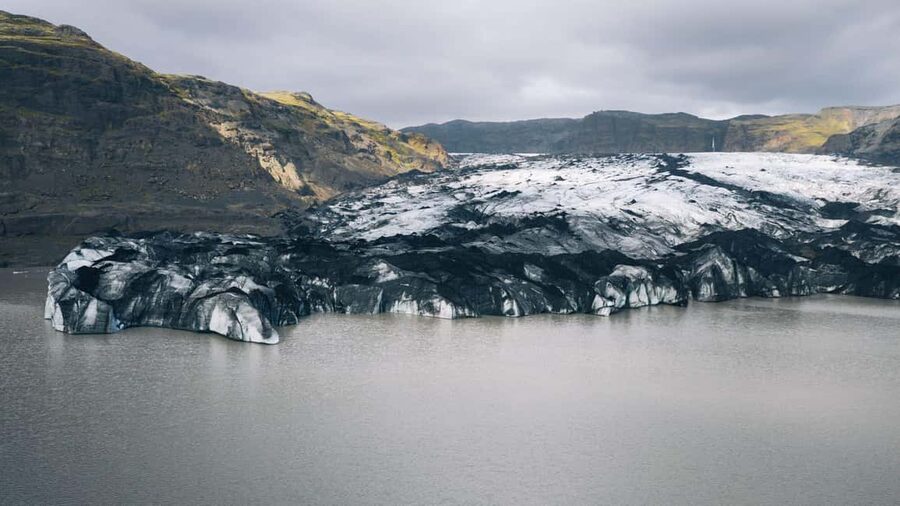
Wear warm layers that allow movement. Waterproof outer clothing is sensible because weather on the glacier may differ from conditions at the base camp. Bring hiking shoes unless the operator confirms another arrangement.
I would also pack gloves, a hat, and clothing that protects your face from wind. These items are not all listed as required, but cold exposure becomes more noticeable when you stop inside the cave or wait while the group regroups.
Keep your camera or phone secure. The ice is uneven, and you will need both hands at times. The guide should always take priority over getting a photograph, especially near crevasses or on narrow sections.
Do not arrive at the last minute. The crampons must be adjusted to each person’s shoe size, and a rushed fitting starts the tour badly. The base camp’s toilet and coffee or tea make arriving early easy enough.
Booking flexibility and the main risk
You can cancel up to 24 hours ahead for a full refund, and the reserve-now-pay-later option lets you hold a place without paying immediately. Those terms are useful when an Iceland itinerary depends on road conditions and weather.
The bigger issue is not cancellation. It is accepting that the exact cave experience may change. A newly formed ice cave is part of an active glacier system, so its condition is not fixed. Bad weather may also prevent entry.
I see that uncertainty as a normal part of the activity, but you should be comfortable with it before booking. If the cave is the only reason you want to go, the tour carries more risk of disappointment. If the glacier hike, guide instruction, and possibility of climbing or rappelling all appeal to you, the experience has a stronger safety net.
Should you book the Sólheimajökull hike?
Book it if you want a hands-on glacier experience with a small group, proper equipment, and a guide who can explain what is happening beneath your feet. The blue ice cave is the visual prize, but the walk across the glacier is what gives the visit its meaning.
I would be especially keen to book this for a South Coast trip with enough room in the schedule and a flexible attitude toward weather. You should skip it if you have limited mobility, low fitness, or want a guaranteed cave with no possibility of a changed plan.
For most active visitors, the combination of glacier travel, technical gear, and a naturally formed ice tunnel makes the $196 worthwhile. Just arrive early, dress for wind, bring sturdy shoes, and treat the cave as a welcome possibility rather than a promise.
FAQ
Where does the Sólheimajökull glacier tour meet?
The meeting point is the Icelandic Mountain Guides Base Camp at the end of Road 221, Sólheimajökulsvegur. From Route 1, turn onto Road 221 between Skógar and Vík and continue to the only building in the area.
How long does the tour last?
The activity lasts 210 minutes, or three and a half hours.
What language is the tour conducted in?
The live tour guide speaks English.
How many people are in the group?
The group is limited to eight participants.
What glacier equipment is included?
The tour provides glacier gear and safety equipment, including an ice axe, crampons, harness, and helmet.
Do I need to arrive early?
Yes. Arrive 20 minutes before the start time so the staff can fit the equipment, including crampons adjusted to your shoe size.
What should I wear?
Bring warm clothing, hiking shoes, and clothing suited to the weather. Open-toed shoes are not allowed.
Is lunch included?
No. Lunch is not included, though coffee and tea are available at the base camp.
Can children join the tour?
Children under 10 years old cannot join this activity. It is also not suitable for people with a low level of fitness.
Is the blue ice cave guaranteed?
No. Weather and glacier conditions can affect access to the cave. If the cave cannot be visited, the guide may adapt the glacier outing, with activities such as climbing or rappelling possible depending on conditions.
Just added around Iceland
- South Coast Iceland: 2-Day Blue Ice Cave & Jokulsarlon Tour★ 4.6 · 93 reviews
- Sólheimajökull: Glacier Hike and Ice Cave Tour★ 4.7 · 21 reviews
- Snæfellsnes: Vatnshellir Lava Cave Tour★ 4.7 · 165 reviews
- Skaftafell: Ice Cave Experience★ 4.4 · 21 reviews
- Reykjavik: Lava Cave, Hot Springs, Horses & Waterfalls Tour★ 4.8 · 130 reviews
- Reykjavík: Langjökull Glacier Snowmobile Tour with Ice Cave★ 4.5 · 135 reviews
- Reykjavik: Golden Circle, Glacier Truck & Ice Cave Tour★ 4.5 · 46 reviews
- Jökulsárlón: Blue Ice Cave Tour and Glacier Walk★ 4.8 · 39 reviews
Ice Cave Tours, compared.
Jökulsárlón: Vatnajökull Ice Cave Guided Tour
Read the review →
Jökulsárlón: Crystal Ice Cave Super Jeep Tour
Read the review →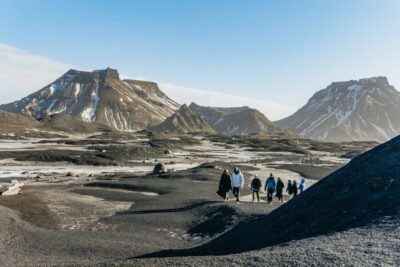
Ice Cave by Katla Volcano Super Jeep Tour from Vik
Read the review →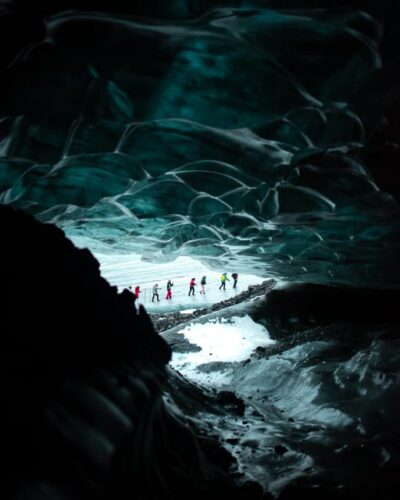
From Jökulsárlón: Vatnajökull Glacier Blue Ice Cave Tour
Read the review →Browse the lists this tour appears in