
Review · ATHENS CAVE TOURS
Meteora Monasteries & Caves DayTrip from Athens with Greek Lunch
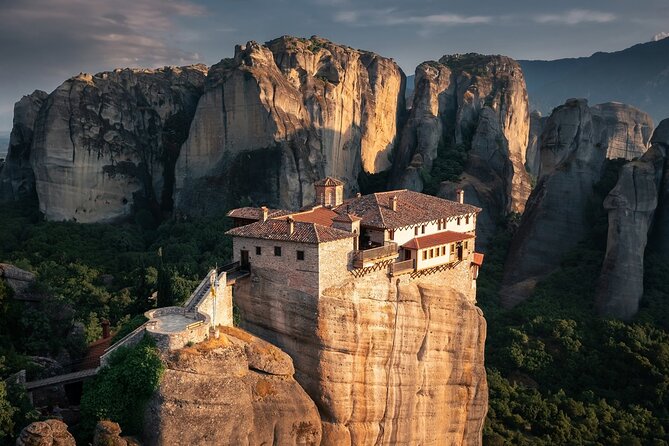
Meteora is one of Greece’s great sights: six monasteries perched on tall rock towers above Kalambaka, reached by a long but scenic ride from Athens. I like that this trip gives you broad views of all six monasteries, then takes you inside three of them, including Great Meteoron and Varlaam. The Hermit Caves add a human story to all that grand scenery.
I also like the practical setup. Maria and Clement are named local tour leaders, and the coach includes WiFi and USB chargers. The midway stop at Kamena Vourla breaks up the ride with a look at the coast and Evia Island, while the optional Greek lunch saves you from hunting for food during a tight day.
The catch is simple: this is a very long day, usually from 8:00 a.m. until about 10:30 p.m. Road delays can make it longer, and the monastery visits require stairs. If you have two days, staying overnight in Kalambaka or Kastraki will give Meteora the time it deserves.
Key points to know before you book
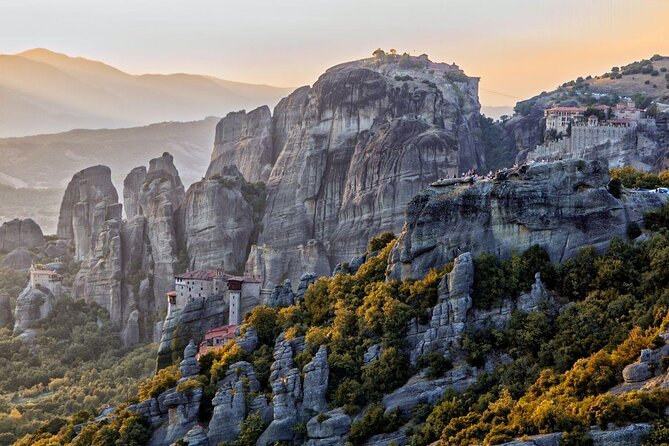
- Six monasteries in one circuit: You get panoramic views of all six, with visits inside three of the most important ones.
- The bus ride takes most of the day: The scheduled journey includes a stop at Kamena Vourla, but traffic or road protests can add several hours.
- The Hermit Caves add depth: You see where early ascetics lived in small shelters carved into the cliffs.
- Lunch is optional: The package includes a main dish, Greek salad, bread, and water, with vegetarian and vegan choices.
- Bring monastery clothing and cash: Each entrance costs €5, and ladies need a skirt at or below the knee with covered shoulders.
- The best guides bring the place alive: Maria, Clement, and other local leaders explain the monasteries, caves, town, and rock formations during the Meteora portion.
Why Meteora is worth the long ride from Athens
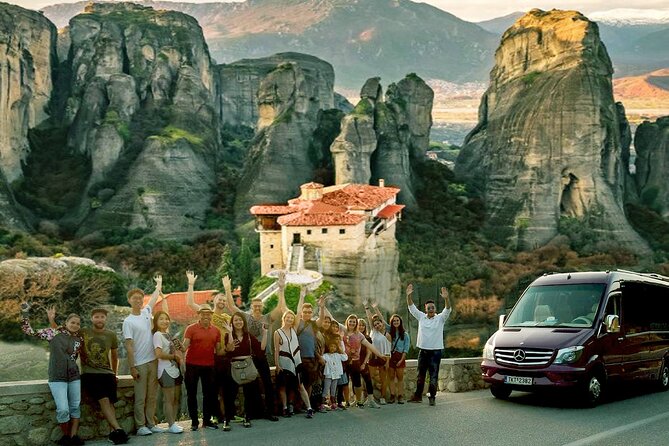
The first sight of Meteora makes the long bus ride easier to accept. Huge sandstone pillars rise from the plain around Kalambaka, with monasteries balanced on their tops and ledges. The setting looks almost impossible, which is exactly why the place matters.
Meteora became a refuge for monks seeking solitude in the cliffs. The monasteries grew from small hermit shelters into religious communities, and six remain active today. The setting is not just pretty scenery. It explains why people came here, how they lived, and why building anything on these rocks required remarkable effort.
I would not choose this day trip if you dislike long coach journeys. I would choose it if your time in Athens is tight and you want to see one of mainland Greece’s most unusual places without arranging trains, local transfers, monastery visits, and return transport yourself.
The tour costs about $87.07 per person, before any monastery entrance fees and before lunch if you skip the optional meal. That is a fair price for round-trip transport, a local tour leader, the Meteora circuit, photo stops, and the convenience of returning to Athens the same night. The tradeoff is time. You are buying access and ease, not a slow visit.
Trips with lunch within reach of Greece:
- Athens: Meteora Monasteries Day Trip with Caves and Lunch
★ 4.7 · 4,670 reviews - Athens: Meteora Monasteries, Caves & Coastal Stopovers with Lunch
★ 4.5 · 1,432 reviews - Kayak Trip to Hidden blue Cave, with lunch & fruits.
★ 5.0 · 393 reviews
What the Athens to Kalambaka ride is really like
You meet the coach at Larissa Station in Athens at 8:00 a.m. The departure point is across the road from the train station, where you should look for the METEORA THRONES, TRAVEL CENTER sign on the bus. Arrive at least 15 minutes early. The company states that it is not responsible if you miss the departure.
The air-conditioned coach has free WiFi and USB chargers. Several people have found the ride comfortable, though comfort can vary by seat, and taller passengers may want to avoid the back row if possible. The scheduled trip includes a midway break, making the journey easier on families and anyone who needs regular stops.
At Kamena Vourla, you stop for about 30 minutes at a seaside restaurant. The central Greek coast lies to your right during part of the drive, and on a clear day you can see Evia across the water. This is a useful pause for coffee, snacks, and fresh air, though it also means every minute of the day matters.
The normal arrival time in Kalambaka is around 12:30 p.m. The actual return can vary. Farmers’ protests have blocked highways in the past, turning a planned four hour leg into five or six hours and, in severe cases, pushing the return far later than expected. That is not a normal part of the tour, but it is a real reason not to schedule an important flight, dinner reservation, or ferry immediately afterward.
Lunch in Kalambaka: convenient, not the main event
After reaching Kalambaka, you meet your local tour leader and stop for about 30 minutes to eat. The lunch option includes one main dish, a Greek salad, bread, and water. Vegetarian and vegan choices are available.
The meal is useful because the Meteora circuit is tightly timed. You can choose from dishes such as pasta, fried fish, moussaka, chicken, or other Greek style plates, depending on the day. The setting has been described in different ways, so I would think of it as a practical group meal rather than a special restaurant experience.
If food is a major part of your trip, you may prefer to use the Kamena Vourla stop for something you choose yourself. If you want the easiest day, adding lunch makes sense. You do not need to spend time finding a place in Kalambaka while the coach and guide are waiting.
Kastraki and the first views of the rock towers
Kastraki sits below the Meteora rocks and gives you the most natural sense of the area. Stone houses, quiet lanes, and mountain paths make it feel different from Athens and from the larger town of Kalambaka.
The village is also a good reminder that Meteora is not a collection of isolated monuments. People live beneath these cliffs, and the roads connecting the monasteries pass through a real mountain community. From the coach, you get views of Kastraki and the rocks before beginning the main circuit.
Your guide explains how the monasteries were built and why monks chose these high ledges. Guides such as Maria and Clement have been especially praised for making the history clear and keeping the group engaged during the limited time available.
More Cave Tours in Greece:
- From Corfu: Day Cruise to Paxos, Antipaxos, & the Blue Caves
★ 4.3 · 4,800 reviews - Zakynthos: Shipwreck Beach with Blue Caves Land & Sea Tour
★ 4.9 · 3,774 reviews - From Corfu Island: Antipaxos & Paxos Blue Caves Boat Cruise
★ 4.7 · 3,690 reviews - Zakinthos: Shipwreck Beach and Blue Caves Land and Sea Tour
★ 4.6 · 3,359 reviews
Great Meteoron: the largest monastery
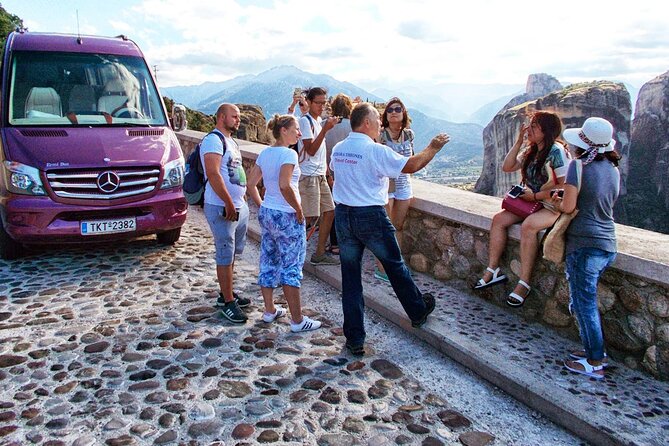
Great Meteoron is the oldest and largest of the six monasteries. Saint Athanasios founded it in the 14th century, and its size gives you a useful introduction to monastic life at Meteora.
Inside, you can see chapels, frescoes, and a small museum. Outside, the high position gives you wide views across the rock formations and valleys. This is one of the visits where the climb matters. You need to manage stairs to reach the monastery, and there is no elevator.
Allow about an hour here. The visit combines art, religious history, architecture, and scenery, so it is more than a quick photo stop. You will want modest clothing ready before entering, not tucked away at the bottom of your day bag.
Varlaam and the story of construction
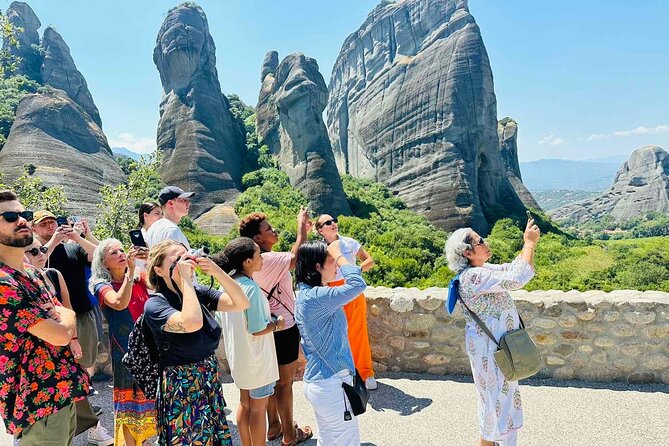
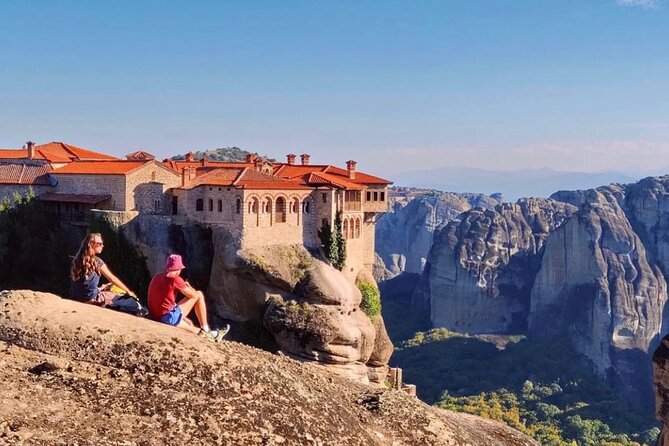
Varlaam is the second largest monastery and dates from the 16th century. Its courtyard, frescoes, and large wooden barrel show a different side of the complex. The monastery feels more compact than Great Meteoron, but the views are just as rewarding.
The climb takes effort, though visitors who are comfortable with stairs can manage it at a steady pace. You have about 45 minutes here, which is enough for the main areas but not for a slow, detailed visit.
This is where Meteora’s engineering becomes clear. Monks once relied on ropes, ladders, and baskets to move people and supplies. Today’s stairs are far easier, but you still feel the height and isolation.
The Hermit Caves and Saint Nicholas Badovas
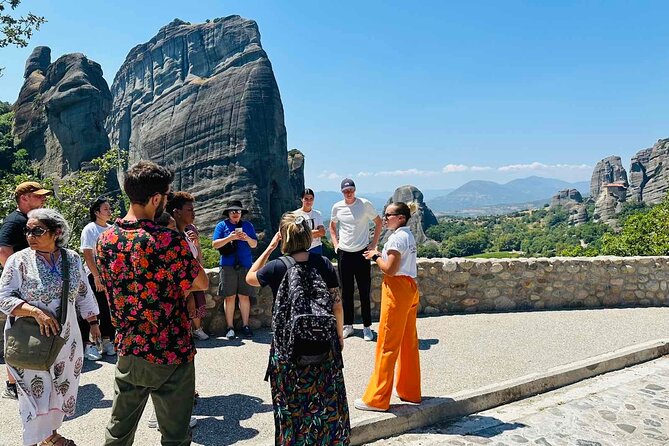
The Hermit Caves are among the most unusual parts of the outing. These small shelters were carved into the cliffs and used by ascetics who lived alone or in tiny communities. They show the early, simpler stage of Meteora’s religious life.
You also see the hermitage of Badovas and the small Saint Nicholas Badovas monastery, built into the rock. This stop lasts about 15 minutes, so it is mainly a guided look and a photo opportunity rather than a long exploration.
I like this part because it prevents the day from becoming a procession of large churches. The caves explain the beginning of the monastic tradition. The grand monasteries came later.
Agios Stefanos, the easiest monastery to reach
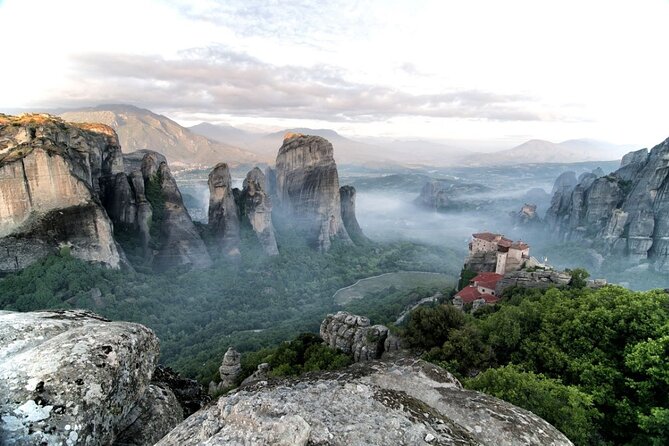
Agios Stefanos, also called Saint Stephen, is the most accessible monastery in the group. A small bridge replaces the long stair climb, making this a helpful stop for anyone worried about steep steps.
The site was founded in the 14th century and is now a nunnery. Inside, you can see frescoes and a calm chapel, while the position gives views toward Kalambaka and the valley below. You have about 40 minutes here.
The monastery is still religiously active, so this is not simply an open-air museum. Dress and behavior matter. Keep your voice low, follow instructions, and avoid treating chapels as ordinary photo rooms.
Holy Trinity and Rousanou from the cliff roads
Holy Trinity is one of Meteora’s most famous views. It sits high on a steep rock and requires a path and stairs. The reward is a broad view over the valley and a close look at one of the most dramatic buildings in Greece.
You have about 35 minutes at Holy Trinity. That is enough for the main visit, but not enough to linger over every detail. If the weather is poor, clouds or mist can reduce the views, so check the forecast before booking.
Rousanou, also called Saint Barbara, occupies a narrow rock pillar and is now home to nuns. Its frescoes, balconies, and compact design make it especially photogenic. Another 35 minute stop gives you time for the key views and a short visit.
Saint Nicholas Anapafsas and the final circuit
Saint Nicholas Anapafsas is the smallest monastery on the route. Its limited space forced builders to stack the rooms and chapels vertically on a narrow rock. The monastery is known for frescoes by Theophanis Strelitzas, an important painter of the period.
You spend about 15 minutes here, so expect a brief visit. The value is contrast. After the larger compounds, this tiny monastery shows how varied Meteora’s buildings can be.
The tour also gives you panoramic views of all six monasteries, not only the three you enter. That matters because the best photograph may come from the road, a lookout, or a place where several rock towers appear together.
Group size, guides, and the audio option
The stated maximum is 35 people. That is not a private tour, and the group may feel large at the bus and meeting points. Once inside a monastery, you often explore at your own pace, which reduces the problem.
Your live guide leads the Meteora portion in English or Spanish. Maria and Clement are among the named tour leaders, and their role is especially important because the bus ride itself is mainly transport. Do not expect nonstop commentary from Athens to Kalambaka.
A multilingual smart audio guide is available in English, French, Italian, Dutch, Spanish, Portuguese, Polish, Russian, Japanese, Korean, and Chinese. It is useful if you want extra background while walking, but it does not replace a local guide who can answer questions and keep the schedule moving.
Clothing, cash, and physical effort
Bring €5 in cash for each monastery entrance. There is no ATM in the monastery area. The listed monastery entrances are not included in the tour price, so budget at least €15 if you plan to enter the three main sites.
Dress rules are strict. Ladies need skirts at or below the knee, covered shoulders, and no trousers. Men cannot wear sleeveless tops or shorts above the knee. Pack a wrap or suitable skirt rather than hoping the monastery will provide one.
Stairs are part of the experience. Great Meteoron, Varlaam, Holy Trinity, Rousanou, and Saint Nicholas all involve climbing to varying degrees. Agios Stefanos is easier because of its bridge. Most people can participate, but anyone with mobility concerns should think carefully before booking.
Is this day trip the right choice?
I would book this tour if you have only a few days in Greece, want transport handled for you, and accept that Meteora will be a long day trip from Athens. You get the major views, three interior monastery visits, the Hermit Caves, a local guide, and a return coach without having to coordinate the route yourself.
I would not book it if you can spare an overnight stay. Two days would let you slow down, explore Kastraki and Kalambaka, and give weather or traffic less power over your visit.
For a one day option, the value is strong at about $87.07, especially if you add lunch and use the coach facilities. Pack water, snacks, cash, proper clothing, and patience. Meteora will give you the memorable part. The road there simply asks you to earn it.
FAQ
Where does the Meteora tour depart from in Athens?
The coach departs from Larissa Station, also called Larissis Station. You should be across the road from the station at least 15 minutes before the 8:00 a.m. departure.
What time does the tour return to Athens?
The planned return is around 10:30 p.m. The exact time can change because of traffic, road closures, or other delays.
How many monasteries do you visit?
You see panoramic views of all six monasteries and visit inside three of them. The route includes Great Meteoron, Varlaam, Agios Stefanos, Holy Trinity, Rousanou, and Saint Nicholas Anapafsas.
Is lunch included in the price?
Lunch is included only if you select that option when booking. It includes a main dish, Greek salad, bread, and water, with vegetarian and vegan choices.
How much are the monastery entrance fees?
Each monastery entrance costs €5 per person. Bring cash because there is no ATM in the monastery area.
What clothing is required?
Ladies need a skirt at or below the knee and cannot wear trousers, shorts, or sleeveless tops. Men cannot wear sleeveless clothing or shorts above the knee.
Is the tour available in languages other than English?
The live tour is guided in English or Spanish. A smart audio guide is available in English, French, Italian, Dutch, Spanish, Portuguese, Polish, Russian, Japanese, Korean, and Chinese.
Just added around Greece
- Agios Sostis: Marathonissi, Keri Caves, and Turtle Spotting★ 4.3 · 401 reviews
- Adventurous Boat Tour to Kleftiko & Sykia Caves★ 4.9 · 16 reviews
- Zakynthos: Private Shipwreck & Blue Caves Tour by Land & Sea★ 4.9 · 59 reviews
- Private 7m 250hp speed boat tour Shipwreck Blue caves up to 8pax★ 5.0 · 76 reviews
- Private Luxury 6.5m 140hp Speedboat cruise Shipwreck & Blue Caves★ 5.0 · 58 reviews
- Semi-private Antiparos & Caves Blue Lagoon OR Rina Cave & Small Cyclades★ 4.5 · 500 reviews
- Knossos & Lasithi Plateau: Zeus Cave,Villages, Olive Oil Tour★ 5.0 · 328 reviews
- Private Full-Day Knossos-Lasithi Plateau-Cave of Zeus★ 5.0 · 176 reviews
Athens Cave Tours, compared.
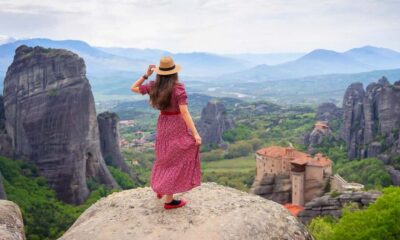
Meteora Monasteries Day Trip with Caves and Lunch
Read the review →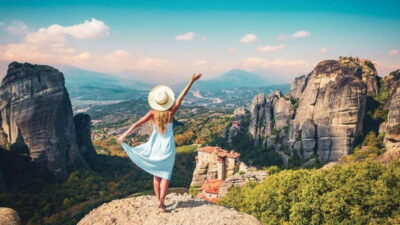
Athens to Meteora: Monasteries, Caves & Seaside Stopovers
Read the review →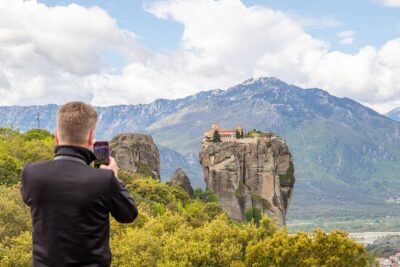
Meteora Monasteries, Caves & Coastal Stopovers with Lunch
Read the review →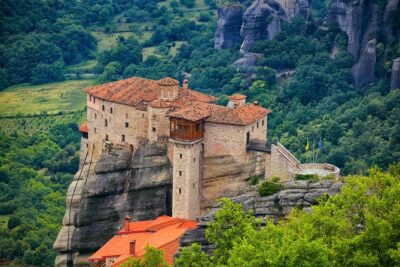
Meteora Monasteries, Hermit Caves Tour with Pickup
Read the review →Browse the lists this tour appears in