
Review · HISTORICAL TOURS
Boston: Underground Railroad History Tour of Beacon Hill
Boston’s Beacon Hill looks polished today, but its narrow streets once held a determined free Black community living beside some of Boston’s wealthiest residents. This small-group walking tour traces that uneasy neighborhood, connecting homes, schools, churches, and meeting places to the fight against slavery and the long road toward the Civil War.
I like the African Meeting House stop, where the tour slows down for a 20-minute visit, and I like the way the route links famous sights with quieter places such as the Lewis and Harriet Hayden House. The main drawback is simple: two miles of hills and uneven sidewalks can be tiring, and the entire tour runs outdoors in all weather.
Key points to know before you book

- Follow the Black Heritage Trail: Visit 10 landmarks tied to Boston’s Black community and the antislavery movement.
- See Underground Railroad homes: Stop at the homes of John J. Smith, John Coburn, and Lewis and Harriet Hayden.
- Visit the African Meeting House: Spend about 20 minutes at one of the tour’s most important sites.
- Connect Boston to the Civil War: Finish at the Robert Gould Shaw and 54th Massachusetts Regiment Memorial.
- Expect about 2 miles of walking: Beacon Hill’s steep hills and non-ADA-compliant sidewalks require steady footing.
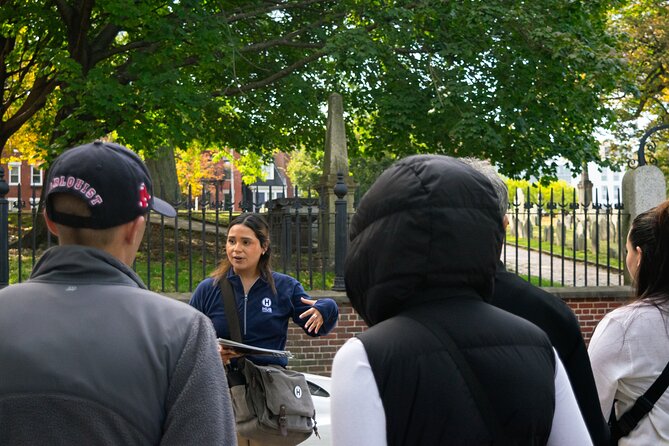
- Hear strong guide-led storytelling: Will, Dana, Joe, and William have all led tours, using clear explanations, visual aids, questions, and occasional acted-out scenes.
Why Beacon Hill tells a different Boston story
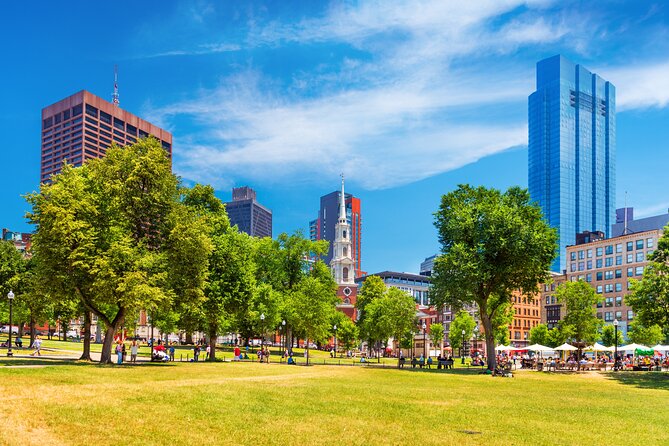
Boston Common is an easy place to begin. It gives you open space, familiar city sights, and a clear meeting point before the tour turns into the tighter streets of Beacon Hill.
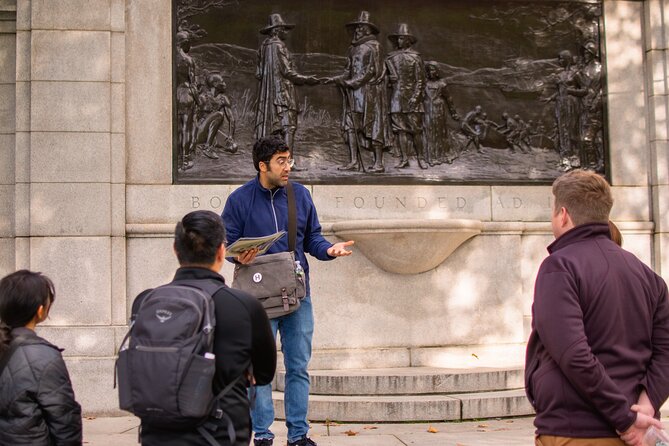
At the Soldiers and Sailors Monument, look for the white granite column topped by a female figure holding a flag. Four bronze figures sit around its base. The monument is in the center of Boston Common, close to the Boston Common Visitors Center at 139 Tremont Street.
From here, the guide sets the time period: roughly the three decades before the American Civil War. This was not a calm prelude. Arguments about slavery shaped politics, churches, schools, newspapers, businesses, and family life far beyond the plantation states.
The route focuses on Boston’s free African-American community and the people who fought against slavery from inside the city. You’ll hear about debates over school equality, racial integration, abolitionist politics, and the risks faced by people who helped those escaping slavery.
That focus gives the walk real value. Boston is often presented through the Revolution, the harbor, and famous white statesmen. This tour adds the people and places that challenge that tidy version of the city.
History tours within reach of the USA:
- Beneath The Streets Underground History Tour
★ 4.5 · 8,006 reviews - Emerald Cave Express Kayak Tour with Scenic & Historic Stops
★ 5.0 · 1,522 reviews - Boston: Underground Railroad History Tour of Beacon Hill
★ 5.0 · 141 reviews
From Boston Common to Beacon Hill’s narrow lanes
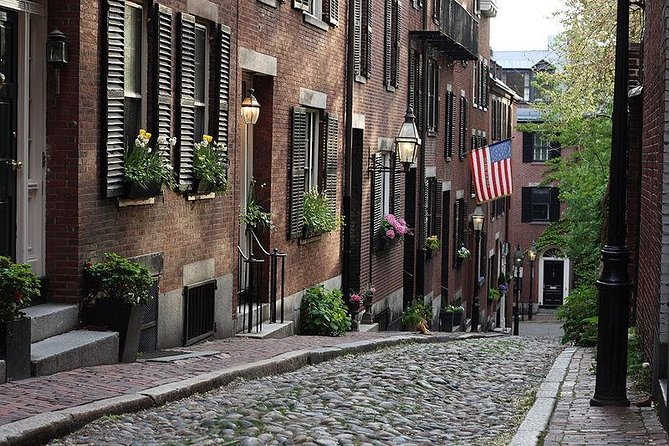
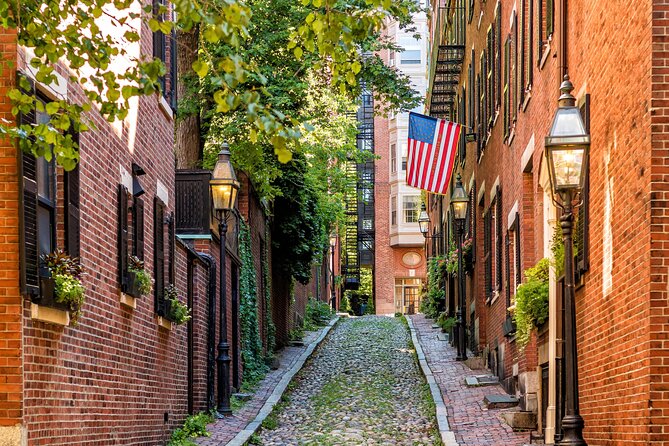
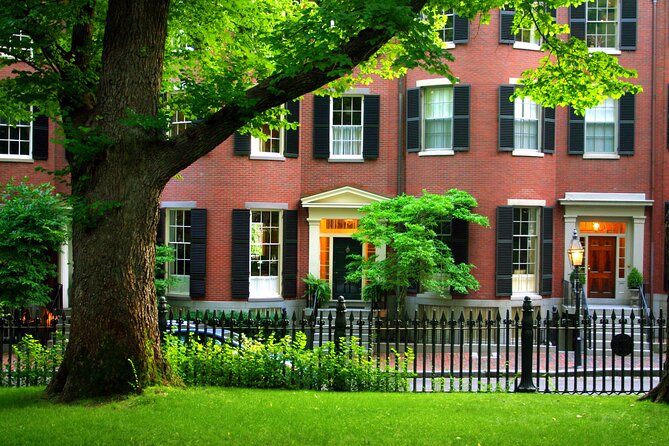
The first stops on Mount Vernon Street, Acorn Street, and Louisburg Square show you the visual character of Beacon Hill. These streets are among the neighborhood’s most photographed corners, with brick buildings, tight lanes, and handsome row houses.
The history here is more important than the scenery, though. The tour explains how a free Black community lived only a short walk from Boston’s wealthiest residents. That physical closeness makes the social divide easier to grasp. Freedom in Boston did not mean equal treatment, safety, or access to the same schools and jobs.
Acorn Street is a brief stop, about five minutes, while Louisburg Square receives more time. You will not spend the whole visit admiring architecture. Instead, the guide uses these streets to explain who lived nearby, how Beacon Hill changed, and why location mattered.
The narrow sidewalks can slow the group. That is useful for the history, since you have time to look at houses and plaques, but it also means you should wear shoes with good grip. This is not a flat stroll along a harbor promenade.
Phillips School and the fight over education
The Phillips School is one of the tour’s most important stops, with about 15 minutes devoted to it. Here the story turns to education and the effort to secure equal treatment for Black children.
The subject is not just school buildings. It is the broader question of who had access to public education, who was forced to attend separate schools, and how Boston residents argued over racial integration. These local disputes help explain the larger political conflict that eventually tore the United States apart.
I find this part especially useful because it moves beyond famous abolitionists and military figures. Education is something you can picture in daily terms: children, parents, teachers, school assignments, and neighborhood boundaries. It shows how discrimination worked through ordinary public systems.
The guide’s role matters here. Will has been praised for answering detailed questions and explaining difficult subjects in clear language. Dana is also noted for bringing attention to lesser-known parts of Boston’s past. The exact guide can vary, but the tour is designed around a live English-speaking historian rather than an audio recording.
Homes connected to Boston’s abolitionist network
The walk then moves through several houses tied to Black leaders and antislavery work. At the John J. Smith House, the John Coburn House, and the Lewis and Harriet Hayden House, you begin to see how activism operated at the neighborhood level.
These are not grand public monuments. They are residential places, which makes them powerful. The homes remind you that antislavery work took place where people lived, hosted visitors, shared information, and made difficult choices.
The Lewis and Harriet Hayden House receives about 15 minutes. The Haydens are central to the Underground Railroad story in Boston, and the stop gives the phrase Underground Railroad a human scale. Rather than treating it as a mysterious network in the abstract, the tour connects it to a real address in Beacon Hill.
Keep your expectations measured. This is a walking tour of historic locations, not a museum exhibition with a large collection of objects. Some stops are exterior explanations, and the route does not promise entry into every building.
You will also pass the Otis House Museum and the Old West Church. These are brief exterior points rather than full museum visits. The tour uses them as part of the surrounding story, so do not book this expecting admission to several indoor attractions.
More Cave Tours in the USA:
- Best Niagara Falls US Tour W/Boat Ride, Cave & More Wonders!
★ 5.0 · 8,372 reviews - Half-Day Emerald Cave Kayak Tour with Optional Hotel Pickup
★ 5.0 · 4,978 reviews - Niagara Falls USA: Maid of the Mist & Cave Adventure
★ 5.0 · 3,924 reviews - New York Catacombs by Candlelight
★ 4.5 · 2,863 reviews
Charles Street Meeting House and the cost of protest
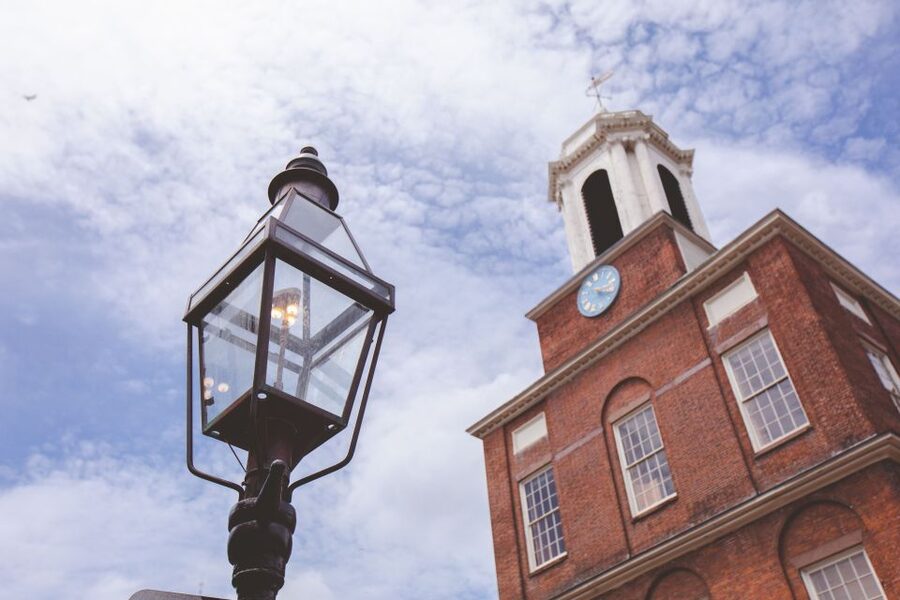
The Charles Street Meeting House receives about 15 minutes. It is an important place for understanding Boston’s religious and civic arguments around slavery, abolition, and racial equality.
Churches and meeting houses were not separate from politics in this period. They were places where people debated moral responsibility, organized campaigns, and confronted disagreements within their own communities. The tour shows how antislavery arguments could be both deeply religious and sharply political.
The route along Charles Street also gives you a change of pace. You move from individual houses to a larger public setting, then back toward homes tied to Black leadership. That variety keeps the walk from becoming a string of similar plaques.
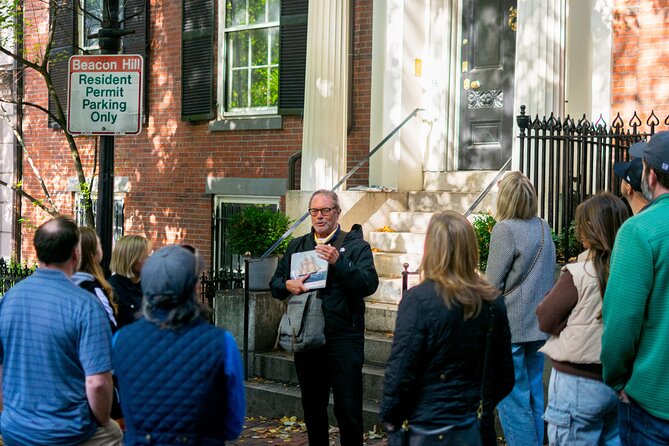
A useful feature of a small group is the chance to ask questions without shouting across a crowd. One guide, Joe, has used visual aids during the walk, while Will has been praised for handling a long run of questions with thoughtful answers. Those details matter if you prefer conversation to a fixed speech.
Smith Court, Abiel Smith School, and the African Meeting House
Smith Court Residences and the Abiel Smith School form the heart of the Black Heritage Trail. These sites help explain the institutions that supported Boston’s Black residents and the pressure placed on them by unequal laws and customs.
The Abiel Smith School is especially important because it connects directly to the education story introduced at Phillips School. Seeing both places helps you understand that school integration was not a single event or a simple policy change. It involved organized resistance, public argument, and Black families demanding equal rights.
The African Meeting House is the tour’s main indoor-style pause, with about 20 minutes for a guided visit and break. It is the oldest African meeting house in the United States, according to the historical focus of this route, and it served as a religious, civic, and community center.
This is where many of the tour’s themes come together. The meeting house represents faith, political organizing, education, abolition, and community life. You are not just looking at an old building. You are considering how a community created its own institutions in a city that did not offer equal access to the institutions around it.
Admission inside museums is not included, so check what access is available during your selected tour time. The experience clearly includes the African Meeting House stop, but the wider package is primarily an outdoor walking tour.
George Middleton House and the people behind the names
The George Middleton House receives about 15 minutes and adds another personal layer to the route. Stops like this prevent the story from becoming only a discussion of laws and movements.
The strongest moments on this kind of walk usually come when the guide explains what a person did, what pressures they faced, and how their choices affected others. William has been praised for using vivid storytelling and occasionally acting out scenes. That presentation style may not suit someone who wants a quiet academic lecture, but it can make names and events easier to remember.
The tour does not reduce Boston’s Black history to suffering alone. It also shows organization, leadership, family life, education, and political action. That balance is important. You leave with a picture of people shaping their city, not simply reacting to events controlled by others.
Charles Sumner, the State House, and the road to war
The Charles Sumner House is another 15-minute stop. Sumner was a major Massachusetts antislavery politician, and his place in the tour connects neighborhood history to the national political fight over slavery.
The Massachusetts State House appears as a pass-by landmark, with a view along the route. It is a useful reminder that the arguments discussed at houses, schools, and meeting halls also reached the formal center of state government.
Park Street Church comes into view along the way. The stop is described as scenic rather than a full guided visit, so you should treat it as part of the route’s visual context, not as a separate church tour.
Together, these places show how local activism moved into public politics. The tour’s subject is not only the Underground Railroad. It also covers the political movements and social conflicts that made compromise over slavery harder and helped set the stage for war.
Ending at the 54th Massachusetts Regiment Memorial
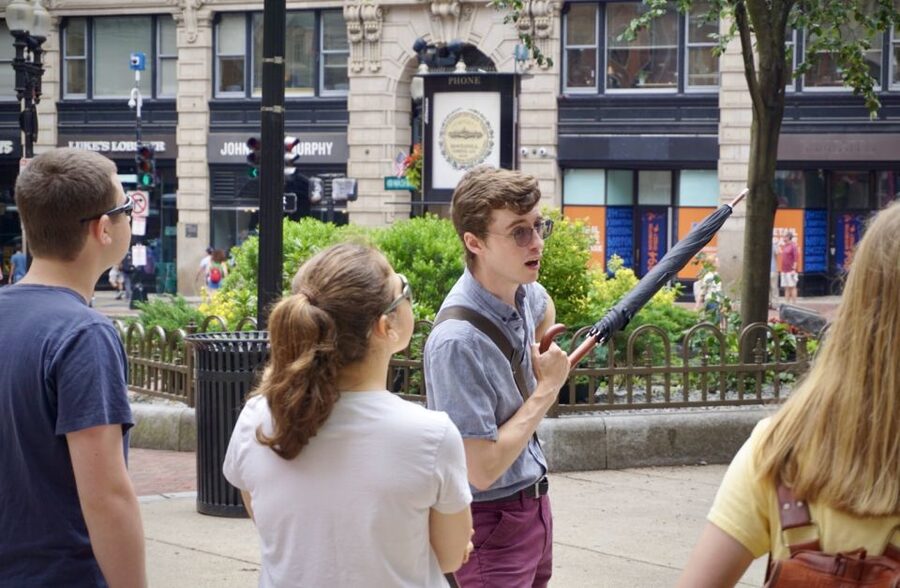
The walk loops back toward Boston Common and ends at the Robert Gould Shaw and the 54th Massachusetts Regiment Memorial. The final guided portion takes about 20 minutes.
This is a fitting ending. The 54th Massachusetts was one of the best-known Black regiments in the Union Army, and the memorial links the earlier decades of organizing and protest to the Civil War itself.
The monument is on Beacon Street, near where the tour began. That makes the finish practical if you want to continue exploring Boston Common, visit the State House area, or connect with other downtown sights.
The ending also gives the tour a clear arc. You begin with a free Black community fighting for rights before the war, then finish with Black military service during the war. The route makes the period feel connected rather than divided into isolated stories.
What $35 gets you
At $35 per person, the tour is fairly priced for a 150-minute guided walk led by a local historian. You get about two miles of route coverage, a focused look at 10 Black Heritage Trail landmarks, and interpretation that connects individual homes to national events.
The value depends on how you like to see a city. If you want indoor admission, extensive exhibits, or transportation between sites, this is not the right purchase. If you want context that helps you understand why Beacon Hill matters, the price is reasonable.
Small groups are another practical benefit. Beacon Hill’s sidewalks are narrow, and large groups can clog the same streets you are trying to appreciate. A smaller party makes it easier to hear the guide and ask questions.
The tour has a 4.9 rating from 38 reviews, and the strongest praise centers on guide enthusiasm, clear explanations, and the ability to bring overlooked stories to life. Guides named Will, Dana, Joe, and William have each received particularly warm feedback. Since assignments can change, book for the subject and route rather than expecting one specific person unless your confirmation names them.
Who should book this walk
I would choose this tour if you want more than Boston’s Revolutionary landmarks and harbor views. It suits adults, older children over age six, history students, first-time Boston visitors, and anyone interested in African-American history, abolition, or the Civil War.
It is also a good choice for a short city visit. In two and a half hours, you cover a concentrated part of Beacon Hill without needing taxis or transit between stops.
I would hesitate if you have low stamina, trouble with hills, or need an ADA-compliant route. The tour is not suitable for wheelchair users or people with mobility impairments. The walk runs rain or shine, and the total time can vary, though it will not exceed three hours.
Bring comfortable shoes and weather-appropriate clothing. Leave luggage and large bags behind, and note that video recording is not allowed. The tour is in English and operates entirely outdoors apart from the included stop associated with the African Meeting House.
You can cancel up to 24 hours before the start for a full refund, and reserve now while paying later. Those policies are useful if Boston weather or your schedule is still unsettled.
Should you book the Beacon Hill Underground Railroad tour?
Book it if you want a focused, place-based history lesson led by a guide who can answer questions and connect small neighborhood sites to the Civil War. The African Meeting House, the Hayden home, the Abiel Smith School, and the 54th Regiment Memorial give the walk a strong structure.
Skip it if you want a relaxed flat stroll, a general overview of Boston, or a tour centered on indoor museum collections. For most physically fit visitors who want to understand the Black experience and antislavery movement in Boston, $35 buys a thoughtful and unusually focused two and a half hours.
FAQ
Where does the tour meet?
Meet at the Soldiers and Sailors Monument in the center of Boston Common, close to the Boston Common Visitors Center at 139 Tremont Street, Boston, Massachusetts 02108. Look for the white granite column topped by a female figure holding a flag.
How long is the tour?
The scheduled duration is 150 minutes. The walk covers about 2 miles, or 3.2 kilometers, and the total duration can vary but will not exceed three hours.
Does the tour visit the African Meeting House?
Yes. The African Meeting House is a guided stop with about 20 minutes set aside for a break and visit.
Is the tour accessible for wheelchair users?
No. The route includes steep hills and non-ADA-compliant sidewalks. It is not suitable for wheelchair users or people with mobility impairments.
What should I bring?
Bring comfortable shoes and clothing suited to the weather. The tour operates rain or shine and is entirely outdoors.
Can I cancel for a refund?
Yes. You can cancel up to 24 hours in advance for a full refund. You can also reserve the tour and pay later.
Just added around the USA
- Underground Brooklyn Walking Brewery Tour★ 4.5 · 31 reviews
- Self-Guided Boston’s Beacon Hill Underground Railroad Audio Tour Walking Tour★ 4.5 · 29 reviews
- Boston: Underground Railroad History Tour of Beacon Hill★ 5.0 · 141 reviews
- Wild Cave Adventure Tour★ 5.0 · 41 reviews
- Kona Shore Excursion: Wild Dolphin Reefs Snorkel and Sea Caves★ 4.5 · 73 reviews
- Dolphin, Sea Cave, Captain Cook, Kealakekua Bay Reef Snorkeling★ 4.5 · 47 reviews
- Hilo Shore Excursion: Volcano Safari Lava Caves & Black Sand★ 4.5 · 363 reviews
- Emerald Cave Deluxe Kayak Tour with Catered Lunch & Guide★ 5.0 · 188 reviews
Historical Tours, compared.
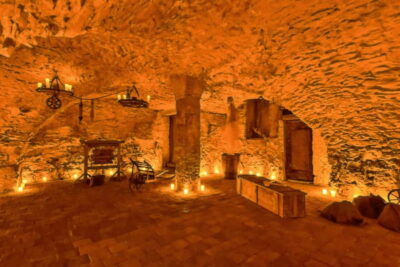
Oldtown, Medieval Underground & Dungeon History Tour
Read the review →
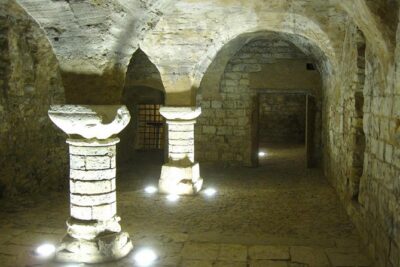
Prague Old Town, Medieval Underground and Dungeon Historical Tour
Read the review →


Emerald Cave Express Kayak Tour with Scenic & Historic Stops
Read the review →
Ancient History and Colosseum Underground Tour
Read the review →
Pilsen: Historic Underground Tour with a Glass of Beer
Read the review →Browse the lists this tour appears in