
Review · WINE TOURS
Belgrade Underground Tour w/ Sparkling Wine Along the River
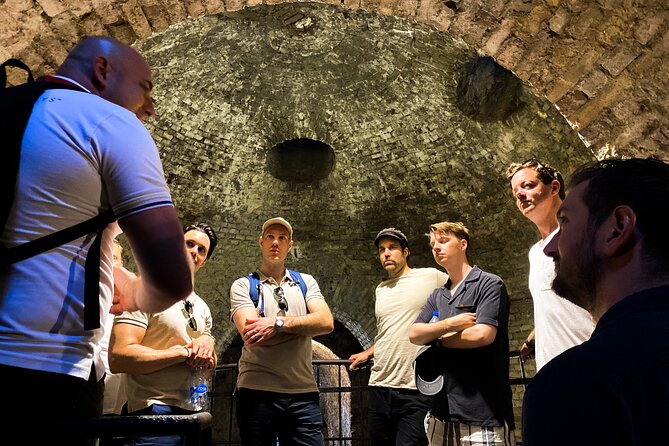
Belgrade keeps some of its best stories below street level. This tour takes you into a Roman-era well, an Austrian gunpowder warehouse, and a Cold War army bunker, then ends beside the Sava River with a glass of wine. Guides including Bojan, Darko, Kristina, and Novica are praised for clear English, humor, and strong command of Serbian history.
I like the mix of three very different underground sites and the way the tour connects Roman, Austrian, and Tito-era Belgrade. I also like the price: at $35.09, entrance fees, a professional guide, and a drink are included. The main caution is simple: this is not a full day underground. You spend time walking above ground around the fortress, and the stairways can be difficult if you have limited mobility.
Key points to know before booking
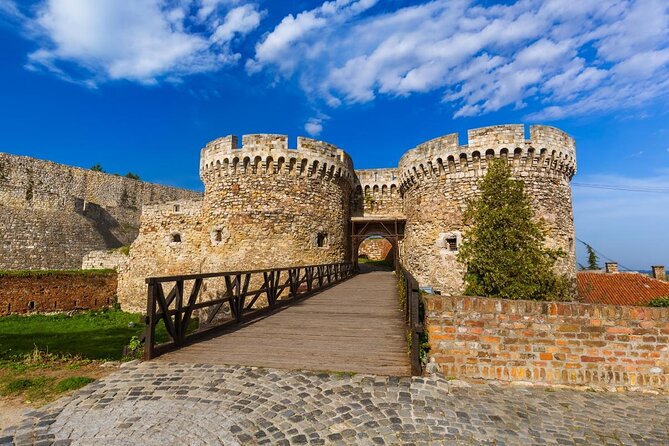
- Three underground sites: Visit the Roman Well, the Austrian Gunpowder Warehouse, and a Cold War military bunker.
- Strong English-speaking guides: Bojan, Darko, Kristina, Novica, and others are praised for clear explanations and an engaging style.
- A history lesson in layers: The route moves from Roman remains to Austrian defenses and Tito-era politics.
- Expect stairs and outdoor walking: The tour is not fully underground, and the Roman Well requires more than a casual stroll.
- A drink finishes the outing: The tour ends at a riverside bar or restaurant near Beton Hala, with wine included and other drinks sometimes available.
- Shared tours need four people: If the minimum is not met, you may be offered another date or a full refund.
Why Belgrade’s underground matters
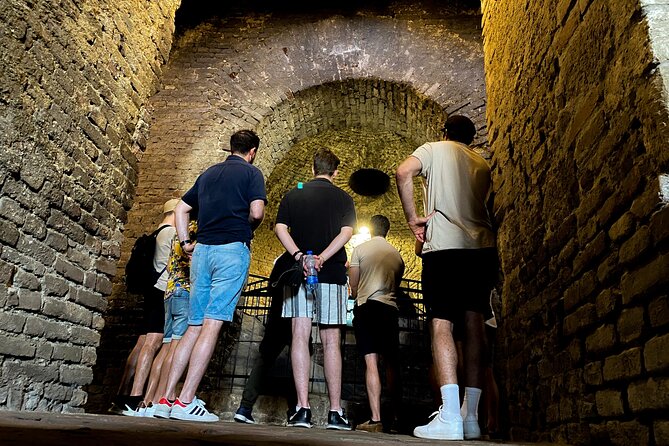
Belgrade Fortress sits where the Sava and Danube meet, a position that made the site valuable to Roman rulers, Austrian armies, Ottoman forces, and modern military planners. The surface gives you walls, gates, river views, and open spaces. Below it, you find traces of the people who defended, governed, and reshaped the city.
I like this tour because it does not treat the fortress as one neat historical period. The Roman Well is not actually Roman in construction, despite its name. It was built in the 18th century during the Austrian period, and its odd name is part of the site’s appeal. The guide can use it to explain how old labels, legends, and later military work overlap in Belgrade.
The route then shifts to the Austrian Gunpowder Warehouse. Here, you get a more direct sense of fortress engineering. The thick cave walls were built as part of the Austrian defense system during its conflict with the Ottoman Empire. You can touch the stone and picture the practical purpose of the space, rather than simply looking at another display case in a museum.
The final underground stop brings you into the 20th century. The army bunker dates from the Cold War, after the Second World War, and gives the guide a chance to explain President Tito’s political balancing act between major powers. That contrast is one of the tour’s best features. In a short walk, you move from ancient artifacts to military strategy in modern Europe.
Wine tours within reach of the world:
- 4-in-1 Cenote Tour Guided Experience with Breakfast, Lunch & Wine
★ 5.0 · 1,004 reviews - Paris: Les Caves du Louvre Guided Tour with Wine Tastings
★ 4.7 · 932 reviews - Khor Virap, Noravank and Birds’ Cave Trip with Wine Tasting
★ 4.8 · 845 reviews
Meeting at Kralja Petra 7
The tour begins outside Osnovna škola Kralj Petar I at Kralja Petra 7. You need to make your own way there, since transportation to and from the attractions is not included. The meeting point is near public transportation, which makes it practical from central Belgrade.
The tour is offered in English and normally takes about two and a half hours. The group can be as large as 40 people, although smaller groups are possible. A group of that size may feel less personal, especially in narrow underground rooms, so arrive ready to stay close to the guide and listen carefully.
The shared option requires at least four people. If that minimum is not reached, the operator says you will be offered a date with an existing small group or the chance to cancel without a fee. That is worth checking if you are booking close to your desired date. The activity is often booked about 24 days ahead, so popular dates may fill before your visit.
The Roman Well and Belgrade’s oldest layers
The first underground stop is the Roman Well beneath Belgrade Fortress. The site is linked to several mysteries and legends, and Alfred Hitchcock reportedly considered it his favorite spot in Belgrade. That detail gives the guide an easy opening, but the site itself deserves more than a famous-name anecdote.
The well dates from the Austrian period and reflects the fortress’s long military use. Your guide can explain how water, storage, defense, and control shaped life inside the walls. The setting also shows why Belgrade’s history can be confusing at first: a site with a Roman-sounding name may actually come from a much later period.
This is one of the places where the guide makes a real difference. Bojan, Darko, and other guides have been praised for answering questions and adding personal perspective without losing the main thread. If you enjoy asking how a place fits into the wider story of Serbia, this is a good moment to do it.
Be realistic about the physical side. The underground route includes quite a lot of stairs. A person who arrived on crutches could only visit the Roman Well, so this is not a suitable outing for everyone with restricted mobility. Most people can take part, but you should be comfortable walking on uneven surfaces and using stairs.
The Austrian Gunpowder Warehouse
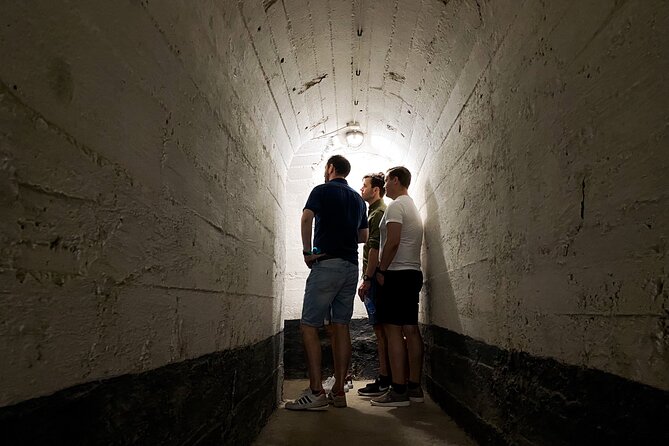
The second major stop is the Gunpowder Warehouse, built by the Austrians as part of their defenses against the Ottoman Empire. This is perhaps the most atmospheric part of the outing. Instead of viewing a fortress only from the outside, you enter a space designed for war and storage.
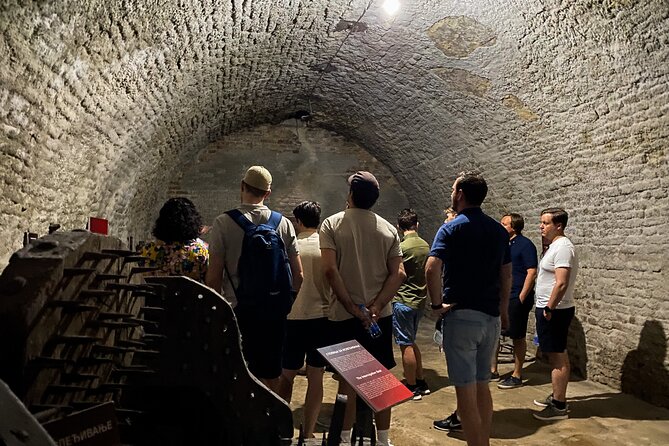
The walls are a key part of the experience. You have the chance to touch the cave surface and see how the underground rooms were adapted for military use. It is a tactile moment, but the guide’s explanation supplies the context. Without it, you might simply see a dark stone chamber. With it, the room becomes evidence of the struggle for control of the region.
The warehouse also functions as an exhibition area. Inside, you can see sarcophaguses and altars gathered from archaeological sites across Serbia. This adds an unexpected religious and archaeological element to what began as a military structure.
I like this combination because it avoids a narrow fortress story. You are not only hearing about armies and borders. You are also seeing objects connected to burial customs, worship, and earlier societies. The collection may appeal most to people who enjoy archaeology, but even casual sightseers get a useful change of pace from the military history.
The underground rooms can also be a welcome break on a hot day. One visit took place in temperatures of about 31 Celsius, and the cooler tunnels offered relief from the sun. That said, the tour still includes outdoor walking, so do not assume the entire outing will be cool and sheltered.
More Cave Tours in the world:
- Chichen Itza, Cenote, and Valladolid Tour
★ 5.0 · 24,293 reviews - Naples: Naples Underground Entry Ticket and Guided Tour
★ 4.4 · 21,781 reviews - Chichen Itza, Cenote & Valladolid Tour with Tequila and Lunch
★ 4.5 · 15,789 reviews - Colosseum: Underground and Ancient Rome Tour
★ 4.7 · 12,691 reviews
Tito’s bunker and the Cold War
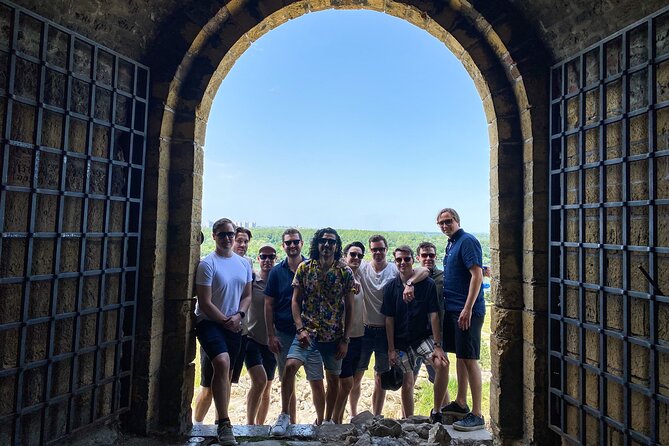
The army bunker is the tour’s most modern stop. It was built during the Cold War under President Tito’s rule, when Yugoslavia pursued its own political path between the major powers. The guide uses the bunker to explain Tito’s political maneuvering and the pressure placed on Yugoslavia after the Second World War.
This part gives the tour a different mood. The Roman Well feels mysterious, and the gunpowder storehouse feels old and defensive. The bunker is more severe and recent. Its existence reminds you that Belgrade’s military importance did not end with empires and medieval walls.
If you have already spent a full day touring the fortress above ground, the bunker and other underground rooms can add a new layer. If you expect a large network of tunnels or hours of subterranean exploration, you may be disappointed. The route visits three main underground sections, and some of the tour takes place outdoors.
That distinction matters. The name underground tour sets a strong expectation, but the experience is better understood as a guided history walk with three underground sites. One person who had explored the fortress the day before found the underground portion smaller than expected. I would book it for the stories and access to places you might not find alone, not for a huge cave system.
What the guides add
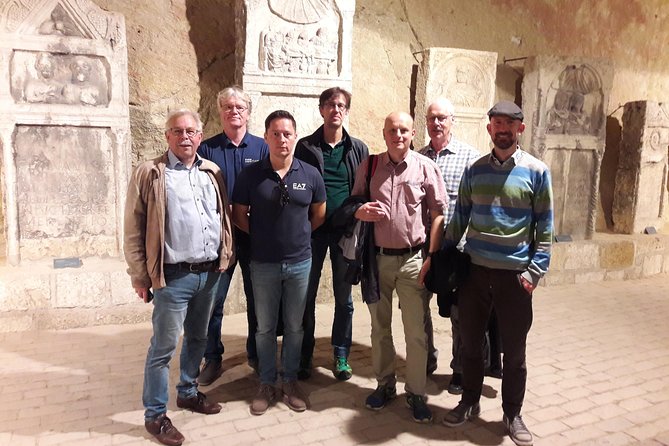
The guides are central to the value of this experience. Bojan receives especially strong praise for his command of Serbian history, concise delivery, wit, and ability to share information without turning the walk into a lecture. Darko is described as friendly, well organized, and ready to answer questions. Kristina and Novica also receive praise for clear explanations and an engaging manner.
Guide quality can vary from date to date, so I would not book on the assumption that one named guide is guaranteed. Still, the repeated mention of several guides suggests that the operator has a solid team. The best guides connect each room to the broader story of Belgrade and adjust to the group’s pace.
A good guide also helps with the practical challenges of the route. On hot days, the group may need a slower pace and more shade. In a larger group, clear speaking matters because narrow rooms can make it harder to hear. The strongest guides appear to handle both the history and the human side of the walk well.
Finishing beside the Sava River
The tour ends at Beton Hala, at Karađorđeva 2, near the Sava River. A glass of local wine is included in the advertised price, and the final stop gives you a chance to sit down after the stairs and walking.
The setting is modern rather than historic. That is useful to know. If you picture an old Serbian tavern with traditional furnishings, this is not necessarily what you will get. The final drink takes place in a contemporary riverside bar or restaurant, and one account described the venue as Michelin recommended.
The drink itself also deserves a small qualification. The experience includes alcoholic beverages and advertises a glass of local wine, but one account found the wine was not Serbian, while another enjoyed the wine and others chose different drinks. If tasting Serbian wine is important to you, ask what is being served on your date. The stop is still a pleasant way to finish, but it is best seen as a social ending rather than a formal wine tasting.
I like the location because it links the fortress walk to Belgrade’s riverfront. You can continue exploring Beton Hala afterward, or use the end point as a break before dinner. The tour does not include transport back to your starting point, so plan your next move from the river.
Is $35.09 a fair price?
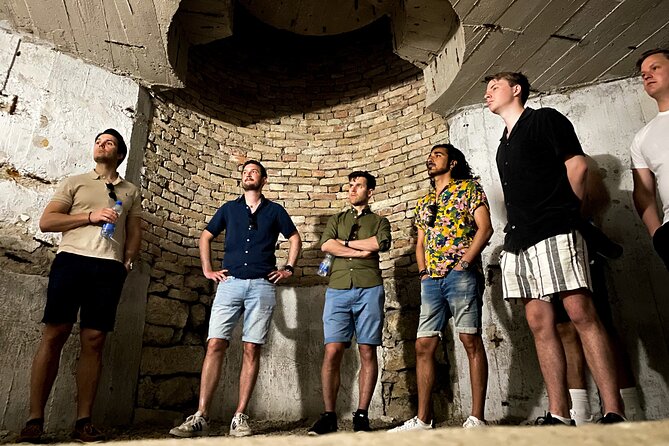
At $35.09 per person, the price is reasonable if you want a guided look at parts of the fortress you would probably not discover by yourself. Entrance fees, a professional English-speaking guide, and one drink are included. You are also paying for access to places that are not simply open rooms on a public walking route.
The value depends on what you want from Belgrade. If you are interested in military architecture, archaeology, Tito, or the layered history of the fortress, the cost is easy to justify. You get about two and a half hours of explanation, several admissions, and a riverside refreshment.
If you want a large number of underground chambers, the price may feel less attractive. There are three main underground locations, and the experience includes the open-air fortress area as well. I would compare it with the cost of a standard fortress walk and ask yourself if expert interpretation and access to the bunker and warehouse are worth the difference.
Group discounts are available, though the exact savings are not specified. The maximum group size is 40, and the shared tour minimum is four. For a family or group of friends, a discount may make this a particularly sensible way to organize an afternoon.
Who should book this experience?
I would recommend the tour to you if you want to understand how Belgrade changed across several eras rather than simply collect photographs. It suits first-time visitors who want a guided introduction, as well as people who already know the city and want access to less obvious fortress sites.
It is also a strong choice in hot weather, since the tunnels provide some relief. History fans, architecture lovers, and anyone curious about Cold War Yugoslavia will get the most from it.
I would be more cautious if you dislike stairs, have limited mobility, or expect a fully underground adventure. The route is not ideal for a person who cannot manage the steps, and the final drink is in a modern riverfront venue rather than a traditional tavern. You may also want to confirm the wine choice if Serbian wine is a priority.
Free cancellation is available up to 24 hours before the start time. Poor weather or failure to reach the minimum group size can also lead to a new date or a full refund.
Should you book the Belgrade Underground Tour?
Book it if you want access plus explanation. The Roman Well, Austrian warehouse, and Tito-era bunker are much more useful when someone can place them in Serbia’s long political and military story. The strongest guides, especially Bojan and Darko, appear to make the difference between a plain walk and a memorable history lesson.
Skip it if you want hours of underground exploration, a traditional wine tasting, or a completely step-free route. For most visitors who can handle the stairs, the $35.09 price offers a good mix of unusual sites, strong guiding, and a relaxed drink by the Sava.
FAQ
How long does the Belgrade Underground Tour last?
The experience lasts approximately two and a half hours. The listed itinerary also gives two hours for the main fortress portion, followed by the drink at the river.
Where does the tour start?
It starts at Osnovna škola Kralj Petar I, Kralja Petra 7, Belgrade, Serbia.
Where does the tour finish?
The tour ends at Beton Hala, Karađorđeva 2, Belgrade 11080, beside the Sava River.
Is transportation included?
No. You must arrange your own transportation to and from the attractions. The meeting point is near public transportation.
What underground sites will I see?
The route includes the Roman Well, an Austrian Gunpowder Warehouse, and a military bunker from the Cold War period.
Is a drink included in the price?
Yes. The price includes alcoholic beverages, specifically a glass of local wine as advertised. Other drinks may be available at the final venue.
Can everyone participate?
Most people can take part, but the tour includes quite a lot of stairs and some outdoor walking. Someone using crutches may not be able to complete the full route.
What happens if the shared tour does not reach four people?
You will be offered the choice of joining a date with an existing small group or canceling without a fee. If the activity is canceled because the minimum is not reached, you can choose another date or experience, or receive a full refund.
Just added around the world
- Capri Adventure Cruise: Sea Caves, Coastline & Blue Grotto Visit★ 5.0 · 18 reviews
- Blue Grotto and Capri Boat Tour with Aperitivo Swim and Snorkel★ 4.5 · 47 reviews
- Kayak tour in Capri between caves and beaches. Photos included.★ 5.0 · 302 reviews
- Capri Island and Blue Grotto Small Group Day Tour from Capri Port★ 5.0 · 62 reviews
- Capri Private Boat Tour from Capri (3 Hours) with Blue Grotto★ 4.5 · 42 reviews
- Capri: Boat Tour, Priority Tickets & Blue Grotto (Optional)★ 4.0 · 63 reviews
- Blue Grotto and Capri by Private Boat Tour★ 5.0 · 26 reviews
- Blue Grotto Visit and Capri Semi-Private Boat Tour★ 5.0 · 53 reviews
Wine Tours, compared.
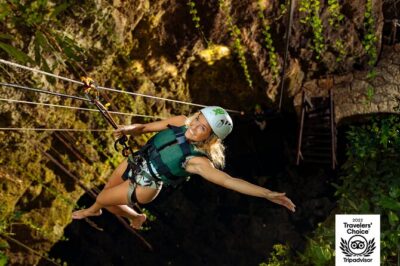
4-in-1 Cenote Tour Guided Experience with Breakfast, Lunch & Wine
Read the review →
Les Caves du Louvre Guided Tour with Wine Tastings
Read the review →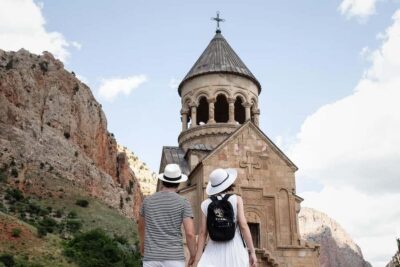
Khor Virap, Noravank and Birds’ Cave Trip with Wine Tasting
Read the review →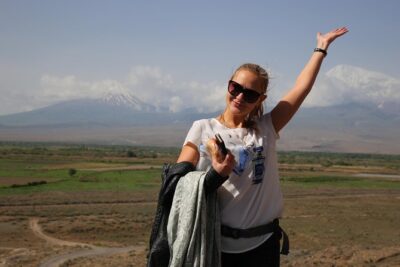
Group tour: Khor Virap, Noravank, Areni Winery and Cave
Read the review →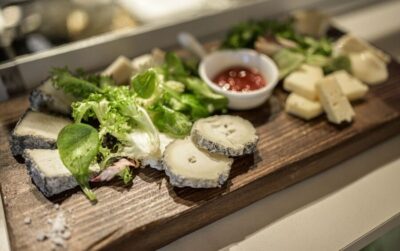
Dijon: La Cave du Palais Burgundy Wine Tasting Experience
Read the review →
Beer and Wine Spa Bath with Salt Cave Experience
Read the review →
Margaret River, Caves, Wine and Cape Leeuwin Lighthouse Tour from Perth
Read the review →Browse the lists this tour appears in