
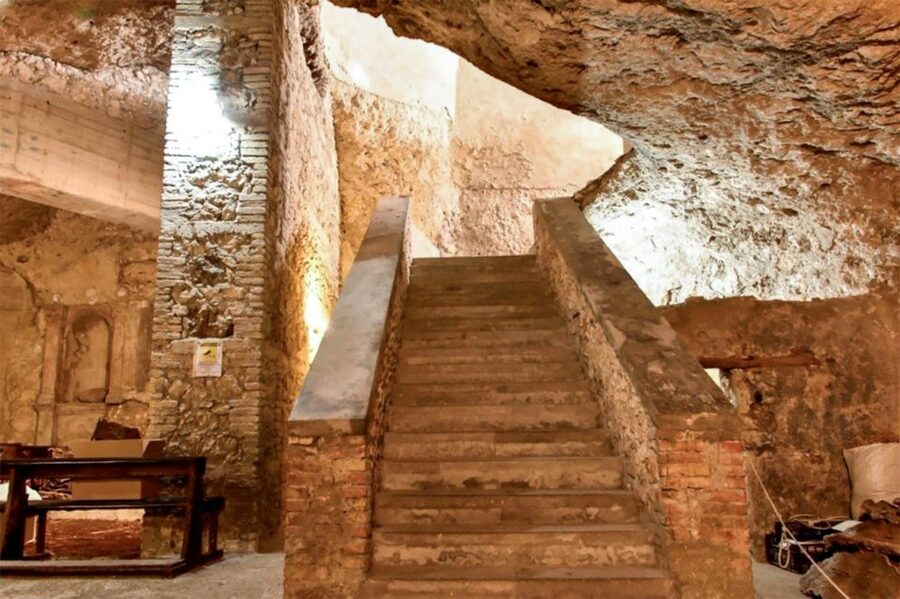
Review · ITALY CAVE TOURS
Cagliari: Underground Cagliari Walking Tour
Cagliari keeps some of its best stories below street level. This tour links a 120-meter WWII shelter, a damp early-Christian crypt, and Roman ruins beneath Saint Eulalia, giving you three very different ways to read the city.
I like the contrast between modern wartime history and ancient archaeology. I also like the short walks through Stampace and Marina, which connect the sites instead of treating them as isolated rooms. The main drawback is the dual-language format: with a large group, explanations in English and Italian can take extra time.
The tour costs about $35 per person, including admission to all three underground sites. You can add a guided Old Town walk or a wine-and-snack option, but the latter is closer to one glass of wine with Sardinian nibbles than a full tasting.
Key points at a glance
- A 120-meter school shelter: Walk through a private tunnel beneath the Salesian school that served as a bomb shelter during World War II.
- A crypt with a very old past: Santa Restituta includes surviving frescoes and signs of pagan worship dating to the fifth century.
- Roman remains beneath a church: Saint Eulalia’s archaeological area includes a paved Roman road.
- Two historic districts connect the stops: Short walks through Stampace and Marina help you see how the underground sites fit into modern Cagliari.
- A bilingual guided experience: The tour runs in English and Italian, with private group options available.
- Flexible add-ons: Choose an Old Town walk or a wine-and-snack stop, depending on the option you book.
Three underground chapters of Cagliari
This is not a single cave visit. You move between three separate sites, each with its own period and mood.
The first stop is tied to the twentieth century and the fear of wartime bombing. The second takes you into a religious space shaped by centuries of use. The third reaches back to Roman Cagliari, where the remains include an actual paved road.
That variety is the tour’s best feature. If you already plan to see Cagliari’s churches and streets, the underground route gives you a different angle without asking you to spend a full day in a museum. You will still spend time above ground, so this is a walking tour with underground visits, not a continuous cave expedition.
The standard route takes around two to four hours. The shorter timing should suit the core underground visits, while the longer version likely includes the Old Town walk or another extended option. Exact timing depends on the selection you make and the opening hours of the sites.
More Cave Tours in Italy:
- Naples: Naples Underground Entry Ticket and Guided Tour
★ 4.4 · 21,781 reviews - Colosseum: Underground and Ancient Rome Tour
★ 4.7 · 12,691 reviews - Naples: Catacombs of San Gennaro Entry Ticket & Guided Tour
★ 4.6 · 7,941 reviews
Starting beneath the Salesian school
The tour begins at the Istituto Salesiano Don Bosco on Via Sant’Ignazio da Laconi. The first guided visit lasts about 40 minutes.
Here, you enter a private tunnel shelter beneath the school. At 120 meters long, it is substantial enough to feel like a real passage through wartime Cagliari rather than a quick look at a basement room. The tunnel served as a bomb shelter during World War II, giving the site a direct link to the city’s recent past.
The atmosphere is a key part of the visit. The tunnel is described as candle-lit, which gives it a quiet, enclosed feel. That setting can make the history more immediate, though it also means this stop will not suit anyone uncomfortable in confined spaces.
Your guide supplies the context that the bare tunnel cannot provide on its own. Ask questions if you want to understand how the shelter fits into daily life in the city during the war. The tour is guided in English and Italian, so the pace may be slower than an English-only visit.
After the shelter, you walk for about ten minutes through Stampace. That short outdoor stretch matters. You are not simply transported from one historical chamber to another. You get a glimpse of the district above the tunnel and a chance to reset before the next enclosed site.
Santa Restituta and the sound of dripping water
The crypt of Santa Restituta is the most atmospheric stop. Its guided visit also lasts around 40 minutes.
This underground space preserves frescoes and evidence of pagan worship linked to the fifth century. The site has a layered past, and the guide helps separate the different periods rather than leaving you to look at worn walls without context.
Expect damp conditions and the sound of water dripping. That detail is small but useful: this is not a polished, brightly lit gallery. The moisture and darkness are part of the character of the crypt, although they may make the footing feel less comfortable for some people.
I would pay close attention here if you enjoy religious history and archaeology. The crypt shows how a place can be used and reshaped across long periods. It is also a good counterpoint to the WWII shelter. The first stop concerns an urgent, modern threat; Santa Restituta brings you into a much older world of worship and burial.
The site visit takes about 40 minutes, followed by a ten-minute walk toward Marina. Comfortable shoes are important throughout the tour, especially when moving through older underground areas and then continuing on city streets.
Roman Cagliari beneath Saint Eulalia
The final main stop is MUTSEU, the Museum of the Treasury and Archaeological Area of Saint Eulalia. Its underground visit lasts about 40 minutes.
The main feature is a Roman paved road, along with other Roman remains beneath the church. A road is a particularly helpful archaeological find because it gives you a clear sense of how the ancient city was organized. Instead of seeing only fragments in display cases, you can connect the ruins to movement, trade, and urban life.
This is also a practical stop for anyone planning to visit Cagliari’s archaeological museum. One person who had planned to visit the archaeology museum found that it was already included in the tour, making the booking more useful than expected. Check the exact venue included in your chosen option, but this stop can save you from arranging a separate visit.
The archaeological area completes the tour well. You have seen modern wartime shelter, an early religious crypt, and Roman infrastructure. The three locations do not blur together, and each gives you a different reason to go underground.
Sites can occasionally change if opening hours require it. That is worth keeping in mind if one particular location is the main reason you are booking. The operator may substitute another underground site.
Same stretch of coast and karst, a different entrance:
- Matera: Sassi Tour with Cave House and Rupestrian Church
★ 4.7 · 6,618 reviews - Rome: Capuchin Crypts and Catacombs Tour with Transfers
★ 4.6 · 6,456 reviews - Naples: Spanish Quarters Underground Guided Tour
★ 4.8 · 5,064 reviews - Expert Guided Tour of Colosseum Arena OR Underground, and Forum
★ 4.5 · 5,041 reviews
Stampace and Marina between the sites
The walks between stops are short, about ten minutes each, but they add useful local context.
Stampace and Marina are historic districts with their own character. You pass through them while moving from the Salesian school to Santa Restituta and then toward Saint Eulalia. The outdoor sections also give you fresh air between the enclosed sites, which is welcome on a tour involving tunnels and crypts.
Do not treat these walks as transfers you need to endure. Use them to ask your guide how the districts connect to the sites below. The supplied route ends at one of several central locations, including Saint Eulalia, Piazza Yenne, and nearby streets. That makes it easy to continue exploring Cagliari after the tour, though the precise end point depends on your booking option.
If you choose the Old Town extension, the experience continues with a guided walk through the historic center. This is the better add-on if you want orientation and city sights after the underground visits. It also gives the tour a clearer sense of place, since you see the streets above the ruins you have just explored.
Choosing the Old Town walk or wine option
The add-on changes the feel of the experience.
The Old Town walk is the more substantial choice if you want history and orientation. After the three underground sites, your guide takes you through the historic center and points out key sights. Since the tour already passes through Stampace and Marina, this option builds on the walking side of the experience.
The wine-and-snack option is more of a light finish. It includes wine and Sardinian snacks, but you should not expect a broad comparative tasting or a long food session. The practical description is one glass of wine with local nibbles. That can still be a pleasant way to end the tour, especially if you want a small introduction to Sardinian flavors, but the wording may suggest more than the actual portion provides.
One useful detail: a separate food guide called Silvia led a particularly small tasting group for one booking, while other guide names connected with the tour include Francesca, Valentina, Federico, and others. Guide assignments can change, so do not book based on a specific person. The important point is that the experience depends heavily on the guide’s ability to explain both languages clearly and keep the group moving.
How the bilingual format affects the pace
The tour operates in English and Italian. This is convenient for mixed groups and means you do not need to arrange separate language visits, but it can affect the rhythm.
In a small group, the format may feel easy enough. In a group of around 25 people, expect explanations to be repeated in both languages. One person found that splitting English and Italian into separate groups would have made the visit easier. That is a fair concern, especially in a crypt where sound can carry poorly.
The upside is that the guides are used to switching languages. Angela specifically praised her guide’s ability to move between English and Italian without rushing the group. Other feedback highlighted clear explanations, humor, enthusiasm, and strong subject knowledge from guides including Francesca, Valentina, and Federico.
A private group is available if you want a more personal pace and more room for questions. It will cost more than the basic $35 price, but the difference may matter if your party has limited time or wants detailed explanations. For an ordinary shared booking, arrive ten minutes early and be ready to stay close to the guide.
Value at about $35 per person
At $35, the tour offers reasonable value if you want several historical sites in one organized outing.
The price includes admission to the three underground locations and a live guide in English and Italian. Buying separate entries might not give you the same connection between the sites, and you would need to arrange the route yourself. The tour also removes some of the guesswork around finding entrances that are easy to miss from the street.
The value is strongest for a first visit to Cagliari, or for anyone with only a day or two in the city. You get ancient, religious, and twentieth-century history in one booking. The Old Town addition makes the longer version more useful still.
The value is weaker if you dislike guided groups, want to spend a long time at one archaeological site, or expect a large wine tasting. In that case, the core tour still has merit, but the add-on may not justify extra cost. Also remember that the basic price does not turn the tour into a fully underground experience. You will walk outside between the sites.
Who should book this walk?
I would recommend it to you if you enjoy history but want more than a standard church-and-square route. It is especially good for people interested in archaeology, wartime history, and unusual city spaces.
It also suits visitors who like a guide to connect separate sites. Cagliari’s underground locations can be hard to understand as isolated stops. Here, the route gives you a clear progression from the Roman period through later religious use to World War II.
You should think twice if you have claustrophobia, mobility limitations, or trouble walking on uneven surfaces. The tour is not suitable for wheelchair users, people with mobility impairments, or people with visual impairments. The operator also advises against booking if confined spaces are a problem.
Wear comfortable shoes. Bring an umbrella if rain is possible, since part of the tour is outdoors. The tour requires at least two adults per booking, and you should arrive ten minutes before the scheduled start.
Should you book the Underground Cagliari Walking Tour?
Book it if you want a compact, well-organized look at three different layers of Cagliari. The WWII shelter, Santa Restituta crypt, and Saint Eulalia ruins each offer something distinct, and the $35 price includes entry and guiding at all three.
Choose the Old Town extension if you want more city orientation. Choose the wine option only if a glass of wine and Sardinian snacks sounds right to you, rather than a full tasting menu.
Skip it if you need step-free access, dislike tunnels, or prefer to explore one archaeological site at your own pace. For most able walkers who enjoy local history and do not mind a bilingual group, this is a smart way to see the city from below and understand what lies beneath its sunny streets.
FAQ
How long does the Underground Cagliari Walking Tour take?
The tour lasts between two and four hours, depending on the option selected. The three underground visits each take about 40 minutes, with short walks between them.
What sites are included?
The route includes the tunnel shelter beneath the Salesian school, the crypt of Santa Restituta, and the archaeological area beneath Saint Eulalia. Alternative underground sites may be used if opening hours require a change.
Is the tour entirely underground?
No. You visit three underground sites, but you also walk outdoors through the Stampace and Marina districts. The route includes about ten minutes of walking between the main stops.
Is the tour available in English?
Yes. The guide speaks English and Italian, and the tour is conducted in both languages.
Does the price include entry fees?
Yes. Entry to all three underground sites is included in the tour price. The listed price is about $35 per person.
Can I choose a private group?
Yes. A private group option is available. Shared group tours are also offered.
What should I bring?
Wear comfortable shoes because the experience includes underground visits and outdoor walking. An umbrella is suggested if rain is expected.
Is the tour suitable for wheelchair users or people with claustrophobia?
No. The experience is not suitable for wheelchair users, people with mobility impairments, people with claustrophobia, or people with visual impairments.
Just added around Italy
- siracusa boat tour with visit to sea caves and ortigiaisland★ 4.6 · 34 reviews
- Boat tour of Ortigia Island and sea caves★ 5.0 · 407 reviews
- Boat tour Giardini Naxos Taormina Isola Bella Blue Grotto★ 4.5 · 541 reviews
- Syracuse: Ortigia Island & Sea Cave Boat Tour with Prosecco★ 4.7 · 418 reviews
- Private Tour of Catacombs and Ancient Appian Way (hotel pick up)★ 4.5 · 120 reviews
- Hidden Gems & Rome Catacomb Semi Private Tour by golf cart★ 5.0 · 114 reviews
- Private Guided Tour of Colosseum Underground OR Arena and Forum★ 5.0 · 111 reviews
- Exclusive Capri, Anacapri & Blue Grotto Private Tour from Naples★ 5.0 · 121 reviews
Italy Cave Tours, compared.
Naples Underground Entry Ticket and Guided Tour
Read the review →
Colosseum: Underground and Ancient Rome Tour
Read the review →
Catacombs of San Gennaro Entry Ticket & Guided Tour
Read the review →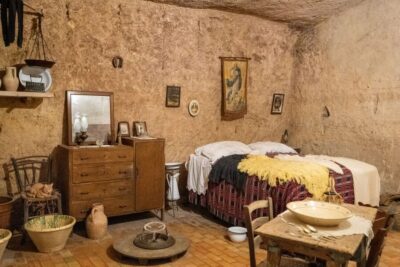
Sassi Tour with Cave House and Rupestrian Church
Read the review →
Capuchin Crypts and Catacombs Tour with Transfers
Read the review →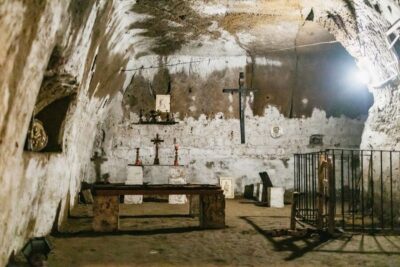
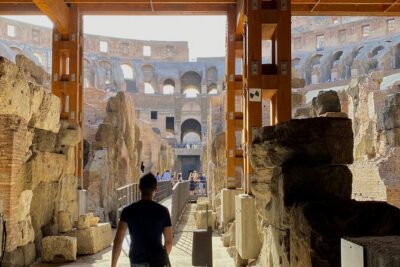
Expert Guided Tour of Colosseum Arena OR Underground, and Forum
Read the review →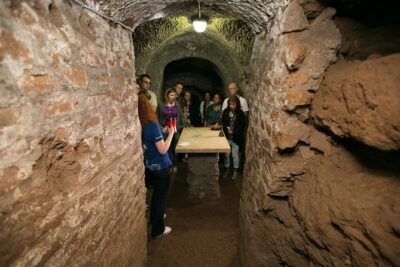
The Original Roman Crypts and Catacombs Tour with Transfers
Read the review →Browse the lists this tour appears in