
Review · AUDIO TOURS
Marseille: Cosquer Cave Ticket & Panier District Audio Tour
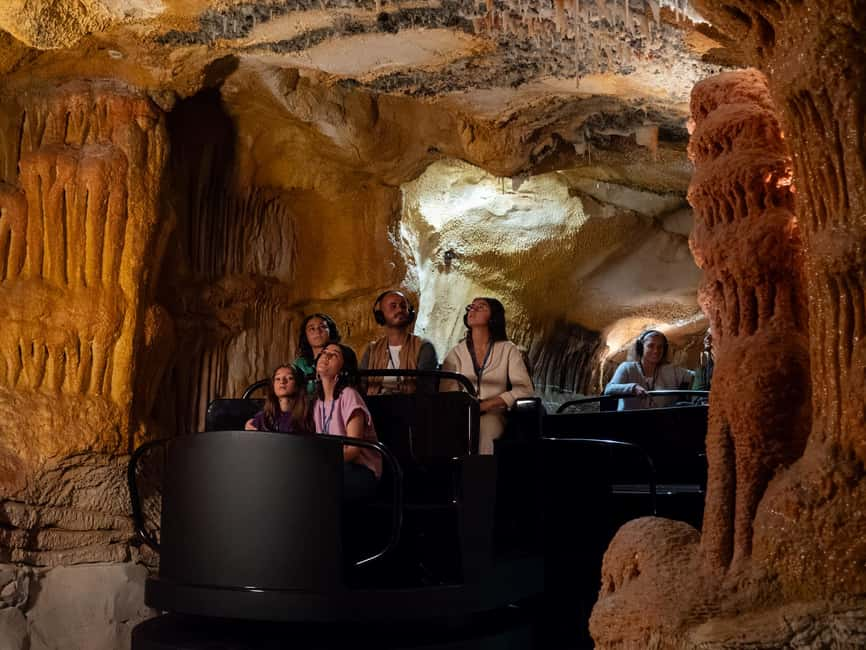
Marseille’s Cosquer Cave brings prehistoric art up from the Mediterranean in a clever, modern way. You walk over a floating walkway, see the equipment used in the cave’s discovery, then descend into a recreated cavern aboard an exploratory vehicle. It is a fine choice if you want something beyond the usual harbor views.
I like the combination of ancient cave art and a flexible city tour. I also like that the digital route includes major sights such as the Vieux Port, Canebière, Le Panier, and Notre-Dame de La Garde, letting you explore at your own pace. The main drawback is that the visit is fairly short, and parts of the museum display may be difficult if you do not speak French.
Key points to know
- The Cosquer Cave is a recreation, not the original underwater cave, with prehistoric paintings presented through an exploratory vehicle.
- A floating walkway and historic diving equipment introduce the remarkable story behind the cave’s discovery.
- The cave audio guide is available in six languages: French, English, German, Dutch, Spanish, and Italian.
- The Marseille city tour is self-guided, so you can visit the Vieux Port, Canebière, Le Panier, and Notre-Dame de La Garde on your own schedule.
- You need your own smartphone and headset, and the sightseeing app should be downloaded by scanning a QR code before arrival.
- The listed price is $27 per person, which is reasonable if you plan to use both the cave admission and the city audio tour.
Entering the Cosquer Cave at Esplanade J4

The visit begins at the Cosquer Cave entrance on Promenade Robert Laffont, at Esplanade J4. You go directly there rather than meeting a guide somewhere else in Marseille. That makes the start simple, especially if you are already visiting the waterfront area.
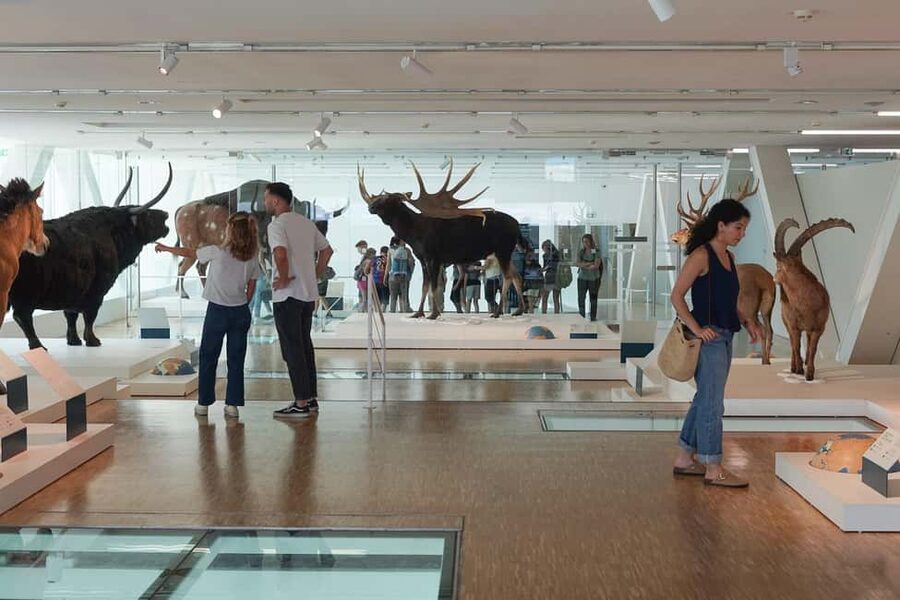
The first section sets the scene above the artificial sea. A floating walkway gives the entrance a nautical feel, and you can see the diving equipment connected with the cave’s discovery. This is a useful introduction because the original cave is not an ordinary archaeological site. It lies below the Mediterranean, so the recreation is the practical way to show the paintings and animal figures to the public.
I like this opening because it connects the modern story to the prehistoric one. You are not simply dropped into a dark room filled with replicas. The equipment helps explain the effort needed to reach the original cave and why the recreated setting exists in the first place.
Self-guided tours within reach of France:
- Paris: Catacombs Entry & Seine River Cruise with Audio Guide
★ 4.4 · 1,150 reviews - Paris: Catacombs, Audio Guide, and River Cruise Option
★ 4.6 · 966 reviews - Nerja: Caves of Nerja Entry Ticket with Audio Guide
★ 4.6 · 1,616 reviews
Riding through prehistoric art
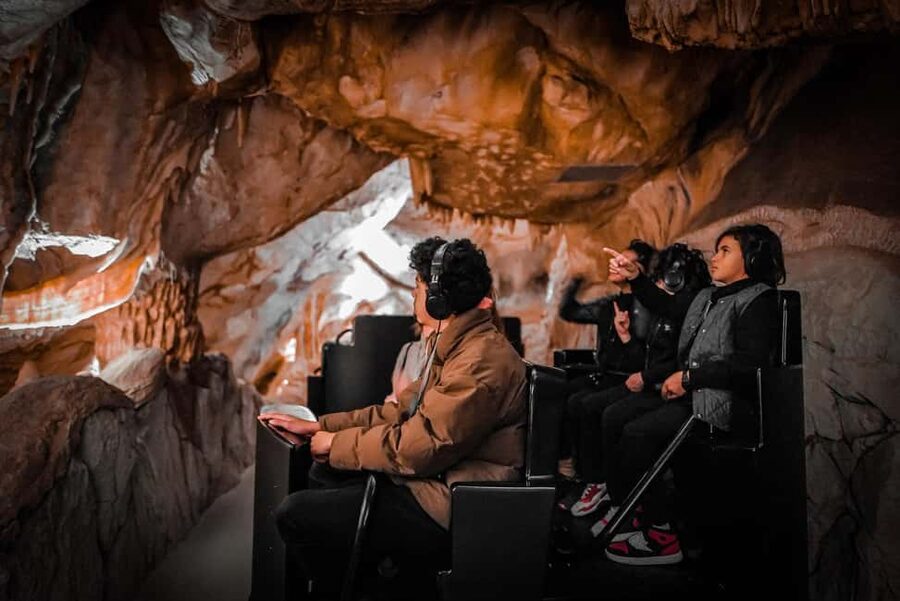
After the introductory area, you descend into the recreated cave and board an exploratory vehicle. The vehicle presents the cave as a moving visual experience rather than a standard museum corridor. You can expect to see recreated prehistoric paintings and signs of early human life while listening to the included audio guide.
The audio commentary is available in French, English, German, Dutch, Spanish, and Italian. If you want the full story, choose your language before setting off. The audio guide is one of the strongest parts of the admission because the images alone cannot explain what you are seeing or why the cave matters.
The artwork gives the visit its real purpose. You are looking at scenes created by early humans, reproduced in a setting designed to suggest the original cave. The subject is unusual for Marseille, a city better known for its port, churches, and Mediterranean setting. That contrast makes the Cosquer visit a useful change of pace during a city break.
The experience does not last all day. One detailed comment described the cave portion as lasting about 40 minutes, with the overall visit feeling short. The supplied duration for the complete activity is two hours, but that includes the city audio tour as well as the cave. Plan on the Cosquer section being a focused visit, not a half-day museum outing.
The vehicle format may appeal to you if you want a simple, structured presentation. It also means you are not wandering freely through a full-size cave complex. If you prefer large museums with long galleries and many objects to study, you may find the cave section limited.
Seeing the discovery equipment before the ride
The diving equipment deserves a little attention before you move on. It gives the cave a human and modern point of reference. The original discovery depended on underwater exploration, and the display helps you picture the conditions behind the story.
You will not be visiting the actual underwater cave. The public presentation is a recreation, created so the prehistoric artwork can be seen without sending visitors into a protected site beneath the sea. That distinction matters when setting expectations. The appeal is not physical access to the original cavern, but the chance to see how its artwork and atmosphere have been presented for a general audience.
I would allow a few quiet minutes here rather than rushing straight to the vehicle. This is one of the few parts where the modern discovery process is made visible. It also gives children a concrete object to focus on before the more abstract cave scenes begin.
Using the audio guide without a tour leader
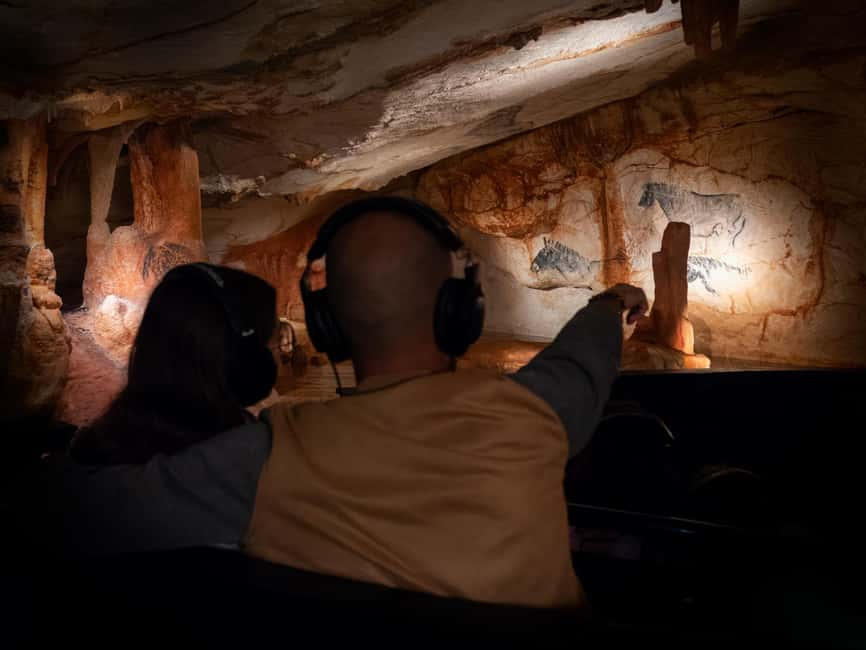
This is a self-guided activity. There is no live guide leading your group, and no guide’s name is provided because the commentary comes through the audio system and sightseeing app.
That arrangement has clear advantages. You can listen at your own pace, avoid keeping up with a group, and combine the cave with your own plans for Marseille. It is also easier to choose the language you need. The cave commentary covers six languages, and the city app provides multilingual commentary as well.
The trade-off is that you must manage the technology yourself. The cave audio guide is included, but the smartphone and headset are not. For the Marseille portion, scan the QR code and download the sightseeing app before you arrive. I would do this while connected to reliable Wi-Fi, then bring a charged phone and personal headphones.
One point deserves care. A comment about the visit noted that the museum material was not available in English and that translators were taken away after the cave portion. The cave audio is offered in English, but you should not assume every written display outside the vehicle will be translated. If you depend on English explanations, make sure you understand how the audio equipment and app work before entering.
Audio tours within reach of France:
- Palma: Caves of Genova Ticket & Digital Audio Guide
★ 3.9 · 820 reviews - Rome: Navona Square Underground Ticket with Audio Guide
★ 4.0 · 518 reviews - Rome: Guided Catacombs Tour & Capuchin Crypt (Audio Guide)
★ 4.3 · 191 reviews - Margaret River: Self-Guided Audio Tour of Mammoth Cave
★ 4.7 · 48 reviews
From the Cosquer Cave to Marseille’s waterfront

The second part uses the digital city tour to widen your view of Marseille. The route includes the Vieux Port, Canebière, Le Panier, and the Basilica of Notre-Dame de La Garde. You are not joining a fixed walking group, so the exact order and pace are yours to decide.
The Vieux Port is the natural place to start. It is one of Marseille’s defining public spaces, and it gives you an immediate sense of the city’s connection with the sea. Use the audio commentary to orient yourself, then stop for photographs and look around without feeling pressured to keep pace with a guide.
Canebière gives the city tour a more urban focus. It is one of the best-known streets in Marseille and helps connect the harbor with the city beyond the waterfront. The app is most useful here if you want short explanations while moving between major points rather than a long formal lecture.
Le Panier offers a different kind of stop. The district is included as part of the self-guided route, so you can explore its streets with your phone in hand and pause when something catches your eye. The main benefit is control. You can spend more time in the area if it interests you, or move on if your schedule is tight.
Notre-Dame de La Garde adds a major landmark to the route. The activity information identifies the basilica as one of the top sights you can see, but it does not promise a guided interior visit or entrance. Treat it as a sightseeing stop in the digital route, not as a separate church tour.
How the two parts work together
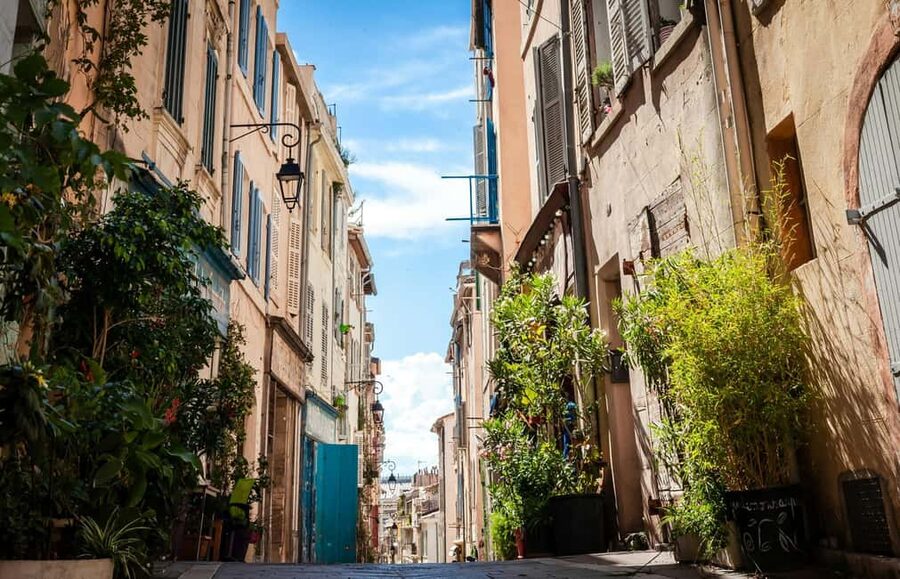
The cave and city route are quite different, and that is part of the appeal. The Cosquer visit is timed, enclosed, and presented through an exploratory vehicle. The Marseille tour is open-ended, independent, and built around your own walking schedule.
I like this pairing for a first visit because it covers two sides of Marseille. You get a focused cultural attraction in the Cosquer Cave, followed by familiar city landmarks and neighborhoods. You also avoid spending the entire activity in one museum setting.
The arrangement requires a little planning. The total advertised duration is two hours, but the city audio tour does not function like a fixed two-hour walk with a guide. You can use it at your own pace, and the time you spend at the Vieux Port, Canebière, Le Panier, and the basilica will depend on your route.
If you want a tightly managed excursion with transportation between every stop, this is not that. You receive the cave ticket, audio commentary, and city app, then handle the movement yourself. That is good for independent visitors and less appealing if you want someone to lead you through Marseille and answer questions in person.
Is $27 a fair price?
At $27 per person, the value depends on how much use you make of the city app. The Cosquer Cave admission and audio guide form the main purchase. The Marseille route is an added tool that can help you cover several major sights without paying for a separate guided walk.
The price is easier to justify if you already plan to see the Vieux Port and Le Panier. You can use the app for orientation and commentary while taking your own route. It is less compelling if you want only a short cave visit and have no interest in using your phone for city sightseeing.
You should also factor in what is not included. There is no live guided tour, and you must supply your own smartphone and headset. The activity is non-refundable, so check your schedule before booking. Opening times are generally 9:30 AM to 6 PM Monday through Friday and 9:30 AM to 7:30 PM on Saturday and Sunday. In July and August, the site is open daily from 9 AM to 8:30 PM.
Starting times are subject to availability. Since the city portion is flexible but the cave admission is tied to the available entry time, check the schedule carefully before you commit to a day.
Who will enjoy this Marseille combination?
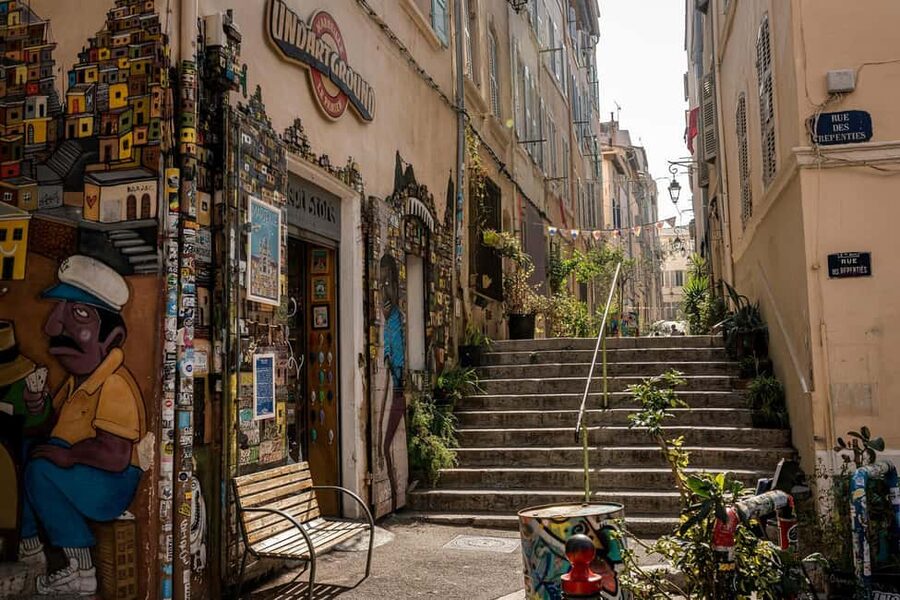
I would recommend this activity to you if you like unusual museums, prehistoric art, and independent city walks. It also suits families or couples who prefer to explore without being tied to a guide’s pace, provided everyone is comfortable using an app and audio equipment.
It is a good match for a short stay in Marseille because the program introduces both a distinctive local attraction and several famous city sights. The mix can fill a useful part of your day without requiring a separate booking for a walking tour.
You may want another option if you need extensive English-language museum text, personal explanations, or a long visit with many rooms to explore. The cave section is focused, and some of the surrounding museum information may not be translated. You should also think twice if you dislike wearing headphones or managing a phone while sightseeing.
The rating attached to this activity is 4.4 out of 5 from 17 reviews. That points to a generally positive experience, while the specific criticism about comfort, limited length, and non-English museum material is worth taking seriously. The cave can be fascinating without being a full afternoon attraction.
Practical tips for a smoother visit

Download the sightseeing app before arriving. The instructions call for scanning a QR code, and doing this in advance saves time at the entrance.
Bring a charged smartphone and your own headset. The cave audio guide is included, but the phone and headphones are not. Your phone is also needed for the Marseille city commentary.
Choose your language at the cave carefully. French, English, German, Dutch, Spanish, and Italian are available. If English is your preference, select it before the presentation begins rather than assuming you can change it easily later.
Allow extra time if you want to use the city route properly. The advertised activity lasts two hours, but the app is self-guided. A quick walk through the main sights will take less time than stopping for photos and exploring Le Panier at a slower pace.
Wear something comfortable for the cave presentation and the city walking portion. The exact conditions inside are not specified, but one comment described the cave visit as uncomfortable at times. The city section also involves moving between outdoor sights, so practical clothing is sensible.
Should you book the Cosquer Cave and Panier audio tour?
Book it if you want a short, unusual cultural visit paired with flexible sightseeing in Marseille. The prehistoric artwork, underwater discovery story, and exploratory vehicle make the Cosquer Cave different from the city’s standard attractions. The added audio route is useful if you want to see the Vieux Port, Canebière, Le Panier, and Notre-Dame de La Garde without joining a group.
Skip it if you want a live guide, extensive English text, or a lengthy museum visit. The cave presentation can feel brief, and the city portion works only if you are happy using your own phone and making your own way around.
For most independent visitors, $27 is a fair price when both parts are used. Download the app early, bring your headset, check the available time, and treat the Cosquer Cave as a focused introduction to Marseille’s prehistoric past rather than a full-day attraction.
FAQ
Where does the Cosquer Cave experience begin?
Go directly to the Cosquer Cave entrance at Promenade Robert Laffont, Esplanade J4, in Marseille.
How long does the activity last?
The listed duration is two hours. Check availability for the specific starting times.
Is the original Cosquer Cave open to visitors?
The activity takes you into a recreated version of the Cosquer Cave. You see recreated prehistoric paintings from an exploratory vehicle.
Which languages are available for the cave audio guide?
The cave audio guide is available in French, English, German, Dutch, Spanish, and Italian.
Do I need to bring a smartphone and headset?
Yes. A smartphone and headset are not included. You should scan the QR code and download the sightseeing app before arrival.
Is this a guided walking tour of Marseille?
No. The Marseille portion is a self-guided digital audio tour. It includes sights such as the Vieux Port, Canebière, Le Panier, and Notre-Dame de La Garde.
Just added around France
- Full-day Saint-Emilion: Village, Undergrounds and Châteaux★ 4.5 · 55 reviews
- Dordogne Day Tour : Prehistory and The Art of the Caves from Sarlat★ 4.5 · 105 reviews
- The Napoleon Cave – complete package (Corsican meal)★ 5.0 · 68 reviews
- Porto-Vecchio : Boat Trip to Lavezzi, Caves & Bonifacio★ 4.7 · 61 reviews
- Paris: Catacombs Tour with Restricted Areas★ 4.8 · 64 reviews
- Paris: Small-Group Catacombs Tour with Skip-the-Line Entry★ 4.9 · 110 reviews
- Lascaux IV: Full Replica Cave Experience Ticket★ 4.5 · 334 reviews
- From Sarlat-la-Canéda: Lascaux IV and Cave Art Full-Day Tour★ 4.9 · 122 reviews
Audio Tours, compared.
Nerja: Caves of Nerja Entry Ticket with Audio Guide
Read the review →
Catacombs Entry & Seine River Cruise with Audio Guide
Read the review →
Catacombs, Audio Guide, and River Cruise Option
Read the review →
Navona Square Underground Ticket with Audio Guide
Read the review →
Guided Catacombs Tour & Capuchin Crypt (Audio Guide)
Read the review →

Self-Guided Boston’s Beacon Hill Underground Railroad Audio Tour Walking Tour
Read the review →Browse the lists this tour appears in