
Review · ITALY CAVE TOURS
Matera: Caves and Rock Churches Walking Tour in English
Matera’s Sassi make far more sense once you understand how people actually lived inside the rock. This 2.5-hour walking tour takes you from Piazza S. Pietro Caveoso through cave homes, viewpoints, old churches, and the ingenious water system that kept the city alive.
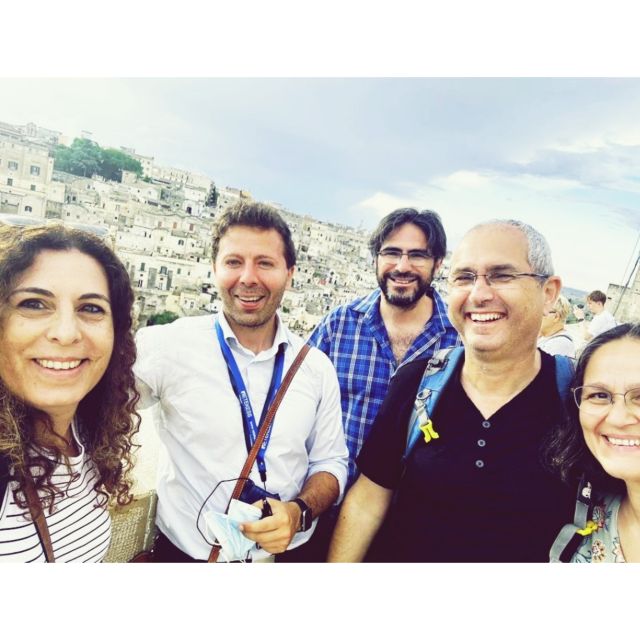
I like the strong local angle. Guide Gaetano Campanile is from Matera, speaks excellent English, and brings in stories passed down by families who lived in the Sassi. I also like the relaxed pace, which gives you time to manage the stairs and stop for questions.
The main drawback is physical rather than cultural: Matera is built on a hill, and you will climb steps. The walk is not presented as strenuous, but anyone with limited mobility should plan carefully and wear proper shoes.
Key points to know before booking
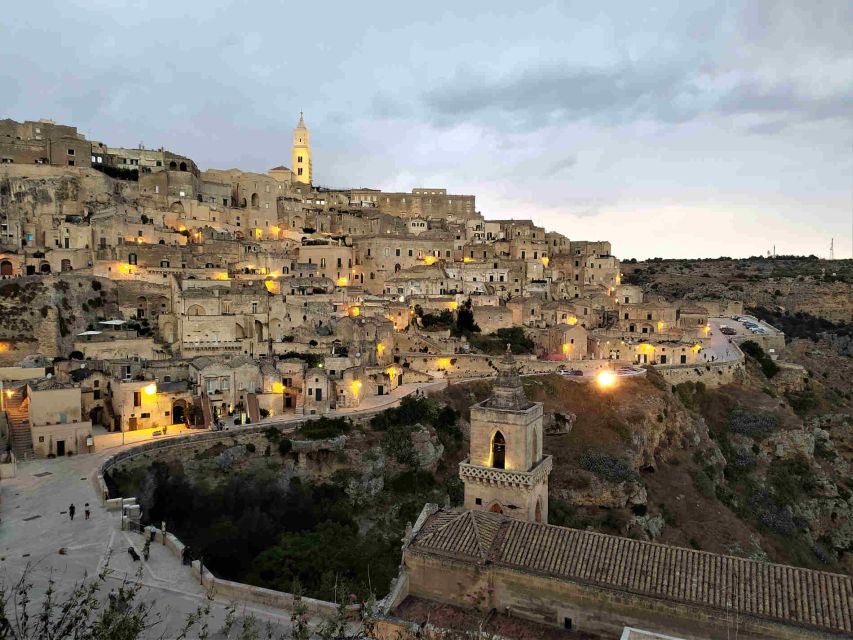
- Start in Piazza S. Pietro Caveoso: Meet the guide directly in front of the church, with parking garages nearby on Via Pasquale Vena and Via Rocco Scotellaro.
- Enter real cave homes: See how families shared space with animals, stored water, and adapted daily life to rooms cut into the rock.
- Visit St. Mary of Idris: This rock church is one of the tour’s main cultural stops, carved into Matera’s unusual stone setting.
- Learn the water story: Matera’s rainwater collection system explains how a city with few natural water sources survived for centuries.
- Hear the modern social history: The walk follows Matera’s shift from the shame of Italy to a UNESCO-listed center of Italian culture.
- Allow time for stairs: The pace is leisurely, but the old city has uneven paths and repeated stairways.
Why a guided walk helps in Matera
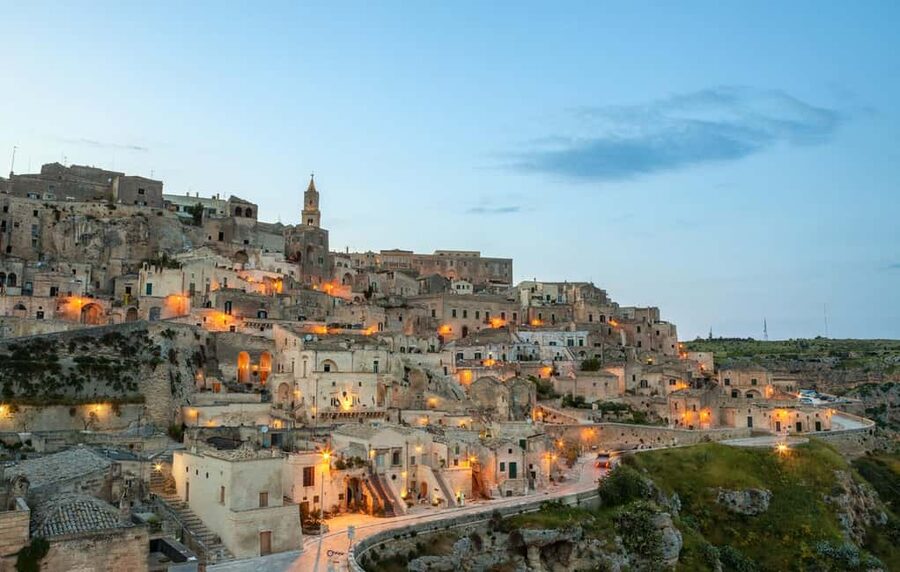
Matera can look simple at first glance: pale stone, stacked houses, dark openings in the cliffs, and views across the ravine. Yet the surface does not tell you how the city worked. Without context, a cave may look like a photogenic room rather than a former home shaped by poverty, climate, family life, and careful use of water.
That is the real value of this walk. Gaetano does not simply point out old stones. He explains how the Sassi functioned as neighborhoods, how families used the caves, and how Matera’s reputation changed over time.
This matters because Matera’s story has two very different sides. It is an ancient settlement and a beautiful place to visit, but it was also marked by serious hardship. The tour gives you a way to appreciate the architecture without turning past poverty into a postcard.
The English-language setting is another practical advantage. You can ask about details as they appear, rather than trying to piece together short signs or guidebook captions. The guide’s clear English and easy humor also help keep a long history lesson from becoming a dry one.
More Cave Tours in Italy:
- Naples: Naples Underground Entry Ticket and Guided Tour
★ 4.4 · 21,781 reviews - Colosseum: Underground and Ancient Rome Tour
★ 4.7 · 12,691 reviews - Naples: Catacombs of San Gennaro Entry Ticket & Guided Tour
★ 4.6 · 7,941 reviews
Meeting at Piazza S. Pietro Caveoso
The tour begins in Piazza S. Pietro Caveoso, with the guide waiting in front of the church. This is a useful starting point because you are already at the edge of the old Sassi, where the stone buildings, stairways, and dramatic views begin to crowd around you.
If you are driving, the suggested parking options are the multi-level garages on Via Pasquale Vena and Via Rocco Scotellaro. You should allow enough time to park and walk to the meeting point. Matera’s old center is not a place where you want to arrive at the last minute, especially if you are unfamiliar with the streets.
The tour ends back at the same meeting point. That makes the walk easy to fit into a day of sightseeing. You can schedule it early, use what you learn to explore on your own afterward, or place it before an evening meal in the Sassi.
Seeing Matera from its viewpoints
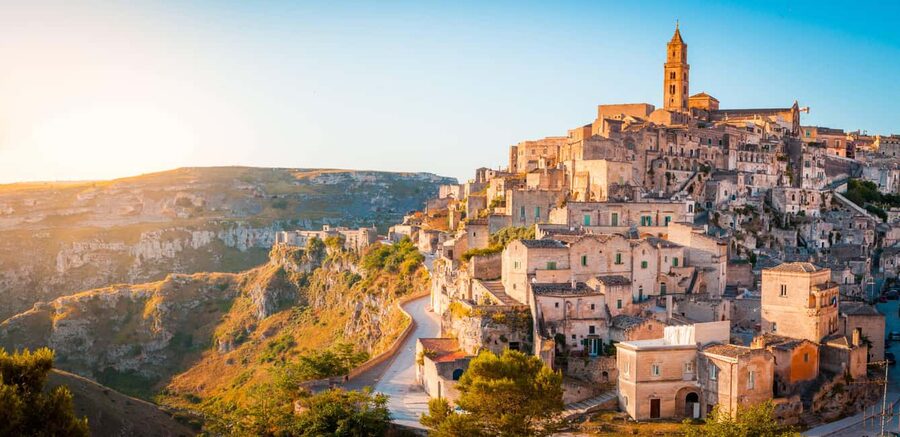
Early in the walk, the guide leads you through broad views and smaller corners that you could easily pass without noticing. Matera’s layout is layered, with streets, roofs, staircases, courtyards, and caves often occupying the same visual frame.
The best views are not only about taking photographs. They help you understand the physical challenge of the city. Houses cling to sloping ground, paths rise and fall, and the old districts fit into the rock rather than sitting neatly on a flat street grid.
Gaetano’s local knowledge is especially useful here. A guide who knows the city can explain what you are looking at and steer the conversation toward the details that interest your group. If you want social history, architecture, family stories, or practical suggestions for the rest of your stay, this is a good time to ask.
The pace is described as leisurely, but do not confuse that with flat or effortless. You will encounter steps as the route moves through the old districts. Comfortable shoes are essential, and footwear with a secure sole is a sensible choice.
Entering the cave homes
The cave houses are the heart of the tour. Inside, you can see how families once lived in rooms shaped directly from the local rock. These homes were not designed for modern comfort. They were practical spaces in which people made careful use of every available surface.
A cave home also tells you about the whole household, not just the building. The arrangement reflects how people stored supplies, shared rooms, kept animals, and dealt with light and water. When you stand inside, the story becomes more concrete than it is from an overlook.
The tour also explains Matera’s rainwater collection system. This is one of the most useful details to understand. Rain did not simply run away from the stone slopes. It was collected and directed through a network of cisterns, making scarce water available to the people who lived in the caves.
That system shows the practical intelligence behind the old city. Matera’s residents had to work with the rock, the weather, and limited resources. You leave with a clearer idea of why the Sassi developed in this unusual form.
A few parts of the route may include an old cistern, an ancient church, or a local workshop, depending on the path and the guide’s handling of the walk. These additions are valuable because they connect the main themes of home life, religious practice, and local craft.
Same stretch of coast and karst, a different entrance:
- Matera: Sassi Tour with Cave House and Rupestrian Church
★ 4.7 · 6,618 reviews - Rome: Capuchin Crypts and Catacombs Tour with Transfers
★ 4.6 · 6,456 reviews - Naples: Spanish Quarters Underground Guided Tour
★ 4.8 · 5,064 reviews - Expert Guided Tour of Colosseum Arena OR Underground, and Forum
★ 4.5 · 5,041 reviews
Visiting St. Mary of Idris
The rock church of St. Mary of Idris is a key stop. It is carved into the stone and belongs to the religious side of Matera’s story, adding a different layer to the domestic spaces of the Sassi.
The church is special because it is not a separate monument placed beside the old city. It is part of the same rock environment that shaped homes, storage rooms, streets, and cisterns. Seeing it after the cave houses helps you understand how religious life was built into the same setting.
You should expect a place where the setting matters as much as the individual details. Matera’s rock churches are tied closely to the city’s terrain, and the guide can explain their role within the wider story of the Sassi.
The exact amount of time spent inside each site may depend on the group and the pace. That is a benefit for some visitors and a limitation for others. This is a guided overview of Matera, not a specialist art-history tour focused on one church alone.
From the shame of Italy to UNESCO recognition
One of the strongest parts of this walk is the modern history. Matera was once widely described as the shame of Italy, a label tied to the poor living conditions in the Sassi and the public embarrassment surrounding them.
The city’s transformation was not simply a matter of cleaning old buildings and putting up signs. It involved a major change in how Matera was understood. Places once associated with hardship came to be valued for their age, architecture, community story, and cultural importance.
The UNESCO designation forms part of that larger change. It recognizes Matera as an important cultural site, but the tour helps you see why recognition alone is not the whole story. The Sassi are also a record of ordinary people adapting to difficult conditions over many generations.
Gaetano’s connection to local families adds useful depth here. He can link broad historical events with personal stories and oral accounts from original residents. That human scale is important. It keeps the tour from becoming a list of dates and turns the old districts into places where real families worked, ate, worshipped, and raised children.
Gaetano’s guiding style
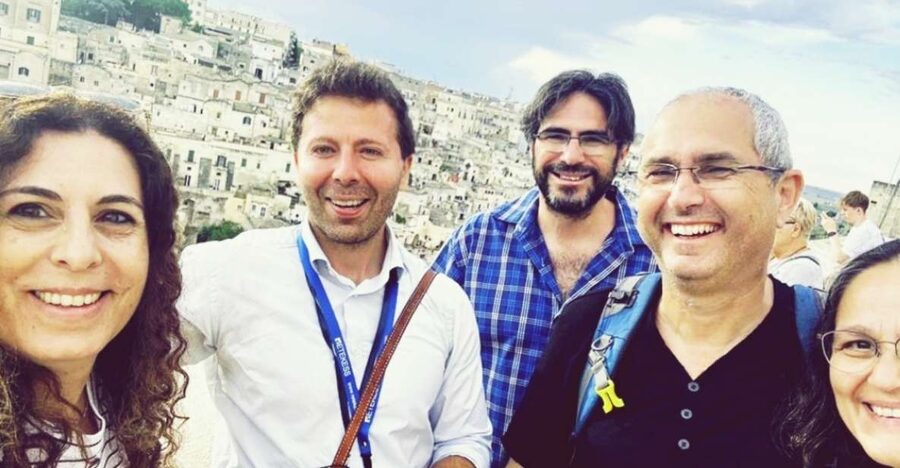
The guide is a major part of the experience. Gaetano is described as a trained historian, a native resident of Matera, and an entertaining storyteller. His strength is not only the amount of information he gives you, but the way he connects it to the streets around you.
His English is reported as excellent, which is important on a tour built around detailed explanations. You should be able to follow the story clearly and ask questions without worrying that a language barrier will flatten the subject.
The style is active and conversational. Gaetano is known for answering many questions, adjusting to the group’s interests, and adding humor without losing the serious side of Matera’s past. That flexibility is helpful when a group includes different ages and walking abilities.
This is also a tour that can work well for a small group. It has continued even with only two people, so you are not necessarily relying on a large crowd to make the outing worthwhile. A smaller group can make it easier to hear, ask questions, and keep a steady pace.
Is the $28 price good value?
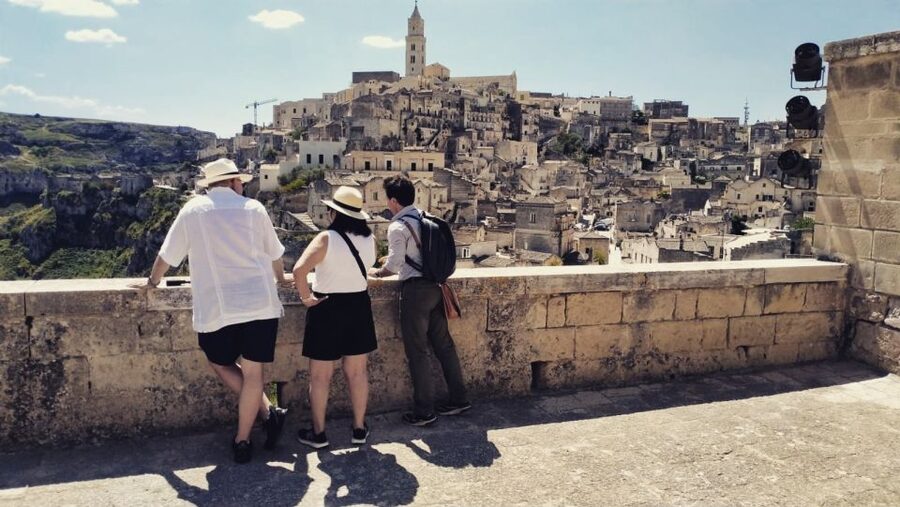
At $28 per person, this is a strong value if you want more than photographs and a quick look at the caves. You receive a 2.5-hour guided walk in English, access to the guide’s local knowledge, and a structured explanation of the Sassi, cave homes, water system, and rock churches.
You could walk through Matera for free, of course. But you would miss much of the reason the city looks the way it does. The price pays for interpretation, not transportation or luxury extras, and that is exactly where the value lies.
I would especially consider booking this near the start of your stay. The guide can help you see the city with better context afterward, point out places you might otherwise miss, and offer suggestions for food and other sights. One useful local recommendation mentioned in connection with the tour was a bread shop, so you may want to keep a little appetite available after the walk.
The free cancellation up to 24 hours before the activity and the option to reserve now and pay later make the booking less risky. These details are useful if your southern Italy plans are still shifting.
Who should book this walk?
I would choose this tour if you are visiting Matera for the first time and want the old city explained rather than simply photographed. It suits history-minded visitors, curious food and culture seekers, and anyone who wants to understand the daily life behind the stone facades.
It is also a good choice for older walkers who can manage stairs at a slow pace. The route has steps, but the guide can work with a mixed-age group and adjust to the group’s ability. You should still be honest with yourself about uneven ground and repeated climbs.
Families may appreciate the cave homes and practical water story, though the amount of historical explanation may be more appealing to older children and adults. The relaxed style and humor help, but this is still a history-focused walking tour.
I would not choose it if you want a flat route, a rapid photo stop, or a specialist visit centered only on religious art. Matera’s topography is part of the experience, and the tour takes time to explain the city’s social story.
Practical details for the walk
Wear comfortable shoes and bring enough water for a two-and-a-half-hour outing. The route includes stairways because the old city lies on a hill, even though the pace is designed to be manageable.
Check the available starting times when you book. Starting earlier in the day may help you avoid the strongest heat, while a later time can work well if you are using the tour as an introduction before dinner. The supplied details do not specify a fixed daily schedule, so availability is the best guide.
Meet directly in front of the church at Piazza S. Pietro Caveoso. If you are driving, use one of the two listed multi-level car parks and allow time to reach the square.
Should you book it?
Yes, if you want Matera to become more than a striking collection of caves and viewpoints. The best reason to book is Gaetano’s combination of local roots, historical training, clear English, humor, and personal stories tied to the Sassi.
The $28 cost is modest for a 2.5-hour introduction, and doing the walk early can improve the rest of your stay. Just plan for stairs, wear good shoes, and expect a thoughtful history tour rather than a flat sightseeing stroll.
FAQ
Where does the Matera walking tour begin?
It begins in Piazza S. Pietro Caveoso. The guide waits directly in front of the church.
Where does the tour end?
The walk ends back at the meeting point in Piazza S. Pietro Caveoso.
How long does the tour last?
The tour lasts 2.5 hours. Starting times depend on availability.
What language is the tour in?
The tour is conducted in English by a live guide.
Who leads the tour?
The experience provider and guide is Gaetano Campanile.
Does the tour visit cave homes?
Yes. You enter ancient cave houses and learn how families once lived inside them.
Does the tour include St. Mary of Idris?
Yes. The rock church of St. Mary of Idris is one of the main stops.
Are there stairs on the route?
Yes. Matera’s old city is on a hill, so the walk includes stairways. The pace is leisurely.
What should I wear?
Wear comfortable shoes suitable for walking and stairs.
Is cancellation available?
Yes. You can cancel up to 24 hours in advance for a full refund. You can also reserve your place and pay later.
Just added around Italy
- siracusa boat tour with visit to sea caves and ortigiaisland★ 4.6 · 34 reviews
- Boat tour of Ortigia Island and sea caves★ 5.0 · 407 reviews
- Boat tour Giardini Naxos Taormina Isola Bella Blue Grotto★ 4.5 · 541 reviews
- Syracuse: Ortigia Island & Sea Cave Boat Tour with Prosecco★ 4.7 · 418 reviews
- Private Guided Tour of Colosseum Underground OR Arena and Forum★ 5.0 · 111 reviews
- Private Tour of Catacombs and Ancient Appian Way (hotel pick up)★ 4.5 · 120 reviews
- Hidden Gems & Rome Catacomb Semi Private Tour by golf cart★ 5.0 · 114 reviews
- Exclusive Capri, Anacapri & Blue Grotto Private Tour from Naples★ 5.0 · 121 reviews
Italy Cave Tours, compared.
Naples Underground Entry Ticket and Guided Tour
Read the review →
Colosseum: Underground and Ancient Rome Tour
Read the review →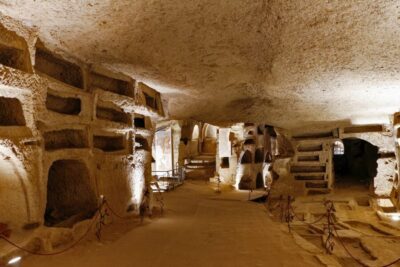
Catacombs of San Gennaro Entry Ticket & Guided Tour
Read the review →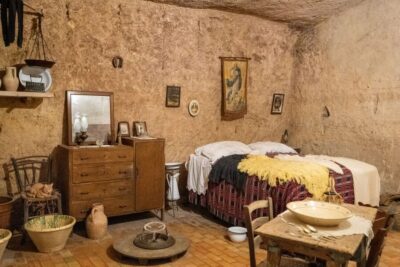
Sassi Tour with Cave House and Rupestrian Church
Read the review →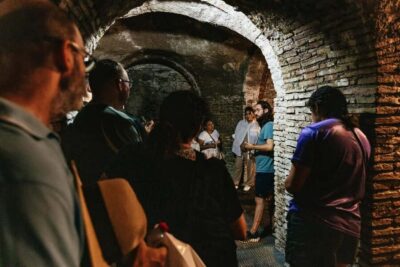
Capuchin Crypts and Catacombs Tour with Transfers
Read the review →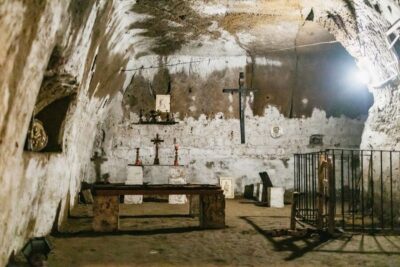
Expert Guided Tour of Colosseum Arena OR Underground, and Forum
Read the review →
The Original Roman Crypts and Catacombs Tour with Transfers
Read the review →Browse the lists this tour appears in