
Review · GUIDED
Narni: Guided underground Experience
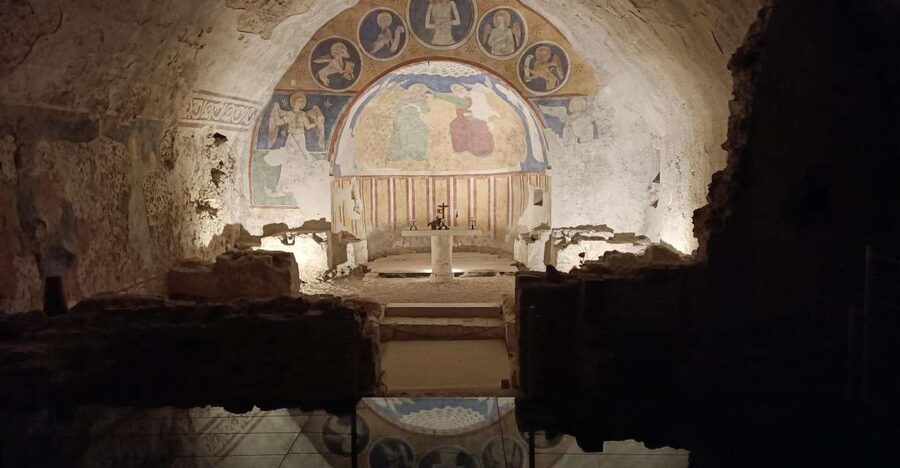
Narni Underground begins with a surprise: you enter through an ancient church hidden below the former Dominican convent of Santa Maria Maggiore. From there, the visit moves through medieval worship, Roman engineering, and the grim cells of the Holy Office before reaching Narni’s first cathedral above ground. The layers are the attraction. You are not looking at one old room, but at a town’s changing story stacked below your feet.
I like the low price of $11, especially since the visit includes the underground church, archaeological remains, multimedia material, and the upper church. I also like the way the site uses real evidence, from limestone-covered frescoes to prisoner graffiti, rather than relying only on dates and grand claims. The main caution is language: the live guide speaks Italian, while other languages are supplied by audioguide, and the theatrical delivery may not suit everyone.
Key points to know before you go
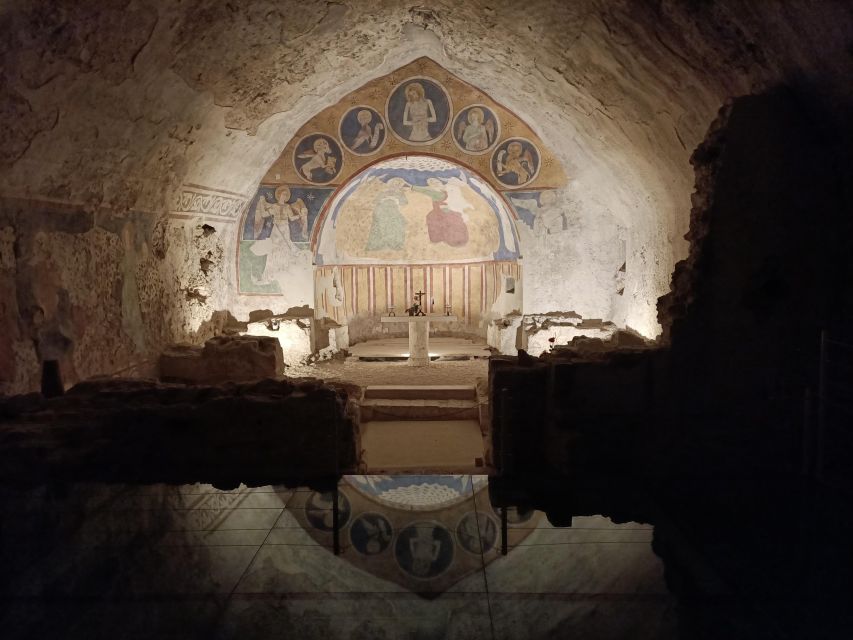
- A 13th-century church is the emotional center: Enter the former underground church dedicated to Archangel Michael and see frescoes slowly returning after years beneath limestone.
- Roman engineering gets a modern explanation: An interactive video lets you follow the aqueduct excavation systems of Roman Narnia.
- The Inquisition cell remains intact: A narrow dungeon still carries graffiti left by prisoners.
- The upper church adds a second layer: You finish with a Byzantine mosaic linked to Narni’s first cathedral, plus more frescoes and remains.
- Italian is the live-tour language: English, French, German, and Spanish are available through audioguides. An English or Spanish live guide requires a reserved group of at least 20.
- The visit is short but dense: The stated duration is one hour, while the walking itinerary is listed at about one and a half hours, so leave a little extra time.
Entering Narni through the underground church
Your visit starts at Via S. Bernardo, 12, in Narni. The opening move is simple but effective: instead of beginning with a broad view or a long introduction, you go down into the basement of the former Dominican convent of Santa Maria Maggiore.
The underground church is dedicated to Archangel Michael and dates in its present form to the 13th century. It was likely built over older structures, then folded into the Dominican complex around the 14th century. That layered construction gives the place its character. You are looking at medieval architecture, but the floor and walls also hint at earlier use.
This is the point where the experience feels most like an old story made physical. The room is not polished into a perfect museum display. It carries damage, repairs, and traces of neglect. The church was looted in 1860 and later damaged during World War II. During its abandoned years, rainwater coated many frescoes with limestone.
Restoration is still bringing those paintings back into view. That slow process matters. You may not see every image with equal clarity, but the incomplete surfaces help you understand how archaeology works. What you see is not simply a finished decoration. It is a record being recovered, carefully and gradually.
The site was reconsecrated in 2000 under the name St. Mary of the Cliff. The original dedication had not yet been identified at that time. That small detail gives you a useful lesson in historical research: even the name of a church can remain uncertain until documents and physical evidence line up.
Guided tours within reach of Italy:
- Naples: Naples Underground Entry Ticket and Guided Tour
★ 4.4 · 21,781 reviews - Naples: Catacombs of San Gennaro Entry Ticket & Guided Tour
★ 4.6 · 7,941 reviews - Naples: Spanish Quarters Underground Guided Tour
★ 4.8 · 5,064 reviews
How multimedia changes the visit
The visit uses multimedia material to show the church’s different historical phases. This helps you follow a place that has changed function and appearance over many centuries.
I generally prefer objects and buildings to screens, but here the technology has a clear job. Underground rooms can be hard to read. Walls may be dark, damaged, or altered. A visual reconstruction can show how the complex developed and help you connect the remaining fragments with its earlier form.
Still, the balance depends on your taste. One Italian-language assessment found some of the videos unnecessary and preferred a more serious explanation. That is a fair warning. If you want a quiet, traditional church visit, the multimedia sections may interrupt the mood. If you like visual context, they make the archaeology easier to grasp.
The live guide can also shape the experience. Guide Letizia has been praised for energetic storytelling, expressive gestures, and the ability to keep a group focused. Another assessment found the style too theatrical, even while acknowledging that the guide was well prepared. I would treat this as a matter of preference, not a flaw in the site. Expect a lively presentation rather than a dry academic lecture.
Following Roman Narnia below the streets
In an adjoining room, an interactive video explains how aqueducts were excavated in Roman Narnia. You can virtually enter the tunnel and see how water systems were cut through the underground world.
This section adds useful scale. The church shows you how people worshipped and lived with the remains of earlier buildings. The aqueduct material shows the practical side of Roman urban life. Water had to be planned, excavated, and moved through difficult ground, and the surviving underground spaces make that work easier to imagine.
The presentation is virtual rather than a claim that you will walk through a Roman aqueduct tunnel during this one-hour visit. That distinction is worth knowing before you book. You come for an explanation of the engineering, supported by interactive media, not for a long physical tunnel expedition.
For me, this is one of the more useful parts of the visit because it widens the subject beyond church history. Narni’s underground is not only about religious buildings or punishment. It also shows how the ancient town functioned.
The Holy Office cell and its human evidence
The most sobering stop is the dungeon area connected with the Holy Office. The institution was created to combat heresies, and one cell remains intact.
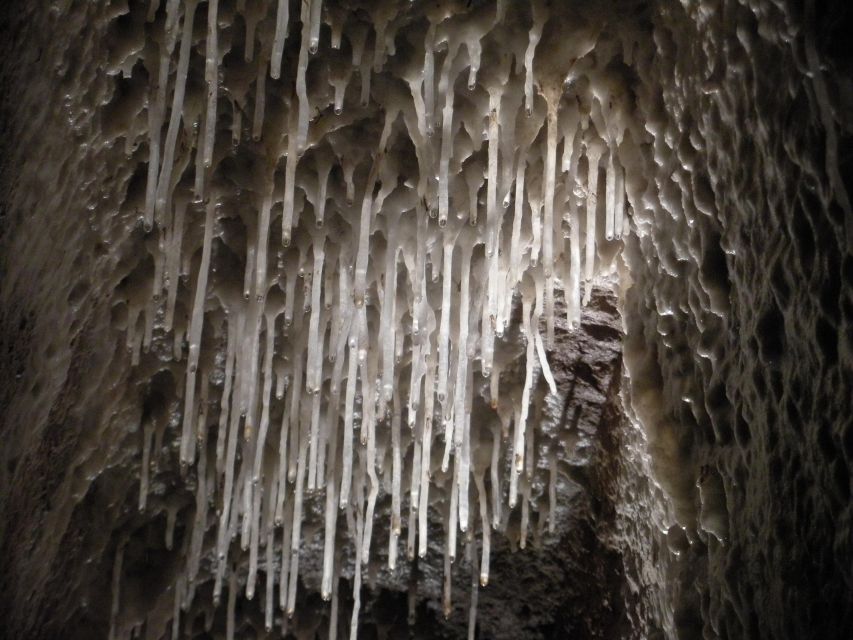
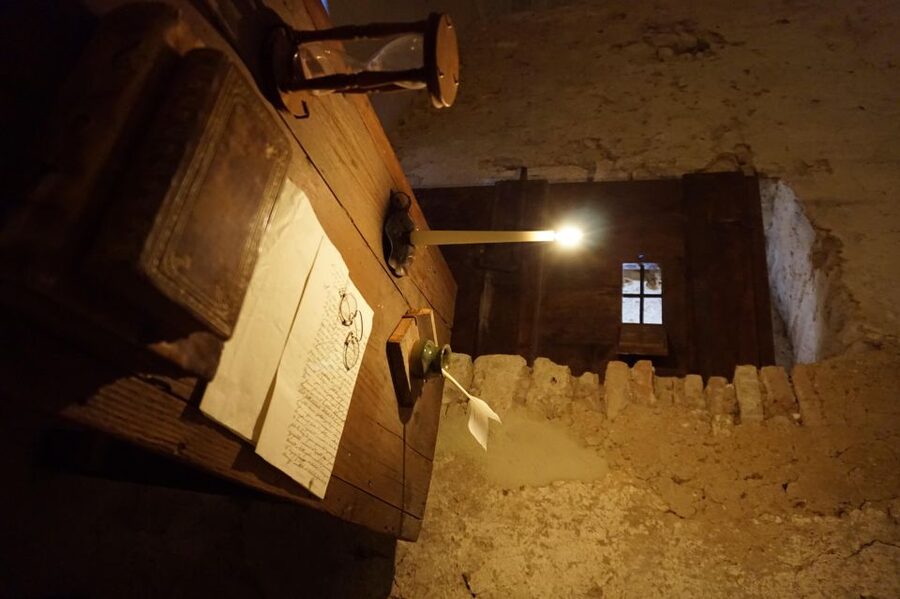
The cell is narrow, and its small size does much of the work. You do not need a dramatic reconstruction to understand that confinement here was harsh. The walls preserve graffiti made by prisoners, and Vatican Archive material helped reconstruct parts of their stories.
That combination of written evidence and physical space is valuable. A date on a wall can feel remote. A scratched message left by someone held in that cell brings the past closer without needing to invent dialogue or stage a scene.
This part may be difficult for younger children or anyone who dislikes confined spaces, though the supplied information does not set a specific age limit. The tour is designed as a historical visit, not a haunted attraction. Its power comes from the ordinary marks left by people who were held there.
Pay attention to the guide or audioguide here. The cell is small, so details can be easy to miss if you focus only on the room itself. The story of the prisoners is what turns this from an architectural stop into a human one.
More Cave Tours in Italy:
- Colosseum: Underground and Ancient Rome Tour
★ 4.7 · 12,691 reviews - Matera: Sassi Tour with Cave House and Rupestrian Church
★ 4.7 · 6,618 reviews - Rome: Capuchin Crypts and Catacombs Tour with Transfers
★ 4.6 · 6,456 reviews - Expert Guided Tour of Colosseum Arena OR Underground, and Forum
★ 4.5 · 5,041 reviews
Finishing in Narni’s first cathedral
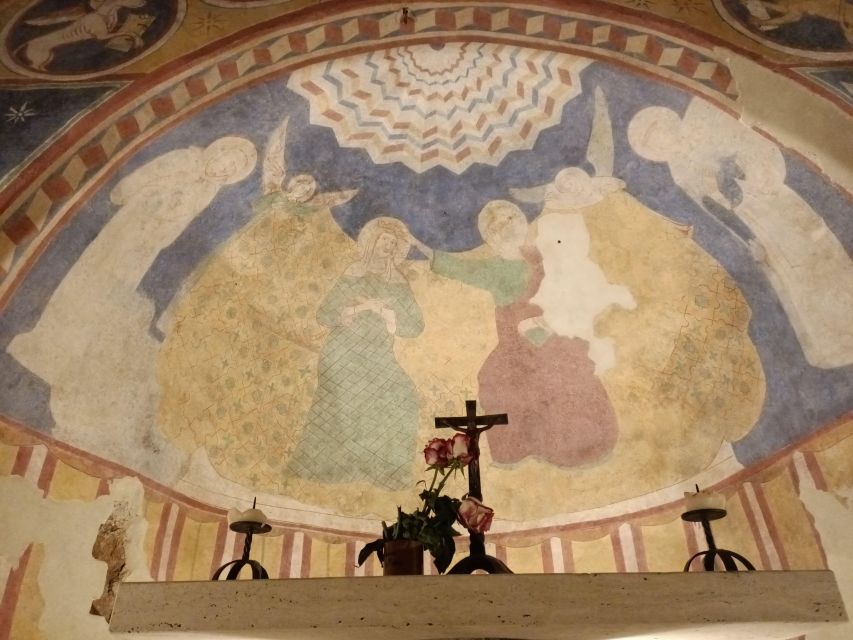
The tour continues upstairs into the upper church, identified as Narni’s first cathedral. This change in level is also a change in mood. After the cramped underground church and dungeon, the upper space gives you a wider sense of how the city’s religious life developed.
The key feature is a precious Byzantine mosaic, along with additional remains and frescoes. It gives the visit a strong finish because you can connect the underground material with a more formal church setting above it.
The upper church also helps explain why the full visit is more than a basement tour. You begin below the former convent, pass through several historical periods, and then reach an important church connected with early Narni. The route is compact, but its subject matter is not.
The listed walking itinerary takes about one and a half hours, while the activity description gives a one-hour duration. I would plan for the longer figure, especially if you need time to move between spaces, listen to the audio, and look closely at the frescoes and mosaic.
What the $11 price really buys you
At $11 per person, this is an easy activity to justify if you are already spending time in Narni. The price covers reserved access with a guided visit in Italian, an audioguide in English, French, German, or Spanish, entry to the underground complex, and the upper church.
You also receive a card offering discounts at restaurants in Narni. The value of that card depends on where you eat, so I would treat it as a bonus rather than the reason to book.
The strongest value comes from the range of material packed into a short visit. For roughly the cost of a casual snack, you see a medieval church, recovering frescoes, Roman engineering explained through interactive media, an intact Holy Office cell, prisoner graffiti, and a Byzantine mosaic.
The price is less attractive if you need a fully guided explanation in English, French, German, or Spanish as an individual visitor. The standard live guide is only in Italian. Other languages are covered by audioguide. A live English or Spanish tour is available for groups of at least 20 with advance reservation, but the information does not promise the same arrangement for smaller groups or every language.
Language, pace, and the guide’s style
If you understand Italian, the live presentation gives you the fullest version of the experience. The Italian guides are clearly expected to tell the story with energy, and Letizia’s storytelling has been especially well received for its enthusiasm and expressive delivery.
If you do not speak Italian, use the audioguide. English, French, German, and Spanish are listed, and the audio format lets you follow the main points without relying on gestures or partial understanding.
You may find the multimedia material more useful in your own language than a live talk you cannot follow. On the other hand, an audioguide will not provide the same interaction as a guide who can respond to questions or adjust the pace.
This is not a silent, self-directed walk. Even with an audioguide, the visit has a planned route and a presentation style. Go in expecting interpretation, screens, and storytelling alongside the physical remains.
Access and practical limits
Large bags and luggage are not allowed. If you are arriving with suitcases, arrange storage before you come to Via S. Bernardo, 12. The information also describes the experience as unsuitable for people with mobility impairments.
There is a conflicting accessibility note: reserved Italian guided access is described as available for wheelchair users, while the activity is also marked as not suitable for people with mobility impairments. I would not rely on the general wording. Contact the provider before booking and ask about the exact route, stairs, surfaces, and upper-church access for your needs.
The visit offers skip-the-line access through a separate entrance, which matters most during busy periods. Since the site is small and underground, a reservation is sensible even though the price is modest.
Free cancellation is available up to 24 hours before the start time, and you can reserve now and pay later. Check the available start times because the duration is fixed but the schedule is not.
Who will enjoy Narni Underground most
I would recommend this experience to you if you like archaeology, medieval churches, Roman infrastructure, or places where the past has not been polished away. It suits visitors who want a focused activity in Narni rather than a full-day excursion.
It is also a good choice if you enjoy stories tied to physical evidence. The frescoes, cell, prisoner graffiti, and mosaic each give the guide something real to explain. The visit does not depend only on grand scenery.
Families with older children may find the changing subjects hold attention, though the dungeon and serious religious history may not suit every child. Anyone who dislikes screens or theatrical guiding should know that the presentation is not purely traditional.
I would be more cautious if you need a live tour in English as an individual booking, have difficulty with underground spaces, or require fully confirmed wheelchair access. In those cases, ask questions before paying.
Should you book Narni Underground?
Yes, if you want a short, inexpensive look at Narni’s hidden layers. The $11 price is strong value, and the route offers more variety than its modest length suggests. The 13th-century church, restored frescoes, Roman aqueduct explanation, Holy Office cell, and Byzantine mosaic give you a clear sense of how the city changed over time.
Book with realistic expectations. The live tour is in Italian, the other languages use audioguides, and the presentation may feel theatrical rather than formal. Allow up to an hour and a half, bring no large luggage, and confirm access needs in advance.
For most visitors spending time in Narni, this is a worthwhile addition. It gives you a side of the town that cannot be understood from the streets alone.
FAQ
Where does the Narni Underground experience begin?
The meeting point is Via S. Bernardo, 12, in Narni, Umbria.
How long does the experience last?
The activity duration is listed as one hour, while the walking itinerary is described as about one and a half hours. Plan for up to 90 minutes.
What is the price?
The listed price is $11 per person.
Is the live tour available in English?
The guided visit is only in Italian for standard bookings. English, French, German, and Spanish are available through audioguides. Guided English and Spanish tours can be arranged for groups of at least 20 by reservation.
Is an audioguide included?
Yes. Audioguides are available in Italian, English, French, German, and Spanish. Texts in other languages are also available.
What will I see underground?
You will see a 13th-century underground church dedicated to Archangel Michael, archaeological remains, frescoes being restored, an interactive explanation of Roman aqueduct excavation, and a Holy Office cell.
Will I see Roman aqueduct tunnels in person?
The aqueduct section uses an interactive video that lets you virtually enter the tunnel. The information does not describe a physical tunnel walk as part of the visit.
Can I bring luggage?
No. Luggage and large bags are not allowed.
Is the site suitable for wheelchair users?
The information is inconsistent. Reserved Italian guided access is described as available for wheelchair users, but the activity is also marked as unsuitable for people with mobility impairments. Contact the provider before booking to confirm the exact route and access conditions.
Can I cancel the booking?
Yes. You can cancel up to 24 hours in advance for a full refund. Reserve now and pay later is also available.
Just added around Italy
- Capri Adventure Cruise: Sea Caves, Coastline & Blue Grotto Visit★ 5.0 · 18 reviews
- Blue Grotto and Capri Boat Tour with Aperitivo Swim and Snorkel★ 4.5 · 47 reviews
- Kayak tour in Capri between caves and beaches. Photos included.★ 5.0 · 302 reviews
- Capri Island and Blue Grotto Small Group Day Tour from Capri Port★ 5.0 · 62 reviews
- Capri Private Boat Tour from Capri (3 Hours) with Blue Grotto★ 4.5 · 42 reviews
- Blue Grotto and Capri by Private Boat Tour★ 5.0 · 26 reviews
- Capri: Boat Tour, Priority Tickets & Blue Grotto (Optional)★ 4.0 · 63 reviews
- Blue Grotto Visit and Capri Semi-Private Boat Tour★ 5.0 · 53 reviews
Guided, compared.
Naples Underground Entry Ticket and Guided Tour
Read the review →
Catacombs of San Gennaro Entry Ticket & Guided Tour
Read the review →
Expert Guided Tour of Colosseum Arena OR Underground, and Forum
Read the review →

Colosseum Underground Small Group Guided Tour
Read the review →
Catacombs of St. Callixtus Entry Ticket & Guided Tour
Read the review →
Benagil: Caves, Beaches, and Secret Spots Guided Kayak Tour
Read the review →Browse the lists this tour appears in