
Review · ROME CAVE TOURS
Rome: Piazza Navona and Trevi District Underground Pass
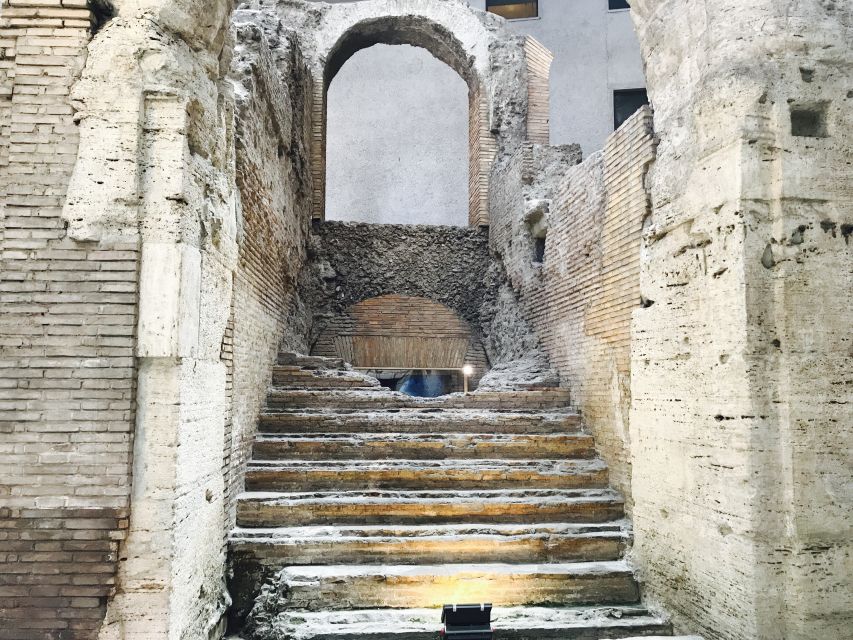
Rome’s past is stacked under its present, and this pass lets you see two small but genuine pieces of that buried city. Beneath Piazza Navona, you’ll find the Stadium of Domitian, while near Trevi Fountain, the Vicus Caprarius excavation reveals ancient passages and the remains of a Roman house.
I like the way the two sites fit into a central Rome walk, with the Pantheon, Piazza Navona, and Trevi Fountain along the route. I also like the freedom of an audio guide, which lets you move at your own pace rather than follow a large group. The main caution is scale: each underground stop may take roughly 30 minutes, and the Stadium of Domitian can feel smaller than expected.
Key points at a glance
- Two separate underground sites: Visit the Stadium of Domitian beneath Piazza Navona and Vicus Caprarius near Trevi Fountain.
- Short, central walking route: The two excavations are about 10 minutes apart on foot, with famous Rome sights between and around them.
- Audio guides included: Choose from English, Italian, French, Spanish, German, Russian, or Portuguese at the archaeological sites.
- Expect compact excavations: These are focused archaeological visits, not sprawling tunnels or full underground neighborhoods.
- Your voucher needs exchanging: Redeem it at the Tourist Office at Piazza Navona 25 before visiting either site.
- Good for repeat Rome visitors: The pass adds a quieter archaeological layer to the standard Pantheon, fountain, and piazza circuit.
What this Rome underground pass actually includes
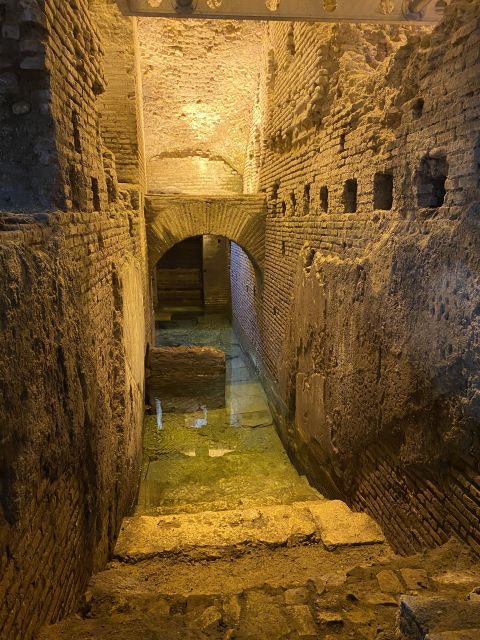
This is best understood as a two-site archaeological pass tied to a short walk through the historic center. You receive reserved admission to the Stadium of Domitian beneath Piazza Navona and the Trevi District Underground, also known as Vicus Caprarius.
The route is not an underground tour from one end of Rome to the other. You visit two separate excavations, each with its own entrance and audio guide. That distinction matters because the title can suggest a much larger subterranean experience than you actually get.
The wider route includes an English-speaking guide through central Rome. You’ll see Piazza Navona, the outside of the Pantheon, and Trevi Fountain while learning about Rome from the Roman Empire through the modern era. The archaeological visits themselves use audio guides, giving you more control over the pace.
At $34 per person, the value depends on your interest in Roman remains. If you want a major monument with many halls and galleries, this is not the right comparison. If you enjoy seeing how old structures sit below modern streets, the combination gives you two different examples for one reasonable central-Rome outing.
More Cave Tours in Rome:
- Colosseum: Underground and Ancient Rome Tour
★ 4.7 · 12,691 reviews - Rome: Capuchin Crypts and Catacombs Tour with Transfers
★ 4.6 · 6,456 reviews - Expert Guided Tour of Colosseum Arena OR Underground, and Forum
★ 4.5 · 5,041 reviews
Starting at Piazza Navona and exchanging your voucher
Your first practical task is not entering the excavation. It is redeeming your voucher at the Tourist Office at Piazza Navona 25.
Your voucher is not the admission ticket, so allow enough time to find the office and exchange it before heading to the sites. This is one of the most important details in the entire booking process. Arriving directly at an excavation with only the voucher could create confusion.
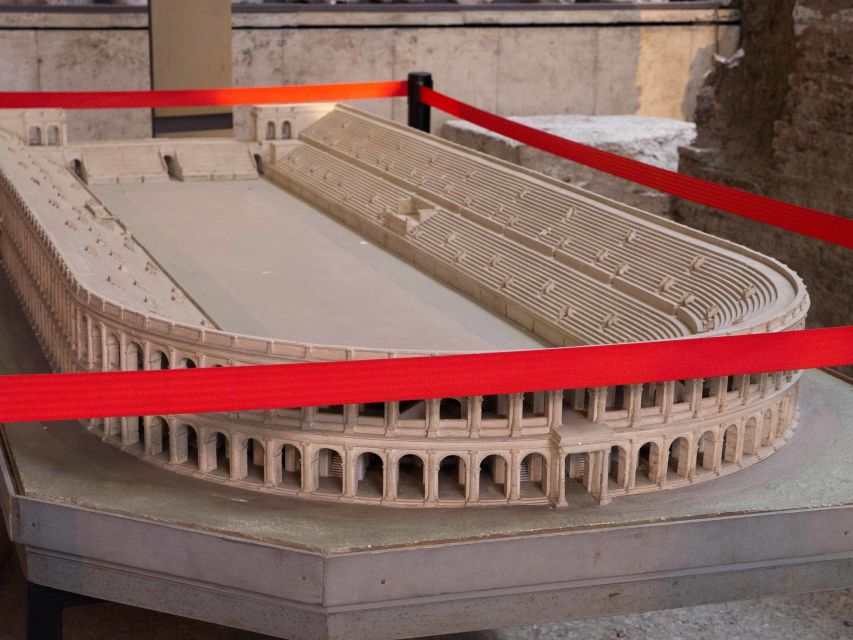
The meeting point also gives you a natural place to begin the walk. Piazza Navona is one of Rome’s grandest public spaces, built over the footprint of the ancient stadium. Its long oval form still hints at the sporting arena below, even though today the square is framed by Baroque churches, palaces, cafés, and fountains.
The office staff should also confirm the timing printed on your reservation. Pay close attention to the time shown on your receipt, especially if it uses the 24-hour clock. A mix-up at the meeting point once led visitors to hurry to the Trevi site at the wrong time, only to learn that their entry was scheduled an hour later. Read the times yourself rather than relying only on verbal directions.
Beneath Piazza Navona: the Stadium of Domitian
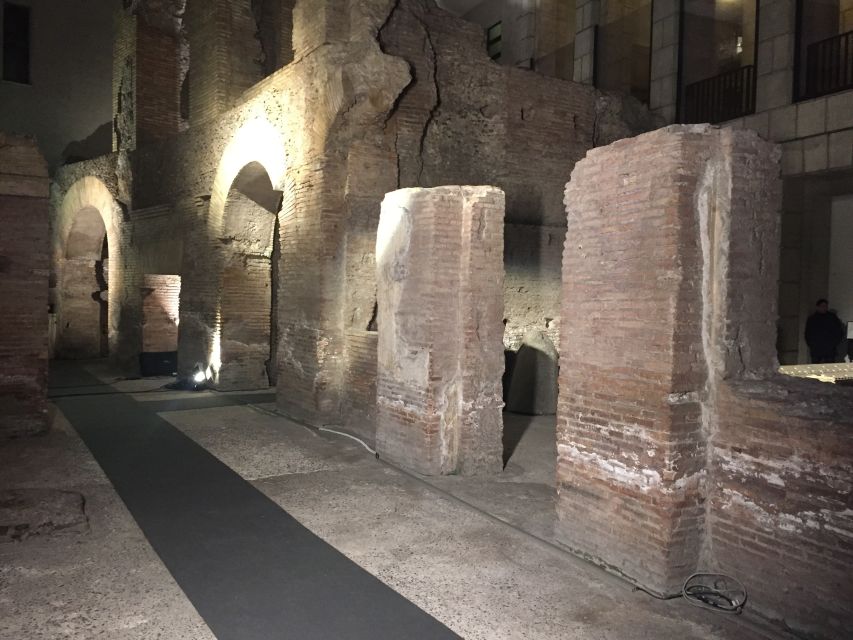
The Stadium of Domitian is the more unusual of the two sites because it sits directly beneath one of Rome’s most famous squares. Ancient Romans used the stadium for athletic contests and public spectacles, and the long shape of Piazza Navona follows the old building’s outline.
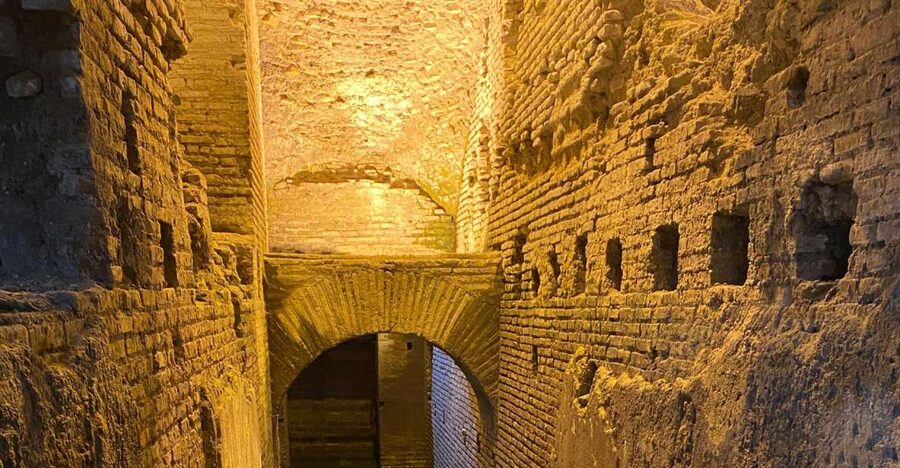
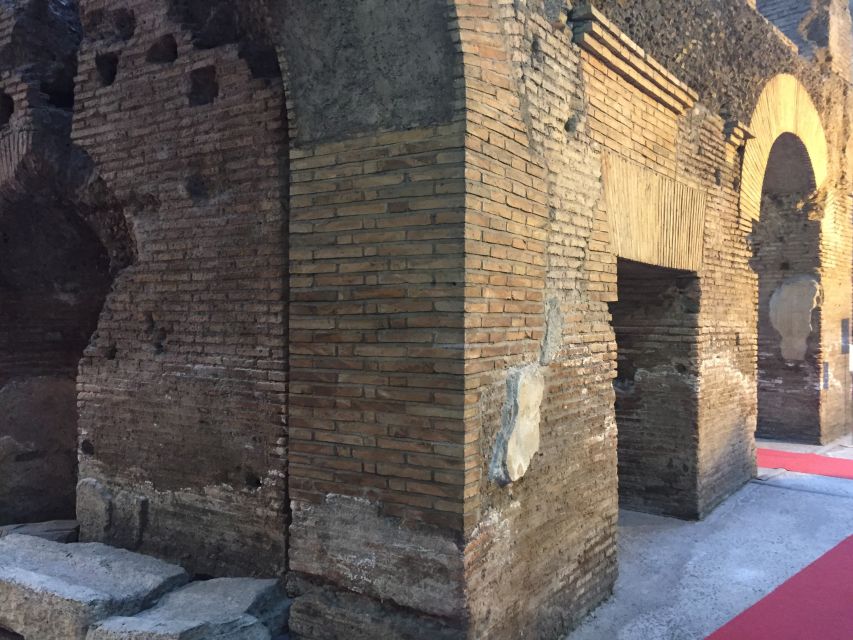
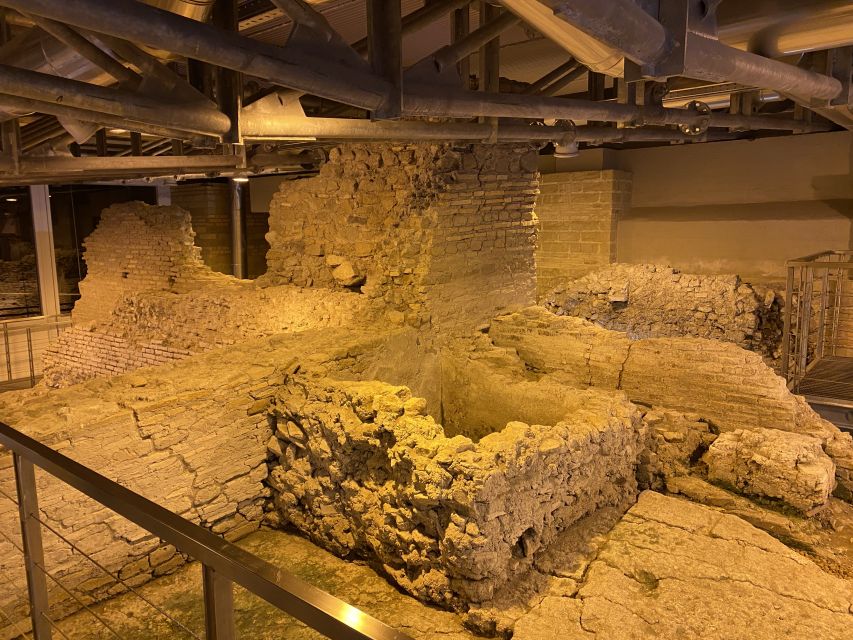
Below street level, the excavation presents a section of the stadium structure and helps you picture the scale of the original arena. The audio guide explains the site and its place in Roman life. Since the archaeological area is not large, the visit is fairly focused rather than sprawling.
I find this stop most useful when you have already spent a few minutes looking across Piazza Navona. From above, you see a lively square with Bernini’s Fountain of the Four Rivers at its center. Below, you begin to understand why the piazza has its distinctive elongated shape.
The contrast is the point. Modern Rome is not simply built beside ancient Rome. In places such as this, it is built directly on top of it.
Set your expectations before entering. The remains are fascinating, but there is not a vast network of corridors to explore. Several people find the Stadium of Domitian smaller than expected, and a visit may take about half an hour. I would treat it as a clear archaeological explanation of one structure, not as a full underground city.
The audio guide helps because it gives the visible stonework context. Without explanation, a short wall or partial foundation can be hard to read. With the recording, you can connect the remains underfoot to the stadium above.
Piazza Navona, Bernini, and the Pantheon exterior
The above-ground section adds value because it links the excavation to the city around it. You’ll walk through Piazza Navona and see its famous fountains, including Bernini’s Fountain of the Four Rivers.
The square is particularly rewarding for first-time visitors because it combines several layers of Rome in one place. The ancient stadium lies below. Baroque architecture and sculpture dominate the present-day setting. Street life fills the space between them.
You’ll also see the Pantheon from outside. This ancient temple, dedicated to all divinities, is among the best-preserved buildings from the Roman world. The experience does not include an interior visit according to the information provided, so you should plan separately if entering the Pantheon is important to you.
Even from the exterior, the building makes a strong impression. Its heavy portico and vast domed form show why later architects studied it so closely. Michelangelo was so struck by its design that he described it as the work of angels rather than humans.
The route is valuable here because it gives you more than isolated ticket entries. You get a short explanation of how Rome’s ancient, Renaissance, and Baroque layers meet in the center. The walk also gives your visit a sense of place before you go below ground again.
Same stretch of coast and karst, a different entrance:
- The Original Roman Crypts and Catacombs Tour with Transfers
★ 4.5 · 4,896 reviews - Rome: Colosseum Underground Small Group Guided Tour
★ 4.7 · 4,844 reviews - Rome: St. Peter’s Basilica, Dome Climb, and Underground Tour
★ 4.8 · 3,404 reviews - Rome: Colosseum Underground, Arena & Forum Tour
★ 4.7 · 3,272 reviews
From the fountains to Vicus Caprarius near Trevi
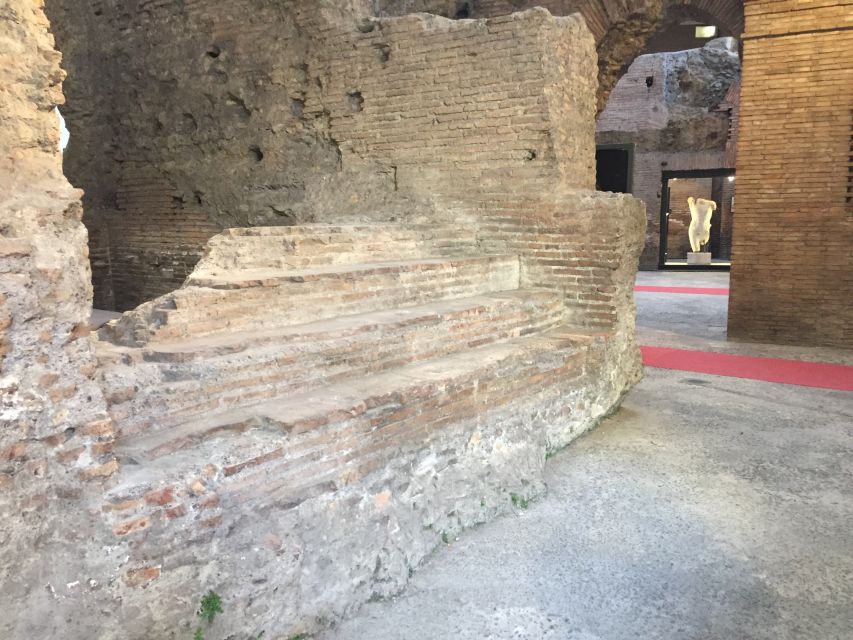
The second archaeological stop is in the Trevi District, close to the Trevi Fountain. The walk between the two underground sites is about 10 minutes, according to the available visitor information, though the central streets can be crowded and slow at busy times.
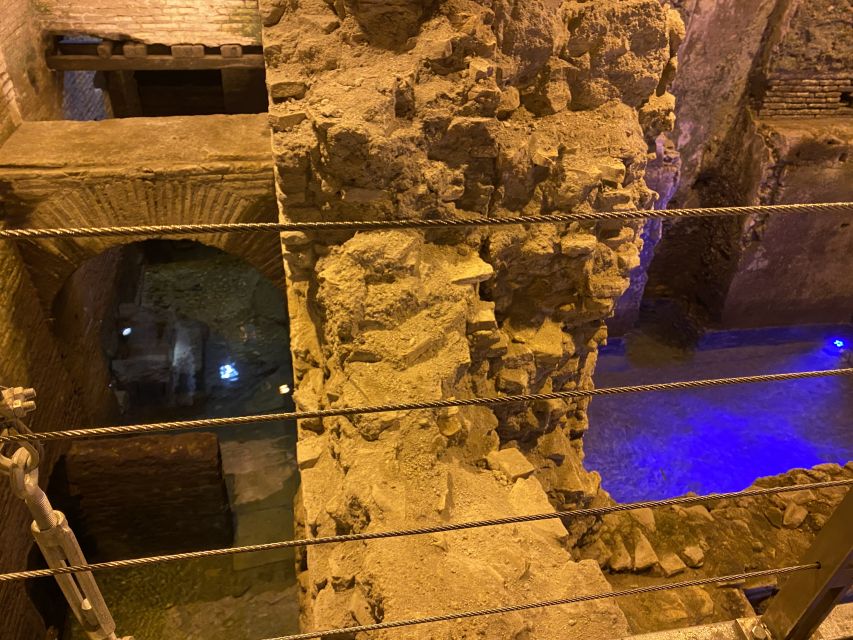
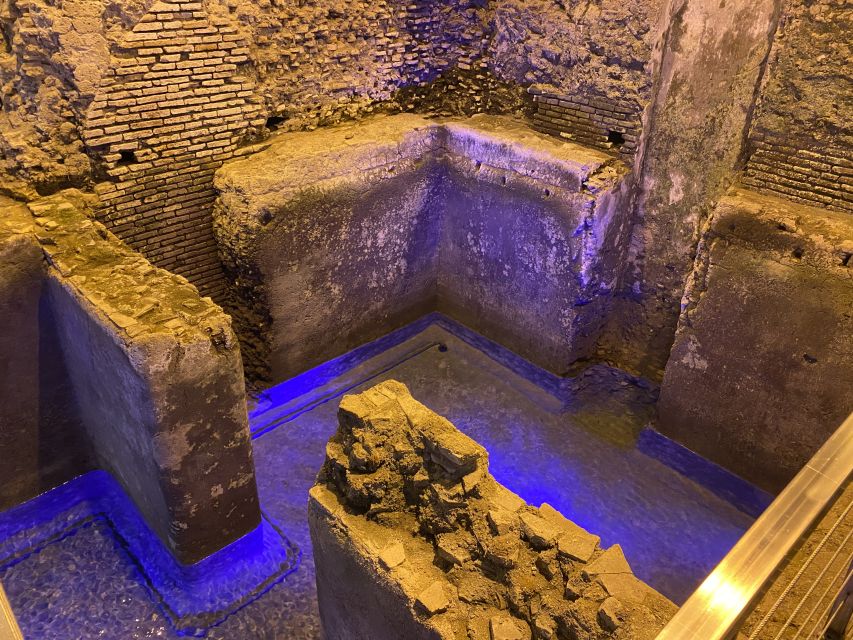
Vicus Caprarius offers a different kind of view from the stadium. Instead of concentrating on one large public building, the excavation reveals ancient passages and the remains of a Roman house. You might find this stop more intimate and easier to picture as part of everyday Roman life.
The site is also described as the excavation beneath the Trevi area, making it a striking reminder that the fountain and surrounding streets sit above much older remains. The visit is compact, with roughly half an hour being a realistic expectation.
I like the contrast between the two stops. The Stadium of Domitian shows public architecture and spectacle. Vicus Caprarius gives you a closer look at domestic and underground spaces. Neither site is huge, but together they offer a more rounded picture of ancient Rome than visiting only one.
Again, the audio guide is useful. Archaeological remains rarely explain themselves. The recording helps you understand what you are looking at and why the excavation matters. Since you can move at your own pace, you can spend longer at the areas that interest you and move on when the display becomes familiar.
Tossing a coin at Trevi Fountain
Trevi Fountain is the lively above-ground finish to this part of the route. It is Rome’s largest and best-known fountain, and the traditional coin toss is a simple ritual: throw a coin into the water to suggest that you will return to Rome.
The fountain can be crowded, so do not expect a quiet private moment. Still, it is worth pausing to look at the sculpture, water, and grand theatrical setting. The visit is less about discovering an obscure corner and more about seeing one of the city’s essential public sights after learning what lies beneath it.
The underground site near Trevi adds a useful twist. Most people look at the fountain and move on. This pass asks you to consider the older layers below the stonework and streets. That connection makes the stop more rewarding than a quick photograph alone.
You’ll also have chances for photographs during the walk, especially around Piazza Navona, the Pantheon exterior, and Trevi Fountain. The city sights are a major part of the appeal, even though the ticket’s main purpose is archaeological.
Audio guides, languages, and the pace of the visit
The included audio guides are available in English, Italian, French, Spanish, German, Russian, and Portuguese. For English speakers, this means you can follow the site explanations without needing a live archaeological lecture at every display.
A self-paced audio guide is a good match for these excavations. The sites are small, and people do not all want the same amount of time at each wall, passage, or foundation. You can listen closely to the sections that interest you and keep moving when you have the basic picture.
The broader city walk includes a professional English-speaking guide. The supplied details do not name the guide, so do not book this expecting a particular person. The guide’s role is to connect the main sights and explain Rome’s story from the imperial period to the present.
There is a useful difference between the two formats. The live guide gives the city walk a human rhythm and helps you orient yourself. The audio guides give the underground visits flexibility. Together, they make sense for a short two-hour experience.
Do not rush simply because the overall duration is listed as two hours. The exact timing may depend on the starting slot and the movement between locations. Also, check the times on your booking carefully. The combination of a meeting point, two separate entries, and a short walk means timing matters more here than it might at a single museum.
Optional panoramic and museum choices
The experience may also be available with an added choice involving the Panoramic Glass Elevator and Palazzo Venezia’s Risorgimento Museum, or the Capitoline Museums.
These options are not the same kind of visit as the underground excavations. The glass elevator and Palazzo Venezia route focus on city views and Italy’s modern national story. The Capitoline Museums offer an art and archaeology collection and are described as the world’s first museum opened to the public, dating to 1734.
Choose the option that matches your interests rather than automatically selecting the longest package. If your main goal is ancient Rome below street level, the two archaeological sites are the core of the experience. If you want to add a museum or panoramic view to your day, one of the extended choices may make better use of your time.
Read the exact option details when booking. The available information indicates that you select the version most suitable for you, but it does not provide a full breakdown of how each add-on is timed.
How much time should you allow?
The stated duration is two hours. That is enough for the planned route when the visits and walking connections run on schedule, but it is not enough for a slow, full-day exploration of every sight mentioned.
The underground stops themselves are compact. A useful mental plan is around 30 minutes at each archaeological site, with the remaining time used for the city walk, orientation, and movement between locations.
I would avoid pairing this with another tightly timed attraction immediately afterward. The central streets can be busy, and you may need time to redeem the voucher, locate each entrance, and follow the correct schedule.
The route works well earlier in a day when you want to understand the historic center before visiting larger monuments. It also suits a later gap between major bookings, provided your reservation time and voucher exchange are clear.
Who will get the most from this experience?
I recommend this pass to you if you enjoy archaeology but do not want to spend half a day in a large museum. It is also a good choice if you have already seen the headline sights and want a different way to read Piazza Navona and Trevi Fountain.
Families with older children may appreciate the short visits and the clear contrast between an ancient stadium and a Roman house. The city walk adds visual variety, while the underground sections provide a change from fountains and piazzas.
First-time visitors can also benefit, especially if they want a guided orientation to central Rome. Just remember that the Pantheon is viewed from the outside in this experience, based on the supplied details.
You should reconsider it if you expect large excavated neighborhoods, long tunnels, or a dramatic underground adventure. The sites are authentic, but limited in size. You should also note that the activity is not suitable for wheelchair users.
Cancellation is flexible up to 24 hours before the activity for a full refund, and you can reserve now and pay later. Those terms help if your Rome schedule is still changing, but they do not remove the need to exchange the voucher before entering.
Should you book the Piazza Navona and Trevi Underground Pass?
Book it if you want two compact archaeological stops tied to a pleasant walk through Rome’s historic center. The best feature is the pairing: one site explains a major public stadium, while the other presents ancient domestic remains near Trevi Fountain.
Do not book it expecting the scale of the Colosseum, Roman Forum, or Capitoline Museums. At $34, the pass offers fair value for visitors who care about the archaeology and want reserved access with audio explanations. It is less compelling if you judge value only by the number of rooms or the length of the visit.
My practical advice is simple: redeem the voucher early, read the printed time carefully, and keep your expectations focused on two small excavations. With that approach, the experience gives you a rewarding look below the streets and a useful way to connect Rome’s famous squares with the ancient structures beneath them.
FAQ
Where do I redeem the voucher?
Redeem your voucher at the Tourist Office at Piazza Navona 25 in Rome before visiting the attractions. The voucher itself is not the admission ticket.
What sites are included?
The pass includes reserved entrance to the Stadium of Domitian beneath Piazza Navona and the Trevi District Underground, also known as Vicus Caprarius.
Is a guide included?
A professional English-speaking guide accompanies the city walk. The archaeological sites include audio guides rather than a named live guide.
Which languages are available for the audio guide?
The audio guide is available in Italian, French, English, Spanish, German, Russian, and Portuguese.
How long does the experience last?
The stated duration is two hours. Each underground site is relatively compact, and the walk between them is about 10 minutes.
Is the Pantheon included?
The route includes viewing the Pantheon from outside. The provided details do not state that interior admission is included.
Is the activity suitable for wheelchair users?
No. The activity is listed as not suitable for wheelchair users.
Can I cancel the booking?
Yes. You can cancel up to 24 hours in advance for a full refund. You can also reserve now and pay later.
Just added around Rome
- St. Peter’s Basilica and Vatican Grottoes Tour★ 4.9 · 120 reviews
- St. Peter’s Basilica Full Guided Tour with Vatican Grottoes★ 4.6 · 286 reviews
- Rome: St Peter’s Basilica Express Tour & Grottoes★ 4.3 · 126 reviews
- Rome: Tour of St. Clement’s Basilica Underground Temples★ 4.8 · 242 reviews
- Rome: Underground Trastevere Guided Walking Tour★ 4.8 · 87 reviews
- Rome: Appian Way, Aqueducts, & Catacombs E-Bike Guided Tour★ 4.9 · 54 reviews
- Rome underground hidden temples, ruins, and secret basilicas★ 3.7 · 21 reviews
- Rome: Trevi Fountain District Underground Tour and Ice Cream★ 4.5 · 356 reviews
Rome Cave Tours, compared.
Colosseum: Underground and Ancient Rome Tour
Read the review →
Capuchin Crypts and Catacombs Tour with Transfers
Read the review →
Expert Guided Tour of Colosseum Arena OR Underground, and Forum
Read the review →
The Original Roman Crypts and Catacombs Tour with Transfers
Read the review →
Colosseum Underground Small Group Guided Tour
Read the review →
St. Peter’s Basilica, Dome Climb, and Underground Tour
Read the review →
Catacombs of St. Callixtus Entry Ticket & Guided Tour
Read the review →Browse the lists this tour appears in