

Review · ROME CAVE TOURS
Rome: Trevi Fountain District Underground Tour and Ice Cream
Beneath the Trevi District, Rome reveals a quieter story than the famous fountain above. At Vicus Caprarius, you see ancient walls, water channels, and a former Domus residence shaped by the Virgo aqueduct. It is a small archaeological site, but a good guide makes the cramped rooms speak.
I like the clear link between the Trevi Fountain and Roman water engineering, and I like the final gelato stop, which gives the hour a cheerful finish. The main consideration is space: the underground area is compact, and the Trevi Fountain portion is brief, usually viewed from the public side of the plaza rather than from a private, close-up position.
Key points at a glance
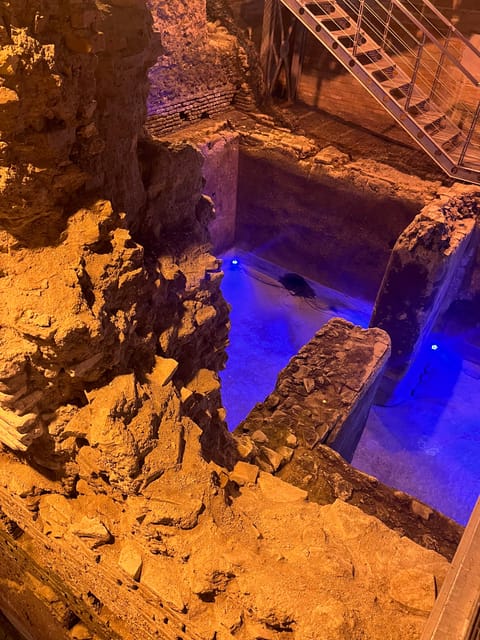
- Ancient water under modern Rome: See how water connected to the Trevi system still passes through old masonry below street level.
- Imperial-era finds: Examine coins, amphorae, polychrome marble, and the head of Alessandro Helios.
- A guide-led archaeological visit: An English-speaking guide explains the Vicus Caprarius rooms, Roman life, and the aqueduct.
- A compact one-hour outing: The main underground visit lasts about 40 minutes, followed by a short fountain explanation and gelato break.
- Historic gelato included: Finish with Italian gelato from a long-established shop near Trevi Fountain.
- Best for mobile visitors: Expect an underground setting and walking conditions that do not suit wheelchair users or people with mobility impairments.
Why Rome’s most famous fountain has an underground story
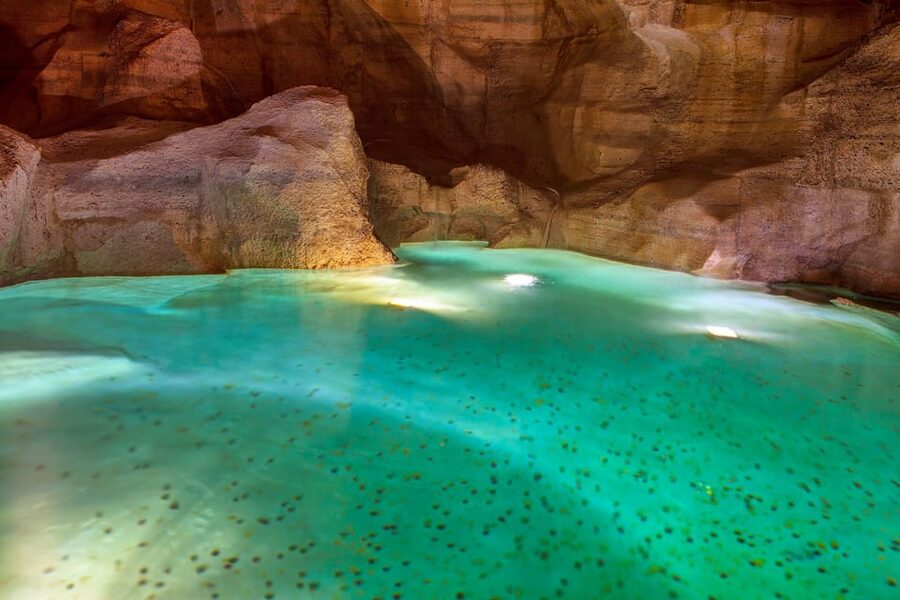
Most people meet Trevi Fountain at street level, among crowds, cameras, and the sound of falling water. This tour asks you to look below the paving stones. Just a short walk from the fountain, the Vicus Caprarius archaeological area preserves several layers of Rome, including buildings, water channels, and remains from a luxurious Domus.
I like this approach because it gives the fountain a useful backstory. Instead of treating Trevi as an isolated Baroque showpiece, you see it as part of a much older water system. The tour explains why this district earned the nickname City of Water, and how the Virgo aqueduct helped supply Roman buildings and public fountains.
The experience is not a grand underground complex on the scale of the Colosseum or the Roman Forum. It is a contained site with narrow passages and a limited number of rooms. That is part of its appeal, since your guide can point to details at close range, but it also means you should not expect a large, open archaeological park.
The tour costs about $52 per person and lasts one hour. That is not a bargain if you measure value only by time or square footage. It becomes more reasonable if you want a focused explanation of Roman water systems, an archaeological site that is easy to fit into a Trevi District visit, and gelato included at the end.
Dessert tours within reach of Rome:
- 4×4 ATV Experience, Water Cave, Chocolate and Coffee Tasting
★ 5.0 · 1,430 reviews - Tangier: Sunset, Tea, Sweets, Camel Ride, and Hercules Caves
★ 4.9 · 575 reviews - ATV Adventure w/ Chocolate, Coffee & Cave Swim in Punta Cana
★ 5.0 · 178 reviews
Starting with Trevi Fountain and the wish ritual
The meeting point is at Vicolo del Puttarello 25. You should arrive at least 15 minutes early, since the Trevi area can be hard to cross when the plaza is crowded. One booking party was delayed by the crowds and still managed to join, but I would not count on that courtesy.
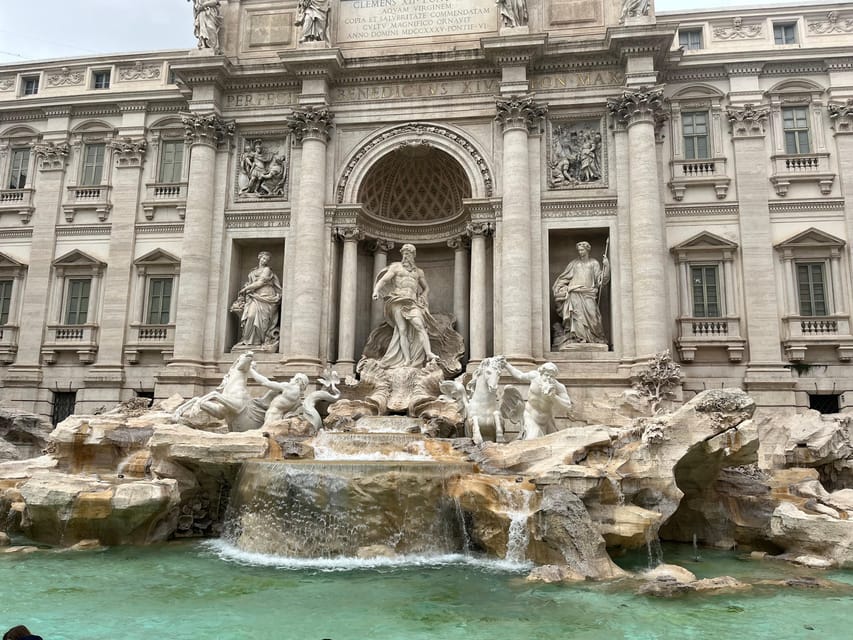
The tour begins with the familiar Trevi Fountain setting. You can make the traditional wish and take in the fountain before the group heads below ground. The guide gives a short explanation of the fountain, its setting, and its connection to the water that flows through the district.
Keep your expectations in check here. The tour does not provide a private viewing area or a special close-up entrance into the fountain itself. You generally see it from the public side of the plaza, and the fountain segment is listed at about five minutes. That is enough for orientation and a few photographs, but not enough for a full fountain history lesson.
Some guides add useful photo advice and allow time for pictures. Erika, Carla, Noemi, Alessia, and Naomi are among the guides praised for making the history clear and personal. Guide assignments can change, of course, but the repeated strength of this activity is the quality of its English explanations.
Entering Vicus Caprarius below the Trevi District
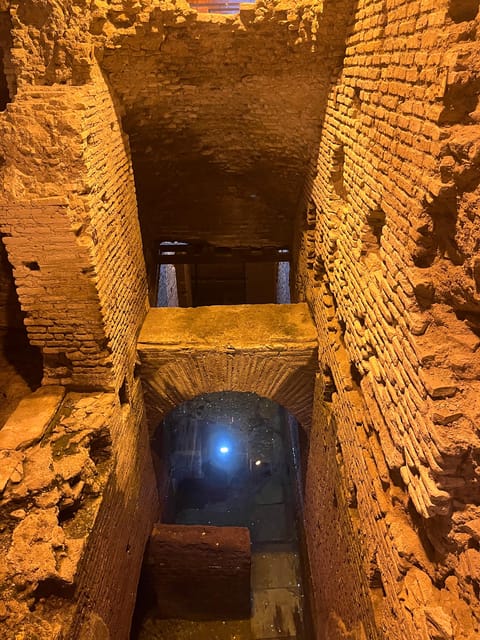
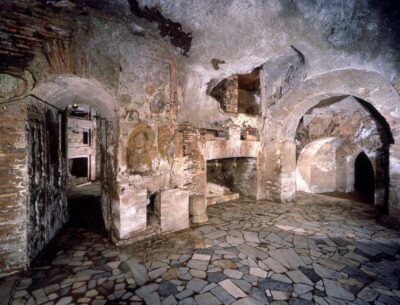
The main part of the outing takes place at Vicus Caprarius, with about 40 minutes for the guided visit. You walk through the archaeological remains and see how Rome was built in layers. The modern city sits above earlier Roman structures, giving you a literal example of what people often mean when they describe Rome as an ancient city beneath a modern one.
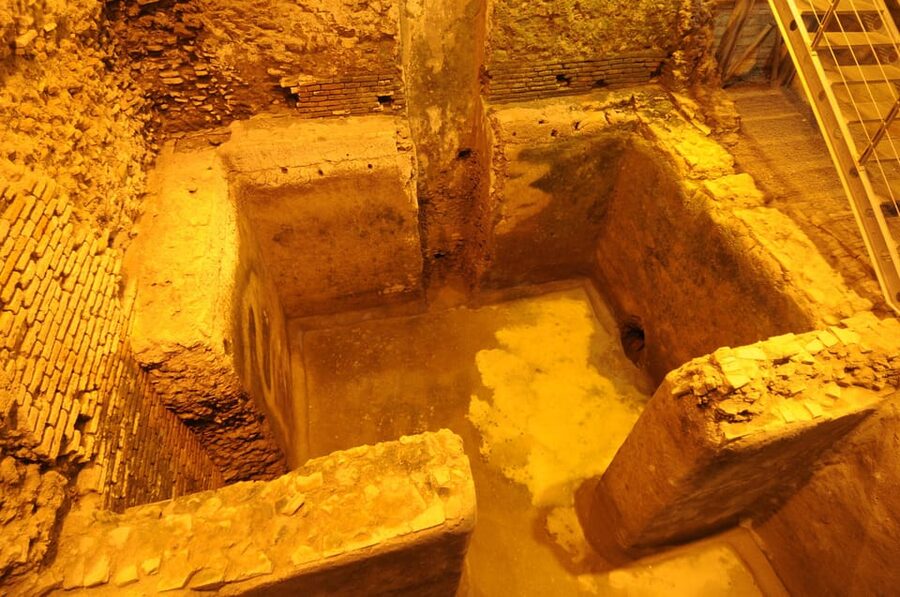
The guide explains the arrangement of the site, including the Domus residence and its water supply. This residence was more than a simple home. Its fittings and marble decoration suggest a comfortable, high-status Roman setting, and the surviving remains help show how water was used inside private buildings.
The most interesting point for me is the relationship between water and architecture. The water associated with the Trevi Fountain filters through ancient masonry at the archaeological site, continuing through pipes and pools connected to the Domus. You are not just looking at old stones. You are seeing part of a working water story that links Roman engineering with the fountain above.
That connection is especially helpful if you have already seen other Roman monuments but found aqueducts and water systems hard to picture. The guide turns the subject into something concrete: channels, pipes, pools, and the physical route taken by water.
The three antiquarian sections and their objects
The underground visit includes three sections of the antiquarian, where archaeological objects found during excavation are displayed. The site is small enough that you can get close to the remains, though that can also make it feel crowded when several groups are present.
Look for the polychrome marble coverings, which show the level of decoration used in Roman interiors. You also see the famous head of Alessandro Helios, an object that gives the collection a memorable focal point. The guide supplies the context, so the objects do not feel like disconnected pieces in glass cases.
Another striking find is a hoard of about 800 coins. A group of coins can tell a wider story than one statue or architectural fragment. It helps place the site within changing periods of Roman life and gives you a sense of the material evidence recovered from the area.
The Spatheia is another unusual object. This African amphora was used to transport oil, a reminder that Roman trade moved goods across a wide network. It is an easy detail to miss if you visit without a guide, but it becomes meaningful when the explanation connects the container to daily supplies and long-distance commerce.
I would not expect a museum-sized collection. This is an archaeological visit rather than a full museum tour. The value comes from seeing the finds alongside the building remains and hearing how they fit together.
More Cave Tours in Rome:
- Colosseum: Underground and Ancient Rome Tour
★ 4.7 · 12,691 reviews - Rome: Capuchin Crypts and Catacombs Tour with Transfers
★ 4.6 · 6,456 reviews - Expert Guided Tour of Colosseum Arena OR Underground, and Forum
★ 4.5 · 5,041 reviews - The Original Roman Crypts and Catacombs Tour with Transfers
★ 4.5 · 4,896 reviews
What the guide adds to a compact site
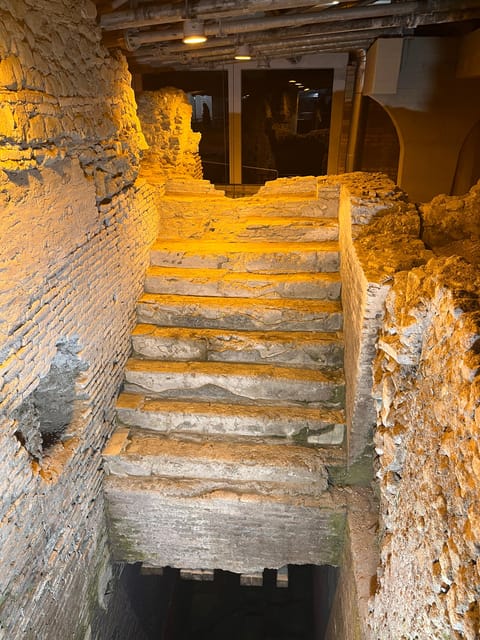
A strong guide matters here more than at a monument that can speak for itself. The rooms are not huge, and several features may look like ordinary stonework until someone explains their purpose. Guides such as Carla have been praised for answering questions clearly, while Erika and Noemi are known for adding humor and extra context.
I particularly like the way the best guides connect the site to Roman daily life. They explain not only how water moved, but also what it meant to live in a city where buildings, streets, drains, fountains, and aqueducts were tied together. That makes the tour useful for first-time visitors and for people who have already visited Rome several times.
The tone is generally relaxed rather than rushed. Guides make room for photographs and questions, and some have offered extra advice about nearby sights after the official portion ends. One guide even stayed longer to help with fountain photographs and local suggestions, though extra time should be treated as a kindness, not part of the guaranteed schedule.
Families can manage the tour, especially with an attentive guide. Alessia and Michelle, among others, have been praised for keeping children involved. Still, the subject is archaeological and the underground setting is compact, so very young children who need constant movement may not enjoy every minute.
Headsets have been used on some departures, which helps when the area is busy or the group is spread through the rooms. Equipment can vary by departure, but clear sound is useful in a site where the guide cannot simply raise a voice across a large open space.
Finishing with gelato near the fountain
The last part is simple and effective: Italian gelato at a historic shop near Trevi Fountain. After stone walls, coins, and aqueducts, a cold scoop or cup gives the hour a light finish.
The gelato is generally provided through a voucher rather than as a formal seated tasting. That arrangement has one advantage: you may have some flexibility about when you redeem it, depending on the instructions given on your departure. It also means the guide may not walk you through a long tasting session. You collect the treat at the designated historic shop.
The gelato itself has earned plenty of praise, with some visitors calling it the best they had during a weekend in Rome. I would treat that as a pleasant bonus rather than the main reason to book. The archaeological visit is the heart of the experience, while the gelato makes the ending more enjoyable.
If you want to linger at the fountain after the tour, this is a convenient point to do so. The group portion ends after the gelato arrangement, leaving you in one of Rome’s most central sightseeing areas.
Price, timing, and practical value
At $52 per person, this is a premium price for a one-hour activity. The underground site itself is not large, and the fountain explanation is short. You are paying mainly for reserved entry, an English-speaking guide, the archaeological interpretation, and the included gelato.
I think the price works best for three kinds of visitors. First, it suits anyone fascinated by Roman engineering and aqueducts. Second, it helps visitors who want a structured activity around Trevi Fountain instead of simply taking photographs. Third, it is useful on a hot day, since the underground rooms offer a cooler break from the streets.
It is less convincing for someone who only wants a long Trevi Fountain tour. You will not spend an hour examining every sculptural detail of the Baroque fountain. It is also not the right choice if you prefer a large, sweeping site with plenty of room to wander independently.
The activity includes assistance, a reserved Vicus Caprarius entry ticket, the guided visit, the Trevi Fountain portion, and Italian gelato. Hotel pickup and drop-off are not included. The booking information also says to check available start times, since the total duration is one hour.
You can cancel up to 24 hours before the scheduled time for a full refund, and the reserve-now, pay-later option keeps your plans flexible. Those terms are useful in Rome, where weather, transport delays, and changing sightseeing plans can easily affect a short activity.
Wear comfortable shoes. The tour is not suitable for wheelchair users or people with mobility impairments, and the underground setting may be difficult if stairs or uneven surfaces are a problem. The tour is offered in English.
Who should book this Trevi Fountain underground tour?
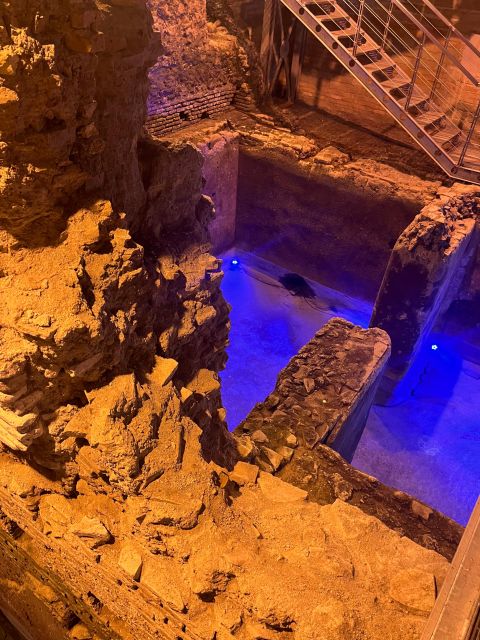
I would book this if you want context rather than another photo stop. The fountain is already famous, but the aqueduct, water channels, Domus, coins, and amphorae explain why this corner of Rome mattered long before the Baroque era.
It is especially good for history and architecture fans, first-time Rome visitors who want a manageable introduction to ancient infrastructure, and repeat visitors looking for a lesser-known site near a familiar landmark. The one-hour length also fits neatly before lunch, dinner, or another central Rome attraction.
I would skip it if you need step-free access, dislike enclosed archaeological spaces, or want a long, detailed examination of Trevi Fountain itself. I would also compare the price against your wider plans if you are already booking several paid Roman sites.
For the right visitor, the experience delivers a useful change of scale: you begin with one of Rome’s biggest public spectacles, then move into a small underground place where water, stone, trade, and domestic life come together. Add the gelato, and you have a compact outing with a clear beginning, a strong middle, and a tasty finish.
FAQ
How long does the tour last?
The activity lasts one hour. The guided visit at Vicus Caprarius takes about 40 minutes, followed by a short Trevi Fountain explanation and a gelato stop.
Where does the tour meet?
The meeting point is Vicolo del Puttarello 25. Arrive at least 15 minutes before your selected start time.
Is the tour offered in English?
Yes. The live tour guide and activity language are English.
What can I see underground?
You can see the Vicus Caprarius archaeological area, ancient masonry, water channels, parts of a Domus residence, polychrome marble coverings, the head of Alessandro Helios, a collection of about 800 coins, and a Spatheia amphora used to transport oil.
Is gelato included?
Yes. Italian gelato from a historic shop near Trevi Fountain is included. The gelato is provided through a voucher arrangement.
Does the tour include close access to Trevi Fountain?
The activity includes a guided Trevi Fountain portion, but the fountain is generally viewed from the public side of the plaza. The fountain segment lasts about five minutes.
Is the tour suitable for wheelchair users?
No. The activity is not suitable for wheelchair users or people with mobility impairments. Comfortable shoes are recommended.
Just added around Rome
- St. Peter’s Basilica and Vatican Grottoes Tour★ 4.9 · 120 reviews
- St. Peter’s Basilica Full Guided Tour with Vatican Grottoes★ 4.6 · 286 reviews
- Rome: St Peter’s Basilica Express Tour & Grottoes★ 4.3 · 126 reviews
- Rome: Tour of St. Clement’s Basilica Underground Temples★ 4.8 · 242 reviews
- Rome underground hidden temples, ruins, and secret basilicas★ 3.7 · 21 reviews
- Rome: Underground Trastevere Guided Walking Tour★ 4.8 · 87 reviews
- Rome: Appian Way, Aqueducts, & Catacombs E-Bike Guided Tour★ 4.9 · 54 reviews
- Rome: Trevi Fountain Underground Small Group Tour★ 4.4 · 47 reviews
Rome Cave Tours, compared.
Colosseum: Underground and Ancient Rome Tour
Read the review →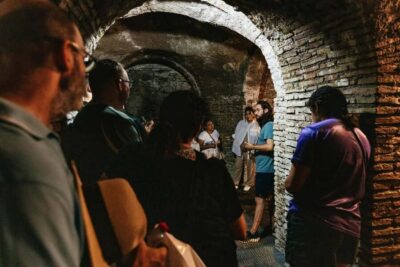
Capuchin Crypts and Catacombs Tour with Transfers
Read the review →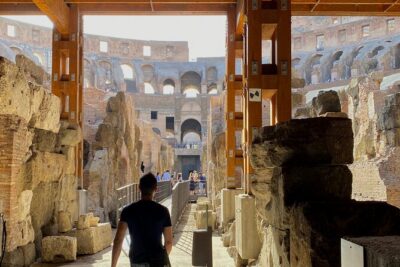
Expert Guided Tour of Colosseum Arena OR Underground, and Forum
Read the review →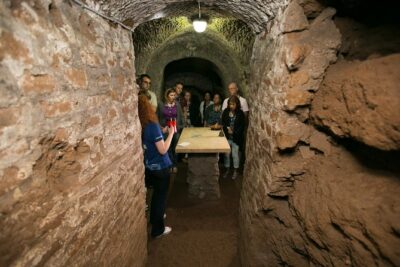
The Original Roman Crypts and Catacombs Tour with Transfers
Read the review →
Colosseum Underground Small Group Guided Tour
Read the review →
St. Peter’s Basilica, Dome Climb, and Underground Tour
Read the review →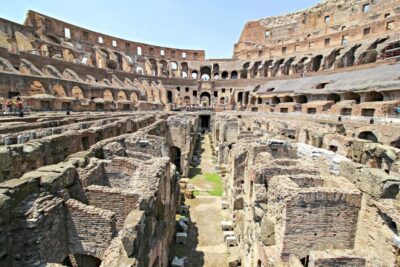
Catacombs of St. Callixtus Entry Ticket & Guided Tour
Read the review →Browse the lists this tour appears in