

Review · ROME CAVE TOURS
Rome: Trevi Fountain Underground Small Group Tour
Beneath the crowds and coin tosses at Trevi Fountain sits Vicus Caprarius, an underground archaeological area built around the remains of Aqua Virgo, one of ancient Rome’s aqueducts. I like that this tour takes you beyond the fountain’s marble showpiece and into the older layers of the city, including an Imperial-era domus and a medieval settlement.
I also like the short format and the included entry ticket, which make this a useful addition to a busy Rome day. The separate entrance and headsets should help you get inside and follow the English guide clearly. The main caution is that the tour is not necessarily beneath the fountain itself, despite the way the experience is described. One participant found the guide excellent, while another reported poor explanations and an argument with another guide, so the quality may depend heavily on who leads your visit.
Key points at a glance
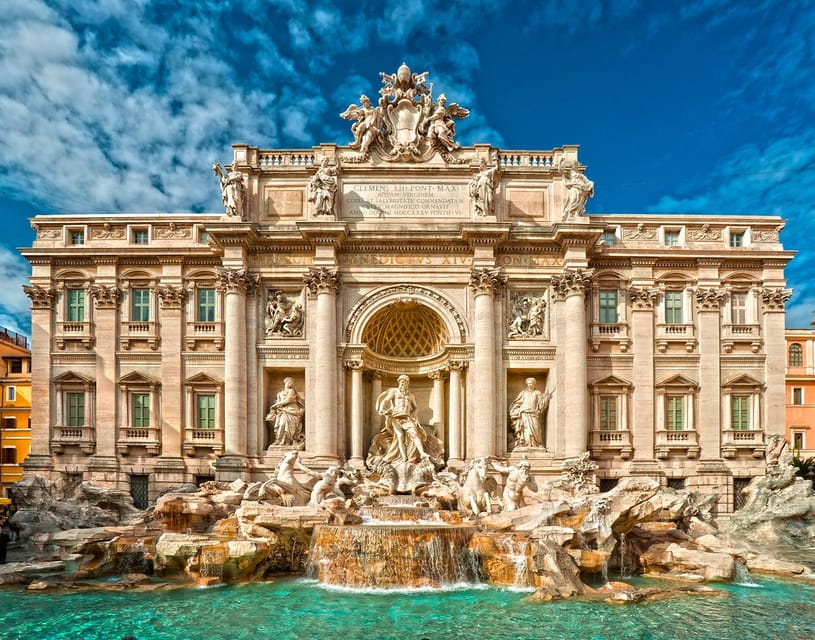
- Aqua Virgo under Rome: See surviving parts of the aqueduct that still feeds the Trevi Fountain.
- Layers beneath a cinema: Vicus Caprarius was uncovered during renovation work at the former Cinema Trevi in 1999.
- More than a fountain visit: Explore an Imperial domus, medieval houses, and a Roman water tank.
- Short and focused: The underground guided visit is listed at 45 minutes, with a separate 15-minute Trevi Fountain stop in the route.
- Easy central meeting point: Meet your guide at tiny Piazza dei Crociferi, not at the archaeological site entrance.
- Important limitation: The site is not suitable for wheelchair users, and comfortable shoes are recommended.
What lies beneath Trevi Fountain
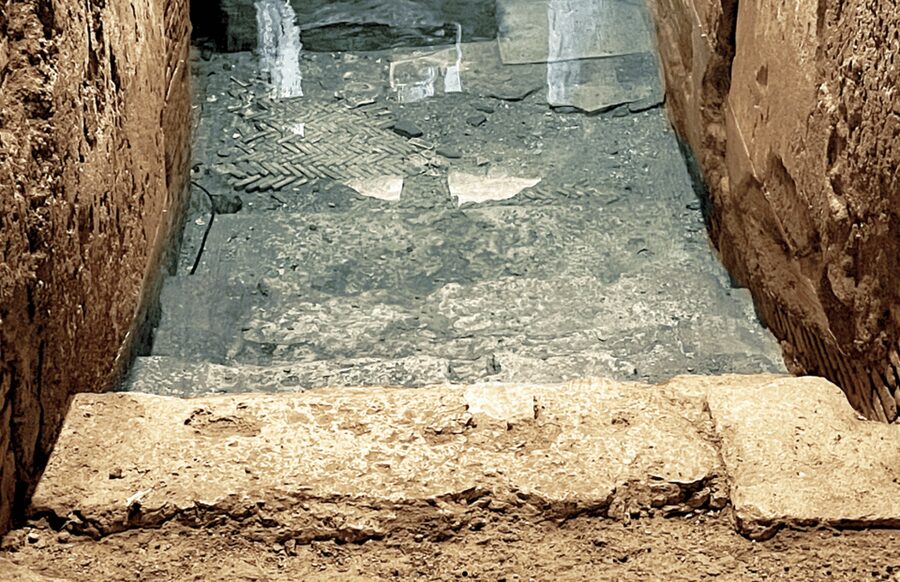
The most interesting part of this visit is not the famous fountain itself. It is the older Rome underneath it.
Vicus Caprarius, also known as the City of Water, sits below the Trevi area. Here, you can see remains linked to Aqua Virgo, the ancient aqueduct whose name means pure water. The Romans built 11 major aqueducts, and Aqua Virgo was one of them.
The aqueduct’s name also carries a story. According to legend, a young woman led thirsty Roman soldiers to a spring. In Latin, virgo means maiden, and that tale gave the waterway its name.
You are not simply looking at one isolated ruin. The site shows how Rome was repeatedly built over, altered, and reused. An Imperial-era domus gives way to medieval houses, while the aqueduct’s water system continued to shape life in the area.
That layered quality is the real reason to book. The Trevi Fountain is one of Rome’s most photographed sights, but this visit gives you a look at the infrastructure and buildings that existed long before the Baroque fountain appeared.
More Cave Tours in Rome:
- Colosseum: Underground and Ancient Rome Tour
★ 4.7 · 12,691 reviews - Rome: Capuchin Crypts and Catacombs Tour with Transfers
★ 4.6 · 6,456 reviews - Expert Guided Tour of Colosseum Arena OR Underground, and Forum
★ 4.5 · 5,041 reviews
Meeting at Piazza dei Crociferi
Your meeting point is Piazza dei Crociferi, a tiny square close to Trevi Fountain. Look for a guide holding a sign with the Rome with Silvia logo.
Pay close attention to this instruction: do not wait at the entrance to the archaeological site. The guide meets you in the square first, then leads the group onward. That distinction matters because the entrance and meeting point are not the same place.
I would arrive early, even though the ticket time is the formal starting time. One person who arrived three minutes before the listed time received repeated calls warning that the guide might leave. The instructions do not clearly state how early you must arrive, so giving yourself extra time is the sensible choice.
Piazza dei Crociferi is near one of Rome’s busiest sights, where pedestrians can be packed into narrow streets. A few extra minutes can help you identify the correct square and locate the sign without rushing.
Entering Vicus Caprarius

The tour’s main section takes place at Vicus Caprarius. Entry tickets are included, and a separate entrance is listed as part of the visit. That should save you from handling admission on site, though you still need to meet the guide at the correct outdoor location.
The underground rooms are the result of excavation and conservation work connected to the former Cinema Trevi. The archaeological area came to light during renovations in 1999 and opened to the public in 2004.
That origin gives the place an appealing modern connection. A working cinema stood above ancient Roman remains, and the renovation exposed a much older story below. Rome often works this way. A modern building may cover a medieval structure, which may itself sit on Imperial foundations.
Inside, the guide introduces the site’s main sections. You can expect to see parts of an Imperial domus, medieval houses, and the castellum aquae associated with Aqua Virgo. The water tank was built under Emperor Hadrian to improve water supplies in the Campo Marzio area.
The visit is especially useful if you want to understand Roman engineering in practical terms. The aqueduct was not simply a stone channel carrying water from the countryside. It was part of a wider urban system that fed homes, public buildings, fountains, and other facilities.
Aqua Virgo and the Roman water system
Aqua Virgo is the central character of this underground visit. Its poetic name and connection to Trevi give the tour a story that is easier to remember than a list of dates.
The aqueduct was one of Rome’s 11 aqueducts. The surviving remains beneath the Trevi area help explain why this location mattered long before the current fountain was built.
The castellum aquae is another key stop. Think of it as a water distribution tank, designed to help manage and direct the supply. Its connection with Emperor Hadrian places the structure within the larger Roman effort to organize water in the Campo Marzio district.
I like this part because it turns the fountain above into the final chapter of a much older water story. When you later see Trevi Fountain, you can think beyond its statues and coins. Its water supply is tied to an ancient aqueduct and a system that helped make urban Roman life possible.
The guide’s explanation matters here. One account praised a guide called Virginia for making the visit a great one. Another said the guide was informative about Roman aqueducts. Yet a separate account described a guide named Sylvia as difficult to understand and repetitive, with little information beyond the most basic facts. That contrast suggests you should keep expectations realistic: the archaeology is fixed, but the quality of the explanation can vary.
Same stretch of coast and karst, a different entrance:
- The Original Roman Crypts and Catacombs Tour with Transfers
★ 4.5 · 4,896 reviews - Rome: Colosseum Underground Small Group Guided Tour
★ 4.7 · 4,844 reviews - Rome: St. Peter’s Basilica, Dome Climb, and Underground Tour
★ 4.8 · 3,404 reviews - Rome: Colosseum Underground, Arena & Forum Tour
★ 4.7 · 3,272 reviews
Imperial rooms and medieval homes
The underground area also gives you a look at how people used the space over different periods.
The Imperial domus offers a glimpse of domestic life in Roman times. You will not be touring a complete palace, but the remains help connect the aqueduct to the people who lived in the city around it.
The medieval houses show another change. After the Imperial period, the same urban area did not simply disappear. Buildings were adapted, rebuilt, and used in new ways. The site lets you see that Rome’s past is not one clean layer placed after another. Different periods overlap.
This is where a guide can add real value. Without explanation, underground ruins can look like scattered walls and damp stone. With a clear account of what each structure was used for, you can understand how the site changed over centuries.
Headsets are included so you can hear the English-speaking guide. That is useful in a below-ground space, especially if the group is larger than expected or the rooms are echoing. The tour is described as a small-group visit, but no exact maximum group size is provided.
The Trevi Fountain stop
After the underground visit, the route includes a guided stop at Trevi Fountain for photographs. The listed itinerary gives 15 minutes to this part.
This is not a replacement for spending a longer stretch at the fountain on your own. It is a short orientation and photo stop after you have learned about the water source beneath the district.
Trevi Fountain carries a special place in popular culture because of Federico Fellini’s La Dolce Vita, including the famous scene with Anita Ekberg. It is also tied to the familiar coin tradition. People toss a coin into the water with the hope of returning to Rome.
The fountain can be crowded, and a short stop may feel rushed if you want time for detailed photos or people-watching. On the other hand, the brief format keeps the tour moving and works well if you already plan to return later.
One point deserves special attention: the promotional wording can make you think you will walk directly underneath the fountain. The archaeological area is beneath the Trevi district and connected to its ancient water system, but the underground route is not necessarily a passage below the fountain’s exact basin. If that distinction matters to you, treat the visit as an archaeology tour near and beneath the Trevi area, not as a tunnel beneath the marble monument itself.
Is $71 a fair price?
At $71 per person, this is not the cheapest way to spend 45 minutes in central Rome. You are paying for an included archaeological admission, an English-speaking guide, headsets, and a structured visit to a site that is easy to miss on your own.
The value depends on your interest. If you already know Rome’s aqueducts and prefer to read signs independently, the price may feel high for a short visit. If you want the underground site explained in clear English, the cost is easier to justify.
The tour also saves you from having to work out the archaeological site’s history alone. The Imperial domus, medieval houses, aqueduct, and water tank are connected by a complicated story. A good guide can turn those separate remains into one understandable sequence.
The short duration is both a strength and a weakness. You can fit it between other central Rome sights without giving up half a day. But you should not expect a long archaeological session or an expansive tour of the Trevi area.
I would see it as a focused add-on rather than a main Rome activity. It pairs naturally with a visit to the fountain, Pantheon, Spanish Steps, or other central sights, though the tour itself only promises the underground site and fountain stop.
Who will enjoy this tour most?
I would recommend this visit to you if you want a different side of Rome’s most famous fountain. It suits people who enjoy archaeology, Roman engineering, and the way ancient buildings survive below modern streets.
It is also a good choice for first-time visitors who want a quick, guided introduction rather than a full museum session. The English format, included tickets, and headset make the visit simple to follow when the guide is clear.
Families may find the 45-minute underground section manageable, but the quality of the guide’s delivery matters. One account specifically noted that two children could not understand the guide, so this may be less successful for young children if the explanation is fast, repetitive, or poorly delivered.
You should skip it if you use a wheelchair, since the site is not suitable for wheelchair users. Comfortable shoes are sensible, and you should wear clothing suited to the weather because the meeting and fountain portions take place outdoors.
The tour runs rain or shine. That is not a major problem for the underground section, but you still need to reach the meeting point and complete the outdoor portion in whatever conditions Rome provides.
Timing, cancellation, and practical details
The activity is listed as lasting 45 minutes, while the route gives 45 minutes for the guided Vicus Caprarius visit and another 15 minutes for the Trevi Fountain stop. Because those figures do not perfectly match, check the starting time and expected end time when booking.
The tour is offered in English, with an official English-speaking guide. Bring your passport or ID card, comfortable shoes, and weather-appropriate clothing.
You can cancel up to 24 hours before the start time for a full refund. A reserve-now, pay-later option is also available, which helps if your Rome schedule is still shifting.
The overall rating is 4.4 from 47 ratings, with strong praise for several guides and one notably harsh complaint about timing, clarity, and conduct. I would not ignore that mixed record. The location and archaeology are worthwhile, but you should arrive early and confirm that you are comfortable with the possibility of an uneven guiding style.
Should you book the Trevi Fountain Underground Tour?
Book it if you want to see the ancient water system beneath the Trevi area, prefer a short guided visit, and value the chance to connect the fountain with Aqua Virgo. The underground remains, Imperial domus, medieval houses, and Hadrian-era water tank give you much more context than a standard photo stop.
Think twice if you want a guaranteed walk directly beneath the fountain, a long archaeological tour, or a fully accessible site. The best reason to book is the archaeology, not the promise of a secret tunnel under the fountain itself.
For most visitors interested in Rome’s layers, I think the site is worth considering at $71, provided you understand the limits and arrive early at Piazza dei Crociferi. A strong guide can make the short visit memorable. A weak one can leave you feeling that the ruins deserved better.
FAQ
Where does the tour meet?
The meeting point is Piazza dei Crociferi, a small square near Trevi Fountain. Look for a guide holding a sign with the Rome with Silvia logo.
Should I wait at the archaeological site entrance?
No. You should meet the guide at Piazza dei Crociferi, not at the entrance to Vicus Caprarius.
How long does the tour last?
The activity is listed as 45 minutes. Its route also lists a 45-minute guided visit to Vicus Caprarius and a 15-minute guided photo stop at Trevi Fountain, so confirm the exact timing when booking.
What language is the tour offered in?
The tour is offered in English with a live English-speaking guide.
What is included in the price?
Entry tickets, headsets to hear the guide, and an official English-speaking guide are included.
Is the tour wheelchair accessible?
No. The experience is not suitable for wheelchair users.
What should I bring?
Bring a passport or ID card, comfortable shoes, and clothing suitable for the weather.
Can I cancel the booking?
Yes. You can cancel up to 24 hours in advance for a full refund. A reserve-now, pay-later option is also available.
Just added around Rome
- St. Peter’s Basilica and Vatican Grottoes Tour★ 4.9 · 120 reviews
- St. Peter’s Basilica Full Guided Tour with Vatican Grottoes★ 4.6 · 286 reviews
- Rome: St Peter’s Basilica Express Tour & Grottoes★ 4.3 · 126 reviews
- Rome: Tour of St. Clement’s Basilica Underground Temples★ 4.8 · 242 reviews
- Rome underground hidden temples, ruins, and secret basilicas★ 3.7 · 21 reviews
- Rome: Underground Trastevere Guided Walking Tour★ 4.8 · 87 reviews
- Rome: Appian Way, Aqueducts, & Catacombs E-Bike Guided Tour★ 4.9 · 54 reviews
- Rome: Trevi Fountain District Underground Tour and Ice Cream★ 4.5 · 356 reviews
Rome Cave Tours, compared.
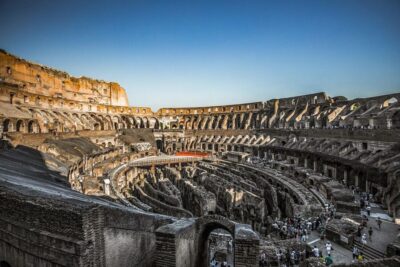
Colosseum: Underground and Ancient Rome Tour
Read the review →
Capuchin Crypts and Catacombs Tour with Transfers
Read the review →
Expert Guided Tour of Colosseum Arena OR Underground, and Forum
Read the review →
The Original Roman Crypts and Catacombs Tour with Transfers
Read the review →
Colosseum Underground Small Group Guided Tour
Read the review →
St. Peter’s Basilica, Dome Climb, and Underground Tour
Read the review →
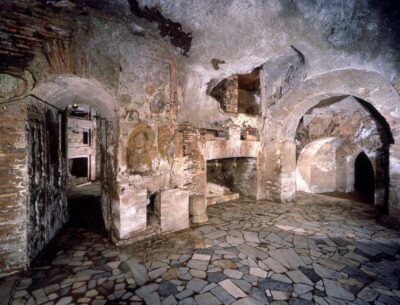
Catacombs of St. Callixtus Entry Ticket & Guided Tour
Read the review →Browse the lists this tour appears in