
Review · ROME CAVE TOURS
Rome: Tour of St. Clement’s Basilica Underground Temples
Fourteen meters below Rome’s Basilica of San Clemente, a stairway leads through centuries of belief. You move from a 12th-century church to an early Christian basilica, then lower still to a Roman house, a Mithraic temple, and the sound of water running underground. I like the layered archaeology and the way a good guide makes each level understandable. The main drawback is that the underground rooms are tight, dark, and unsuitable for wheelchair users or anyone uneasy in enclosed spaces.
I also like the small-scale feel. This is not a grand parade through Rome’s busiest monuments. It is a focused, one-hour history lesson where guides such as Francesca, Lorenzo, Paul, and Tom have been praised for clear explanations, humor, and strong command of the site. If you add Santo Stefano Rotondo, you get another 45 minutes of early Christian art, though the graphic martyrdom scenes are not right for every child.
Key points to know before booking
- Fourteen meters below modern Rome: San Clemente takes you through several building levels, ending at a well-preserved Mithraic temple and underground stream.
- The guide matters here: Much of the meaning is easy to miss without help, and guides including Paul, Francesca, Lorenzo, and Anestis have received especially strong praise for their teaching.
- A beautiful contrast of faiths: You see Christian frescoes and symbolism above a sanctuary devoted to the Roman god Mithras.
- Optional Santo Stefano extension: Add a 45-minute walk and guided visit to a circular church filled with stark scenes of martyrdom.
- Expect strict church rules: Wear comfortable shoes, and do not bring food or drinks inside. Photography and video recording are not allowed indoors.
- Not suitable for everyone: The lower rooms are not wheelchair accessible and may feel claustrophobic.
Why San Clemente is one of Rome’s best archaeological visits
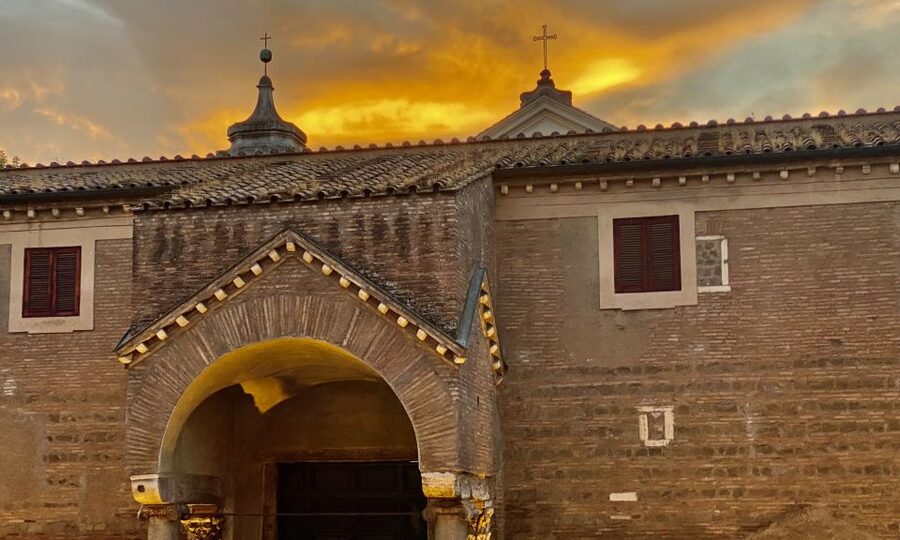
Many Roman monuments show you one moment in time. San Clemente shows you Rome building over itself, century after century. The current basilica dates to the 12th century, but its foundations reach down into earlier Christian and Roman buildings.
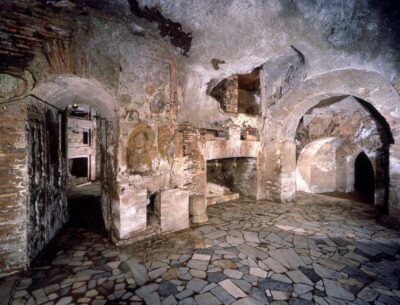
That physical descent gives the tour its shape. You do not simply hear that Rome changed from pagan to Christian. You walk through spaces that help you picture that change. A church was built above an earlier church, which stood above older Roman structures. At the lowest level, the remains of a Mithraic sanctuary offer a glimpse of a religious world that existed before Christianity became dominant.
I find this easier to grasp than a museum display filled with detached objects. The walls, rooms, passageways, and water channel remain tied to their original setting. Your guide supplies the missing pieces, explaining what each space was used for and why later builders chose to construct above it.
The tour is advertised as lasting about one hour at San Clemente. With the optional Santo Stefano Rotondo visit, the experience runs closer to two hours, including the 15-minute walk between the churches. That is a useful distinction when you are planning a busy day around the Colosseum, Roman Forum, or Lateran area.
More Cave Tours in Rome:
- Colosseum: Underground and Ancient Rome Tour
★ 4.7 · 12,691 reviews - Rome: Capuchin Crypts and Catacombs Tour with Transfers
★ 4.6 · 6,456 reviews - Expert Guided Tour of Colosseum Arena OR Underground, and Forum
★ 4.5 · 5,041 reviews
Beginning inside the 12th-century basilica
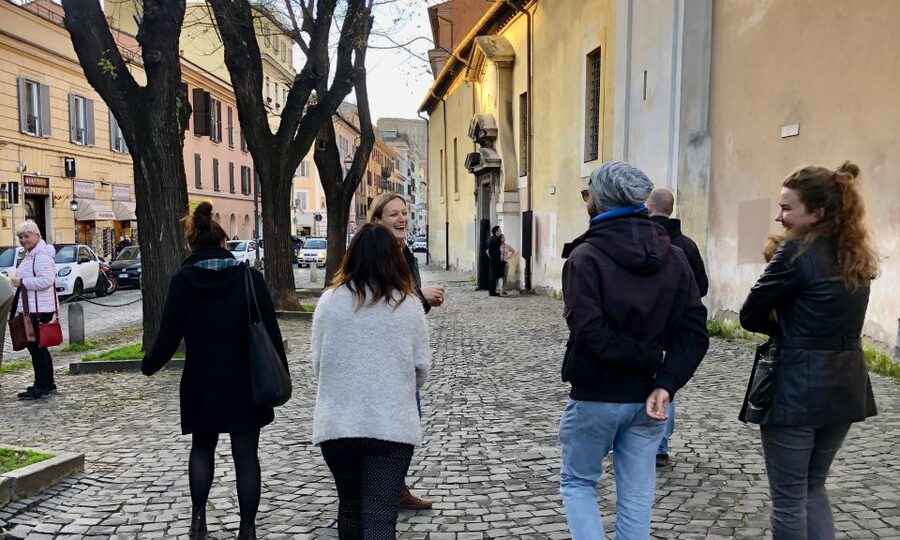
The visit starts at Piazza di San Clemente, beside the basilica. Meeting details can vary according to the option you book, so check your confirmation carefully before setting out. The church is near some of Rome’s major ancient sites, making it practical to pair with a day in the Colosseum area, though you should allow enough time to arrive without rushing.
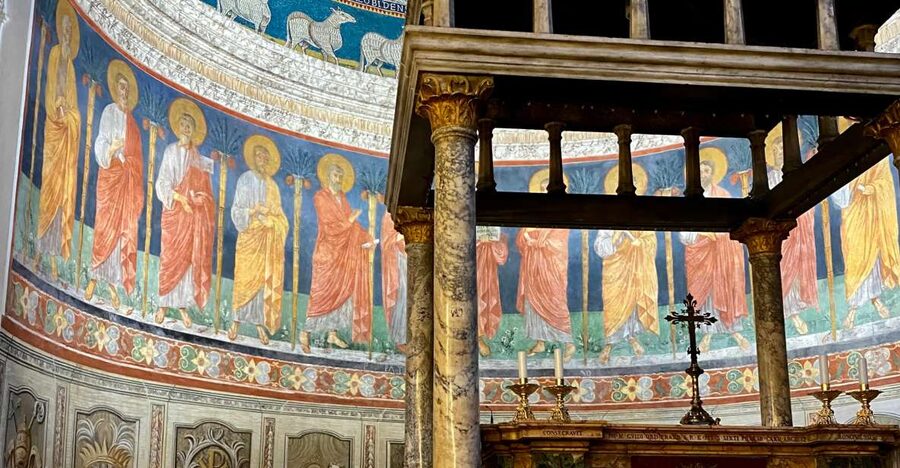
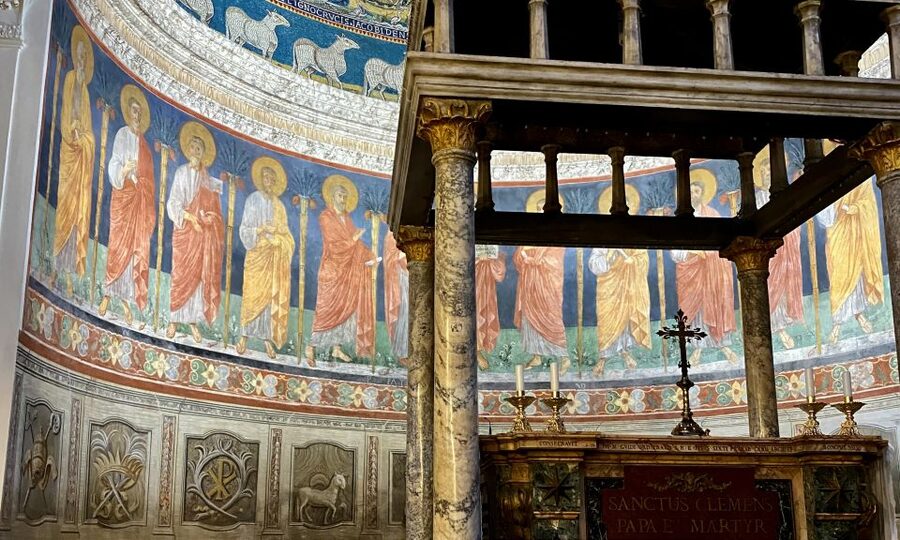
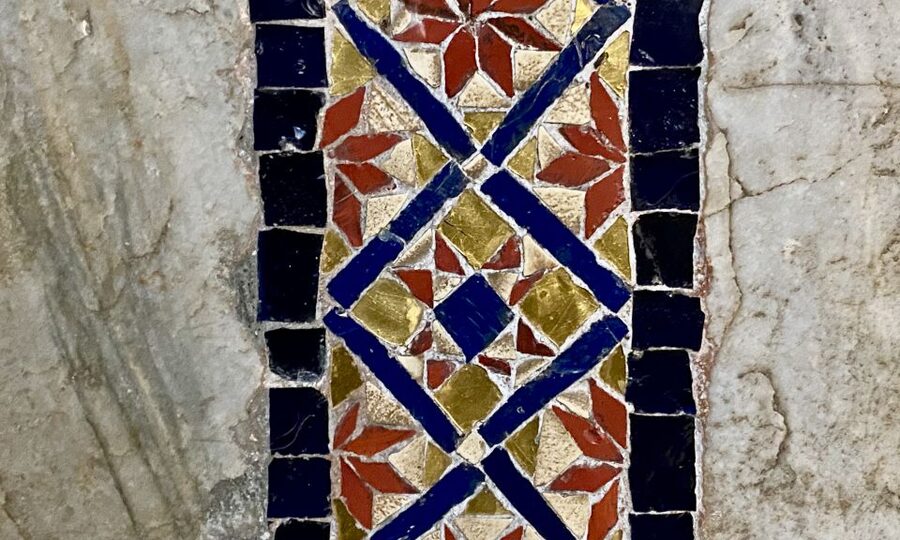
Before heading underground, your guide introduces the upper basilica. The highlight here is the apse mosaic, with its gold background and dense Christian symbolism. Look for the visual connections between the cross, vines, saints, and the wider idea of salvation. This is not just a decorative ceiling. It gives you the religious framework for the levels below.
The upper church is also a useful reminder that San Clemente is an active place of worship, not only an archaeological attraction. That means access can sometimes be affected by liturgical events or special closures. If part of the church is unavailable, the guide may adjust the route and explain other areas instead. The overall tour time remains the same.
The mood changes as you leave the bright upper church. Stairs lead down into darker, cooler spaces. Comfortable shoes are essential, both for the steps and for standing on uneven historic floors.
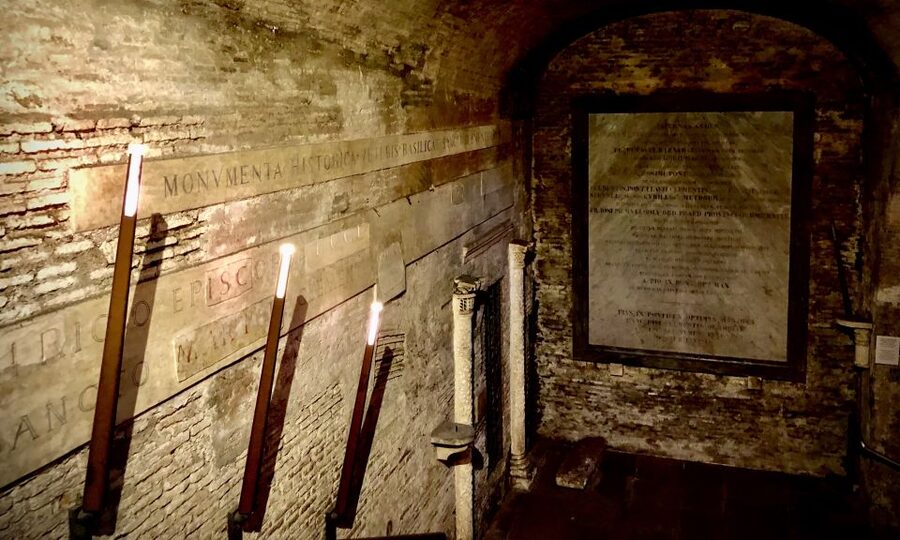
The 4th-century church beneath the basilica
The next level takes you to a 4th-century Christian basilica. It was built over the home associated with St. Clement, traditionally regarded as the third pope of Rome. Here, the tour shifts from medieval decoration to the early centuries of Christian worship.
The surviving frescoes are among the most valuable parts of the visit. They show early Christian stories, including the suffering and deaths of martyrs during periods of persecution. Their colors and details have survived for centuries, though the underground setting and age of the paintings make them delicate.
This is where a live guide earns the admission price. A casual walk through the rooms might leave you admiring faded paintings without understanding who is shown, what the scenes mean, or why these images mattered to early Christians. Guides explain the figures, the stories, and the pressure faced by a minority faith in ancient Rome.
Several guides have made a particularly strong impression on past visitors. Paul has been described as an archaeologist and professor in Rome, while Lorenzo has been praised for clear English, humor, and his willingness to answer questions. Francesca has also been singled out for enthusiasm and an easy manner. Your guide may be someone else, but the experience depends heavily on receiving a good explanation rather than simply walking through empty rooms.
The lower basilica is also a good place to slow down. The tour is only about an hour, and there is plenty to absorb. Listen for how the building changed over time, how the early Christians used the space, and how later construction buried and preserved what came before.
Reaching the Mithraic temple and underground river
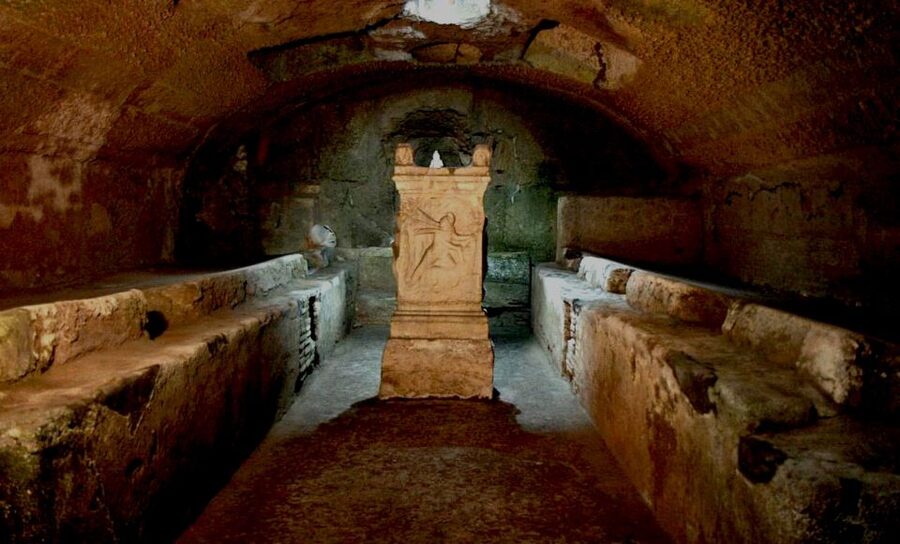
The final descent leads to one of the most memorable parts of the tour: a Mithraic temple. Mithraism was a Roman mystery cult associated with the god Mithras. Its ceremonies were private, and the surviving evidence gives only an incomplete picture of how worshippers practiced their faith.
You do not need prior knowledge of Roman religion to enjoy this section. Your guide explains the basic beliefs, the role of ritual, and the contrast between this hidden pagan sanctuary and the Christian church built above it. The point is not to present the two faiths as simple opposites. Instead, you get a sense of the many religious traditions that existed in Rome before Christianity took a central public role.
The temple is compact and atmospheric. The enclosed setting helps you understand why the space feels separate from the city above. At the same time, it can be uncomfortable if you dislike narrow underground rooms. There is no need to pretend otherwise: claustrophobia is a genuine concern here.
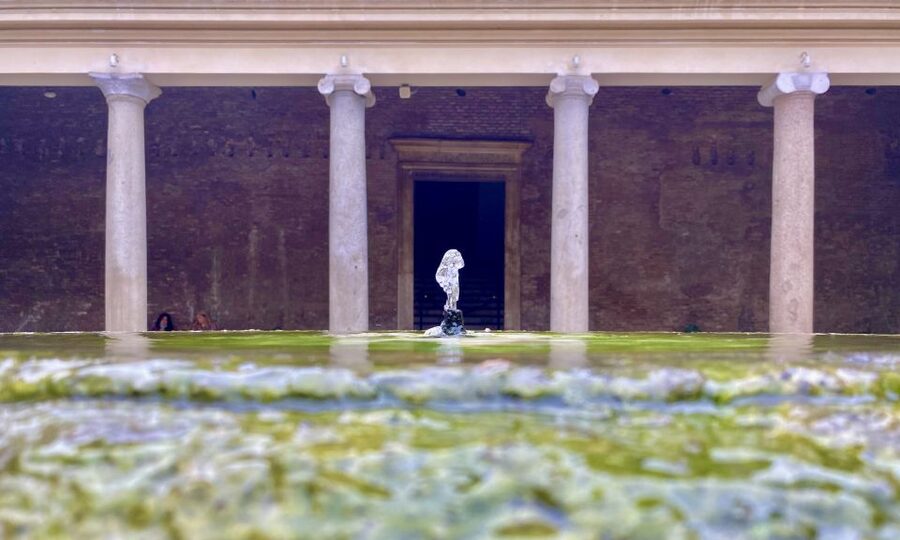
Nearby, water from an underground river adds another layer of atmosphere. You can hear or see the water moving through the lower level, depending on the exact area open during your visit. It is a striking reminder that ancient buildings were shaped not only by religious choices, but also by Rome’s underlying water systems and changing ground levels.
This part of the visit rewards curiosity more than speed. Ask questions if your guide invites them. The Mithraic material is less familiar than the Colosseum or the Vatican, and the explanation can turn a small stone room into one of the most memorable places on your Roman itinerary.
Same stretch of coast and karst, a different entrance:
- The Original Roman Crypts and Catacombs Tour with Transfers
★ 4.5 · 4,896 reviews - Rome: Colosseum Underground Small Group Guided Tour
★ 4.7 · 4,844 reviews - Rome: St. Peter’s Basilica, Dome Climb, and Underground Tour
★ 4.8 · 3,404 reviews - Rome: Colosseum Underground, Arena & Forum Tour
★ 4.7 · 3,272 reviews
Adding Santo Stefano Rotondo for another 45 minutes
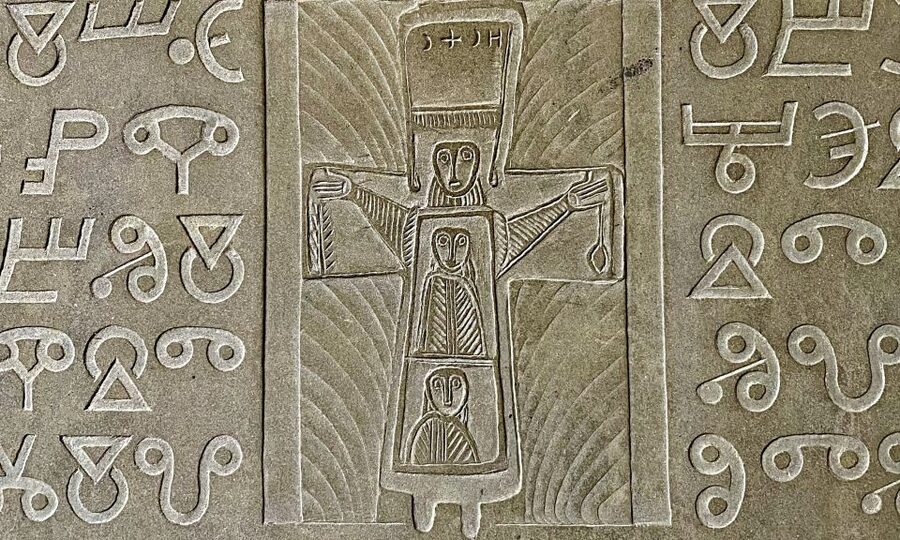
The optional extension continues on foot to Santo Stefano Rotondo. The walk takes about 15 minutes, and the visit adds roughly 45 minutes. Depending on the day’s schedule, you may begin at Santo Stefano and finish at San Clemente, or do the sites in the more natural order from San Clemente to Santo Stefano.
Santo Stefano Rotondo is known for its circular design, which immediately feels different from the long central space of San Clemente. The architecture gives the church a strong sense of enclosure, while the walls carry dramatic scenes of Christian martyrdom.
The paintings are powerful but graphic. They show violent deaths and severe suffering, so I would think twice before bringing young children. For adults interested in early Christian art, the scenes offer a direct look at how martyr stories were presented to worshippers. They are not gentle decoration. They are meant to confront you with sacrifice, courage, and religious conviction.
The extension is worthwhile if you want a fuller picture of early Christian Rome and have the time. It also makes the tour feel less like a single underground attraction and more like a connected walk through the city’s religious past. If your main interest is the Mithraic temple, the one-hour San Clemente visit may be enough.
The Santo Stefano option can occasionally be unavailable because of special events or liturgical celebrations. Confirm that it is offered when you book, especially if it is the main reason you are choosing the longer version.
What the $70 price includes
At about $70 per person, this is not Rome’s cheapest church visit. The value comes from the guide and the access to a site that is difficult to understand on your own. Entrance to San Clemente and the live guided explanation are included, along with headsets so you can hear clearly.
That last detail matters in an underground setting. Stone rooms can swallow voices, and headsets let you stay with the explanation without crowding around the guide. The private group option may also suit families or friends who prefer to ask questions freely, though the exact group setup depends on the booking choice.
The Santo Stefano visit is included only when you select that extension. Do not assume the base price covers it. Food, drinks, transport, and hotel pickup are not included, so you make your own way to the meeting point and between the two churches.
I consider the price fair for visitors who care about archaeology, early Christianity, or Roman religion. It is less compelling if you only want to see a beautiful church quickly. San Clemente’s main value lies in the explanation of connections between the levels. Without that, you see old walls. With it, you understand why the site matters.
Practical advice for a smoother visit
Wear shoes that are comfortable on stairs and uneven floors. The tour includes a descent and ascent through underground spaces, and the optional extension adds a 15-minute walk outdoors.
Dress appropriately for a church. Shorts, short skirts, sleeveless shirts, food, drinks, alcohol, and sharp objects are not allowed. Photography and video recording are also prohibited inside, so plan to pay attention rather than document every room.
Wheelchair users cannot take this tour because of the architectural structure inside and beneath San Clemente. The underground rooms may also be unsuitable for anyone with claustrophobia.
The tour is offered in English, Italian, Spanish, French, German, and Portuguese. Past guides have included Francesca, Lorenzo, Paul, Tom, Anestis, Tara, Sam, Daniel, and Mario, but guide assignment varies. The strongest descriptions of the experience consistently focus on clear teaching, good pacing, humor, and the ability to answer questions.
Allow extra time around the start. The meeting point may vary by booking option, and church access can change because of weather or the liturgical calendar. If the tour is canceled for those reasons, you are offered another date or a full refund. Cancellation is also free up to 24 hours before the scheduled start.
Who will enjoy this tour most
I would recommend San Clemente to you if you enjoy places that reward attention. It suits people interested in archaeology, Roman religion, early Christianity, frescoes, and the way cities change over time.
It is especially useful after you have seen Rome’s major monuments. The Colosseum and Forum give you scale and spectacle. San Clemente gives you a closer look at how ordinary religious spaces, private cults, and changing communities occupied the same ground over many centuries.
The tour also works well for repeat visitors. You do not need another standard walk past the same famous facades. Instead, you get a site with a strong sense of discovery and a clear story.
I would skip it if you dislike enclosed spaces, stairs, or church rules. I would also choose the shorter option if you are already tired or have a tightly packed schedule. The Santo Stefano extension adds worthwhile art, but the lower levels of San Clemente are the heart of the experience.
Should you book the San Clemente underground tour?
Book it if you want Rome’s past presented as a physical journey rather than a list of dates. The Mithraic temple, early Christian frescoes, underground river, and golden apse mosaic create a rare sequence of contrasts. You move from medieval Christianity to early Christian worship and then into the older pagan world beneath it.
The tour is most worthwhile with a guide who explains the evidence and answers questions. If you can manage the stairs and enclosed rooms, $70 is a reasonable price for that context and access. Add Santo Stefano Rotondo if graphic martyrdom art interests you and you have another 45 minutes.
For a first visit to Rome, this is not a replacement for the Colosseum or Vatican Museums. It is a smart addition, especially for a quieter, more intimate look at the city. I would make the booking, then arrive ready to listen, look closely, and leave your camera in your bag.
FAQ
How long does the San Clemente tour last?
The guided visit to Basilica di San Clemente lasts about one hour. Adding Santo Stefano Rotondo adds 45 minutes, with a 15-minute walk between the churches, so the full experience takes about one to two hours.
Is Santo Stefano Rotondo included?
Only the selected extended option includes a guided visit to Santo Stefano Rotondo. The basic San Clemente tour does not include it.
Is the tour wheelchair accessible?
No. The architectural structures inside and beneath San Clemente make the tour unsuitable for wheelchair users.
Is the underground section suitable for people with claustrophobia?
It may not be. The tour enters enclosed underground spaces, including a Mithraic temple and areas near an underground river.
Can I take photographs inside the churches?
No. Photography and video recording are not allowed inside.
What languages are available for the live guide?
Guides are available in English, Italian, Spanish, French, German, and Portuguese.
Just added around Rome
- St. Peter’s Basilica and Vatican Grottoes Tour★ 4.9 · 120 reviews
- St. Peter’s Basilica Full Guided Tour with Vatican Grottoes★ 4.6 · 286 reviews
- Rome: St Peter’s Basilica Express Tour & Grottoes★ 4.3 · 126 reviews
- Rome underground hidden temples, ruins, and secret basilicas★ 3.7 · 21 reviews
- Rome: Underground Trastevere Guided Walking Tour★ 4.8 · 87 reviews
- Rome: Appian Way, Aqueducts, & Catacombs E-Bike Guided Tour★ 4.9 · 54 reviews
- Rome: Trevi Fountain District Underground Tour and Ice Cream★ 4.5 · 356 reviews
- Rome: Trevi Fountain Underground Small Group Tour★ 4.4 · 47 reviews
Rome Cave Tours, compared.
Colosseum: Underground and Ancient Rome Tour
Read the review →
Capuchin Crypts and Catacombs Tour with Transfers
Read the review →
Expert Guided Tour of Colosseum Arena OR Underground, and Forum
Read the review →
The Original Roman Crypts and Catacombs Tour with Transfers
Read the review →
Colosseum Underground Small Group Guided Tour
Read the review →
St. Peter’s Basilica, Dome Climb, and Underground Tour
Read the review →
Catacombs of St. Callixtus Entry Ticket & Guided Tour
Read the review →Browse the lists this tour appears in