
Review · PRIVATE CAVE TOURS
Semi-Private Tour to Jeita Grotto, Harissa & Byblos with Lunch
Jeita Grotto is the star here: a cool, cathedral-like cave filled with huge stalactites, stalagmites, curtains, and underground water. In one day, you also get Harissa’s sweeping bay views and Byblos, a Phoenician port city with thousands of years of history.
I like the smart mix of nature and culture, and I like the small group size. A maximum of 10 people makes hotel pickup, questions, and sightseeing easier than on a large coach. The $55 price also covers lunch, transport, entry to Jeita Grotto, and Byblos Castle.
The main caution is the pace. You cover three major places in roughly eight hours, so Byblos receives a focused visit rather than a slow, unhurried day. The Harissa cable car is also an extra cost, and the lower section of Jeita Grotto may not always be open.
Key points
- Jeita Grotto’s two cave levels: See crystal formations in the upper cave and, when operating, the underground river and lake below.
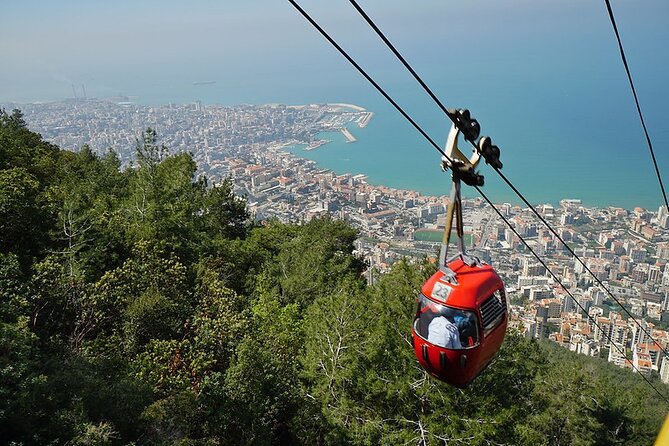
- Harissa by cable car: Ride above the pine-covered slopes to the Our Lady of Lebanon shrine, with wide views over Jounieh Bay.
- Ancient Byblos in one compact visit: Combine the archaeological site, Crusader castle, old souk, and ancient port.
- Small-group transport: A climate-controlled minivan carries no more than 10 people, with hotel pickup and drop-off.
- Lunch included: The meal helps make the $55 price strong value, especially if you want one organized day outside Beirut.
- Friendly guiding: Albert, Fadi, and Hassan are among the guides praised for humor, care, and useful explanations.
Why this Beirut day trip works so well
This tour gives you three very different views of Lebanon without asking you to plan several separate outings. Jeita Grotto brings the natural wonder, Harissa supplies the big coastal panorama, and Byblos connects the present-day country with the Phoenician world.
You leave Beirut at about 8:00 a.m. and travel in an air-conditioned minivan. That matters in Lebanon, where road conditions and traffic can make self-driving tiring, especially when you are trying to fit several stops into one day.
The group is limited to 10 people. You still share the day with others, but the format is much more personal than a full-size bus tour. It also suits solo visitors who want company without joining a huge crowd.
The strongest part of the experience is its variety. You are not spending eight hours looking at one type of sight. Instead, you move from underground rock formations to a religious monument and then to one of the Mediterranean’s oldest urban centers.
More Private Cave Tours in the world:
- Private Half-Day Batu Caves and Cutural Tour in Kuala Lumpur
★ 5.0 · 3,107 reviews - Capri & Blue Grotto Semi Private Boat Day Trip from Sorrento
★ 5.0 · 2,053 reviews - Elephanta Caves & Island Guided Private Tour
★ 5.0 · 1,327 reviews
Inside Jeita Grotto’s cool underground world
Jeita Grotto deserves the longest look of the day. The cave system formed in limestone over millions of years and includes two connected sections. The upper cave reaches about 2,130 meters, while the lower gallery extends for roughly 6,200 meters below it.
Your visit lasts about 90 minutes, with admission included. Expect a dramatic change from the Lebanese sunshine outside to a cool, shadowy interior where the rock formations do the work of architecture.
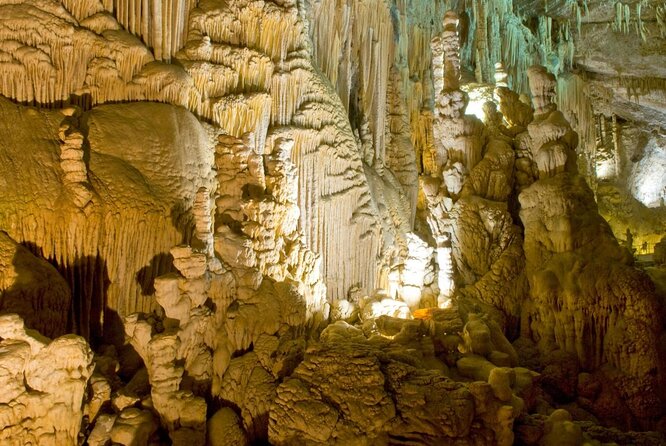
The upper gallery contains stalactites hanging from the ceiling, stalagmites rising from the floor, columns, curtains, draperies, pools, and mushroom-shaped formations. Some formations are delicate and thin, while others are massive enough to feel like carved pillars.
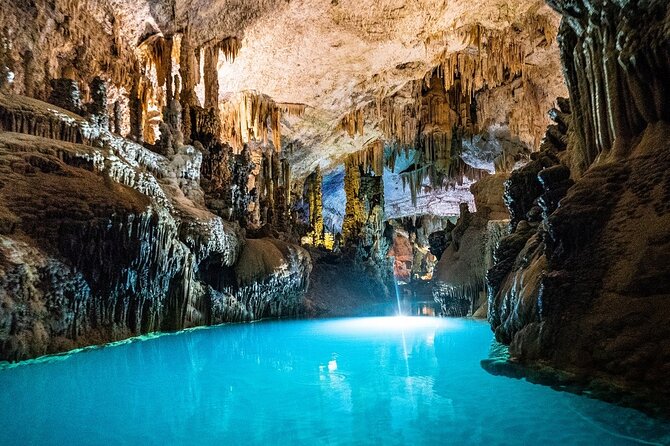
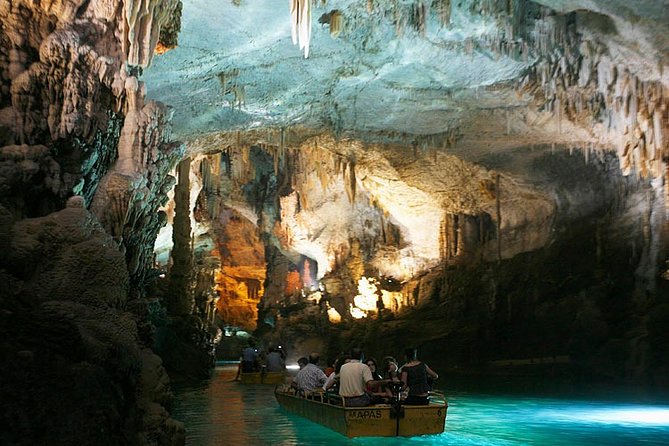
The lower gallery is associated with an underground river and lake. A short boat ride is part of the appeal when this section is operating. That detail matters because conditions can affect exactly how much of Jeita you see. One French-language review specifically noted that the lower caves were unavailable, so do not treat access to both levels as guaranteed.
Even with that limitation, the upper cave is the main reason to choose this excursion. Bring a camera, but remember that cave lighting and restrictions may limit photography in some areas. Comfortable shoes are sensible because you will be walking through a managed cave attraction rather than simply viewing it from one platform.
The stop can feel short if you are fascinated by geology. Still, 90 minutes gives you enough time to appreciate the main formations without letting one attraction consume the whole day. I would pay close attention to the guide’s explanations here, since the shapes can blur together if you rush from one chamber to the next.
Harissa’s statue and the ride above Jounieh Bay
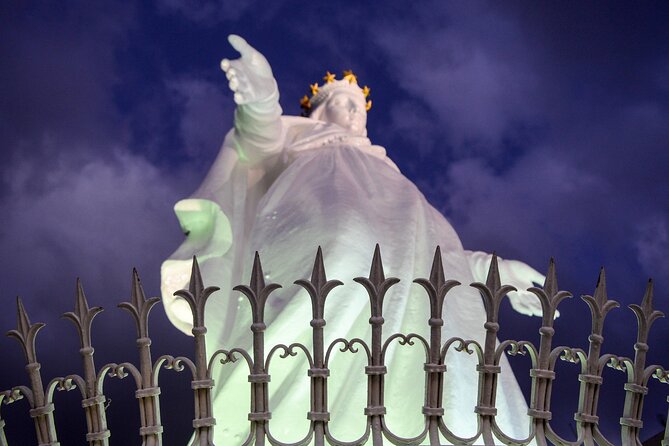
After Jeita, the tour continues to Harissa, a major Christian pilgrimage site above Jounieh. The focal point is Our Lady of Lebanon, a 15-ton bronze statue of the Virgin Mary with outstretched arms facing Beirut and the bay.
The statue is about 8.5 meters high and five meters wide. A small chapel sits inside its base, and a large cathedral of concrete and glass is nearby. Other churches in the area include the Byzantine-style Melkite Greek Catholic Basilica of Saint Paul.
You have about 30 minutes at the shrine, followed by a shorter 15-minute look at the churches. That is enough for the main sight and photographs, but not enough for a detailed religious or architectural study. If you are especially interested in church history, you may wish the schedule allowed more time.
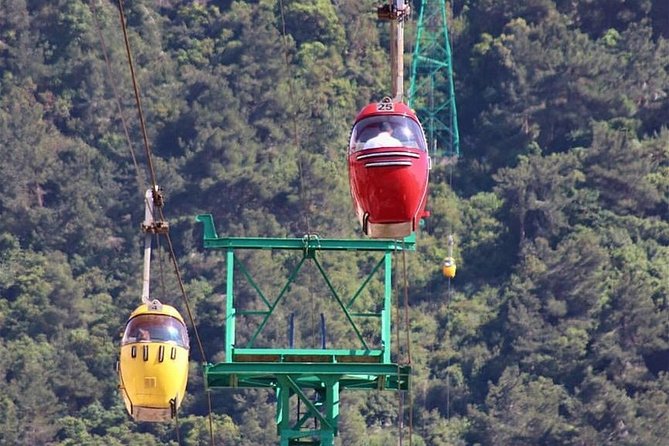
The memorable part for many people is the Téléferique Harissa cable car. The gondola rises above pine-covered slopes to an altitude of about 650 meters, giving you views across Jounieh Bay and the surrounding city. The ride takes around 20 minutes within the planned stop.
The cable car ticket is not included in the tour price. Keep that extra charge in mind when comparing this trip with other excursions. The ride itself is one of the most distinctive parts of the Harissa visit, so I would not treat it as an optional detail unless you are uncomfortable with heights or the service is not operating.
Harissa also adds a useful cultural layer. You are not only stopping at a viewpoint. You are visiting a major Lebanese shrine that remains important to Christian pilgrims, while also seeing how religious buildings and tourism share the same hilltop setting.
Byblos brings seven thousand years into view
Byblos is the most substantial stop after Jeita. The city has been inhabited since Neolithic times and is closely linked with Phoenician trade, the Mediterranean world, and the spread of the Phoenician alphabet.
You have about two hours in Byblos, including roughly an hour at Byblos Castle. That gives you time to see the main archaeological area, walk the old souk, and reach the port, but you should expect a highlights tour rather than an exhaustive archaeological visit.
The archaeological site includes remains connected with the Temple of Baalat Gebal and the Temple of the Obelisks. These ruins help show that Byblos was not simply an old fishing town. It was a major settlement shaped by trade, religion, writing, and contact across the eastern Mediterranean.
Trips with lunch within reach of the world:
- Chichen Itza, Cenote & Valladolid Tour with Tequila and Lunch
★ 4.5 · 15,789 reviews - Cancun: Chichen Itza, Cenote & Valladolid Tour with Lunch
★ 4.6 · 6,722 reviews - Athens: Meteora Monasteries Day Trip with Caves and Lunch
★ 4.7 · 4,670 reviews - ATV Adventure, Interactive Bridges, Ziplines, Cenote and Lunch
★ 4.5 · 3,903 reviews
Climbing Byblos Castle for the best view

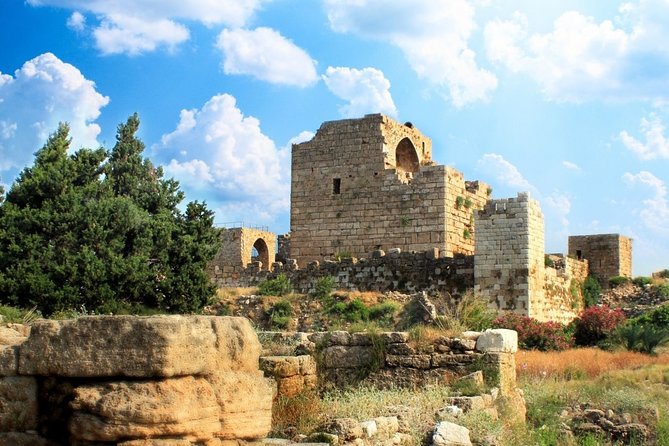
Byblos Castle is a restored 12th-century Crusader fortress surrounded by a dry moat about 10 meters wide. Admission is included, and the square keep gives you a fine view over the archaeological site.
From the top, look down toward the Bronze Age dwellings and across toward the sea. The castle’s elevated position helps you understand how the ancient settlement was arranged, something that is harder to grasp from ground level.
Inside, a small museum and information panels explain the city’s long past. If you have only a short time in Byblos, the castle is an efficient place to gather context because it combines architecture, views, and historical information in one stop.
The trade-off is time. One hour sounds generous, but it passes quickly if you want to study every ruin, read every panel, and linger on the views. A local guide can make this stop much more useful. Guides such as Albert and Fadi are praised for keeping the explanations lively, while one guide in Byblos was described as especially funny and effective.
The old souk and ancient port
The Byblos old souk is a compact area of cobblestone streets, shops, and older stone buildings. You have only about 10 minutes scheduled here, so think of it as a short walk and orientation stop, not a dedicated shopping session.
You may find souvenirs and antiques, but the real value is the change of pace after the archaeological site. The souk lets you see Byblos as a lived-in town rather than only as an ancient monument.
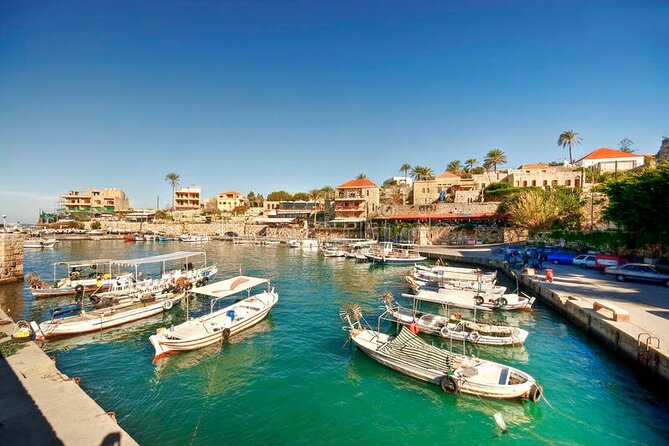
The port receives another 10-minute visit. Lebanese tradition regards it as one of the oldest ports in the world, and it was an important timber-shipping center around 3000 BC. Today, the harbor gives you a pleasant place to connect the ancient city with the Mediterranean setting that made its trade possible.
If you like taking photographs, this is one of the best parts of the day for combining stone lanes, boats, old walls, and the sea. The short timing means you should stay aware of the meeting point and not wander too far.
Lunch, transport, and the real value of $55
At $55 per person, this is a strong-value outing if you want a full day beyond Beirut without arranging transport, entry tickets, and lunch yourself. The price includes hotel pickup and drop-off, an air-conditioned vehicle, a tour leader, a professional guide, lunch, Jeita admission, and Byblos Castle admission.
The Harissa cable car is the main extra expense. You should also remember that the value depends partly on how much you enjoy a structured day. If you prefer choosing your own restaurants and spending half a day at one archaeological site, independent travel may give you more control.
Lunch has received especially warm praise. The meal is described as simple but excellent, and another account places the restaurant near the coast and highlights the variety of food. The exact restaurant and menu are not specified, so treat lunch as a convenient included meal rather than a guaranteed culinary event.
The minivan is another real advantage. Hotel pickup removes the need to find an early meeting point, and the air conditioning matters during a long day of road travel. With a maximum of 10 people, the vehicle should feel more manageable than a large bus, although the trip still involves a fair amount of sitting between sites.
The guides can shape the whole day
The experience appears to depend heavily on the individual guide and driver. Albert is praised for being funny, accommodating, and full of useful information. Fadi is singled out as both an excellent driver and an engaging guide, while Hassan is praised for his service on another departure.
That combination matters in Lebanon. A good driver makes the road time less stressful, and a good guide helps turn ruins and rock formations into places you can understand rather than merely photograph.
You should also know that guide assignments can change. The names above give you an idea of the style associated with the experience, not a promise that one particular person will lead your departure.
The most useful guiding happens in Byblos, where the site covers a long period and includes several layers of settlement. At Jeita, the formations are impressive without much explanation, but context can help you notice how different cave shapes formed.
Who should book this excursion
I would recommend this tour to a first-time visitor who wants a broad introduction to Lebanon outside Beirut. It is especially useful if you have only a few days and want to combine nature, religious culture, coastal views, and ancient history in one outing.
It also suits solo visitors, couples, and small groups who value hotel pickup and a limited group size. The included lunch and entry fees make budgeting easier, and the $55 rate is hard to fault if all major stops operate as planned.
Families with older children may enjoy the contrast between the cave, cable car, and castle. The day is less suitable for anyone who dislikes fixed schedules, has difficulty with extended walking, or wants a slow visit at each site.
You should also consider the cave and cable car conditions before booking. The lower Jeita gallery may be unavailable, and the cable car costs extra. Those are not reasons to reject the tour, but they should be part of your decision.
Should you book the Jeita, Harissa, and Byblos tour?
Book it if you want the best three-stop introduction to the coast north of Beirut and prefer having transport, lunch, and guides arranged for you. Jeita Grotto is the essential stop, while Harissa and Byblos give the day its wider sense of place.
Skip it if you need a flexible schedule or want to spend many hours exploring Byblos alone. For most visitors, though, the small group, included lunch, friendly guide service, and $55 price make this one of the more practical full-day choices from Beirut.
Free cancellation is available when you cancel at least 24 hours before the 8:00 a.m. start time. Cancellations inside that window are not refundable, so check your plans before the deadline.
FAQ
How long is the tour?
The experience lasts approximately eight hours, beginning at about 8:00 a.m.
Is hotel pickup included?
Yes. Hotel pickup and drop-off are included.
How many people can join the tour?
The group has a maximum of 10 participants.
Is lunch included?
Yes. Lunch is included in the tour price.
Is the Harissa cable car included?
No. The Téléferique Harissa ticket is not included and must be paid for separately.
Are Jeita Grotto admission fees included?
Yes. Admission to Jeita Grotto is included.
Can I visit both levels of Jeita Grotto?
The tour information describes both the upper and lower galleries, but access can vary. A previous departure could not visit the lower caves, so both levels are not guaranteed.
Is Byblos Castle included?
Yes. Admission to Byblos Castle is included.
What is the cancellation policy?
You can cancel for a full refund at least 24 hours before the local start time. Cancellations or changes made within 24 hours are not refunded or accepted.
Just added around the world
- Alanya: Sapadere Canyon by Cabrio Bus w/ Cave & Lunch★ 4.8 · 45 reviews
- Alanya: Sapadere Canyon, Dwarfs Cave, and Alanya City Tour★ 4.6 · 192 reviews
- Alanya: Jeep Tour with Dim Cave, Waterfall with Dimcay Lunch★ 4.4 · 49 reviews
- Alanya: Nature Adventure at Dim Cave & Dim River with Lunch★ 4.5 · 66 reviews
- Alanya: Sapadere Canyon Walk & Dim Cave with Dim River Lunch★ 4.2 · 114 reviews
- Alanya: Full-Day City Tour with Sunset Views, Beach, & Caves★ 3.5 · 27 reviews
- Alanya: Half Day Cable Car, Cave, Terraces&Sunset at Castle★ 4.8 · 19 reviews
- Alanya: Ancient Ruins & Hidden Coves of Gazipaşa w/ Cave★ 4.6 · 63 reviews
Private Cave Tours, compared.
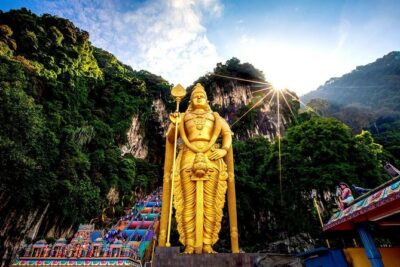
Private Half-Day Batu Caves and Cutural Tour in Kuala Lumpur
Read the review →
Capri & Blue Grotto Semi Private Boat Day Trip from Sorrento
Read the review →

Skip the Line Chichen Itza Private Tour, Sacred Cenote & Lunch
Read the review →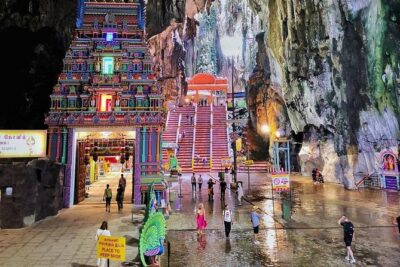
Private Tour Kuala Lumpur with Petronas Twin Towers Observation Deck & Batu Cave
Read the review →
Blue & Green Caves Private Boat Tour with Drinks
Read the review →
4 Private Cenotes, Zip-Lines, Canoes & Mayan Village with Delicious Lunch
Read the review →Bali Quad Bike Pass by Waterfall Gorilla Cave Private Transfer
Read the review →Browse the lists this tour appears in