
Review · PRIVATE CAVE TOURS
New Guided Semi-Private Tour to Jeita Grotto, Harissa & Byblos
Jeita Grotto is the star here: a vast limestone cave system explored by boat, cable car, and mini-train. Then the day moves from mountain views at Harissa to the old port, Crusader castle, and souk of Byblos. It is a lot of Lebanon in one outing, without making you arrange several separate rides.
I like the small maximum group of 15 and the hotel pickup, which takes the edge off Beirut traffic and local planning. I also like the guides’ personal touch. Ali and Harake are repeatedly praised for clear explanations, patience, careful timing, and friendly help. The tradeoff is pace: with three major stops in 8 to 9 hours, Byblos gives you a useful introduction rather than a slow, thorough visit.
Key points to know before booking
- Jeita Grotto comes first: You get about 1 hour and 15 minutes for the cave complex, including its unusual mix of transport and walking.
- Harissa delivers the big view: The Virgin Mary statue looks across Jounieh Bay, with the cable car offering a second angle from the mountain to Jounieh.
- Byblos combines several sights: The port, Crusader castle, archaeological area, and old souk are close enough to visit on foot.
- The $55 price needs checking at booking: Entrance fees and the one-way cable-car ticket may be optional add-ons, as is lunch.
- The guide makes the difference: Ali and Harake are noted for history, culture, directions, photo stops, and keeping the day on time.
- The group stays limited: A maximum of 15 people gives you more room for questions than a large coach tour.
Why this route works for a first day outside Beirut
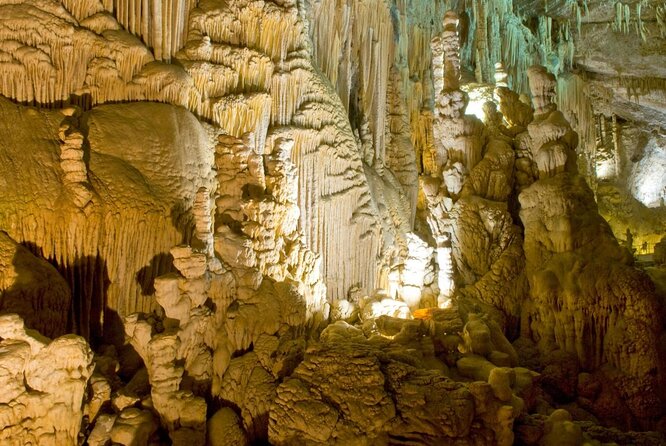
This excursion links three very different parts of Lebanon. Jeita is a natural wonder below ground, Harissa is a mountain viewpoint and religious landmark, and Byblos brings you to one of the country’s oldest continuously inhabited cities.
I like that the route is not just a string of photo stops. Your guide explains each place as you go, and the drive between them gives you a sense of how Beirut gives way to the mountain towns and coast. Several people singled out Ali or Harake for answering questions, stopping for pictures, and keeping the mood easy without pushing shopping stops.
The schedule begins with hotel pickup at about 8:15 to 8:30 in the morning. The published details use both times, so I would confirm the exact pickup with the operator. From Beirut, the vehicle heads toward Jeita in an air-conditioned vehicle. The ride matters here: you avoid arranging taxis for separate legs, and your driver handles the route while you look out at the changing scenery.
The tour usually runs 8 to 9 hours. That makes it a full day, not a quick half-day outing. You should leave Beirut with comfortable shoes, water, and enough patience for a day that includes driving, stairs or uneven surfaces, and several guided walks.
More Private Cave Tours in Lebanon:
- Jeita Grotto,Harissa&Byblos Full-Day PRIVATE-CAR Trip from Beirut
★ 5.0 · 222 reviews - Semi-Private Tour to Jeita Grotto, Harissa & Byblos with Lunch
★ 5.0 · 52 reviews - Private Guided Tour to Jeita Grotto through Harissa and Byblos
★ 5.0 · 48 reviews
Jeita Grotto: Lebanon’s dramatic first stop
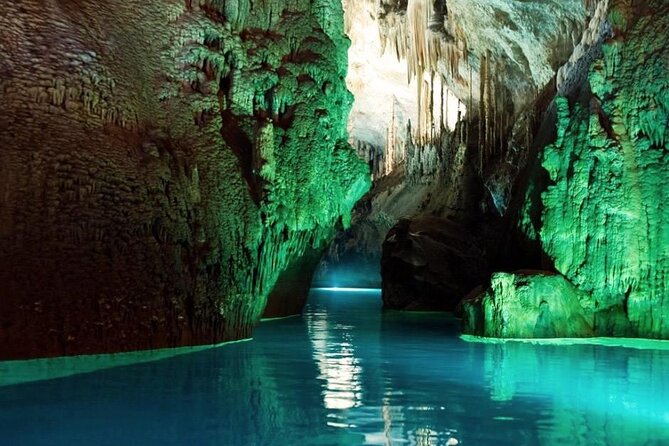
Jeita Grotto is the strongest reason to book this outing. The site is made up of two separate but connected limestone caves, together extending nearly 10 kilometers. You do not cover that whole distance, but the scale helps explain why the visit feels more substantial than a short cave walk.
The experience uses several forms of transport. You take a cable car, ride a boat in the lower cave, and use a mini-train within the site. That mix keeps the visit moving and gives you different views of the formations and underground passages.
You have about 1 hour and 15 minutes here. That is enough for a focused visit, especially with a guide pointing out shapes and features you might otherwise pass without noticing. Harake was specifically praised for giving detailed explanations in the grotto, and that sort of guidance has real value in a cave, where scale and form can be hard to read on your own.
Jeita is also the point where you need to pay attention to the booking option. The base price is listed as $55 per person, while entrance fees are not automatically included in every option. You can choose a package that includes all entrance fees and the one-way cable-car ticket, which is easier if you prefer one clear cost.
The cave may not suit everyone equally. The itinerary does not promise a long, leisurely stay, so you will need to follow the group’s timing. If underground spaces or walking on uneven surfaces are difficult for you, check the practical details before paying. The supplied information says most people can take part, but it does not give a detailed accessibility breakdown.
Harissa and the Virgin Mary statue above Jounieh Bay
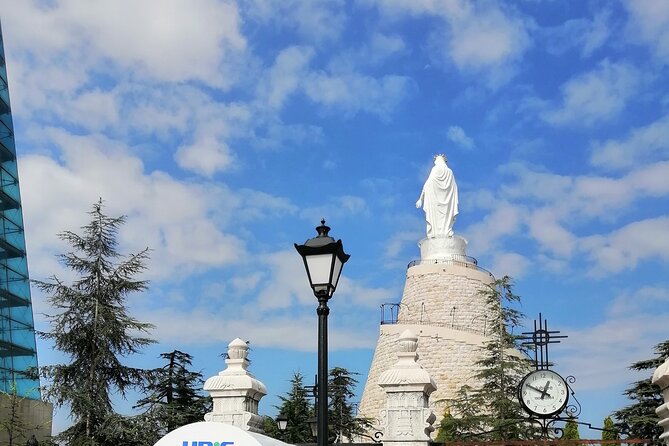
After Jeita, the vehicle climbs toward Harissa. The Shrine of Our Lady of Lebanon is marked by a large Virgin Mary statue, one of the area’s most recognizable sights. Admission to the shrine is listed as free, and the stop lasts about 30 minutes.
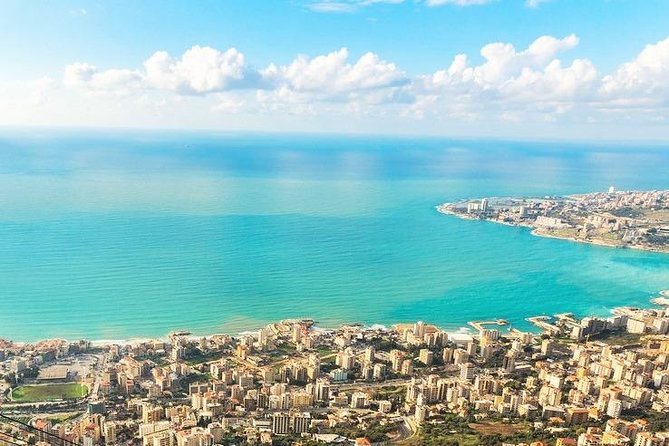
The appeal here is less about a long interior visit and more about the setting. From the mountain, you can look across Jounieh Bay and the coast. The trip’s strongest photographs may come from this section, especially if the air is clear.
Your guide also adds context to what you are seeing. Ali was praised for explaining the history and culture of each site, while Harake was described as helpful and well organized. Those comments point to an important benefit of the trip: you are not left to guess why the statue, shrine, and mountain position matter.
Thirty minutes is enough for the main viewpoint and a quick look around, but not for lingering. I would treat Harissa as a scenic and cultural pause between Jeita and Byblos rather than a full sightseeing visit.
The Téléferique ride from Harissa to Jounieh
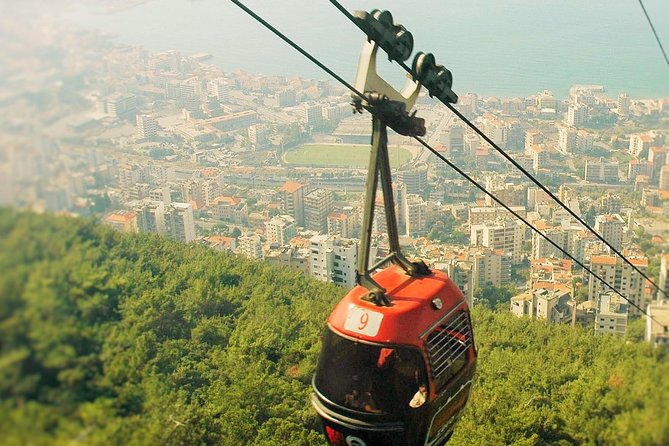
The cable car from Harissa to Jounieh is one of the day’s most enjoyable transitions. Instead of simply returning to the vehicle, you ride above the area and get another look at Jounieh Bay from the air. The ride takes about 20 minutes.
This is a useful detail when comparing tours. A normal road transfer would get you to the next stop, but the Téléferique adds an actual experience without requiring extra time. The cable car ticket may be included in the appropriate booking option, so check exactly what you select.
The ride depends on operation. If the cable car is closed, the vehicle takes you onward instead. That backup keeps the itinerary practical, but it means you should not treat the cable car as guaranteed unless the operator confirms current conditions.
After the ride, your driver meets you in Jounieh and continues to Byblos. The smooth handoff was one reason the trip earned praise for organization and timing. Still, keep your phone and small items secure during the cable-car transfer, and stay aware of the meeting instructions given by your guide.
Guided tours within reach of Lebanon:
- Baalbek Temples & Ksara Caves w/pick-up,guide, entries+lunch
★ 4.9 · 34 reviews - Beirut: Jeita Grotto, Harissa, Byblos group tour & Guide
★ 5.0 · 27 reviews - Naples: Naples Underground Entry Ticket and Guided Tour
★ 4.4 · 21,781 reviews - Naples: Catacombs of San Gennaro Entry Ticket & Guided Tour
★ 4.6 · 7,941 reviews
Byblos Port and the old Phoenician city
Byblos is where the day shifts from scenery to archaeology, architecture, and everyday local life. The city is recognized as a UNESCO World Heritage Site and is described as one of the oldest continuously inhabited cities in the world.
The walking portion begins around the port. You have about 1.5 hours for the Byblos visit as a whole, with time divided among the marina, castle, archaeological remains, and souk. The port gives you an easy starting point. From there, the route moves inland through old walls, stone lanes, and ancient remains.
Do not expect the slow pace of a full Byblos history tour. You are getting an introduction to a compact historic center, with a guide helping you identify the main pieces. That is a good match for a first visit, especially if your Lebanon schedule is short.
The port area is also the place to consider lunch. A traditional Lebanese meal beside the sea can make the middle of the day feel like part of the experience rather than a necessary break. Lunch is an optional booking choice, and the description also refers to a traditional restaurant at the old port. Check your selected package so you know if the meal is included or paid separately.
Byblos Castle and the Crusader remains
The Crusader castle is the most substantial historic structure on the route. It was built in the 12th century from local limestone and reused Roman material. The site sits beside the Phoenician archaeological area, including remains linked to the Temple of Baalat Gebal and the Temple of the Obelisks.
The castle has a complicated past. Saladin captured Byblos and partly dismantled the walls in 1188. Crusaders later took the city again and rebuilt the defenses in 1197. The structure was associated with the Genoese Embriaco family, the Lords of Gibelet, and later faced an attack from ships based at Famagusta.
You get about 45 minutes for the castle stop. That is enough to walk through the main area and take in the position of the fort beside the older ruins. The castle is listed with a separate admission fee, so again, look carefully at the package details. The general tour price does not necessarily cover every entry.
For me, the castle is especially valuable because it gives the Byblos visit a clear physical center. You can see how later powers built on, occupied, and altered an older site. The drawback is that a 45-minute visit leaves little room for a careful archaeological examination or a long climb around every section.
The old souk, small lanes, and a Lebanese lunch
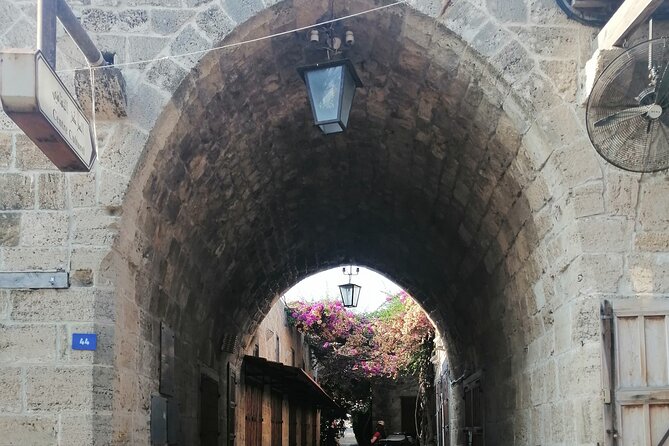
After the castle, you walk into the old souk. This is not a huge market district, but that is part of its charm. You can browse local crafts, antiques, souvenirs, and other goods while walking through narrow lanes lined with old walls, medieval fragments, half-ruins, cafés, and bars.
The souk is a better place for wandering than for a serious shopping mission. Give yourself time to look down side alleys and notice how newer shops fit into older stone buildings. The area is compact, so you can see a lot in 30 minutes, though you may want longer if you enjoy browsing.
The stop also gives the group a less formal break after the castle. You can have a drink, look at crafts, and enjoy the atmosphere before lunch. The tour does not force a long shopping session, which is useful if you prefer history and scenery to retail stops.
Lunch is listed as an optional addition at a traditional restaurant by the sea. Lebanese food is a fitting choice for this route, and one account of the meal describes it as very good. Because the cost depends on the booking option, confirm whether lunch is included in your price or needs to be paid separately.
After lunch, the driver returns you to Beirut and drops you at your location. The timing of the return will depend on traffic and the pace of the group, so do not schedule a tight evening connection immediately afterward.
What the $55 price really gets you
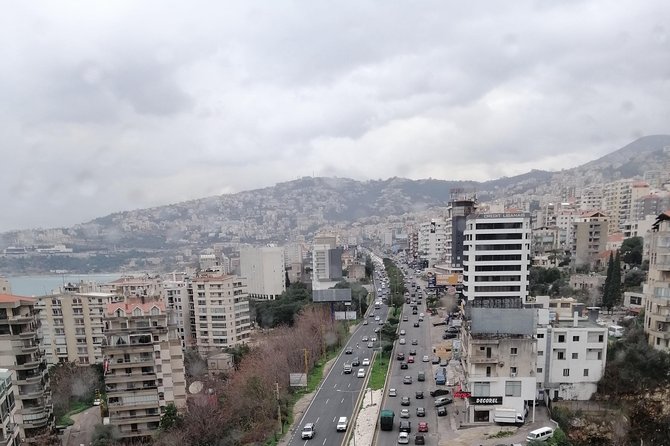
At $55 per person, this is a strong value if you want several major sights in one day and would otherwise pay for separate transport. The price includes hotel pickup and drop-off, an air-conditioned vehicle, an English-speaking local group leader, and explanations at the sites.
The key question is what you add to the base fare. The booking options may include all entrance fees and the one-way cable-car ticket, while the standard details list Jeita admission, the Téléferique, and Byblos Castle admission as not included. Lunch is also optional.
I would compare the final checkout price, not just the headline amount. Paying a little more for the entrance package may be worthwhile because it simplifies the day and avoids stopping to arrange several tickets. If you prefer to control your spending, the lower base price lets you decide which extras to add.
The group maximum is 15 people, and one person received the tour even when they were the only booking that day. That suggests useful flexibility, though the stated policy also says the experience requires a minimum number of people and may be canceled if that minimum is not met.
The guide factor: Ali, Harake, and the pace of the day
The guide is central to this experience because the route covers nature, religion, transport, archaeology, and local life in one day. Ali and Harake are the names most often associated with the strongest praise. They are described as friendly, patient, professional, careful with timing, and willing to answer questions.
That matters most at Jeita and Byblos. A cave can become a succession of pretty rock shapes without explanation, while Byblos can feel like scattered stones if you do not know what you are looking at. A guide who explains the site and keeps the group moving helps you get more from limited time.
You should also expect the guide to fill several roles. This person may be your local explainer, driver, timekeeper, meeting-point organizer, and practical contact throughout the day. The reviews describe drivers who stopped for photos and helped with questions, which is useful on a route with several transfers.
Because the maximum group is 15, you should have a better chance to ask questions than on a large bus. It is still a group itinerary, so the guide cannot tailor every stop to one person’s interests.
Who should book this Beirut day trip?
I would choose this tour if you have only one free day outside Beirut and want to see Jeita, Harissa, and Byblos without renting a car or piecing together taxis. It also suits first-time visitors who want a broad introduction before deciding which places deserve a return visit.
It is a good fit for people who value convenience, guided context, and varied scenery. You get a cave, mountain views, a cable-car ride, a historic port, a castle, a market, and Lebanese food in one long day.
I would think twice if you prefer slow travel. The schedule gives you set blocks of time, and Byblos in particular could reward a longer visit. You may also prefer another plan if you want every entrance fee and meal included without checking options carefully.
Book at least 24 hours before the start if you want the full cancellation protection. You can cancel for a full refund up to that point, but changes or cancellations inside 24 hours are not refunded. The activity is confirmed at booking, and the provider offers free cancellation under those terms.
Should you book it?
Book this tour if you want an efficient first look at Lebanon’s coast and mountains, with transport and guiding handled for you. Jeita Grotto, the Harissa cable car, and Byblos Castle give the day enough variety to justify the long outing, and the $55 starting price is attractive once you understand which extras are included.
Before booking, select the entrance-fee option if you want fewer decisions during the day, and confirm the lunch arrangement. If you want a relaxed, detailed Byblos visit, go independently or plan a longer stay. For a well-organized overview from Beirut, with guides such as Ali or Harake helping you make sense of the route, this is a sensible choice.
FAQ
How long does the tour last?
The tour lasts approximately 8 to 9 hours, including the visits and the return drive to Beirut.
What time does the tour start?
The stated start time is 8:30 am, while the pickup details refer to approximately 8:15 am. Confirm your exact hotel pickup time with Lebanon Local Tour.
Is hotel pickup included?
Yes. Hotel pickup and drop-off in Beirut are included.
What transport is used during the tour?
You travel between sites in an air-conditioned vehicle. At Jeita Grotto, the visit includes a cable car, a boat in the caves, and a mini-train. At Harissa, you can take the Téléferique to Jounieh if it is operating.
Are entrance fees included?
Entrance fees depend on the booking option. You can select an option that includes all entrance fees and the one-way cable-car ticket. The listed details otherwise show fees for Jeita Grotto, the Téléferique, and Byblos Castle as not included.
Is lunch included?
Lunch is optional. You can choose an add-on at a traditional restaurant beside the sea in Byblos, so check your selected booking option.
How many people can join the tour?
The activity has a maximum of 15 people.
Is the tour offered with an English-speaking guide?
Yes. An experienced English-speaking local group leader is included.
Can I cancel for a full refund?
Yes, if you cancel at least 24 hours before the experience begins. Cancellations or changes made less than 24 hours before the start time are not refunded.
Just added around Lebanon
- Full-Day Private Tour to Jeita Grotto, Harissa and Byblos★ 5.0 · 20 reviews
- Jeita Grotto, Byblos and Harissa Full-Day Tour from Beirut★ 5.0 · 23 reviews
- Private Guided Tour to Jeita Grotto through Harissa and Byblos★ 5.0 · 48 reviews
- Jeita Grotto – Harissa – Byblos Tour (All Inclusive)★ 4.5 · 27 reviews
- Small Group Tour to Jeita Grotto, Harisa & Byblos with Hotel pickup★ 5.0 · 49 reviews
- Lebanon: Beirut, Jeita Grotto, Byblos Private Tour and Lunch★ 4.7 · 16 reviews
- Baalbek Temples & Ksara Caves w/pick-up,guide, entries+lunch★ 4.9 · 34 reviews
- From Beirut: Jeita Grotto, Harissa & Byblos Private Day Tour★ 5.0 · 29 reviews
Private Cave Tours, compared.
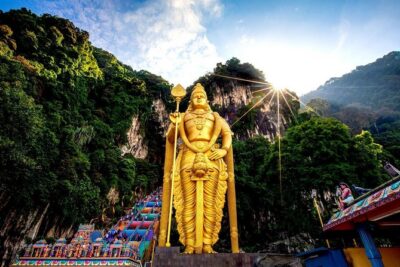
Private Half-Day Batu Caves and Cutural Tour in Kuala Lumpur
Read the review →
Capri & Blue Grotto Semi Private Boat Day Trip from Sorrento
Read the review →

Skip the Line Chichen Itza Private Tour, Sacred Cenote & Lunch
Read the review →
Private Tour Kuala Lumpur with Petronas Twin Towers Observation Deck & Batu Cave
Read the review →
Blue & Green Caves Private Boat Tour with Drinks
Read the review →
4 Private Cenotes, Zip-Lines, Canoes & Mayan Village with Delicious Lunch
Read the review →Bali Quad Bike Pass by Waterfall Gorilla Cave Private Transfer
Read the review →Browse the lists this tour appears in