

Review · TICKETS
Commander Cave All-Inclusive Admission Ticket
The most striking part of Commander Cave is the way it connects a quiet forest path with the hard work of wartime logistics. You move from a VR360 truck ride to construction equipment, ammunition displays, and a seven-storey cave base once used for storage, meetings, and shelter. I like the mix of real objects and recreated scenes, especially the route that leads through the trees toward the exhibitions.
I also like the low price, about $9.86 per person, and the friendly staff. The site has parking, a restaurant with reasonably priced food, and a setting that makes the visit feel more than a museum stop. The main drawback is that some displays may need more written explanation, so visitors who want a detailed military history lesson may find the information a little thin.
Key points to know before you go
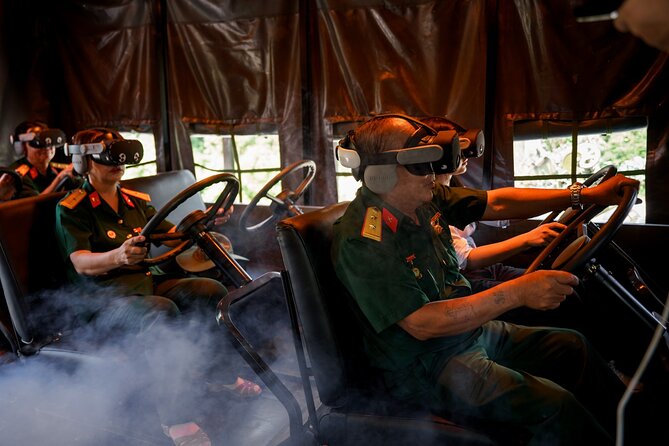
- VR360 on a wartime ZIL truck: The opening presentation places you in a virtual truck journey connected with the war years.
- A forest path recreating Route K: The walk between exhibits gives the visit a physical sense of distance and effort.
- Three main exhibition areas: See road-building tools, logistics supplies, weapons, food, bomb remnants, and ammunition.
- Seven storeys inside Commander Cave: The cave recreates storage rooms, meeting spaces, shelters, and a military depot.
- Good value at $9.86: The ticket combines several displays, the VR experience, and access to the cave complex.
- Allow extra time for the full route: The advertised timing varies from about 1 to 1.5 hours to a stated 180-minute program.
Why Commander Cave matters in Phong Nha
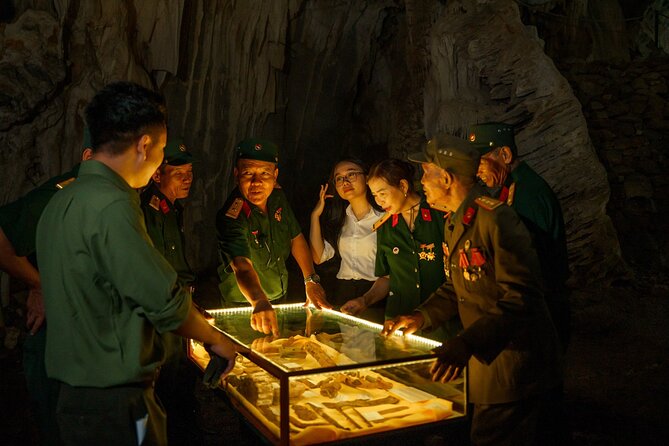
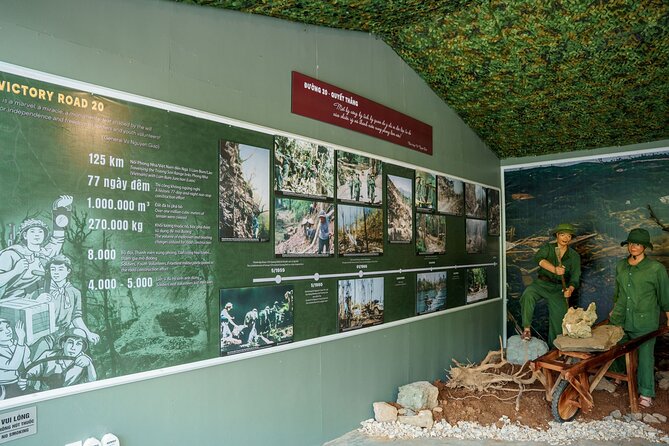
Commander Cave sits on Victory Road 20 in Tân Trạch, within the wider Phong Nha area of central Vietnam. Victory Road 20 was part of the wartime network linked with the Ho Chi Minh Trail, and its purpose was practical rather than ceremonial. Roads, storage sites, shelters, supply depots, and repair areas kept men and materials moving through difficult country.
That context helps explain why the visit focuses so much on tools, vehicles, food, weapons, and ammunition. This is not simply a cave visit. It is an account of the work required to build and maintain a supply route under attack.
I find that useful because war museums can sometimes focus only on famous battles and commanders. Commander Cave gives more attention to the labor behind the front line. Road construction crews, drivers, warehouse workers, and medical teams all appear in the story through the objects and recreated rooms.
The surrounding forest also matters. You are not looking at the site from a city gallery. You walk through an outdoor setting that helps you picture the challenges of moving supplies and building roads in remote terrain.
Entry tickets within reach of Vietnam:
- Naples: Naples Underground Entry Ticket and Guided Tour
★ 4.4 · 21,781 reviews - Naples: Catacombs of San Gennaro Entry Ticket & Guided Tour
★ 4.6 · 7,941 reviews - Porto Cristo: Caves of Hams Entry Ticket
★ 4.2 · 6,548 reviews
Starting with the VR360 truck ride
Your visit begins at the waiting area, where you buy or redeem your ticket and pass through the turnstiles. The first major presentation uses VR360 technology on ZIL trucks to recreate a wartime journey.
This is a smart way to begin. Before you see the tools and cave rooms, you receive a sensory introduction to the movement of people and supplies. The virtual ride aims to show what it felt like to travel along a war route rather than simply read about it on a sign.
The technology is one of the most praised parts of the experience. It is described as a 9D or VR presentation, and the supplied information consistently identifies the truck ride as a central feature. You should expect an audiovisual attraction rather than a conventional guided talk.
I like the idea, though you should keep your expectations in check. VR can create a strong emotional response, but it cannot replace a full historical explanation. It works best as a short introduction to the site and as a way to help younger visitors connect with the subject.
The presentation also gives the experience a modern edge. The rest of the visit is built around forest paths, machinery, and cave spaces, while the VR section uses current technology to bring the past closer. That contrast is part of the appeal.
Walking Route K to the road-building tools
After the VR presentation, you follow a forest path designed to recreate Route K. The route leads to the Victory Road 20 Construction Tools Exhibition.
This section focuses on the equipment used to build and maintain the road. You can see tools and vehicles connected with the construction effort, which gives physical form to a part of the story that is easy to overlook.
A road through wartime terrain required much more than a plan on a map. Workers needed tools, transport, repair equipment, and a way to keep the route usable after damage. Seeing the machinery helps you understand the scale of that job.
The forest walk is also important for pacing. The experience does not place every object in one indoor room. You move through the site, then pause at a display, then continue toward the next section. That makes the visit feel more like a small historical route than a standard museum circuit.
Wear practical shoes. The walk is described as easy enough for most people, but this is still an outdoor site with a forest path. If you are visiting during hot or wet weather, the conditions may affect how comfortable the route feels.
Logistics goods, weapons, and food for the southern battlefield
The next section is the Strategic Logistics Goods Exhibition. Here you see simulated supplies, weapons, and food intended for the southern battlefield.
This part explains the supply chain in straightforward terms. Armies need ammunition, but they also need food and everyday materials. The display helps connect the military story with the routine work of storing, carrying, and distributing goods.
I find this section particularly useful for families and for anyone who knows little about the Ho Chi Minh Trail. You do not need a detailed military background to understand the basic point. A route is only effective if goods can move along it and remain protected.
The displays are presented as reconstructions and simulations rather than a complete archive of original objects. That may disappoint anyone hoping for a large collection of rare artifacts. Still, the choice to show the full supply system makes the visit easier to follow.
Information levels may vary across the exhibitions. One clear criticism of the experience is that some areas could provide more explanation. If you want a detailed chronology, bring your own background knowledge or read about Victory Road 20 before arriving.
More Cave Tours in Vietnam:
- Ninh Binh Full-Day Tour from Hanoi to Hoa Lu, Tam Coc & Mua Cave Via Boat & Bike
★ 5.0 · 4,384 reviews - Hanoi: Ninh Binh, Bai Dinh/Hoa Lu, Trang An, & Mua Cave Tour
★ 4.7 · 4,279 reviews - Hanoi/Ninh Binh: 1-Day Tam Coc/Trang An, Hoa Lu & Mua Caves
★ 4.6 · 3,706 reviews - Cozy Bay Halong 5-Star Day Cruise, Buffet, Cave, Kayak, Swimming
★ 5.0 · 3,512 reviews
The Bomb and Ammunition Exhibition

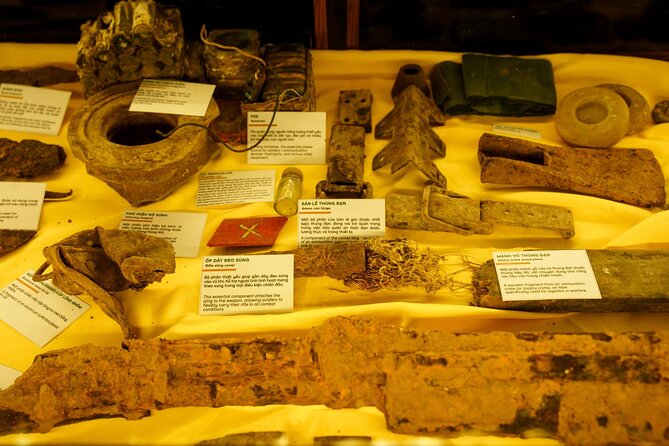
From the logistics display, you continue on foot or use an electric vehicle to reach the Bomb and Ammunition Exhibition. This section shows ordnance used by U.S. forces and includes bomb remnants.
The subject is sobering. The displays make the scale and destructive power of the bombing campaign easier to grasp than photographs alone. A bomb remnant is a blunt object, but that is also its value. It brings the war down to metal, weight, damage, and the danger faced by people working on the route.
The electric transport option may be helpful if you prefer to reduce the walking distance or if the heat makes the route tiring. The supplied information does not specify how often the vehicle runs, so you should not plan your timing around a guaranteed departure.
This area may be the most serious part of the visit. The VR presentation gives you a sense of movement, while the bomb display slows the experience down and focuses attention on the physical cost of the war.
Entering the seven-storey Commander Cave
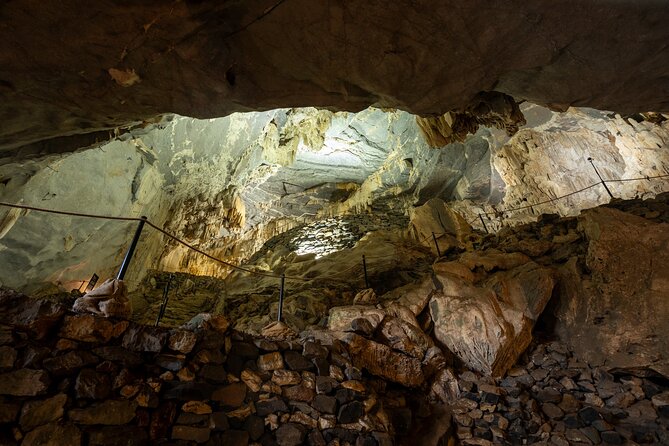
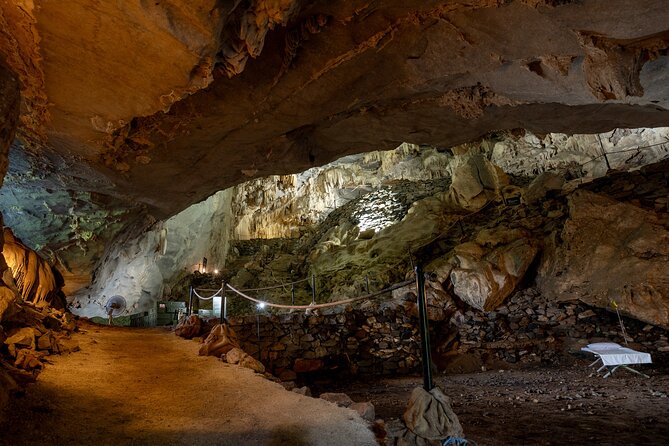
The main destination is Commander Cave, also identified as an NH General Depot. The cave has seven storeys of recreated spaces, including storage areas, meeting rooms, and shelters.
That vertical design is what makes the cave memorable. Instead of seeing one shallow chamber, you get a sense of a larger underground base built for several functions. The cave was not simply a hiding place. It supported logistics, administration, and protection.
The recreated storage areas connect directly with the earlier exhibitions. By the time you reach the cave, you have already seen road tools, supplies, weapons, food, and bombs. The cave gives those objects a setting. You can picture goods being stored, meetings taking place, and people sheltering during attacks.
The meeting rooms add another layer. A depot needs decisions, records, and coordination. These rooms suggest the planning work behind the movement of supplies, even if the displays do not provide every detail a specialist may want.
The cave also offers a change in atmosphere. The forest route is open and bright, while the underground rooms feel enclosed and functional. That contrast helps you understand why a cave could serve as a strategic base.
The seven levels may involve steps and uneven surfaces, but the information provided says most people can participate. If you have mobility concerns, it would be sensible to ask the staff about the route before entering, since the specific access arrangements are not described.
Returning through the forest
After the cave, you return by the same general route. This can sound repetitive, but it gives you time to look again at the forest and the surrounding setting.
I would use the return walk to slow down. The first pass is about following the route and seeing what comes next. On the way back, you can think about how the displays relate to one another: road construction, supply storage, ammunition, and underground protection.
The forest scenery is one of the quieter pleasures of the visit. It keeps Commander Cave from feeling like a collection of unrelated rooms. The natural setting is part of the historical lesson because the route, the cave, and the supply work all depended on moving through this kind of terrain.
The complete program may take longer than the shortest advertised duration. The main information gives an approximate duration of one to one and a half hours, while the experience description also calls it a 180-minute tour. The difference may reflect the pace, transport, waiting time, or time spent at the restaurant and displays. I would allow up to three hours if you want to take your time, but do not assume the core visit always lasts that long.
Is the $9.86 ticket good value?
At about $9.86 per person, this is a fairly inexpensive attraction for the amount of content included. Your ticket covers the site admission and the full sequence of VR, exhibitions, the outdoor route, and Commander Cave.
The value depends on what you want from a historical site. If you want a polished museum with long bilingual panels, original documents, and a detailed timeline, you may find the presentation modest. If you want a manageable introduction to Victory Road 20 with varied formats, the price is easier to justify.
I especially like that the ticket is not limited to a single cave chamber. You get a connected route with several stops, and each one covers a different part of the wartime system.
Food and drinks are available at the site, and the prices are described as reasonable. Fried noodles with beef are one practical meal option. Parking is also described as sufficient, which helps if you are visiting by car or private transport.
The friendly staff add value, particularly because the information in the displays may not answer every question. Staff support can make the route easier to navigate and the experience more comfortable, even though no guide names or fixed guide assignment are provided.
Who should visit Commander Cave?
I would recommend this experience to you if you enjoy military history, Vietnamese history, cultural sites, or unusual stops around Phong Nha. It works well for people who prefer to learn through objects, spaces, and short presentations rather than a long lecture.
Families may also find it approachable. The VR truck ride gives children and teenagers something active to focus on, while the cave and vehicles add a physical element to the history. Adults can then use the exhibitions to discuss the larger story.
The site suits visitors who already plan to explore the Phong Nha area and want to add a historical stop. It may be less suitable if your schedule is extremely tight and you are choosing between several major attractions. One piece of honest advice is simple: if you have only a short time in the region, Commander Cave is interesting but not essential for every itinerary.
History enthusiasts should allow enough time to read, ask questions, and consider the displays. The information can feel limited in places, so the experience rewards curiosity rather than passive sightseeing.
Practical details for planning your visit
Commander Cave is at ĐT20, Tân Trạch, Bố Trạch, Quảng Bình 51700, Vietnam. Opening hours are listed as 7:30 AM to 4:00 PM daily for the stated 2026 operating period.
Arrive early enough to allow time for ticket redemption and the VR presentation. The last admission time is not separately stated, so arriving well before 4:00 PM is the safer choice.
The advertised price is per person. Confirmation is provided at booking, and free cancellation is available if you cancel at least 24 hours before the start time. Cancellations or changes made inside that window are not refunded or accepted.
Most people can take part, but remember that the experience includes an outdoor forest walk and a multi-level cave area. Ask staff about the route if you need specific mobility information, since detailed accessibility facilities are not provided.
Should you book Commander Cave?
Book it if you want a reasonably priced, thoughtful historical stop that combines VR technology with real wartime settings. The strongest parts are the ZIL truck presentation, the forest route, the bomb remnants, and the seven-storey cave depot.
Skip it if your schedule is already packed with Phong Nha highlights or if you need extensive written history and original archival material. The displays may not answer every question, and the program timing is not entirely consistent in the available information.
For most visitors with an interest in Vietnam’s wartime past, I think Commander Cave earns its place as a half-day option. Go for the full route, not just the cave. The road tools, supplies, ammunition, and underground rooms make more sense together, and that connection is what gives the visit its value.
FAQ
Where is Commander Cave located?
Commander Cave is located at ĐT20, Tân Trạch, Bố Trạch, Quảng Bình 51700, Vietnam, in central Vietnam.
What are the opening hours?
The listed opening hours are 7:30 AM to 4:00 PM from Monday through Sunday during the stated 2026 operating period.
How much does admission cost?
The admission price is listed as $9.86 per person.
How long does the experience take?
The approximate duration is listed as one to one and a half hours, while the full description also refers to a 180-minute program. Allow extra time if you want to move slowly through every section.
What does the ticket include?
The ticket includes admission to the VR360 presentation, the Victory Road 20 construction tools exhibition, the strategic logistics goods exhibition, the bomb and ammunition exhibition, and Commander Cave.
What is shown in the VR360 presentation?
The VR360 presentation uses ZIL trucks to recreate a wartime journey connected with the resistance war.
What can you see inside Commander Cave?
Commander Cave has seven recreated storeys with storage areas, meeting rooms, shelters, and spaces connected with the NH General Depot.
Is transportation provided between the exhibition areas?
The route includes walking, and an electric vehicle can be used for the section leading to the Bomb and Ammunition Exhibition.
Is the experience suitable for most people?
The available information says most people can participate. The visit includes a forest path and a multi-level cave area.
Can I cancel for a refund?
You can receive a full refund if you cancel at least 24 hours before the experience start time. Cancellations or changes made less than 24 hours in advance are not accepted or refunded.
Just added around Vietnam
- Paradise Cave & Dark Cave All-Inclusive 1-Day★ 5.0 · 221 reviews
- Tour Phong Nha Cave Dragon Boat Half Day★ 5.0 · 21 reviews
- Botanic Garden – Paradise Cave – Zipline – Mudbath at Dark Cave★ 5.0 · 79 reviews
- Abandoned Valley – Dark Cave exit, E Cave, Golden Cave- 2D1N★ 5.0 · 30 reviews
- PHONG NHA CAVE- PARADISE CAVE FULL DAY FROM DONG HOI or PHONG NHA★ 5.0 · 60 reviews
- Elephant Cave and Ma Da Valley | Secrets of Phong Nha | Full Day★ 5.0 · 22 reviews
- Abandoned Valley Adventure – E Cave & Golden Cave – 1D★ 5.0 · 143 reviews
- Pygmy Cave | The magnificent cave in Phong Nha | 2 days 1 night★ 5.0 · 21 reviews
Tickets, compared.
Naples Underground Entry Ticket and Guided Tour
Read the review →
Catacombs of San Gennaro Entry Ticket & Guided Tour
Read the review →
Catacombs of St. Callixtus Entry Ticket & Guided Tour
Read the review →
Postojna Cave & Predjama Castle Tickets and Tour
Read the review →
From Valencia: Caves of San José Guided Excursion and Ticket
Read the review →
Nerja: Caves of Nerja Entry Ticket with Audio Guide
Read the review →
Tour to Chichen Itza-Tickets, food and cenote
Read the review →Browse the lists this tour appears in