
Review · ROME CAVE TOURS
Rome: San Clemente Underground and Basilica Guided Tour
Rome: San Clemente Underground and Basilica Guided Tour
Beneath a modest church near the Colosseum, Rome drops through several layers of itself. You begin with gold mosaics in the 12th-century Basilica of San Clemente, then descend to an earlier church and finally to Roman buildings and a Mithraic temple. It is one of the clearest places in Rome to see how the city was built over its own past.
I like the way this tour turns complicated archaeology into a story you can follow, and I like the small-group setting, which makes it easier to hear the guide and ask questions. The main drawback is physical: you must manage stairs and uneven surfaces, and the underground rooms can become difficult to hear when several groups are nearby.
Key points to know
- Three historical levels: See the present basilica, a 4th-century church, and older Roman structures below.
- A rare Mithraic temple: The lowest route includes an ancient pagan shrine with its altar.
- A guide makes the difference: Luca, Gina, Eddy, Ursus, Anna, and other guides have led especially strong tours.
- A cool, stair-filled visit: Wear good shoes and bring a layer, but leave cameras and large bags behind.
- A quiet alternative near the Colosseum: San Clemente offers serious history without the scale and crowds of Rome’s biggest monuments.
- Good value at $70: The price covers admission and a 90-minute English-language guided visit.
Why San Clemente explains Rome so well
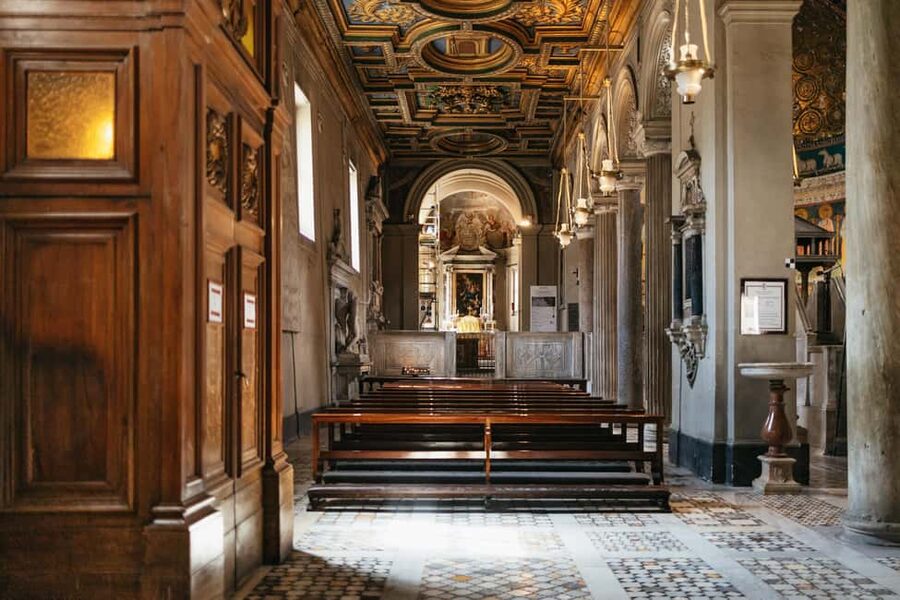
Many Roman sites show you one period at a time. San Clemente lets you move through several at once. The church above you is medieval, the level below belongs to an earlier Christian basilica, and the lowest sections preserve traces of pagan Roman life.
That physical arrangement gives you a useful picture of Rome. The city did not clear away its past and start fresh. New buildings rose above old ones, streets changed level, and earlier rooms disappeared from view. At San Clemente, you can walk down through that process instead of simply hearing about it.
The experience begins at Via di S. Giovanni in Laterano, 126, near the corner by the basilica. The meeting point is outside, not in a tour office, so check the exact location before you set off. The nearest metro stop is Colosseo on Line B. From there, the basilica is close enough to reach on foot, though the surrounding streets can be busy with people heading to the Colosseum.
This is a guided walking tour lasting about 1.5 hours. That is long enough to give the site proper attention without taking up half a day. I would place it before or after a larger ancient-Rome visit, not alongside another demanding museum appointment.
Guided tours within reach of Rome:
- Expert Guided Tour of Colosseum Arena OR Underground, and Forum
★ 4.5 · 5,041 reviews - Rome: Colosseum Underground Small Group Guided Tour
★ 4.7 · 4,844 reviews - Rome: Catacombs of St. Callixtus Entry Ticket & Guided Tour
★ 4.6 · 3,037 reviews
The 12th-century basilica and its glowing mosaics
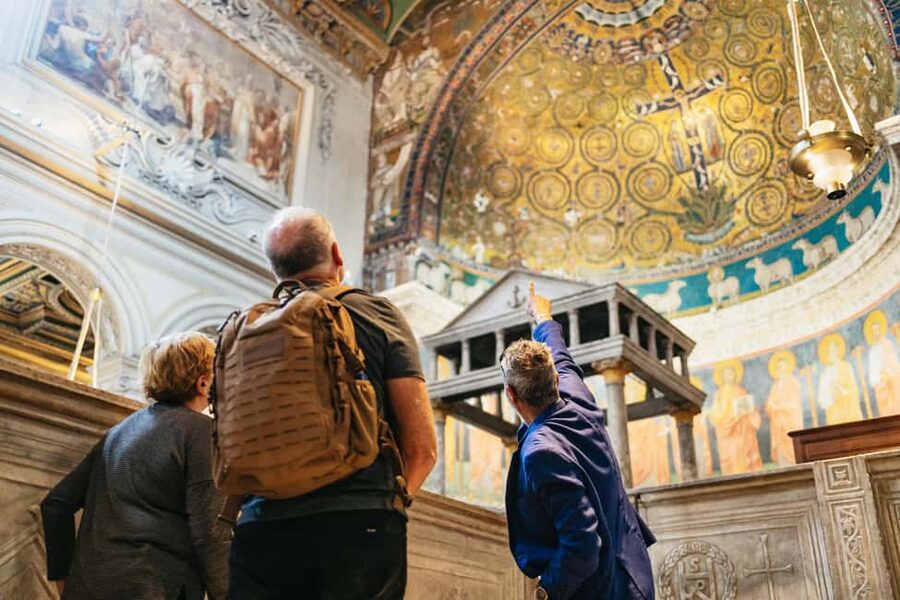
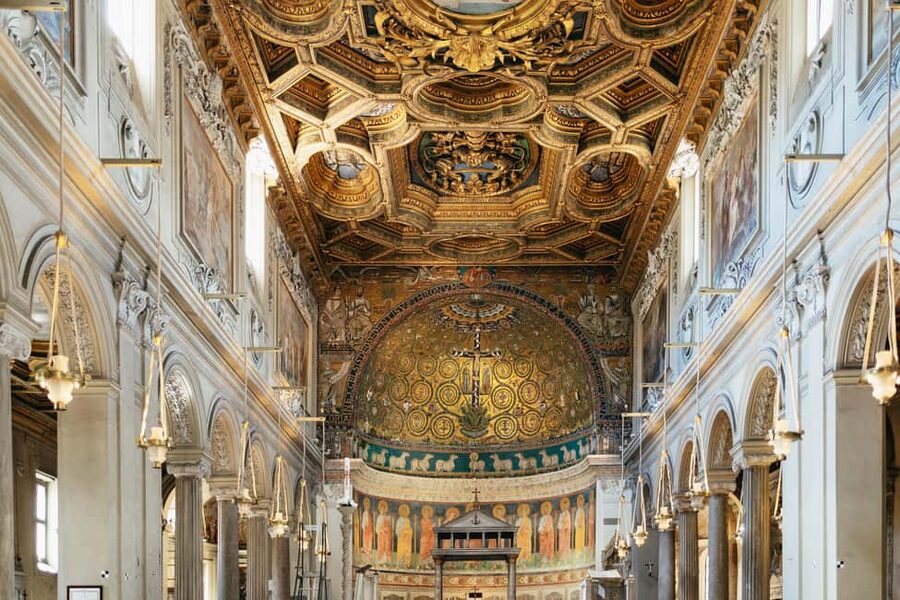
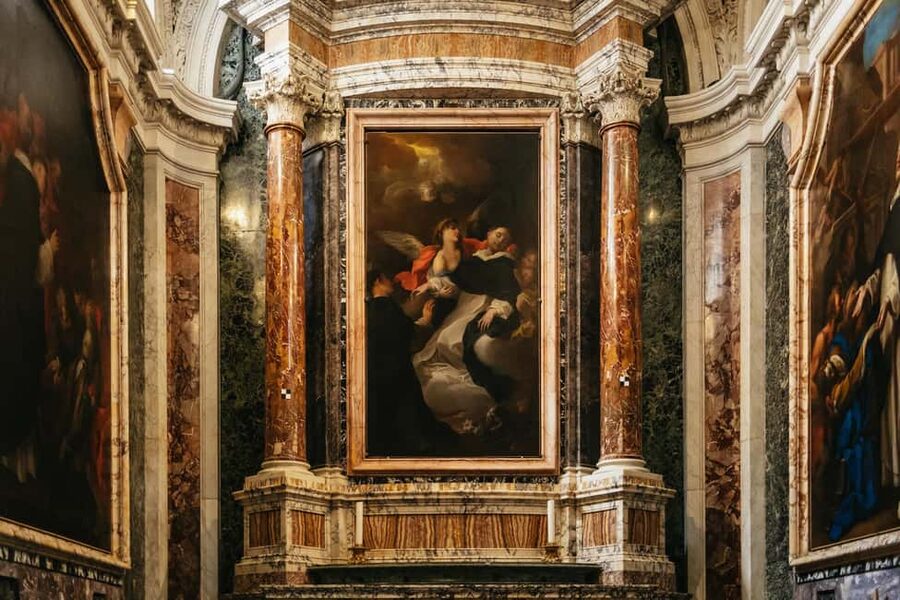
The upper church is the first major stop, and it is not simply a cover for the archaeology below. The gold mosaics are the visual high point of the visit. Their sparkle gives the basilica a very different mood from the dark underground rooms.
Your guide will help connect the artwork and architecture to the building’s place in the long story of the site. You are not only looking at an attractive church interior. You are seeing the latest layer of a location that has changed use and appearance over roughly 2,000 years.
Take a moment here before heading downstairs. The transition matters. Above ground, San Clemente feels like a functioning place of worship. Below, the atmosphere becomes more enclosed and archaeological. Without that contrast, the lower levels would lose some of their force.
Photography is not allowed inside, and cameras and video recording are specifically prohibited. That may disappoint you if you want a visual record of the mosaics or underground rooms. On the other hand, it keeps the visit focused on looking and listening rather than managing your phone.
The church also has a dress code. Your shoulders and knees must be covered, so dress with the religious setting in mind. This is especially worth remembering in warm weather, when shorts and sleeveless tops are common in Rome.
Down to the forgotten 4th-century church
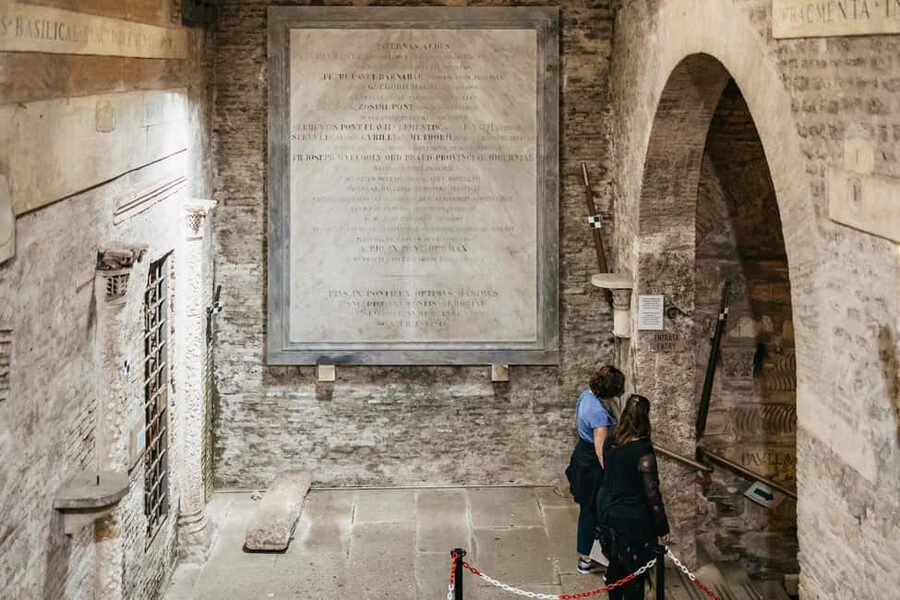
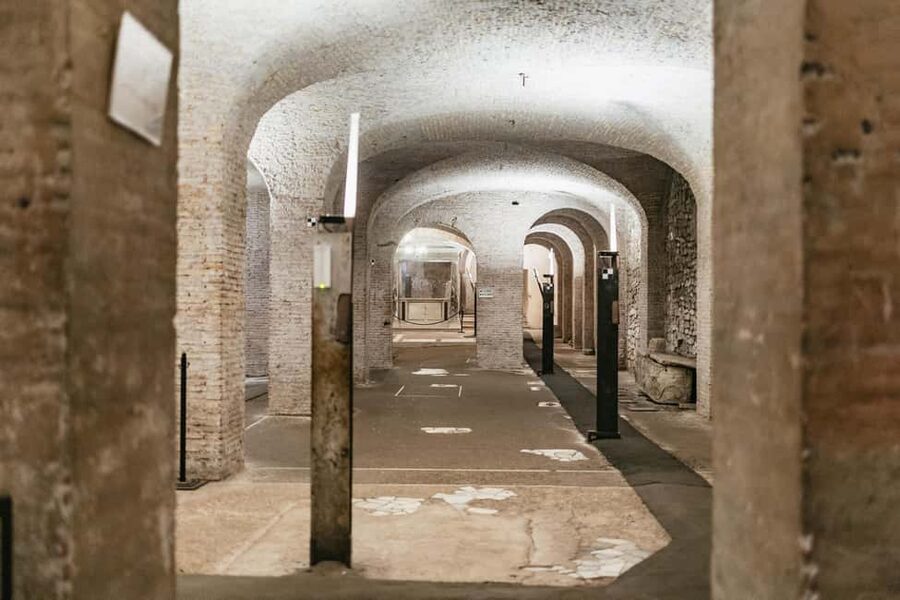
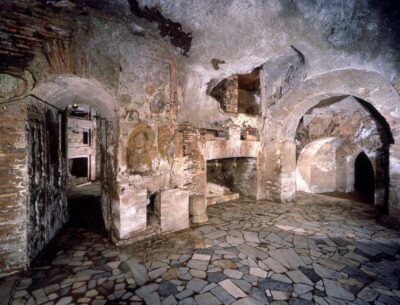
The stairs lead to the first underground level, where you see the remains of a 4th-century basilica. It was eventually forgotten after the 12th-century church was built above it. That simple fact gives the site its strongest sense of discovery: an earlier Christian building remained beneath the later one, hidden in plain sight.
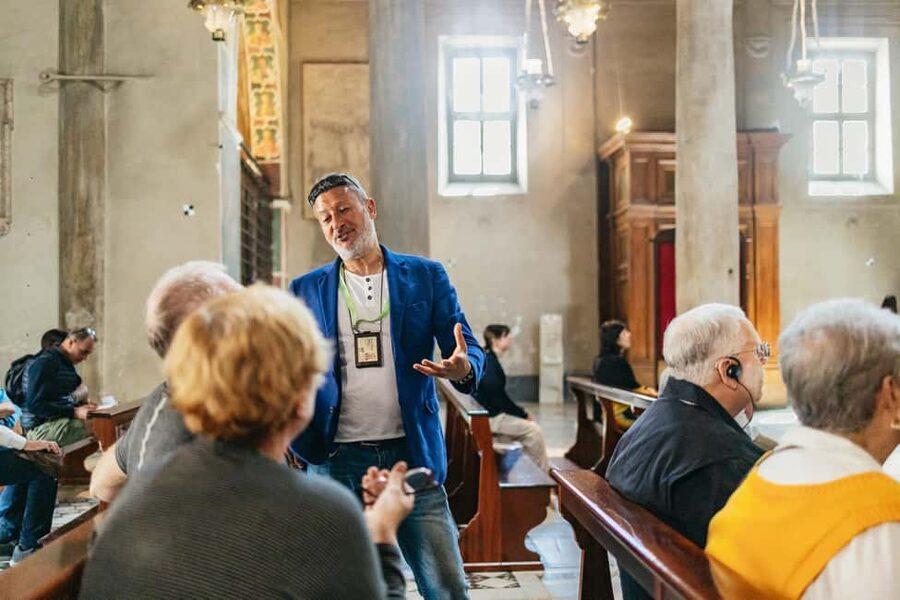
The guide is important here. Archaeological walls and partial rooms rarely explain themselves. A strong guide points out what you are seeing, places it in time, and explains how the building above affected the survival of the one below.
That is where the tour’s best guides have made a clear difference. Luca has been praised for explaining difficult material in an easy way and for adapting his pace to a small group. Gina has a gift for making art, architecture, excavation, and old stories understandable. Eddy is known for bringing energy and humor to the history. Other guides, including Ursus, Anna, Sara, Patricia, Priscilla, and Ricardo, have also led highly regarded visits.
Guide assignments can change, so you should not book expecting one particular person. Still, the repeated praise for the guiding is significant. San Clemente is a site where a good explanation changes what you see. Without one, you may notice old walls. With one, you begin to understand how one structure replaced another.
The group may move through the same spaces as other tours. One recent experience was made harder by missing headsets, and another visitor found it difficult to hear while multiple groups gathered nearby. This is not a reason to avoid the tour, but it is a practical limitation. Stay close to your guide and speak up if you cannot hear.
The Mithraic temple at the lowest level
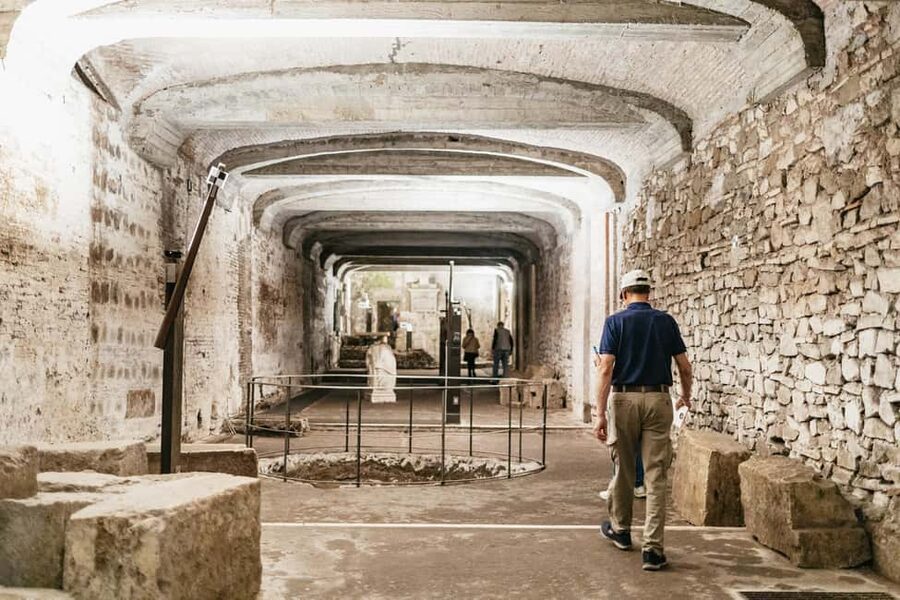
The lowest section is the most unusual part of the route. Here you encounter the remains of an ancient pagan Mithraic temple, including an altar. Mithraism is often mentioned in discussions of Roman religion, but San Clemente lets you see a real place connected with that tradition.
The shrine makes the tour more than a sequence of Christian churches. You move from the medieval basilica to an earlier Christian building, then further down to a pagan religious space. That change in belief and use gives the visit an unusually broad reach.
The rooms are underground, enclosed, and not designed for large crowds. You may find the atmosphere cooler than outside, which is why layers are useful. Comfortable shoes matter too. The route includes stairs, and the surfaces are uneven in places.
The Mithraic altar is a key detail to watch for, but the guide’s explanation gives it meaning. The value here is not only seeing an ancient object. It is learning how the site held different religious communities at different points in Rome’s development.
Some people describe the Mithraeum as the highlight of their week in Rome. I can understand why. The Colosseum and Roman Forum are grand and open to the sky. San Clemente offers something more intimate, with the sense that you are moving through rooms that were not meant to be a modern attraction.
More Cave Tours in Rome:
- Colosseum: Underground and Ancient Rome Tour
★ 4.7 · 12,691 reviews - Rome: Capuchin Crypts and Catacombs Tour with Transfers
★ 4.6 · 6,456 reviews - The Original Roman Crypts and Catacombs Tour with Transfers
★ 4.5 · 4,896 reviews - Rome: St. Peter’s Basilica, Dome Climb, and Underground Tour
★ 4.8 · 3,404 reviews
The spring that helped reveal the underground levels
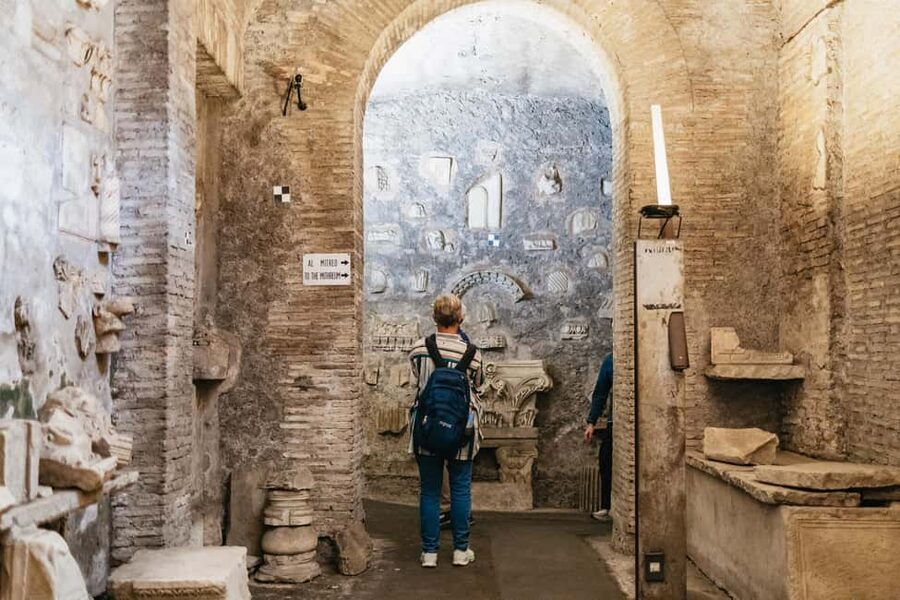
At the lowest point, you see an underground spring. It caused the water problems that helped lead to the discovery of the structures beneath the church.
The site was found in 1860 after flooding drew attention to what lay below. An Irish Dominican Roman Catholic priest and archaeologist played a key role in uncovering the buried levels. That story gives the excavation a human element. The ruins were not simply exposed by a planned modern project. Water, investigation, and persistence revealed the layers.
You can also see remains of ancient Roman homes, carefully excavated and preserved. These domestic traces help balance the grander religious spaces above. A church and a temple may attract the eye, but old homes show how ordinary Romans occupied the area.
This is one reason the tour rewards close attention. The most important feature is not always the largest wall or brightest decoration. Small changes in floor level, water channels, room outlines, and building material can help you understand how the site worked.
A practical look at the 90-minute route
The listed schedule gives about an hour for the guided visit and another 30 minutes for the visit and photo stop. Since indoor photography is not permitted, treat that second portion as time to look around rather than as a chance to take interior pictures.
The route returns to the same area where you meet. You are not being carried across Rome from one monument to another. That makes the tour easy to fit into a day focused on the Colosseum, Lateran area, or central Rome.
The meeting point deserves extra care. It is an outdoor location at the corner near Via di S. Giovanni in Laterano, 126, not an office with a prominent tour desk. One person found the location confusing because the address seemed to point toward a closed business, so arrive early enough to orient yourself.
Admission to San Clemente and the tour guide are included. Skip-the-ticket-line access is also listed, which matters at a church with limited underground space. The main value, though, is the explanation. You are paying for entry into a special site, but you are also paying to have its layers made readable.
At $70 per person, this is not a bargain basement visit. It is a fair price if you want a structured introduction and a guide who can answer questions. If you are comfortable reading archaeological plans and researching the basilica beforehand, you may prefer visiting on your own if independent entry is available. Most people will get more from the site with a guide because the ruins are not self-explanatory.
Who will enjoy this tour most
I would recommend San Clemente to first-time Rome visitors who want more than the standard route of Colosseum, Forum, and Vatican. It also works well for repeat visitors who have already seen the major monuments and want a smaller, more unusual site.
History and archaeology fans will find plenty to hold their attention. So will anyone curious about Roman religion, early Christianity, excavation, or the way cities grow over old buildings. The tour is also a good choice if you like places where the setting itself teaches the lesson.
It is less suitable for anyone who cannot climb and descend stairs independently. The tour is not suitable for wheelchair users or people with mobility impairments. Uneven surfaces make it a poor choice if you need a smooth, step-free route.
Families can consider it if everyone in the group can manage the stairs and stay engaged during a history-focused visit. The underground rooms are not a quick, flashy attraction. You need to listen and move at the group’s pace.
English is the stated tour language. If you need another language, this particular experience may not suit you. Cancellation is free up to 24 hours before the tour, and reserve-now, pay-later booking is available, which gives you some flexibility when building a Rome schedule.
Small details that make the visit better
Wear shoes with good grip. You do not need hiking footwear, but flimsy sandals are a poor match for stairs and uneven archaeological surfaces.
Bring a light layer. The underground levels may feel cooler than the street, even on a hot Roman day.
Cover your shoulders and knees before entering the church. This saves you from having to improvise at the door.
Leave large bags and luggage behind. They are not allowed, and the tour is easier when your hands are free for the stairs.
Do not plan on photographing the interior. Cameras, video recording, and photography inside are prohibited. If you want a visual reminder, spend a few minutes outside after the tour, where you can take in the building’s setting.
Stay near the guide. The lower rooms can be busy with several small groups, and hearing every explanation may be difficult if you drift toward the back. Ask questions when you can. The strongest guides on this route have been praised for welcoming them and taking time to explain unusual details.
Should you book San Clemente?
Book this tour if you want a compact, well-explained look at Rome’s layered past and you are comfortable with stairs. The Mithraic temple, spring, Roman homes, earlier basilica, and medieval mosaics give you a remarkable range of sights in 90 minutes.
Skip it if you need step-free access, want to take photographs indoors, or prefer to explore silently at your own speed. Also think twice if your Rome schedule is already packed with long walking days and you are unlikely to enjoy a focused archaeology visit.
For most visitors who can manage the physical demands, I would make room for it. San Clemente is close to the Colosseum, but it offers a different kind of Rome: quieter, more intimate, and built in layers beneath your feet. The 4.9 rating from 153 reviews fits the experience, especially when the guide is one of the strong storytellers who can make the buried rooms feel present again.
FAQ
Where does the San Clemente tour meet?
Meet outside near San Clemente Basilica, at the corner located at Via di S. Giovanni in Laterano, 126. It is an outdoor meeting point, not a tour office.
Which metro stop is nearest?
The nearest metro stop is Colosseo on Line B.
How long does the tour last?
The experience lasts about 1.5 hours. The guided visit is listed as one hour, followed by about 30 minutes for visiting and the photo stop.
What language is the tour in?
The live tour guide speaks English.
What does the ticket include?
The price includes entrance to San Clemente Basilica and the tour guide. Skip-the-ticket-line access is also listed.
Can I take photographs inside?
No. Cameras, video recording, and photography inside are not allowed.
Do I need to cover my shoulders and knees?
Yes. The church has a dress code requiring covered shoulders and knees.
Is the tour suitable for wheelchair users?
No. The tour is not suitable for wheelchair users or people with mobility impairments. You must be able to climb and descend stairs independently.
What should I bring?
Wear comfortable shoes for stairs and uneven surfaces, and bring layers because the underground levels may be cooler than outside. Do not bring luggage or large bags.
Just added around Rome
- St. Peter’s Basilica and Vatican Grottoes Tour★ 4.9 · 120 reviews
- St. Peter’s Basilica Full Guided Tour with Vatican Grottoes★ 4.6 · 286 reviews
- Rome: St Peter’s Basilica Express Tour & Grottoes★ 4.3 · 126 reviews
- Rome: Tour of St. Clement’s Basilica Underground Temples★ 4.8 · 242 reviews
- Rome: Underground Trastevere Guided Walking Tour★ 4.8 · 87 reviews
- Rome: Appian Way, Aqueducts, & Catacombs E-Bike Guided Tour★ 4.9 · 54 reviews
- Rome underground hidden temples, ruins, and secret basilicas★ 3.7 · 21 reviews
- Rome: Trevi Fountain District Underground Tour and Ice Cream★ 4.5 · 356 reviews
Rome Cave Tours, compared.
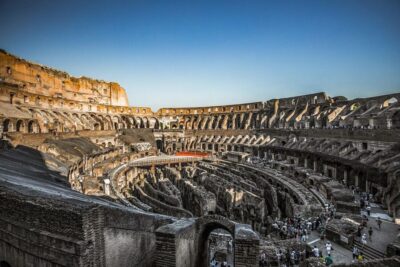
Colosseum: Underground and Ancient Rome Tour
Read the review →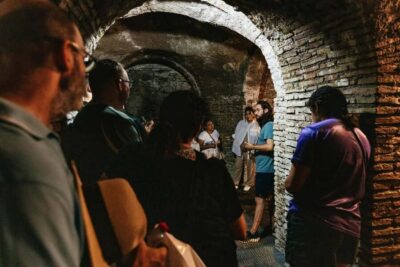
Capuchin Crypts and Catacombs Tour with Transfers
Read the review →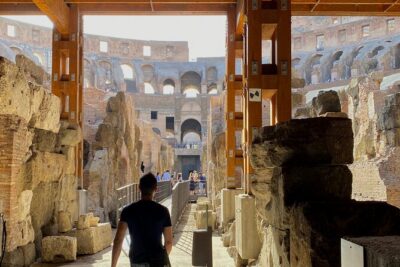
Expert Guided Tour of Colosseum Arena OR Underground, and Forum
Read the review →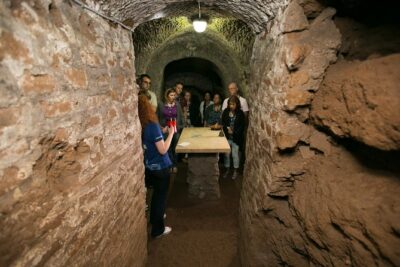
The Original Roman Crypts and Catacombs Tour with Transfers
Read the review →
Colosseum Underground Small Group Guided Tour
Read the review →
St. Peter’s Basilica, Dome Climb, and Underground Tour
Read the review →
Catacombs of St. Callixtus Entry Ticket & Guided Tour
Read the review →Browse the lists this tour appears in