
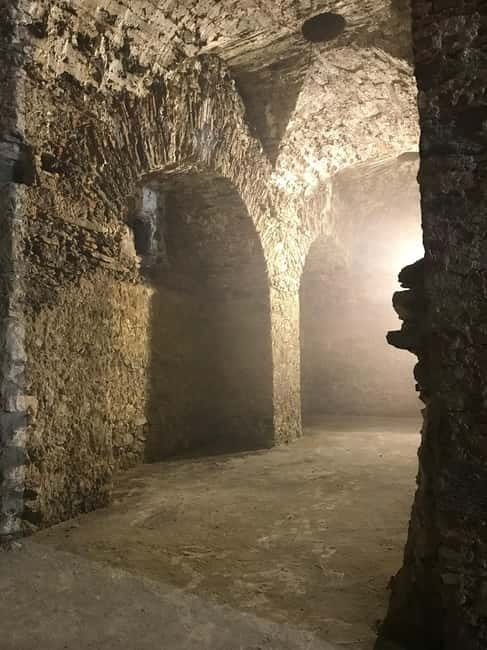
Review · GUIDED
Savona: Guided Tour of the Priamàr Underground
The most unusual part of Savona’s Priamàr Fortress is not above ground. It is below your feet, where old military tunnels, cisterns, passageways, and air-raid shelters form a second fortress in the dark. This one-hour guided visit lets you see that hidden side with an archaeologist rather than simply wandering through rooms on your own.
I like the way the tour connects several periods of the fortress, from the large 16th-century tunnels to the Second World War shelters. I also like the price: at $17, you get a focused, guide-led experience that adds a lot to a visit to the fortress. The main drawback is practical: tight, dark spaces make this unsuitable for anyone with claustrophobia, mobility limitations, or a need for a stroller.
Key points to know before booking
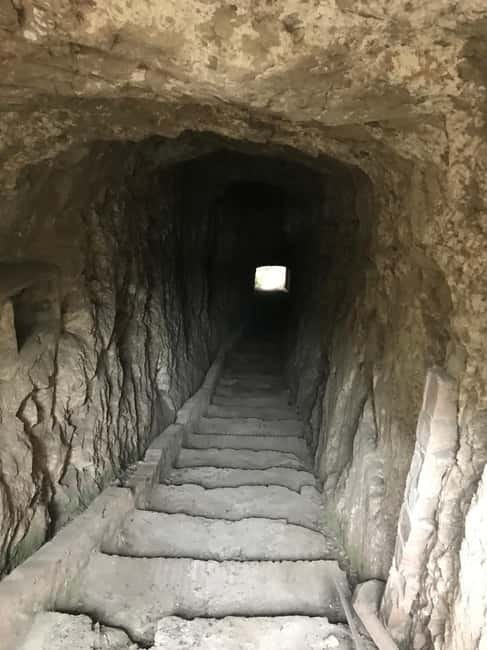
- Four underground routes: Follow the passages of St. Bernard, St. Francis, St. Catherine, and the Holy Conception.
- Many layers of military history: The rooms and tunnels were built between 1542 and 1943.
- Archaeologist-led visit: Guides explain what you are seeing, with English, French, Spanish, Italian, and German available.
- One-hour format: The tour includes a five-minute safety briefing and then about an hour underground.
- Bring proper gear: Wear comfortable sports shoes and carry a flashlight.
- Not for every visitor: Strollers, wheelchairs, and visitors with mobility impairments, visual impairments, pregnancy, or claustrophobia are excluded.
Why Priamàr’s underground matters
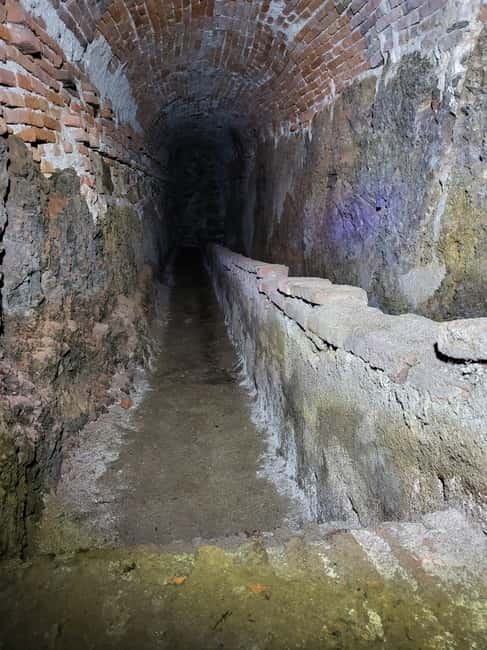
Priamàr Fortress occupies a strong defensive position in Savona, but the impressive walls and open courtyards tell only part of the story. Military fortresses work through spaces that are often invisible from outside: storage rooms, protected links between defensive points, water systems, escape routes, and passages for soldiers.
This tour takes you into that working side of the fortress. Instead of seeing Priamàr only as a stone complex on a hill, you begin to understand how people moved through it and how the defenses changed over time.
The underground network was not built all at once. Its parts date from the fortress’s long working life, beginning in 1542 and continuing through 1943. That gives the tour a useful timeline. You are not looking at one uniform set of tunnels. You are moving through additions and changes made for different military needs.
That variety is the main reason I would choose this experience over a quick look around the fortress alone. The underground rooms show practical decisions: where to move troops, how to store water, how to protect walls from attack, and how to shelter people during wartime.
Guided tours within reach of Italy:
- Naples: Naples Underground Entry Ticket and Guided Tour
★ 4.4 · 21,781 reviews - Naples: Catacombs of San Gennaro Entry Ticket & Guided Tour
★ 4.6 · 7,941 reviews - Naples: Spanish Quarters Underground Guided Tour
★ 4.8 · 5,064 reviews
Meeting at the Civic Archaeological and City Museum
The visit begins at the Màr Civic Archaeological and City Museum inside Priamàr Fortress. The entrance is in Piazza del Maschio, beneath the portico. If you arrive at the foot of the fortress, lifts take you to the first floor. The lift route begins along the flat walkway near the car park, which can be useful if you are approaching from below.
Give yourself enough time to find the museum before the start. The meeting point is inside the fortress, not at a general street address in central Savona. Once everyone is gathered, the guide gives a five-minute safety briefing.
That briefing matters here. You are about to enter uneven, enclosed spaces where ordinary city shoes may be a poor choice. This is the moment to confirm that you have comfortable footwear and your flashlight. A phone light may help in a pinch, but a small real flashlight is the better tool.
The group then follows the guide into the underground sections. The route returns to the same museum entrance, so you do not need to arrange separate transport at the end.
Four routes beneath the fortress
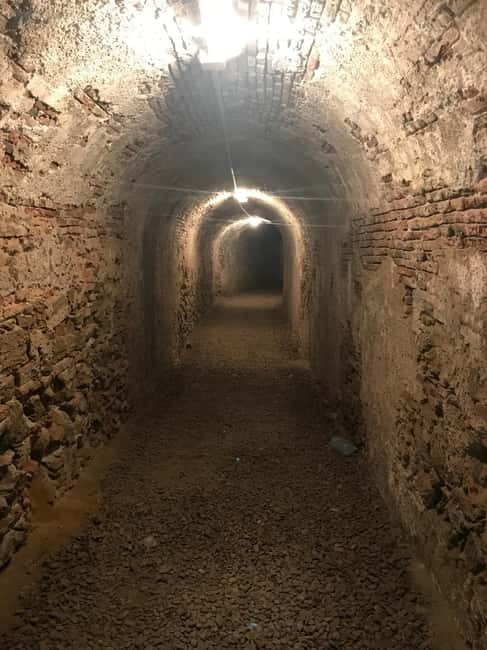
The tour follows four underground routes named St. Bernard, St. Francis, St. Catherine, and the Holy Conception. The names provide a useful way to organize a place that could otherwise feel like a maze.
You should expect a guided walk rather than a staged attraction. The value comes from learning what each passage was for and how it relates to the fortifications above. An archaeologist leads the visit, and this specialist background is especially helpful when a plain corridor or rough wall does not explain itself.
The route includes several types of underground spaces:
- Large tunnels from the 16th century
- Narrow connecting walkways dating from 1683
- Small counter-mine tunnels
- Large rooms below late 17th-century ramparts
- Two cisterns
- Connecting tunnels between the Maschio and the Citadel
- Exits toward the sea and the large outer moat
- Air-raid shelters from the Second World War
You will not be seeing one repeated tunnel in several forms. Each type points to a different problem the fortress had to solve. The narrow walkways suggest controlled movement between sections. Counter-mine tunnels were linked to defense against attacks beneath the walls. Cisterns remind you that a fortress needed its own water supply if access to the outside was cut off.
The sea and moat exits add another layer. They show that underground routes were tied to the fortress’s wider defensive plan, not simply built as isolated rooms. The wartime shelters then bring the story forward to the 20th century, when the same fortress had to respond to air raids rather than the weapons of earlier centuries.
The old tunnels and the problem of changing defenses
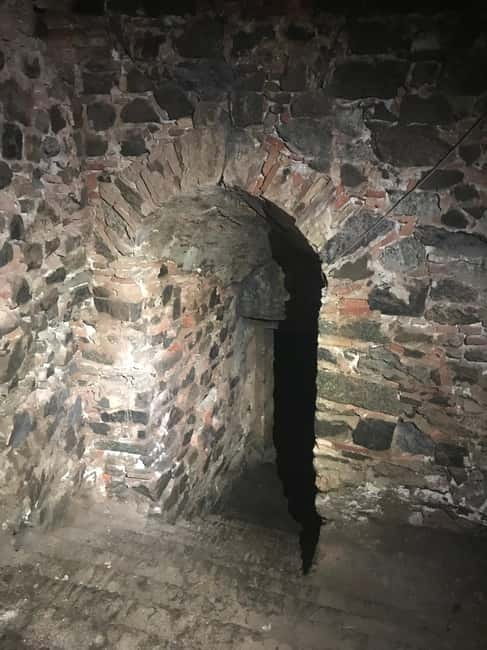
The large 16th-century tunnels are among the most striking parts of the visit. Almost all of them were closed and walled up in the 17th century. That detail gives you a strong sense of how military thinking changes.
A tunnel that once served a purpose could become a weakness, an obstacle, or simply unnecessary after the fortress was rebuilt. Walls and closures are not just signs of neglect. They can show an effort to control movement and reshape the defensive system.
The 1683 connecting walkways offer a contrast. These passages are narrow and belong to a later stage of the fortress. Their small scale makes the underground network feel less like a grand architectural project and more like a practical set of links for moving through a working military site.
This is also where a guide earns the $17 price. Without explanation, a blocked passage may look like a dead end. With context, it becomes evidence of a change in the fortress plan.
More Cave Tours in Italy:
- Colosseum: Underground and Ancient Rome Tour
★ 4.7 · 12,691 reviews - Matera: Sassi Tour with Cave House and Rupestrian Church
★ 4.7 · 6,618 reviews - Rome: Capuchin Crypts and Catacombs Tour with Transfers
★ 4.6 · 6,456 reviews - Expert Guided Tour of Colosseum Arena OR Underground, and Forum
★ 4.5 · 5,041 reviews
Counter-mines, cisterns, and protected movement
The counter-mine tunnels are small, and that is part of their character. They were designed for a specialized defensive purpose, so you should not expect generous corridors. Their presence shows how much military engineering took place below the level of the walls.
The two cisterns are another useful stop. Water is easy to overlook when you look at a fortress from the outside, but a fortified site needed dependable supplies during a siege or emergency. The cisterns and the connecting passages between the Maschio and the Citadel help you picture Priamàr as a complete system, with movement and survival built into its design.
The route also includes large rooms under the late 17th-century ramparts. These spaces should help you compare the cramped connecting passages with broader underground chambers. That change in scale is useful because it shows that underground architecture was not one-size-fits-all. Different rooms served different tasks.
You may find the transitions between room types more memorable than any single chamber. One moment you are in a large space beneath a rampart. The next, you are moving through a tight passage built to connect one defensive point to another.
From fortress passages to wartime shelters
The final major layer comes from the Second World War. Priamàr’s large air-raid shelters bring the underground visit into a period much closer to our own.
These shelters change the mood of the tour. Earlier tunnels were connected to fortress construction and military defense. The shelters were built to protect people from aerial attack. Seeing them in the same underground complex makes the site feel less like a monument frozen in the past.
I appreciate this chronological spread. A short visit can still cover nearly four centuries of construction, adaptation, and reuse. You begin with 16th-century tunnels and end with 20th-century shelters, without needing a long museum program.
The guide’s job is important here because the physical spaces alone may not make the timeline clear. Diego has led visits praised for his enthusiasm, courtesy, and ability to explain the site clearly. The tour is offered in English, French, Spanish, Italian, and German, though some content may be presented in its original language.
What the guide adds
This is not the best choice if you want to explore silently at your own pace. The underground passages are the point, but the explanations give them meaning.
The strongest feedback about the experience centers on the guides’ ability to spark curiosity across different ages. That fits the tour well. Children can respond to the basic adventure of moving through a fortress underground, while adults can pay attention to construction dates, defensive methods, and the changes made over time.
Diego is the guide specifically named in the available feedback, and he is described as both highly prepared and genuinely enthusiastic. That combination matters in an archaeological setting. A guide can list dates, or a guide can help you understand why a cistern, sealed tunnel, or narrow passage exists. This visit aims for the second approach.
The available feedback gives the experience a 4.8 rating from 52 reviews, with repeated praise for the guide’s competence, warmth, and ability to make the subject interesting for people of different ages. I would treat that as a good sign, while still remembering that the physical conditions of the route will shape your experience as much as the guide does.
Is one hour enough?
One hour is short, but it suits this activity. You get a concentrated look at the underground network without turning the visit into a half-day commitment.
The timing also works well if you are combining the tour with other parts of Priamàr Fortress or Savona. The formal plan includes five minutes for safety information, followed by a guided visit lasting about an hour, with a return to the museum.
Do not read the short duration as a promise that you will see every corner of the fortress. The underground network includes many sections built over several centuries, and this is a selected route through it. The advantage is focus. You can learn the main types of spaces and how they fit together without losing the thread.
The one-hour format may also be easier for families than a longer historical tour. Children get the excitement of tunnels and shelters, while the guide keeps the visit moving. Still, parents should judge the route carefully because baby strollers are not allowed, and the activity is not suitable for visitors with mobility impairments.
Shoes, light, and physical comfort
Take the equipment advice seriously. Comfortable shoes and sports shoes are requested because underground fortress passages may not feel like smooth museum floors. A flashlight is also required, and it makes sense even if the guide provides some lighting.
The route is not suitable for wheelchair users or people with mobility impairments. It is also not suitable for visually impaired visitors, pregnant women, or anyone with claustrophobia. Baby strollers are not allowed.
These restrictions are not minor booking notes. They describe the character of the experience. You are entering enclosed underground passages, not simply visiting a broad, accessible exhibition hall.
If you are unsure about confined spaces, consider how you feel in narrow corridors and dark rooms before booking. The tour’s appeal comes partly from its atmosphere, but that same atmosphere can be uncomfortable for some people. There is no reason to force yourself into an experience that will make you anxious.
The $17 price and overall value
At $17 per person, this is a reasonably priced way to see a specialized part of Priamàr Fortress. The ticket covers the guided visit to the underground passages, and the archaeologist-led format gives you more context than an unaccompanied walk through the fortress grounds.
The value is strongest for visitors who care about how historic sites functioned. If you only want open views, grand stonework, or a casual walk around Savona, the underground tour may feel too narrow. If you like military design, archaeology, and unusual spaces, the price is easier to justify.
The one-hour length also keeps the cost practical. You are not paying for a long excursion with transport or meals. You are paying for access and interpretation in a part of the fortress that is not simply an open public walkway.
Free cancellation up to 24 hours before the visit and the option to reserve now and pay later make it easier to fit into a changing schedule. Starting times vary, so check availability before planning the rest of your day.
Who should book the Priamàr underground tour?
I would recommend this for adults and older children who enjoy unusual historical sites, military architecture, or guided archaeology. It is particularly good for anyone who has already seen the main fortress and wants a different angle, though it also works as a first introduction to Priamàr.
You should book it if you like places where the physical setting does much of the storytelling. The old tunnels, walled-up passages, cisterns, sea exits, and wartime shelters create a clear sense of change over time.
You should skip it if you need a fully accessible route, dislike enclosed spaces, or prefer to explore without a guide. Also skip it if you are counting on bringing a stroller.
For the right visitor, this is a memorable addition to Savona. At $17 and roughly an hour, it offers a close look at the fortress’s less visible workings, with a guide who can connect the stone, dates, and defensive plans into a story you can follow.
FAQ
Where does the Priamàr underground tour begin?
It begins at the Civic Archaeological and City Museum inside Priamàr Fortress. The entrance is in Piazza del Maschio, under the portico.
How can I reach the museum entrance?
You can reach the museum through the fortress or use the lifts at the foot of the fortress. The lifts reach the first floor and are located along the flat walkway near the car park.
How long does the activity last?
The activity lasts about one hour. It includes a five-minute safety briefing followed by the guided underground visit.
Which languages are available?
The live guide is available in English, French, Spanish, Italian, and German. Some content may be presented in its original language.
What should I bring?
Bring comfortable sports shoes and a flashlight. These are important for the underground passages.
Is the tour suitable for wheelchair users or visitors with mobility impairments?
No. The activity is not suitable for wheelchair users or people with mobility impairments. It is also not suitable for visually impaired visitors.
Can I cancel the booking?
Yes. You can cancel up to 24 hours in advance for a full refund. A reserve-now, pay-later option is also available.
Just added around Italy
- Capri Adventure Cruise: Sea Caves, Coastline & Blue Grotto Visit★ 5.0 · 18 reviews
- Blue Grotto and Capri Boat Tour with Aperitivo Swim and Snorkel★ 4.5 · 47 reviews
- Capri Island and Blue Grotto Small Group Day Tour from Capri Port★ 5.0 · 62 reviews
- Capri Private Boat Tour from Capri (3 Hours) with Blue Grotto★ 4.5 · 42 reviews
- Kayak tour in Capri between caves and beaches. Photos included.★ 5.0 · 302 reviews
- Blue Grotto and Capri by Private Boat Tour★ 5.0 · 26 reviews
- Capri: Boat Tour, Priority Tickets & Blue Grotto (Optional)★ 4.0 · 63 reviews
- Blue Grotto Visit and Capri Semi-Private Boat Tour★ 5.0 · 53 reviews
Guided, compared.
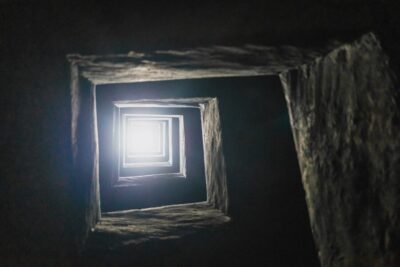
Naples Underground Entry Ticket and Guided Tour
Read the review →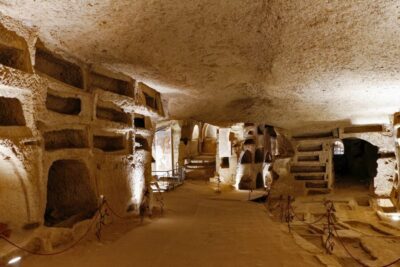
Catacombs of San Gennaro Entry Ticket & Guided Tour
Read the review →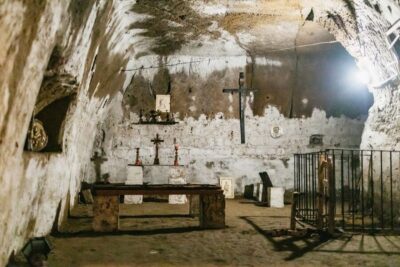
Expert Guided Tour of Colosseum Arena OR Underground, and Forum
Read the review →

Colosseum Underground Small Group Guided Tour
Read the review →
Catacombs of St. Callixtus Entry Ticket & Guided Tour
Read the review →
Benagil: Caves, Beaches, and Secret Spots Guided Kayak Tour
Read the review →Browse the lists this tour appears in