
Review · MUSEUMS
Krakow’s Rynek Underground Museum Tour with Ticket and Guide
Beneath Kraków’s Main Square lies a medieval marketplace most people never see from street level. This 90-minute visit takes you below the cobblestones to preserved streets, market stalls, trade goods, and multimedia scenes that show how merchants and craftsmen shaped the city.
I like the priority entrance, which saves time at a busy central attraction, and I like the guide-led format, which gives meaning to objects that could otherwise feel like scattered stones and old timber. The main drawback is the fixed start time: arrive at least 10 minutes early, since latecomers cannot join or receive a refund.
Key points to know before booking
- 700 years beneath the square: See the remains of Kraków’s medieval commercial center below today’s Main Market Square.
- A guide makes the archaeology readable: Learn how merchants, craftsmen, and passing traders helped Kraków grow into a major European trading center.
- Multimedia adds movement: Projections, sound effects, and holograms recreate the noise and activity of medieval trade.
- Groups can reach 29 people: This is a shared tour, not a private visit. Audio headsets are available for groups of 15 or more.
- Six tour languages: Choose English, Spanish, French, Polish, Italian, or German when booking. Each group uses one language.
- Good value at $34: The price covers the licensed local guide and priority museum entry, with free cancellation up to 24 hours before the tour.
What lies below Kraków’s Main Square
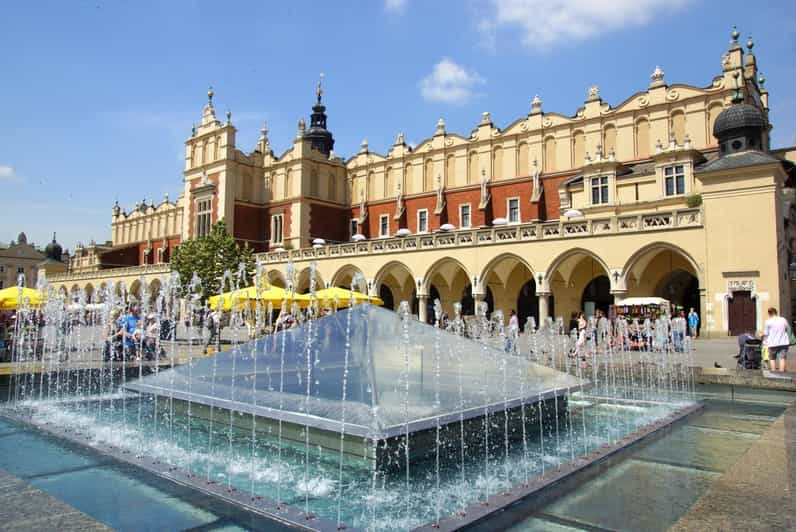
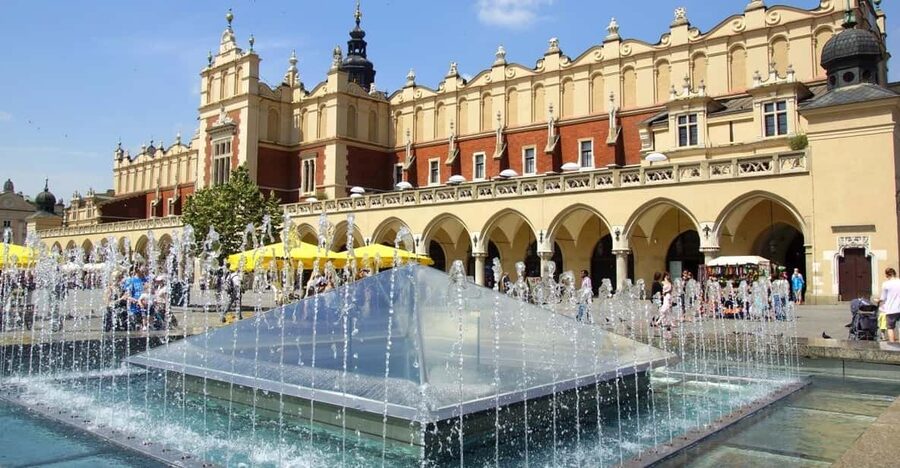
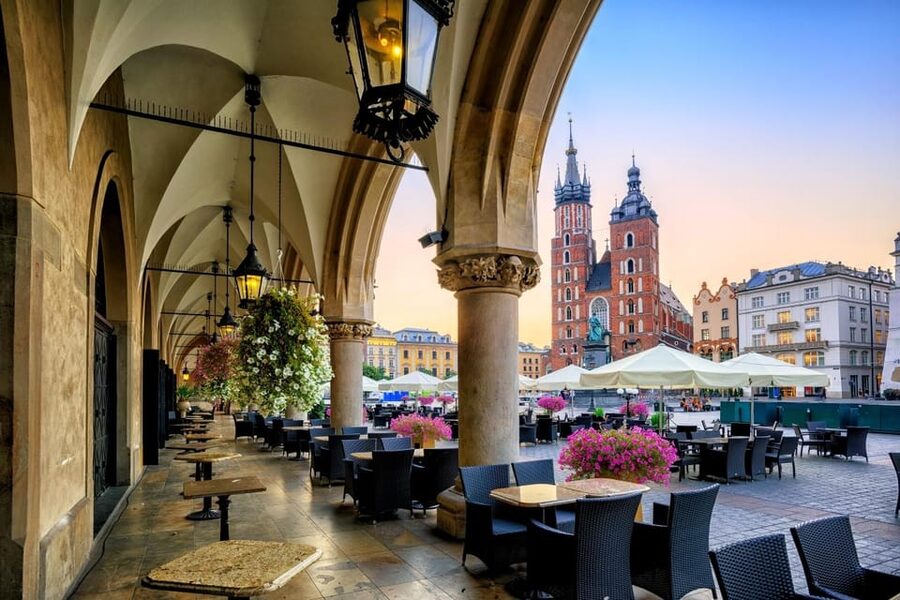
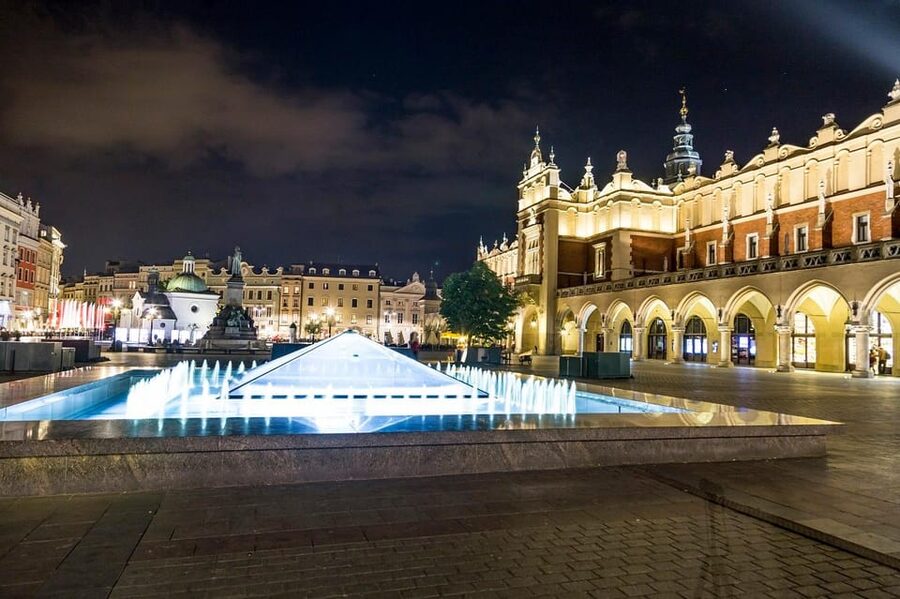
Kraków’s Main Market Square is one of the city’s easiest places to admire from above. St. Mary’s Basilica dominates one side, the Cloth Hall draws attention at the center, and the surrounding streets make the square feel like the heart of the old city.
The Rynek Underground Museum changes your view of all of it. Instead of only looking at the present-day square, you’ll go beneath it and see traces of earlier urban life. The museum preserves parts of medieval streets, market stalls, and objects connected with trade.
That setting gives the tour its main appeal. You are not simply looking at paintings or reading a timeline. You are moving through an archaeological space where the city’s older street level remains under the modern one.
I find this kind of museum especially useful early in a Kraków visit. It gives you a framework for understanding the square, the Cloth Hall, and Kraków’s role in regional commerce. Afterward, the buildings above ground carry more meaning because you have seen the layers below them.
Museum visits within reach of the world:
- Krakow: Rynek Underground Museum Guided Tour
★ 4.6 · 1,122 reviews - Coba Multun-Ha Cenote Tulum and Mayan Museum Small Group
★ 4.5 · 773 reviews - Sacromonte Caves Museum Admission Ticket
★ 4.6 · 502 reviews
Entering the Rynek Underground Museum
The meeting point is directly in front of the main entrance to the Underground Museum. Look for the guide holding a sign marked excursions.city. This detail matters because the Main Square has several entrances, busy pedestrian areas, and plenty of tour groups.
Arrive 10 minutes before the scheduled start. The timing is strict. Once the group has left, latecomers cannot join, and the ticket cannot be refunded, so this is not the kind of activity to squeeze between a late lunch and another booking.
Priority entrance is included. That does not mean you can arrive at any time, but it does remove the normal ticket-line step once the group is ready to enter. For a central museum with a fixed 90-minute schedule, that can make the difference between a calm start and a rushed one.
The guide is a licensed local expert and leads the tour in the language selected during booking. Available choices are English, Spanish, French, Polish, Italian, and German. Each group uses one language, so you should select carefully rather than expect a multilingual presentation.
Medieval streets below the modern city
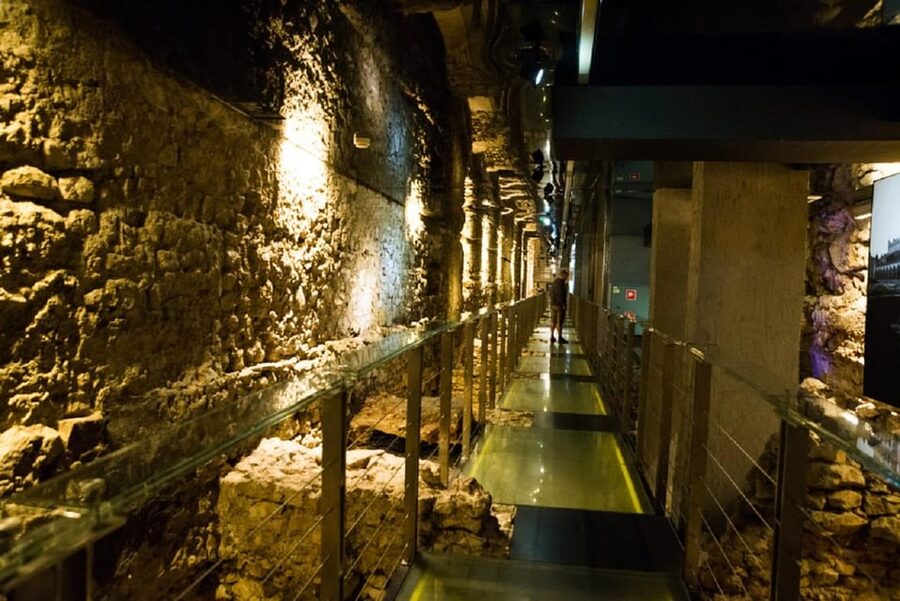
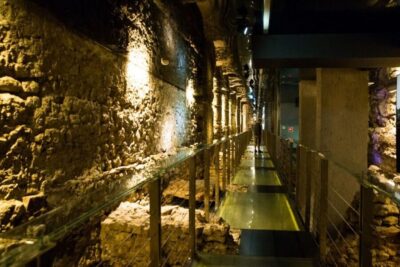
Inside, the route follows an archaeological space beneath the Main Square. You can expect to see fragments of medieval streets and remains linked to the market that once occupied this part of Kraków.
The most interesting feature is the contrast between scale and survival. Above you is a large public square that has changed with the city. Below, sections of the earlier market remain in place, giving you a direct sense of how urban life was organized before modern streets and buildings took their current form.
Your guide helps connect these remains to people rather than leaving them as anonymous ruins. The focus includes merchants, craftsmen, and travelers who passed through Kraków’s commercial center. That human angle is important. A market is not only paving and foundations. It is a place where goods changed hands, skills were practiced, and news moved along with money.
You will not be seeing a complete medieval town recreated underground. This is an archaeological museum, so some areas may feel fragmentary. That is part of its value, but it also means you should expect preserved evidence and interpretation rather than a fully reconstructed street scene.
Market stalls, trade goods, and daily work
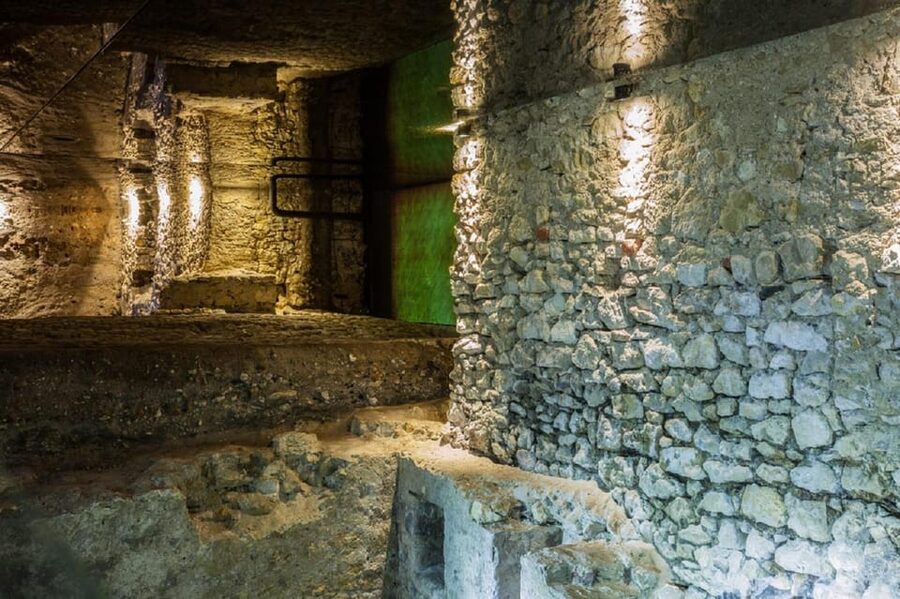
The preserved market stalls help explain how commerce worked at street level. They give the tour a more practical focus than a standard account of kings, battles, and grand churches.
You’ll learn about the activity that helped Kraków grow into an important European trading center. The exact objects and displays are presented as part of the museum route, with trade-related artifacts offering clues about the work and exchange that took place in the square.
I like this focus because it brings ordinary economic life into Kraków’s story. Merchants needed places to sell. Craftsmen needed customers and materials. Visitors from other regions brought goods, money, and news. A city’s importance grows through these repeated exchanges, and the underground museum gives you a physical place to picture them.
The guide-led format is useful here. A small object can be hard to understand without context, especially when it is displayed beside stone foundations or fragments of a street. A good explanation tells you what you are seeing and why it mattered.
The group can include up to 29 participants. That is a reasonable size for a popular museum, but it is not an intimate private walk. If the full group is present, stay near the guide so you can follow the explanation and see the displays clearly.
Entry tickets within reach of the world:
- Naples: Naples Underground Entry Ticket and Guided Tour
★ 4.4 · 21,781 reviews - Naples: Catacombs of San Gennaro Entry Ticket & Guided Tour
★ 4.6 · 7,941 reviews - Porto Cristo: Caves of Hams Entry Ticket
★ 4.2 · 6,548 reviews - Rome: Catacombs of St. Callixtus Entry Ticket & Guided Tour
★ 4.6 · 3,037 reviews
Multimedia scenes that bring the market back to life
The museum uses projections, sound effects, and holograms to add movement to the archaeological remains. These features recreate the feel of carts moving through the market, goods being exchanged, and the constant activity of a working commercial center.
This is a useful balance. The stone and timber remains provide the evidence. The multimedia displays help you picture how those remains once functioned. The technology is not the reason to visit, but it makes the museum easier to follow, especially if you do not normally enjoy archaeology displays.
Some people prefer quiet ruins and simple labels. If that is you, the projections and sound may feel more theatrical than necessary. For most visitors, though, the added atmosphere helps bridge the gap between a preserved foundation and a living medieval market.
The displays also make the tour more accessible to families and to anyone who finds traditional archaeological museums dry. You are still learning about Kraków’s development, but the information arrives through several senses rather than text alone.
For groups of 15 or more, audio headsets are available. That is worth noting because sound can be difficult to follow in an underground space, especially when several people are gathered around the same display. Smaller groups may not need them, but a larger group should benefit from clearer audio.
How the 90-minute visit unfolds
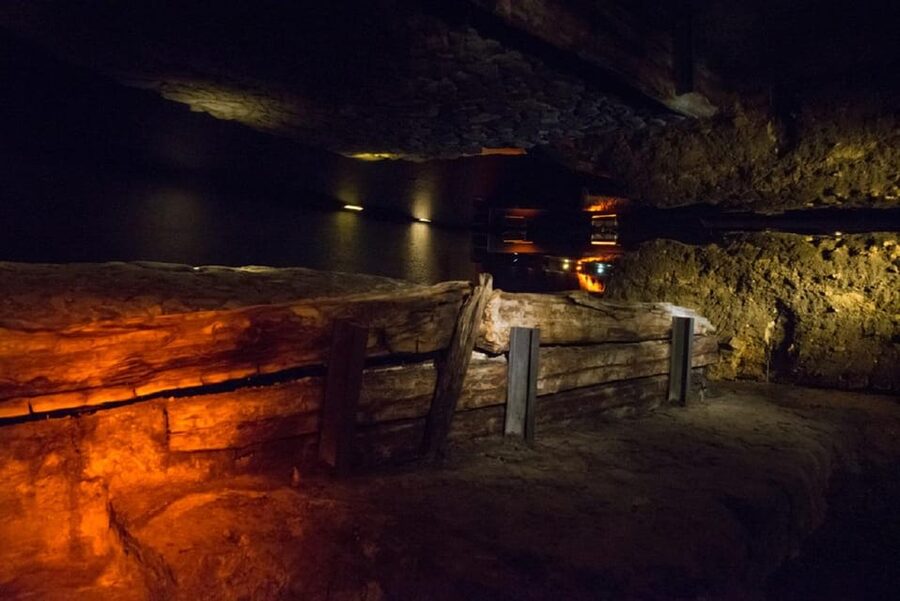
The tour lasts about 90 minutes, which is long enough to cover the key parts of the museum without taking up an entire morning or afternoon. You begin at the entrance, meet the guide, and enter with priority access.
The first part establishes the setting beneath the square. You then move through the remains of medieval streets and market areas, with explanations of how Kraków developed as a trading center. Along the way, the guide points out market stalls, trade-related artifacts, and preserved elements of the older city.
The multimedia displays add scenes of movement and sound as the route continues. Projections, effects, and holograms help show what the market may have felt like when carts, merchants, craftsmen, and buyers shared the same space.
The tour ends back above ground at the Main Square. From there, St. Mary’s Basilica and the Cloth Hall are not new sights, but they may look different after the visit. You have just seen the earlier layers beneath them, so the square becomes more than an attractive open space. It becomes a record of changing city life.
At 90 minutes, the tour works well as a focused historical stop. It will not cover every period of Kraków’s past, and it is not meant to replace a wider city tour. Its strength is concentration: one place, one archaeological layer, and one clear story about trade and urban growth.
Is $34 a fair price?
At $34 per person, this is not the cheapest museum visit in Kraków. The price makes more sense when you consider what is included: a licensed local guide and priority entry to a major attraction beneath the city’s main square.
You could potentially spend less by arranging a museum visit without a guide, but you would lose the structured explanation of the streets, stalls, artifacts, and trading networks. You would also need to handle entry on your own and interpret the displays without the benefit of a local voice.
I consider the price fair for people who want context, a fixed route, and help making sense of archaeological remains. It is less compelling if you prefer to read at your own pace, dislike group tours, or already know a great deal about Kraków’s medieval commerce.
The reserve-now-and-pay-later option is useful if your schedule is still taking shape. You can book the place without paying immediately, and cancellation is free up to 24 hours before the tour. The strict late-arrival rule still applies, so flexibility does not extend past the start time.
Who will get the most from this tour
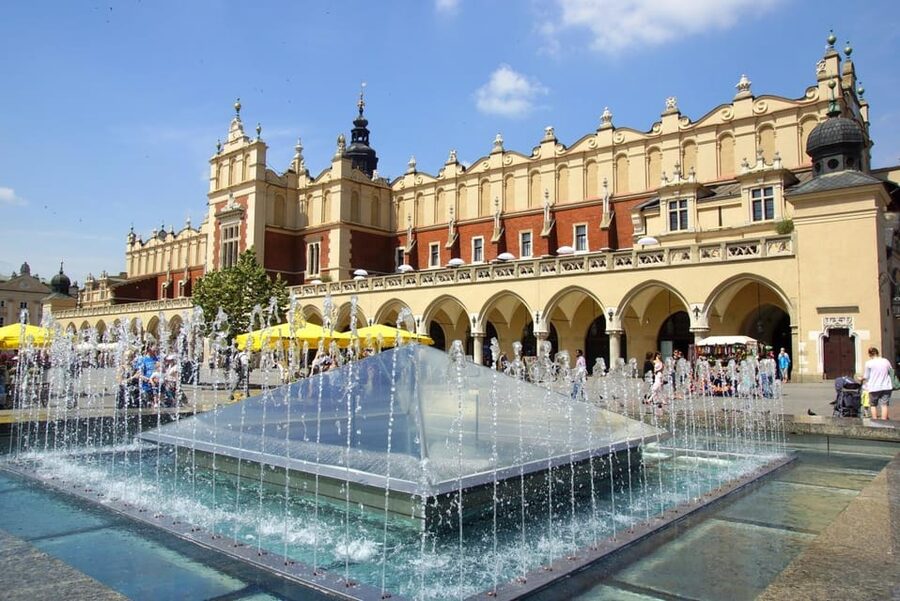
I would choose this tour if you are visiting Kraków for the first time and want more than postcard views of the Main Square. It gives you useful background before you explore the Cloth Hall, St. Mary’s Basilica, and the old city streets above ground.
It also suits history fans who enjoy seeing original remains in their setting. You’ll get the most from it if you are curious about trade, city growth, and the daily work behind Kraków’s importance.
Families may appreciate the multimedia features, since projections, sound, and holograms give the material a faster pace than a room of display cases. The 90-minute length is also manageable compared with a large all-day museum.
This may be less suitable for you if you want a quiet, unstructured museum visit. The group size can reach 29 people, and the route follows the guide’s timing. It also may not satisfy anyone looking for a broad survey of all Kraków history, since the focus stays on the medieval market beneath the square.
The three available ratings from October and September 2025 were strongly positive, with praise aimed at the guides’ pleasant manner, enthusiasm, and clear information. That matches the design of the tour: the guide is central to turning archaeological fragments into a readable story.
Practical advice for a smooth visit
Book your preferred language in advance and remember that the group tour is conducted in only one language. English, Spanish, French, Polish, Italian, and German are available.
Arrive early enough to find the main entrance without rushing. The meeting point is in front of the museum, and the guide carries the excursions.city sign.
Keep the full 90 minutes in your schedule. The underground route is not a quick photo stop, and leaving early could mean missing the explanation that ties the artifacts and street remains together.
If your group has 15 or more people, expect audio headsets to be available. Even with them, stay close to the guide during explanations. A group of up to 29 can spread out around the displays.
Plan to look at the Main Square again after the tour. The final payoff is not only underground. St. Mary’s Basilica and the Cloth Hall gain a stronger connection to the city’s older commercial life once you have seen what lies below.
Should you book the Rynek Underground Museum Tour?
Book it if you want a well-organized introduction to Kraków’s medieval marketplace and prefer a guide to explain what you are seeing. The combination of original archaeological remains, trade artifacts, multimedia scenes, priority entry, and a manageable 90-minute route gives the visit solid value at $34.
Skip it if you dislike group tours or want to explore museums without a fixed pace. The maximum group size is 29, and arriving late means losing the booking.
For most first-time visitors, I would place this near the start of a Kraków stay. It gives you a useful sense of what happened beneath the Main Square, then sends you back outside with a better eye for the city above it.
FAQ
Where does the Rynek Underground Museum tour meet?
Meet in front of the main entrance to the Underground Museum on Kraków’s Main Square. Look for a guide holding a sign marked excursions.city.
How long does the tour last?
The tour lasts 90 minutes.
What is included in the price?
The price includes a guided experience with a licensed local expert and priority, skip-the-line entry to the Rynek Underground Museum.
How much does the tour cost?
The listed price is $34 per person.
Which languages are available?
Tours are available in Spanish, English, French, Polish, Italian, and German.
Can I join a group conducted in more than one language?
No. Group tours are conducted in one language only. Select your preferred language when booking.
How large can the group be?
Museum rules limit each group to a maximum of 29 participants.
Are audio headsets available?
Audio headsets are available for groups of 15 or more participants.
What happens if I arrive late?
Arrive 10 minutes before the tour begins. Once the group has departed, latecomers cannot join, and the ticket cannot be refunded.
Just added around the world
- Capri Adventure Cruise: Sea Caves, Coastline & Blue Grotto Visit★ 5.0 · 18 reviews
- Blue Grotto and Capri Boat Tour with Aperitivo Swim and Snorkel★ 4.5 · 47 reviews
- Kayak tour in Capri between caves and beaches. Photos included.★ 5.0 · 302 reviews
- Capri Island and Blue Grotto Small Group Day Tour from Capri Port★ 5.0 · 62 reviews
- Capri Private Boat Tour from Capri (3 Hours) with Blue Grotto★ 4.5 · 42 reviews
- Blue Grotto and Capri by Private Boat Tour★ 5.0 · 26 reviews
- Capri: Boat Tour, Priority Tickets & Blue Grotto (Optional)★ 4.0 · 63 reviews
- Blue Grotto Visit and Capri Semi-Private Boat Tour★ 5.0 · 53 reviews
Museums, compared.
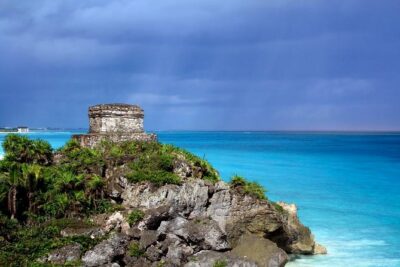
Coba Multun-Ha Cenote Tulum and Mayan Museum Small Group
Read the review →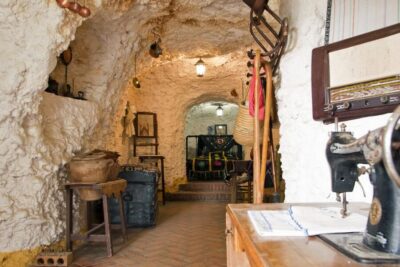

London: Postal Museum Entry Ticket and Underground Rail Ride
Read the review →
Rila Monastery and Optional Museum, Cave or Spa
Read the review →
Beatenberg: Beatus Caves Entry Ticket with Museum
Read the review →
Albaicín, Sacromonte & Museum of Caves Walking Tour
Read the review →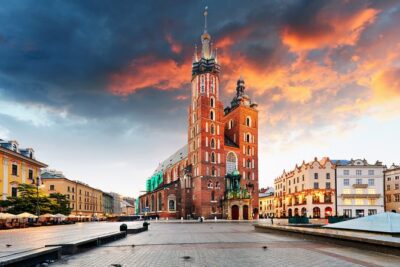
Krakow: Rynek Underground Museum Skip-the-line Guided Tour
Read the review →Browse the lists this tour appears in