Review · CATACOMBS & UNDERGROUND CITY TOURS
Rome: Catacombs of St. Sebastian Entry Ticket & Guided Tour
The most striking part of this experience is the setting: you walk below the Appian Way into a burial complex that began as a pozzolana quarry and later became an underground cemetery. The name ad catacumbas, meaning near the cavities, eventually gave all catacombs their name. For $16, you get a short guided look at a place tied to Saint Sebastian, early Christian worship, and ancient Roman burial customs.
I like the clear historical storytelling and the way the tour brings together Christian catacombs, pagan tombs, old mausoleums, and the basilica above ground. I also like the compact 30-minute format. It fits neatly into a busy day in Rome and gives you shelter from heat or rain. The main drawback is the same feature: 30 minutes can feel rushed, especially after traveling out to the site.
Key points to know before you go
- The catacombs gave their name to underground cemeteries: The site was once a quarry in a sunken valley called ad catacumbas.
- You see more than Christian burials: The route includes pagan tombs, mausoleums, ancient burial niches, and the church above.
- The guide makes the short visit worthwhile: Tours are offered in English, Italian, Spanish, and French, with guides such as Micah and Niko praised for clear explanations.
- Expect cool, narrow passages: Wear comfortable shoes and bring a jacket or warm layer.
- Photography is not allowed underground: You may take photographs in the basilica, but not inside the catacombs.
- This is not a good fit for everyone: Baby carriages are not allowed, and the tour is unsuitable for people with mobility impairments or claustrophobia.
Why Saint Sebastian’s Catacombs matter
The Catacombs of Saint Sebastian are not simply a set of dark tunnels. They developed in a place that had already been busy for centuries. The valley was first worked as a pozzolana quarry, producing the volcanic material used in Roman construction. Once the underground spaces were no longer needed for quarrying, they were reused for burials.
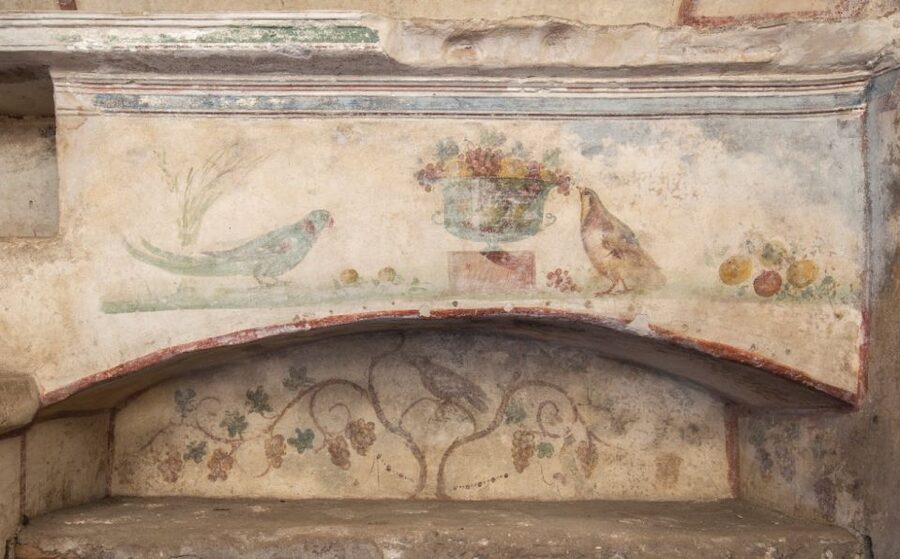
Above ground, the area also contained several columbaria, or buildings with small niches for cremation urns. At least two residential complexes, known as the small villa and large villa, once had painted wall decorations. That mix of quarrying, homes, pagan burial customs, Christian burials, and worship gives the site unusual depth for such a short visit.
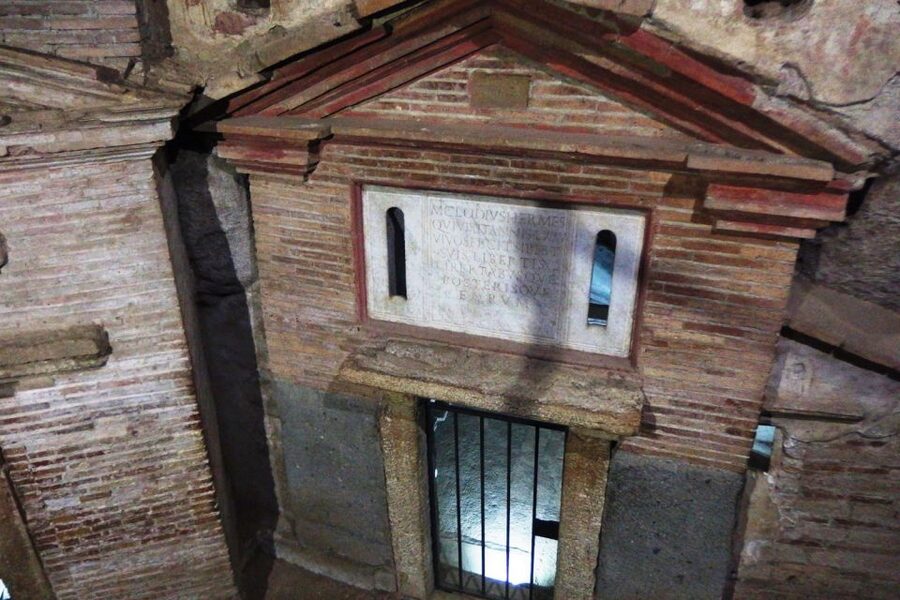
By the middle of the second century, the valley floor had been filled to create a level surface. Three mausoleums were then built in a row. They belonged to Clodius Hermes, the Innocentiores, and the Ax family. You may not spend long at each feature, but knowing this before you enter helps you read the site as a changing Roman neighborhood rather than a single-purpose cemetery.
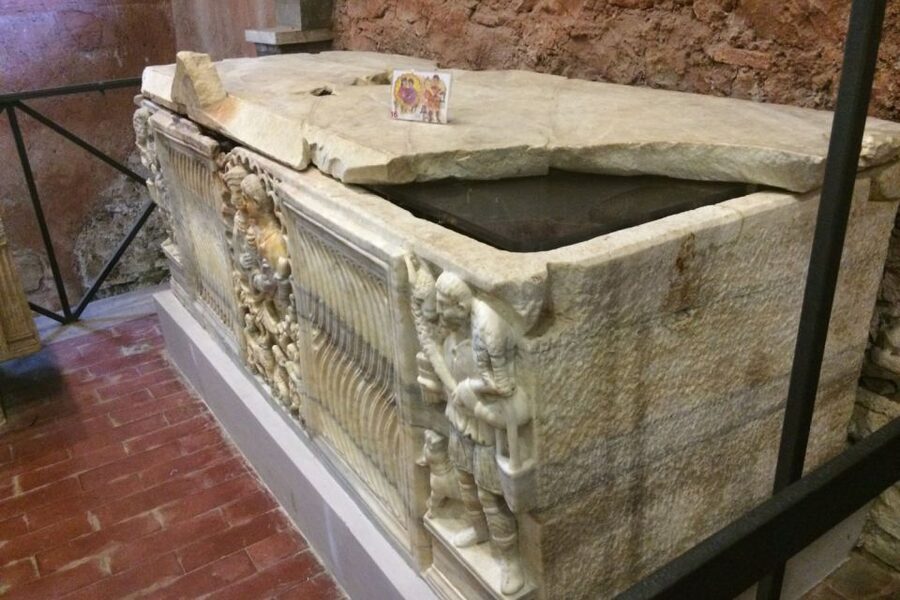
The place also became linked with Saints Peter and Paul. Around the middle of the third century, a portico called the triclia was built. Its wall carried many graffiti inscriptions invoking Peter and Paul, who were honored together here. The site later became associated with Saint Sebastian and Saint Eutichio, whose tombs helped shape the underground complex.
More Catacombs and Underground City Tours in Italy
- Rome: Capuchin Crypts and Catacombs Tour with Transfers
★ 4.6 · 6,456 reviews - The Original Roman Crypts and Catacombs Tour with Transfers
★ 4.5 · 4,896 reviews - Rome: Catacombs of St. Callixtus Entry Ticket & Guided Tour
★ 4.6 · 3,037 reviews
What the 30-minute route covers
You begin at the catacomb’s ticket office. Go directly there and show your reservation at least 10 minutes before the scheduled start. That detail matters because the experience is tied to a timed entry, and the meeting point is not a general landmark somewhere in central Rome.
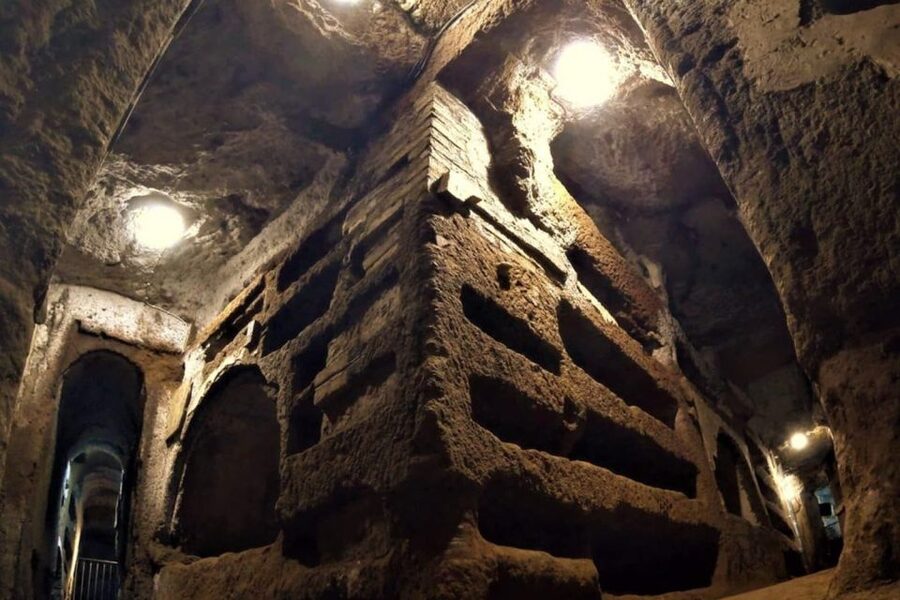
The route takes you below ground into the catacomb galleries. These passages were cut or adapted for burial niches. In narrow sections, you may need to walk in single file, and the guide may pause when the group reaches a wider chamber. One useful feature of a small group is that you can hear the explanation more easily and avoid feeling packed into the passage.
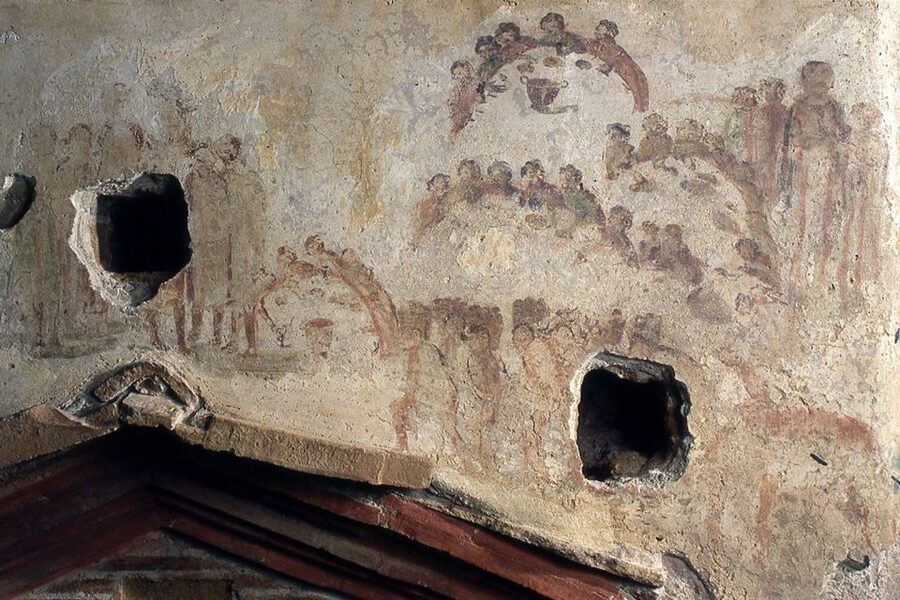
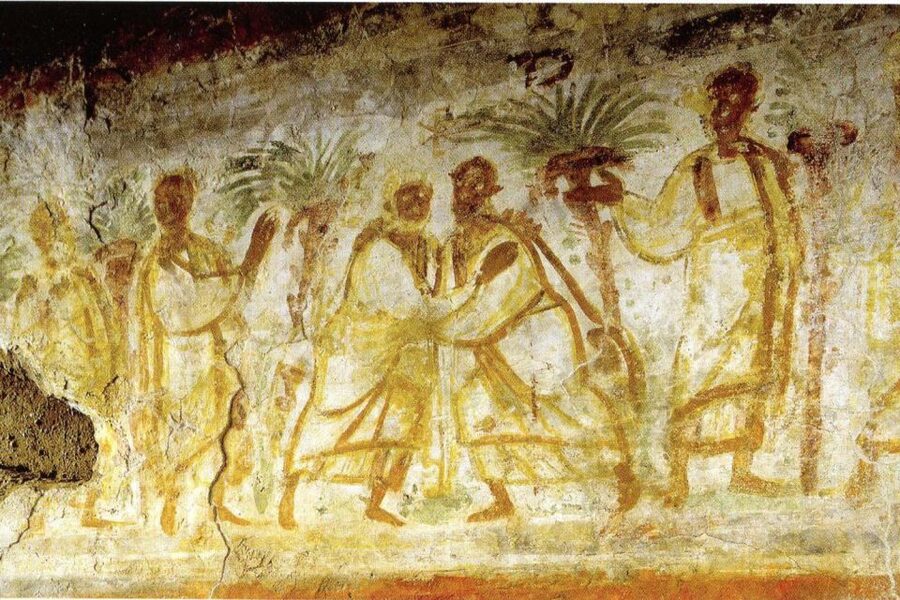
The guide explains how the galleries were reused for Christian burials and how the site fits into the wider customs of ancient Rome. You will hear about the people buried here, the religious meaning of the space, and the difference between the Christian catacomb areas and older pagan tombs.
The route is not a long underground expedition. It is a focused introduction. You see enough to understand the site, but not enough to examine every passage or spend extended time at each burial area. If you enjoy asking detailed questions, the guide can make a major difference. One guide, Niko, was praised for answering questions well beyond the catacombs themselves, while Micah was singled out for her strong explanation of the site’s history.
The tour then connects the underground cemetery with the basilica above. This is an important part of the visit because it shows how the place changed over time. The Emperor Constantine, who ruled from 306 to 337, had a basilica built here in the form of a Roman circus. This unusual shape is called circiforme.
The basilica also gives you a chance to look upward after the confined galleries. The carved wooden ceiling has made a strong impression on people who have visited, and photography is allowed in the basilica even though it is forbidden below ground. That contrast gives the tour a satisfying finish: dark burial passages first, then a more open and visually striking church space.
The history you can actually see underground
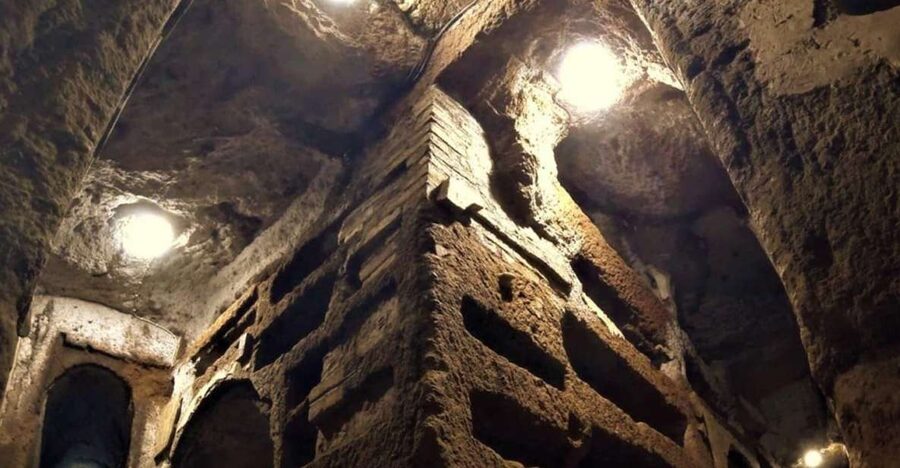
Rome’s catacombs are often reduced to a simple picture of early Christians hiding underground. Saint Sebastian’s site is more complicated. The burial spaces reflect several periods and customs, and the guide’s job is to connect them without turning the visit into a lecture.
The earliest use of the area was practical. Quarrying created the cavities. Later, those cavities were adapted for burial niches. On the surface, columbaria served cremation burials, while mausoleums provided more formal family tombs. This gives you a chance to compare different Roman approaches to death and remembrance in one location.
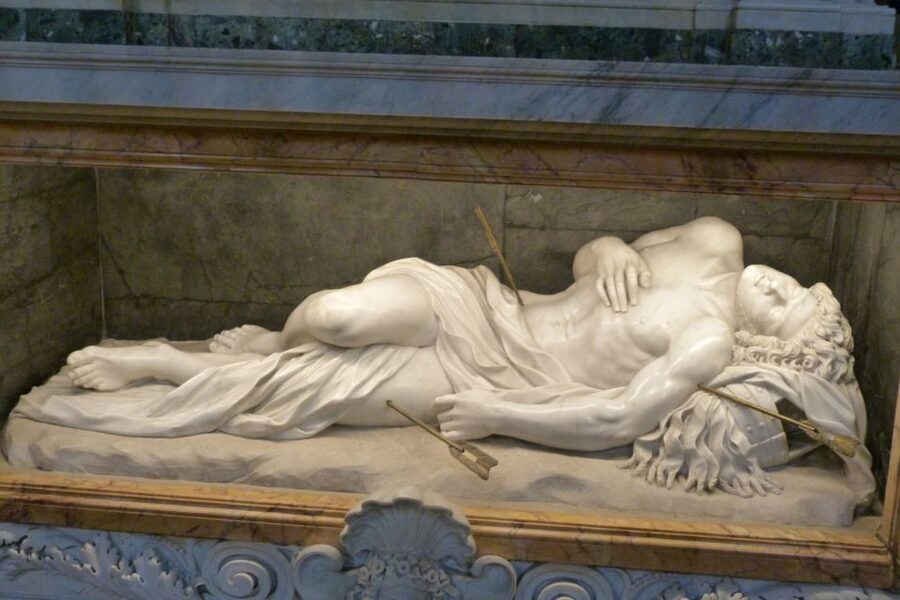
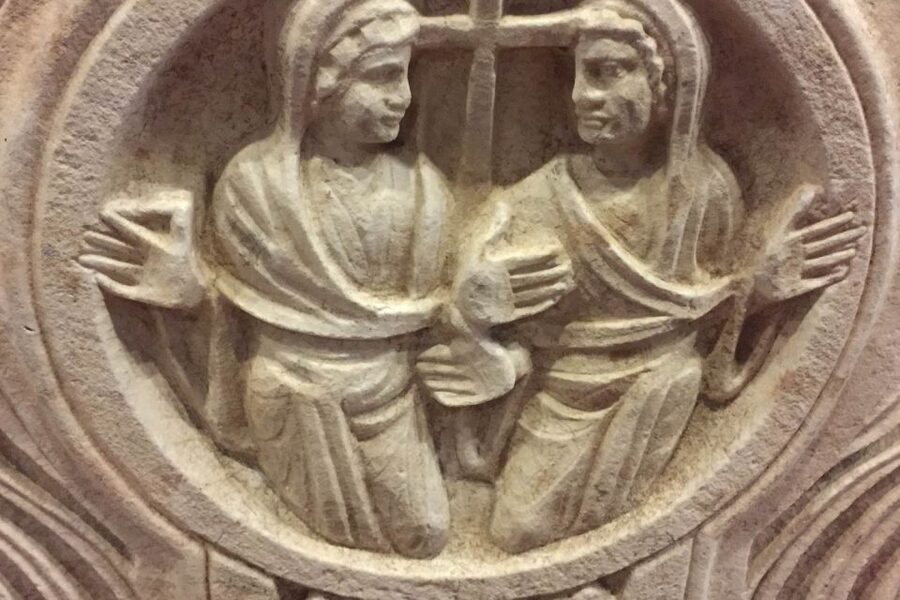
The Christian connection grew later. The catacomb came to house the tombs of martyrs, including Saint Sebastian and Eutichio. The site was also linked to the veneration of Peter and Paul. In the third century, worship and remembrance were taking place alongside the older burial customs.
That layered story is what makes the visit worthwhile. You are not only looking at holes in the walls. You are seeing how one Roman site was quarried, built over, used for pagan burial, adapted for Christian burial, and later given a monumental church.
Why a guide matters here
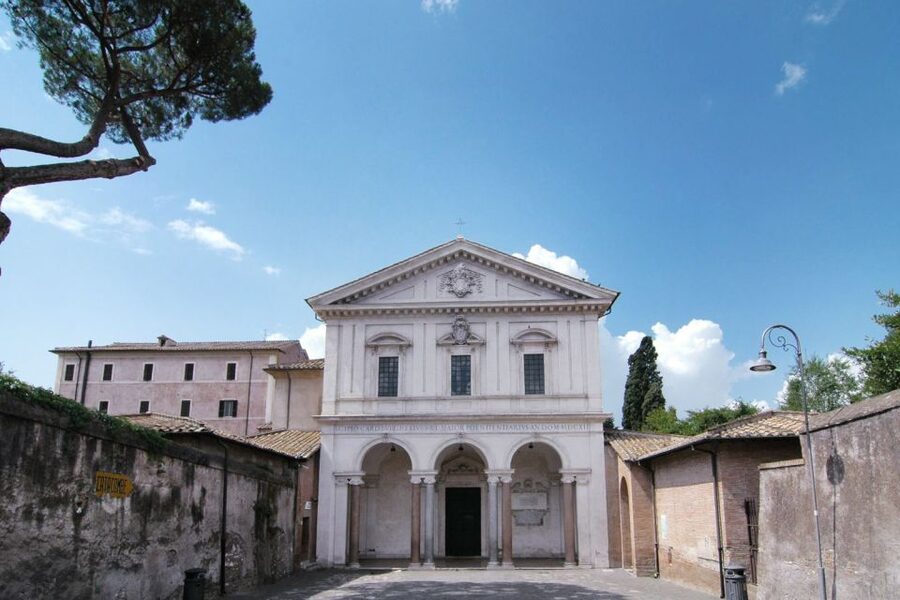
A self-guided walk would not give you much help in the narrow passages. The burial niches can look similar, and the most important details are historical rather than visual. A live guide points out what you are seeing and explains why the site developed in stages.
The strongest praise has gone to guides who keep the language simple and stop often enough for the whole group to gather. That is especially useful in the single-file sections, where people at the front can easily get ahead of those behind them. A good guide also makes the difference between a quick walk through tunnels and a meaningful explanation of Roman customs.
Tours are offered in English, Italian, Spanish, and French. The specific guide depends on the departure, but past guides have included Micah and Niko. The important thing is to choose a language you can follow comfortably. With only 30 minutes, there is little spare time for repeated explanations.
The short duration does have one advantage. The tour stays focused. You get the main burial areas, the key historical points, and the basilica without committing half a day to one attraction. If you are building a full Appian Way itinerary, this is an easy piece to add.
More Catacombs and Underground City Tours in Rome
- Rome: Guided Roman Catacombs Tour with Transfers
★ 4.6 · 1,830 reviews - Rome: Catacombs Guided Tour with Transfer
★ 4.2 · 1,808 reviews - Rome EBike Tour: Appian Way, Catacombs & Roman Aqueducts
★ 5.0 · 1,766 reviews - Rome: Catacombs and Capuchin Crypt Guided Tour with Transfer
★ 4.6 · 1,606 reviews
The $16 price and what you receive
At $16 per person, the cost is reasonable if you value a live explanation and a timed entrance. Your ticket includes admission and a guided tour in your chosen language. There is no hotel pickup or drop-off, so you arrange your own way to the site.
One practical point is that at least one person found the online price slightly higher than buying on site. I would compare the current direct ticket price before booking. The advantage of reserving ahead is a clearer plan and a place on a scheduled tour, though the value depends on how much you want that certainty.
The tour is especially good value for a short Rome stop, a hot afternoon, or a rainy morning. It gives you a different side of the city without requiring a long visit. On the other hand, if you are making a special trip only for the catacombs, the 30-minute length may feel brief for the travel time involved.
Some people have been able to move to a later time after arriving late, but you should not count on that. The safest plan is to arrive at the ticket office 10 minutes early, as requested.
Getting there and preparing for the underground
The catacombs are outside the busiest historic center, so allow time for transport. Bus 118 has been used to reach the site, but the information provided does not give a full route from every part of Rome. Check your departure point and allow extra time for traffic.
Wear comfortable shoes. The walking itself is short, but underground passages can be uneven or confined. A jacket or warm layer is essential for many people because the temperature can feel cooler farther below ground, even during Rome’s hot season.
Bring as little as practical. Baby carriages are not allowed, and mobility limitations can make the route unsuitable. Claustrophobia is also a real concern. The passages can be narrow, and some sections require single-file walking.
Photography is not allowed inside the catacombs. Do not plan to document the burial chambers with a phone or camera. You can take photographs in the basilica, including its striking wooden ceiling, but the underground section is meant to be experienced without photography.
Who will enjoy this tour most
This tour suits you if you want Roman history presented in a direct, manageable way. It is a good choice for anyone interested in early Christianity, ancient burial practices, archaeology, or the Appian Way area. It also works well when you want an indoor activity away from the summer heat or bad weather.
Families with older children may find the subject engaging, especially if children are interested in underground places and ancient customs. The short format helps hold attention, but the narrow passages and quiet atmosphere may not suit very young children.
The experience is also a good fit for people who prefer a guide rather than reading signs. The best moments depend on the explanation: why the quarry became a cemetery, how pagan and Christian burials differed, and how the basilica relates to the underground site.
I would think twice if you need step-free access, use a baby carriage, or dislike enclosed spaces. I would also reconsider if you want an extensive archaeological tour. The route offers a strong introduction, not a long examination of every gallery.
Should you book the Catacombs of Saint Sebastian?
Book it if you want a short, well-organized encounter with Rome’s underground past and you appreciate having the main facts explained as you walk. The combination of ancient quarry, pagan burial areas, Christian catacombs, Saint Sebastian’s connection, and Constantine’s basilica gives you a lot to think about in half an hour.
The best reason to choose this tour is its balance of access and context. You do not simply enter a dark passage and look around. A guide helps you understand how the site changed across centuries. The main caution is time: if the catacombs are your top priority, 30 minutes may leave you wishing for more.
For most people who can manage narrow underground passages, $16 is a fair price for the guided entry. Arrive early, dress warmly, leave the camera in your bag, and treat this as a focused historical visit rather than a full-day attraction.
FAQ
How long is the Catacombs of Saint Sebastian tour?
The guided tour lasts 30 minutes.
What is included in the ticket?
The ticket includes entrance to the Catacombs of Saint Sebastian and a guided tour in your chosen language.
Which languages are available?
Guided tours are offered in English, Italian, Spanish, and French.
Where do I meet the guide?
Go directly to the catacomb ticket office and show your reservation at least 10 minutes before the scheduled tour.
Can I take photographs inside the catacombs?
No. Photography is not allowed inside the catacombs. Photography is allowed in the basilica.
What should I wear?
Wear comfortable shoes and bring warm clothing or a jacket because the underground areas can feel cold.
Is the tour suitable for people with mobility impairments or claustrophobia?
No. The experience is not suitable for people with mobility impairments or claustrophobia. Baby carriages are also not allowed.
Just added around Rome
- Private Guided Tour of Colosseum Underground OR Arena and Forum★ 5.0 · 111 reviews
- Private Tour of Catacombs and Ancient Appian Way (hotel pick up)★ 4.5 · 120 reviews
- Hidden Gems & Rome Catacomb Semi Private Tour by golf cart★ 5.0 · 114 reviews
- Ancient Rome and Colosseum Private Tour with Underground Chambers and Arena★ 4.5 · 184 reviews
- Rome Catacombs & Capuchin Crypts VIP Group Tour with Transfers★ 4.5 · 652 reviews
- Rome: Appian Way & Catacomb Sunset E-bike Tour with Aperitif★ 4.5 · 682 reviews
- Rome Catacomb & Appian Way Small-Group Tour by Golf Cart★ 5.0 · 681 reviews
- Rome: St. Peter’s Basilica, Dome, and Vatican Grottoes Tour★ 4.6 · 692 reviews
Catacombs & Underground City Tours, compared.
Catacombs of San Gennaro Entry Ticket & Guided Tour
Read the review →
Capuchin Crypts and Catacombs Tour with Transfers
Read the review →
The Original Roman Crypts and Catacombs Tour with Transfers
Read the review →
Catacombs of St. Callixtus Entry Ticket & Guided Tour
Read the review →


Rome EBike Tour: Appian Way, Catacombs & Roman Aqueducts
Read the review →