Review · CATACOMBS & UNDERGROUND CITY TOURS
Rome: Catacombs Express ENGLISH Guided Tour – SKIP THE LINE
The most striking part of this tour is not a room full of bones. It is the quiet network of burial tunnels beneath Rome, where simple tombs, worn inscriptions, and early Christian paintings reveal how a persecuted faith slowly became the religion of the Roman Empire. At San Domitilla, you see the old pagan world and Christian Rome meet underground.
I like the small-group format, which gives the guide room to explain details instead of herding you through in a crowd. I also like the stop at the Basilica of Nereus and Achilleus, followed by some of Rome’s best-preserved catacombs and very early images of Saint Peter, Saint Paul, and the Last Supper.
The main drawback is that this is a history-led visit, not a dramatic skeleton tour. You may spend about half the express visit seated in the garden for background before walking underground, and there are no bones or skulls on display. The tunnels are cool, dim, and uneven, so this is not a good choice if you dislike confined spaces or have trouble walking.
Key points to know before you go
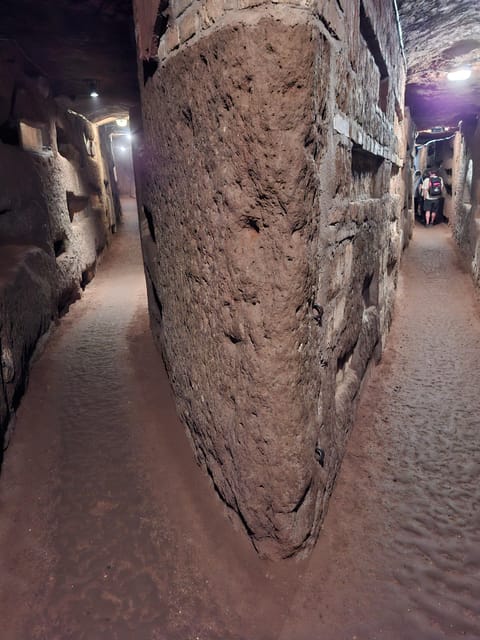
- San Domitilla has 17 kilometers of underground passages: The accessible route gives you only a short section, but it offers a clear look at the scale of the burial complex.
- The tour begins in the garden: Meet at the picnic tables beneath the gazebo after entering through the parking-lot gate.
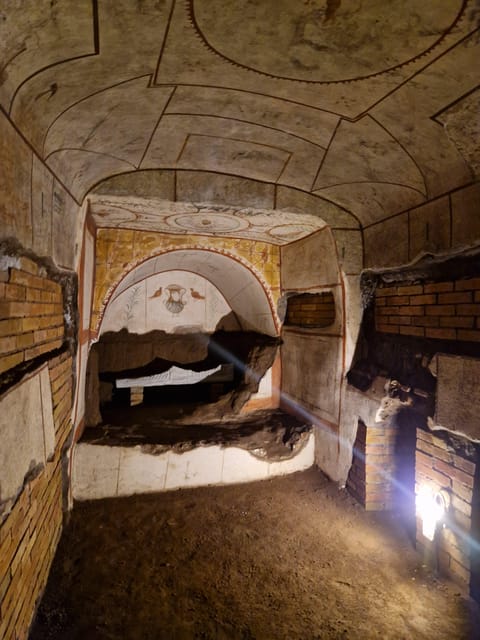
- The best art is early Christian art: Look for old frescoes linked to Saint Peter, Saint Paul, and the Last Supper.
- The Basilica of Nereus and Achilleus adds a major historical stop: You see the church built above the tombs of two martyrs.
- The guide makes a big difference: Mike, Pete, Heather, and John have all led praised visits, with humor and detailed explanations.
- The timing needs checking: The activity is sold as an express one-hour tour, but another timing field gives two hours, so verify the exact duration before you commit to a tight schedule.
Why San Domitilla is worth your time
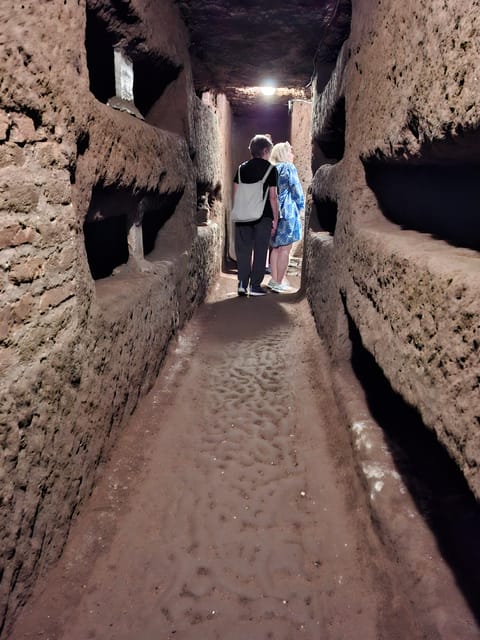
Rome gives you grand churches, marble monuments, and open-air ruins at every turn. The catacombs offer something quieter. Here, the important evidence is cut into the walls and tucked into narrow passages below ground.
San Domitilla is one of Rome’s major Christian burial sites. The complex spreads over four levels and about 17 kilometers of caves. You do not walk all of that, of course. The guided route gives you a manageable sample, with the guide pointing out tombs, burial customs, symbols, and artwork that would be easy to miss on your own.
I find the historical change especially useful. The tour explains how Roman burial practices developed and how early Christians used underground spaces for burial and worship. You also learn about Catholic life in Rome from roughly the second through the ninth centuries.
That context helps you read the site correctly. A wall covered with small niches is not simply an old tunnel. It reflects a practical burial system used by a community with limited space and changing religious customs. A painted Christian scene is not just decoration. It gives you a glimpse of the beliefs and visual language of an early community.
More Catacombs and Underground City Tours in Italy
- Rome: Capuchin Crypts and Catacombs Tour with Transfers
★ 4.6 · 6,456 reviews - The Original Roman Crypts and Catacombs Tour with Transfers
★ 4.5 · 4,896 reviews - Rome: Catacombs of St. Callixtus Entry Ticket & Guided Tour
★ 4.6 · 3,037 reviews
Meeting your guide in the garden
The meeting point is at Via delle Sette Chiese, 282. When you reach the parking lot, walk through the gate into the garden and look for the picnic tables beneath the gazebo. Your English-speaking guide meets you there.
This is a useful arrangement because the catacombs are not a place where you want to be rushing around looking for an office or ticket window. Still, arrive with enough time to find the gate and garden. The activity includes skip-the-line access, but that does not mean you can ignore the meeting instructions.
The guide names vary by departure. Mike is often praised for mixing clear explanations with jokes and even short quizzes. Pete is described as careful with small details, while Heather and John have also led engaging visits. One small-group departure became a private tour when only two people booked, and another last-minute booking also ran with a very small group.
That kind of flexibility can make the visit feel personal. It also means your exact style may depend on the guide working that day. All guides are expected to lead in English, and you should have a strong level of English to follow the historical explanation.
The garden briefing and the Roman transition
The visit may begin with about 30 minutes seated in the garden. This is not wasted time, but it is important to know what you are buying. If you want to get underground immediately, the express format may feel slower than expected.
The outdoor introduction sets up the main story: the change from ancient pagan Rome to Christian Rome. You learn about Roman burial rites, the role of underground tombs, and the place of the early Christian community within Imperial Rome.
I appreciate this approach because the catacombs can otherwise seem like a maze of dark corridors. Without an explanation, you may notice the atmosphere but miss the meaning of the tombs. The guide gives you a framework before you start walking.
The humor also helps. Mike is praised for using jokes, questions, and associations to make names and dates easier to remember. That matters in a place filled with unfamiliar saints, emperors, burial terms, and church history. A dry lecture would be hard to follow in a cool underground room. A lively guide can keep the information moving.
The Basilica of Nereus and Achilleus
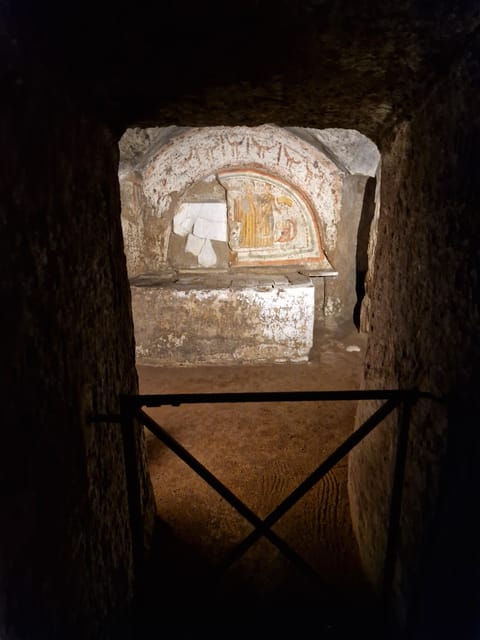
The tour includes entry to the Basilica of Nereus and Achilleus. The church was built at the end of the fourth century above the tombs of the two martyrs.
This stop gives you a sense of how Christian worship became more public and established. You are not only looking at hidden burial chambers. You are also seeing a church built above important Christian graves, linking the underground cemetery with the developing religious life of Rome.
The basilica is valuable for another reason. It breaks up the tunnel walk and gives you a larger architectural space in which to understand the site. The guide can connect the martyrs, the basilica, and the burial complex as parts of one story.
Modest clothing is recommended because this remains a sacred place. That is practical advice, not a suggestion to dress formally. Cover your shoulders and knees if possible, and remember that the setting is religious as well as archaeological.
More Catacombs and Underground City Tours in Rome
- Rome: Guided Roman Catacombs Tour with Transfers
★ 4.6 · 1,830 reviews - Rome: Catacombs Guided Tour with Transfer
★ 4.2 · 1,808 reviews - Rome EBike Tour: Appian Way, Catacombs & Roman Aqueducts
★ 5.0 · 1,766 reviews - Rome: Catacombs and Capuchin Crypt Guided Tour with Transfer
★ 4.6 · 1,606 reviews
Walking through the underground tombs
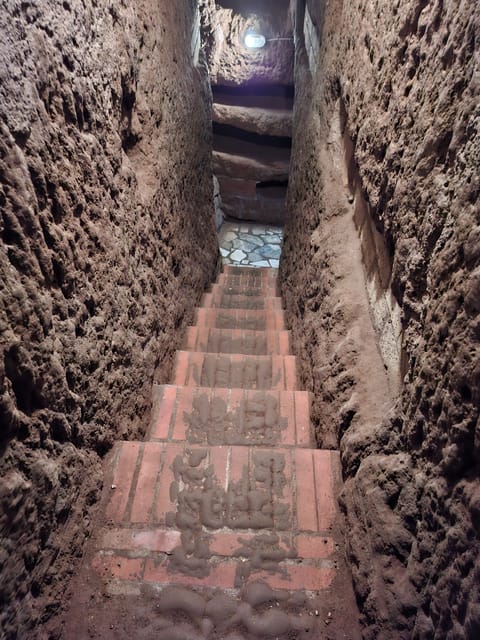
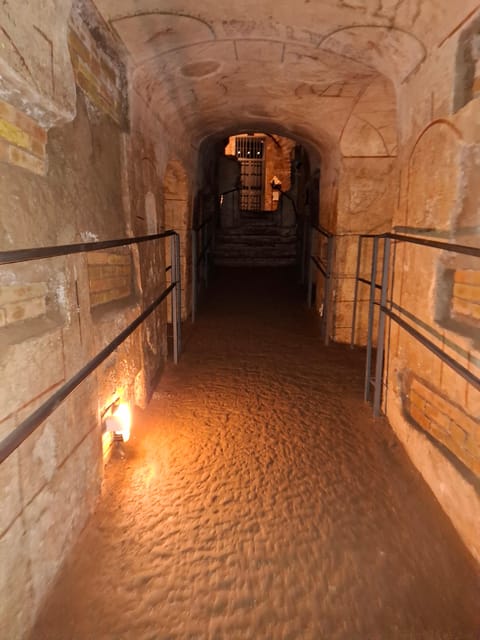
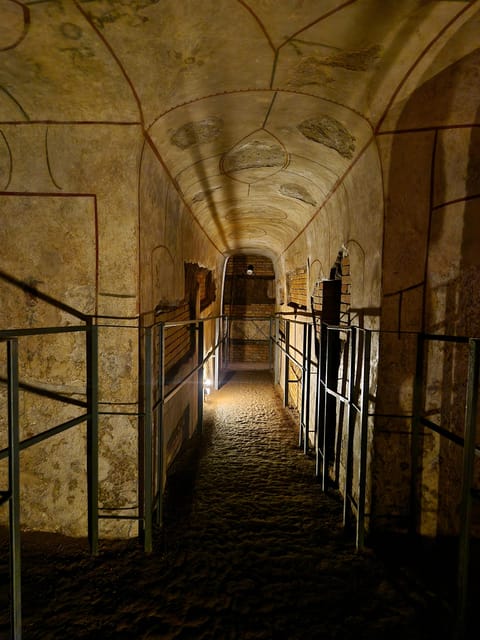
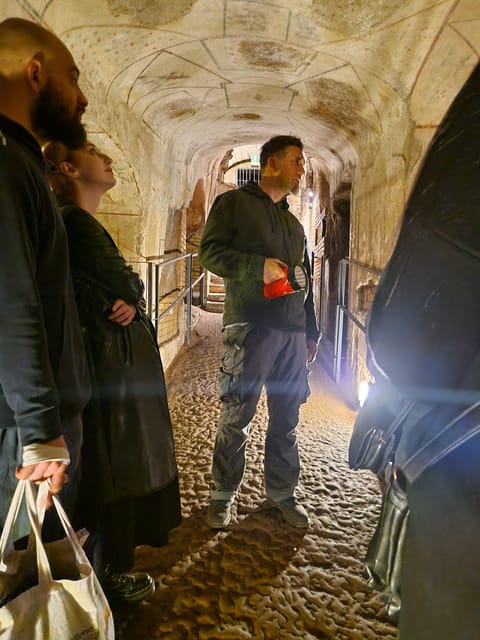
After the introduction and basilica, you go farther underground into the catacombs. San Domitilla is described as one of the best-preserved catacomb complexes in Rome, with passages arranged across four levels.
You should expect uneven surfaces and a cool temperature below ground. Comfortable shoes are essential. Bring a light jacket even in warm weather, since the tunnels are cooler than the surface.
The route is not designed as a dramatic haunted attraction. You see burial niches, passageways, and the structure of the cemetery itself. There are no skeletons, bones, or skulls on this visit. If your main goal is to see human remains, choose a different Roman site.
For me, the absence of bones is not a weakness. It keeps the focus on the people who created and used the cemetery, and on the beliefs expressed through the art. But you should know this before booking. The experience rewards patience and attention more than shock value.
The walking portion may last about 30 minutes on the express visit, according to the timing described for one departure. Since the activity information also gives a two-hour itinerary duration, check the exact schedule for your date. This matters if you are trying to connect the catacombs with the Appian Way, a museum, or a meal.
The frescoes of Saint Peter, Saint Paul, and the Last Supper
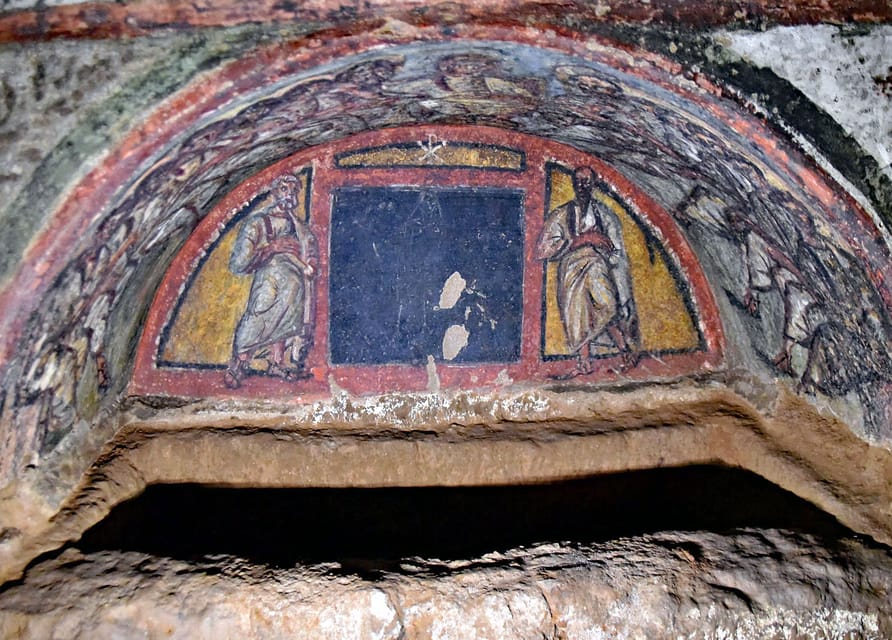
The oldest art is one of the strongest reasons to choose San Domitilla. The route includes frescoes depicting Saint Peter and Saint Paul, as well as an image of the Last Supper.
These paintings are not presented like polished museum pieces. They belong to an underground burial setting and have survived across many centuries. The appeal is seeing early Christian art where it was used, in connection with tombs and religious memory.
Your guide’s explanation is important here. In dim corridors, small details can be easy to overlook. A guide can point out a painted figure, explain its religious meaning, and connect it to the larger changes taking place in Rome.
Photography is not allowed inside the catacombs, and flash photography is specifically prohibited. Treat that as part of the experience. You will need to look carefully and remember what you see rather than trying to record every wall.
Price, group size, and what you receive
At about $37 per person, the tour is reasonably priced for a guided visit that includes skip-the-line access, entrance to the basilica, entrance to the catacombs, and a live English-speaking guide.
The value depends on how much background you want. If you only want a quick look at underground tunnels, the price may feel high for an express visit. If you want the burial customs and religious context explained in clear English, the guide is the main reason to pay for this format.
The small-group setup improves that value. You are more likely to hear the explanation, ask a question, and keep pace with the guide. On quieter dates, the group may be very small or even operate like a private tour. That is not guaranteed, but it has happened when only a few people booked.
Food, drinks, hotel pickup, and hotel drop-off are not included. You make your own way to the catacombs and return to the same place afterward. The location near the Appian Way lets you continue exploring once the tour ends, but you should plan that separately.
Free cancellation up to 24 hours before the visit and the reserve-now, pay-later option give you some useful flexibility. These policies are helpful in Rome, where weather, transport, and crowded attractions can disrupt a tightly packed day.
Who should book this catacomb tour
I would choose this experience if you like archaeology, early Christianity, Roman history, and places that require a little imagination. It suits adults and older children who can listen to a detailed explanation and walk on uneven ground.
Children under six cannot join. The tour is not suitable for wheelchair users or people with mobility impairments, and it should be avoided if you have claustrophobia. The tunnels are underground, cool, and enclosed, even though the visit is guided.
Families should think about the child’s interests. One guide-led visit worked well for children because the explanation included humor, but a young child who expects dramatic ruins or visible skeletons may be disappointed.
I would also skip this if you want a purely visual stop. The tour’s real strength is the story. You spend time seated for historical background, then walk through the burial complex while the guide explains what you are seeing.
Is the one-hour express tour right for you?
Book it if you want a focused introduction to Rome’s Christian catacombs and you value a good English explanation. The combination of the basilica, early frescoes, burial customs, and underground passages gives you more substance than a simple walk through a tunnel.
Before paying, confirm the exact duration. The activity is marketed as a one-hour express tour, while another description gives a two-hour guided itinerary. A detailed departure account describes roughly 30 minutes in the garden and 30 minutes underground, which fits the express label. Do not schedule a major attraction immediately afterward until you know your start and end time.
I would not book it for skeletons, easy walking, or a quick photo stop. I would book it for the chance to see an important part of Rome that most sightseeing routes leave out, especially if you enjoy guides such as Mike, Pete, Heather, or John who bring humor and detail to the history.
FAQ
Where does the tour meet?
Meet at the Catacombs of San Domitilla at Via delle Sette Chiese, 282. Enter through the gate from the parking lot and walk into the garden, where the English-speaking guide meets you at the picnic tables beneath the gazebo.
How long does the tour last?
The activity is presented as a one-hour express tour, but another timing description lists two hours. One detailed schedule describes about 30 minutes in the garden and 30 minutes underground. Confirm the exact duration and start time for your chosen date.
What language is the tour in?
The tour is conducted in English by a live, English-speaking guide. A strong level of English is recommended because the visit includes a detailed historical explanation.
What does the price include?
The price includes skip-the-line access, a small-group tour, an English-speaking guide, entry to the Basilica of Nereus and Achilleus, and entry to the catacombs.
Are hotel transfers included?
No. Hotel pickup and drop-off are not included, and you must make your own way to the meeting point.
Are food and drinks included?
No. Food and drinks are not included.
Are bones or skulls displayed?
No. The visit focuses on tombs, burial passages, architecture, and early Christian art. You should not expect to see skeletons, bones, or skulls.
Can I take photographs inside?
No. Photography is not allowed inside the catacombs, including flash photography.
What should I wear?
Wear comfortable shoes for uneven surfaces and bring a light jacket because the catacombs are cooler than the surface. Modest clothing is recommended because the site is sacred.
Is the tour suitable for children or wheelchair users?
Children under six cannot join. The tour is not suitable for wheelchair users or people with mobility impairments, and it may not suit people with claustrophobia.
Skip-the-line tickets within reach of Rome
- Rome: Catacombs Skip-the-Line Tour in English
★ 4.9 · 746 reviews - Skip the Line Chichen Itza Private Tour, Sacred Cenote & Lunch
★ 5.0 · 1,089 reviews - Cappadocia: Underground Cities Skip-the-Line Tour with Lunch
★ 4.6 · 142 reviews - Krakow: Rynek Underground Museum Skip-the-line Guided Tour
★ 4.7 · 138 reviews
Just added around Rome
- St. Peter’s Basilica Full Guided Tour with Vatican Grottoes★ 4.6 · 286 reviews
- St. Peter’s Basilica and Vatican Grottoes Tour★ 4.9 · 120 reviews
- Rome: St Peter’s Basilica Express Tour & Grottoes★ 4.3 · 126 reviews
- Rome: Tour of St. Clement’s Basilica Underground Temples★ 4.8 · 242 reviews
- Rome underground hidden temples, ruins, and secret basilicas★ 3.7 · 21 reviews
- Rome: Underground Trastevere Guided Walking Tour★ 4.8 · 87 reviews
- Rome: Appian Way, Aqueducts, & Catacombs E-Bike Guided Tour★ 4.9 · 54 reviews
- Rome: Trevi Fountain District Underground Tour and Ice Cream★ 4.5 · 356 reviews
Catacombs & Underground City Tours, compared.
Catacombs of San Gennaro Entry Ticket & Guided Tour
Read the review →
Capuchin Crypts and Catacombs Tour with Transfers
Read the review →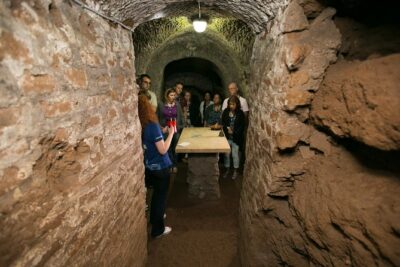
The Original Roman Crypts and Catacombs Tour with Transfers
Read the review →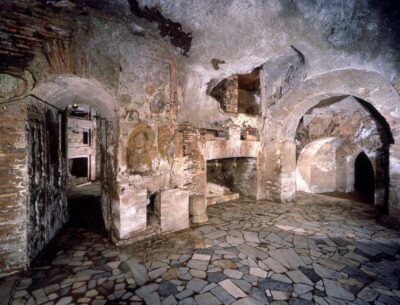
Catacombs of St. Callixtus Entry Ticket & Guided Tour
Read the review →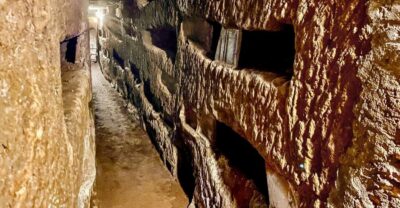


Rome EBike Tour: Appian Way, Catacombs & Roman Aqueducts
Read the review →