Review · CATACOMBS & UNDERGROUND CITY TOURS
Rome: Catacombs of Domitilla Entry Ticket & Guided Tour
The most striking part of the Catacombs of Domitilla is the contrast between the busy streets above and the cold, silent burial chambers below. This is not a polished museum attraction. It is a real underground cemetery, shaped over centuries by pagan families, Christian communities, and the burial of martyrs.
I like the small groups of up to 10 people, which give the guide room to answer questions. I also like the unusual blend of pagan and Christian art, plus the chance to see a basilica built inside the catacombs. The main drawback is the short 30-minute visit: Domitilla extends for about 16 kilometers, but only part of it is open to the public.
Key points to know
- Saints Nereus and Achilleus: Their tombs sit in a crypt later turned into a small basilica.
- Pagan and Christian art together: The frescoes show how the site changed from a pagan burial place into a Christian cemetery.
- Only part of the network is open: The vast catacomb system cannot be explored in full during this short visit.
- Small groups: Tours are limited to 10 participants, a useful size for questions and close listening.
- Guided in a choice of languages: Italian and English are listed, with German and Polish tours available on some dates.
- Bring comfortable clothing: Photography is not allowed, and the visit is not suitable for wheelchair users or people with mobility impairments.
A burial city beneath Via delle Sette Chiese
The Catacombs of Domitilla are on Via delle Sette Chiese, away from the most famous monuments in central Rome. That location matters. You are not simply entering a recreated exhibit. You are visiting one of the largest underground cemeteries in Rome, formed from actual burial grounds and expanded over many generations.
The site began on land connected with Flavia Domitilla, a woman related to the imperial family. According to the historical account presented here, she gave land to her freedmen. As a Christian, she was exiled by Emperor Domitian to the island of Ponza, where she died.
That story gives the catacombs an unusual social setting. The cemetery was linked not only with church leaders or wealthy patrons, but also with freed people and families who needed a place to bury their dead. As you walk below ground, the narrow passages and cut-stone chambers make the scale of that community easier to grasp.
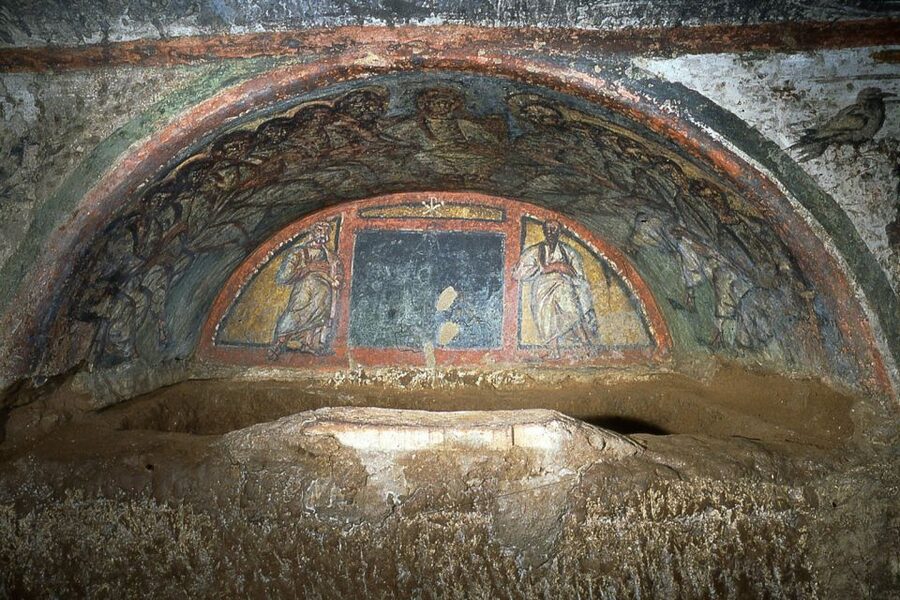
The catacomb has two main levels. One section, known as the Hypogeum of the Flavians, was identified by Giovanni Battista de Rossi as the possible burial place of Christian members of Flavia Domitilla’s family. The space was first a pagan hypogeum, dating from the late second or early third century, and later became Christian.
That change is one of the most useful things to watch for during the tour. The site is not a single, untouched Christian space. It records a gradual shift in belief and burial practice. Pagan and Christian elements exist within the same wider complex, giving you a more honest picture of ancient Rome than a simple story of one faith replacing another overnight.
More Catacombs and Underground City Tours in Italy
- Rome: Capuchin Crypts and Catacombs Tour with Transfers
★ 4.6 · 6,456 reviews - The Original Roman Crypts and Catacombs Tour with Transfers
★ 4.5 · 4,896 reviews - Rome: Catacombs of St. Callixtus Entry Ticket & Guided Tour
★ 4.6 · 3,037 reviews
What the 30-minute visit actually covers
A half-hour tour sounds brief, and it is. You will not walk through the entire 16-kilometer network. Instead, the guide leads you through a selected section of the accessible catacombs, focusing on the chambers, artwork, burial customs, and important Christian remains.
Expect the visit to move at a steady pace. The guide’s explanation is central because the catacombs are not filled with large signs or modern displays. Much of what you see is cut into the walls: corridors, burial spaces, small chambers, and traces of decoration. Without context, it can be hard to understand what makes one section important. With a good guide, the stone begins to tell a story.
The setting itself is part of the experience. The air is cold, the passages are enclosed, and the stone walls make the place feel quiet and serious. The atmosphere may strike you as chilling, but the visit is not designed as a ghost attraction. Its purpose is to explain how burial grounds worked and why these spaces mattered to early Christians.
Comfortable clothing is a sensible choice. The information provided does not specify the exact walking surface or temperature, so you should avoid dressing for a quick outdoor sightseeing stop. You will be underground, moving through an old cemetery, and the environment is more practical than polished.
Pagan frescoes beside Christian images
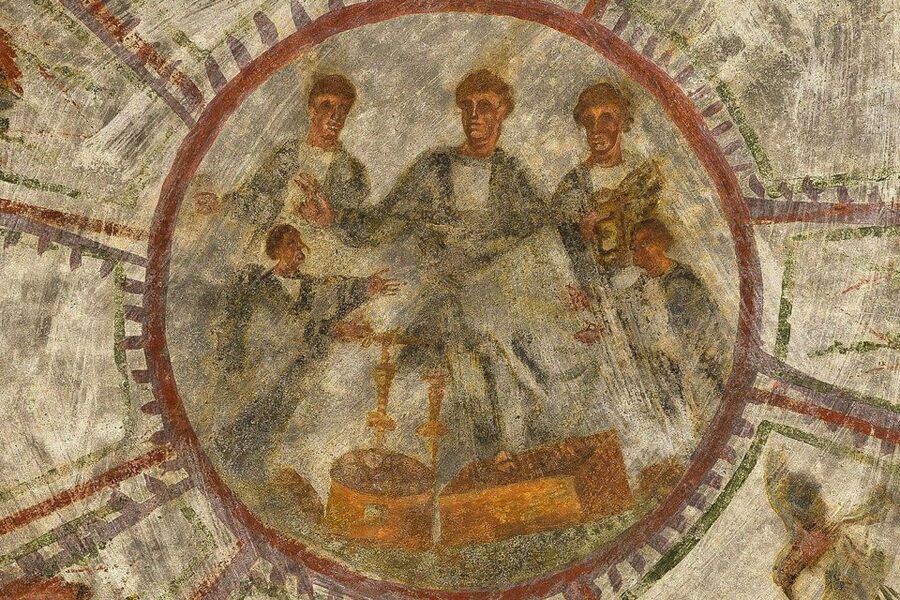
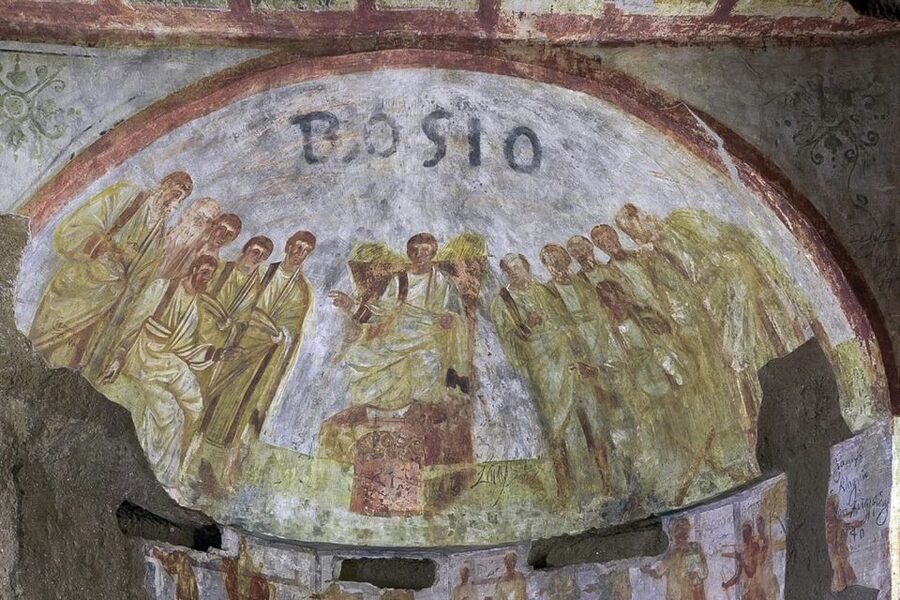
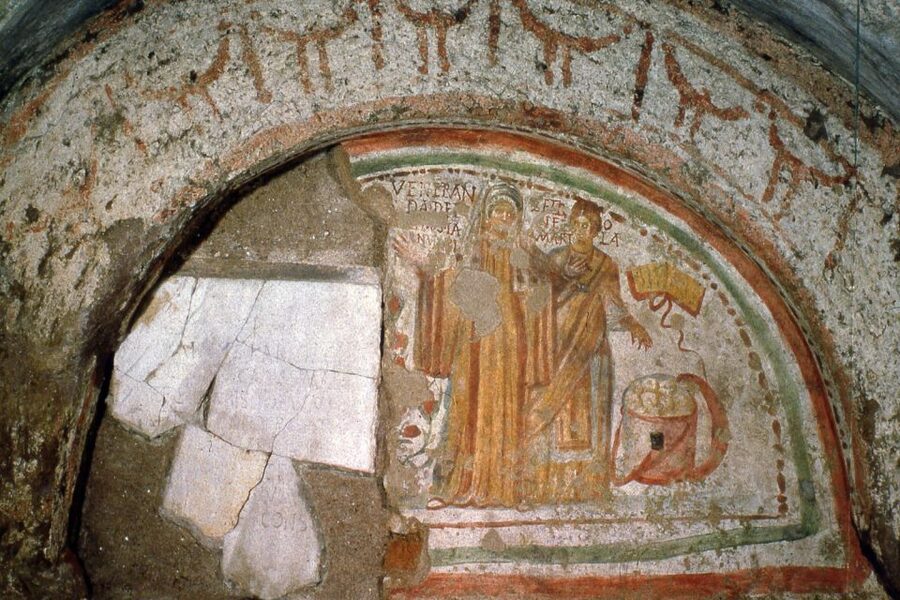
The art is one of Domitilla’s strongest features. The catacombs contain both pagan and Christian frescoes, an uncommon combination that reflects the site’s long development.
The pagan images help show what existed before some sections became Christian. The Christian frescoes then point to a new religious identity, but the artistic setting did not simply disappear. For you, that mixture makes the tour less predictable than a visit focused on a single period or style.
Your guide also explains the work involved in preserving the frescoes. This is a delicate restoration process, and the underground environment creates its own challenges. The value here is not just seeing old paint on stone. You gain a sense of why conservation must be careful, limited, and guided by the condition of the site.
Photography is not allowed inside. That rule may disappoint you, especially in a place where the details are easy to forget. One visitor specifically found that the lack of photographs made the memories fade. I think it is fair to treat this as a real drawback, not a minor footnote.
The best response is to slow down and pay attention while you are there. Listen for the guide’s explanation of a fresco rather than trying to document every wall. You will not leave with your own images, but you can leave with a clearer understanding of how the pagan and Christian layers fit together.
The crypt of Nereus and Achilleus
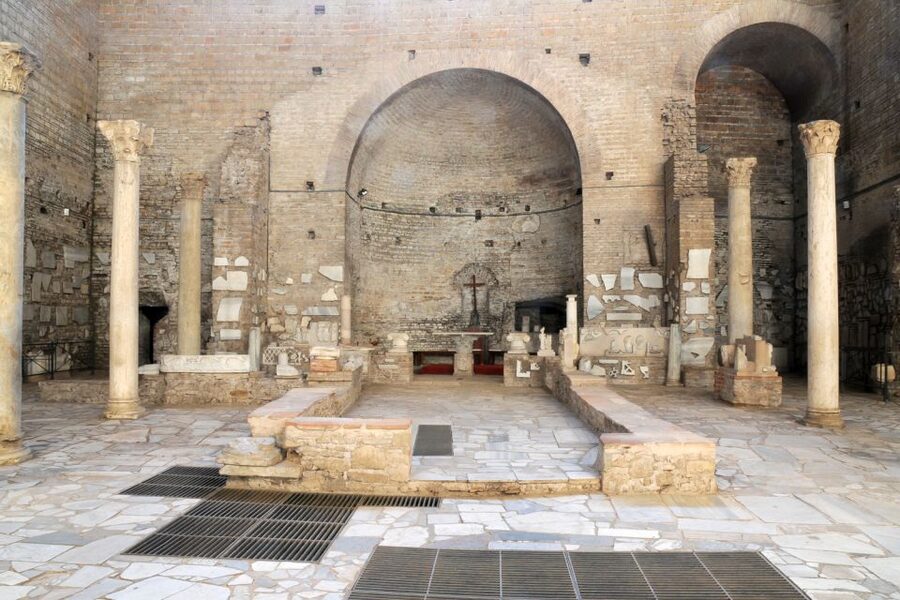
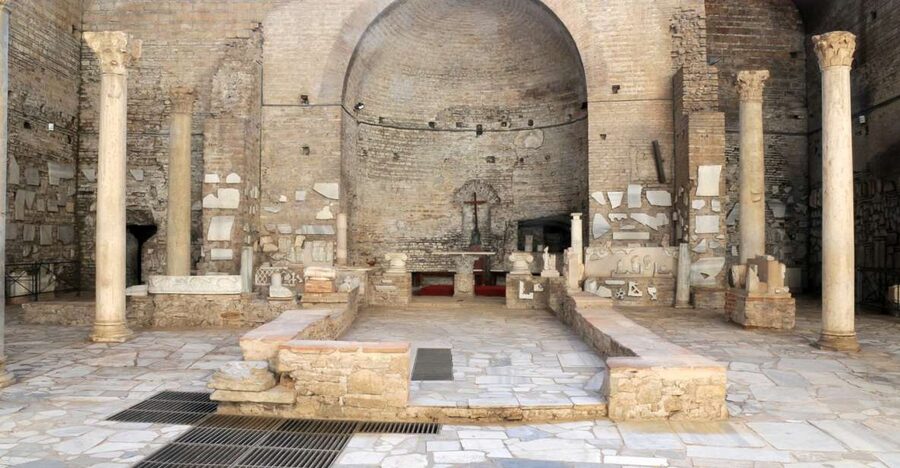
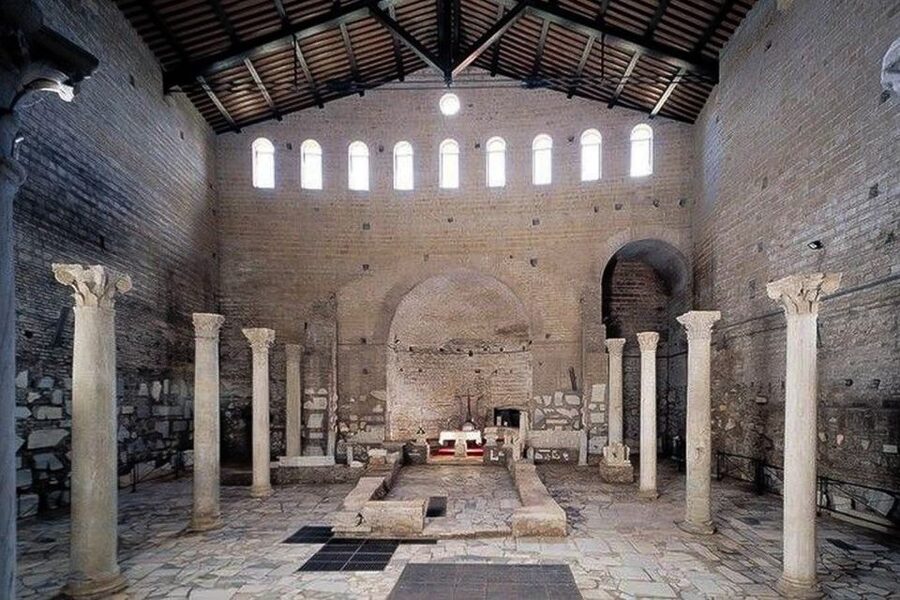
Near the end of the third century, the bodies of the Christian martyrs Nereus and Achilleus were placed in a crypt on the second level. Pope Damasus, who served from 366 to 384, transformed the crypt into a small basilica. Pope Siricius later enlarged it between 390 and 395, producing the form that remains today.
This is the part of the visit that gives Domitilla a strong sense of place. The basilica is not a separate church above ground. It was created inside the burial complex, where worship, memory, and burial were tied together.
The historical importance is matched by the physical setting. A basilica underground feels different from a freestanding church in Rome’s streets. The surrounding chambers remind you that this was both a place of worship and a cemetery connected with martyrs.
You should not expect the scale or decoration of St. Peter’s Basilica. The appeal is the opposite. This is a compact sacred space, shaped by the limits of the rock and the needs of an early Christian community. The guide helps connect the small room to the wider catacomb system and to the status of martyr tombs in Christian belief.
A tour that simply took you through dark corridors would lose much of Domitilla’s meaning. The basilica and the martyrs give the underground network a clear focus, so listen closely when the guide reaches this section.
More Catacombs and Underground City Tours in Rome
- Rome: Guided Roman Catacombs Tour with Transfers
★ 4.6 · 1,830 reviews - Rome: Catacombs Guided Tour with Transfer
★ 4.2 · 1,808 reviews - Rome EBike Tour: Appian Way, Catacombs & Roman Aqueducts
★ 5.0 · 1,766 reviews - Rome: Catacombs and Capuchin Crypt Guided Tour with Transfer
★ 4.6 · 1,606 reviews
Why a small group improves the visit
The group limit is 10 people. That is a practical advantage in narrow underground passages, where a large crowd could make it difficult to hear or see.
A small group also suits the subject. The catacombs reward questions about the frescoes, burial practices, the restoration work, and the history of the basilica. One recent guide named Andrea was praised for being friendly, professional, and passionate about history and art. Another visitor had a Polish-speaking guide who gave detailed answers and shared information with great energy.
The listed languages are Italian and English. Individual tours have also been conducted in German and Polish, but you should check the available language and time when booking rather than assume every departure offers all four.
The guide makes a major difference because the site can otherwise feel confusing. You need someone to explain the two levels, the changing use of the hypogeum, and the reason certain chambers matter. On a short visit, a clear explanation is more useful than a long wandering route.
The group size does not guarantee a private tour. Ten people is still a group, and you may not have time for every question. Still, it is small enough to hear the guide and keep the visit focused.
The $16 price and what you receive
At $16 per person, this is a reasonably priced way to visit a major underground site. The entrance fee and guide are included, so you are paying for both access and interpretation rather than an entry ticket alone.
The value depends on what you want from Rome. If you are looking for a long tour with many rooms, this will feel limited because the scheduled visit lasts only 30 minutes. If you want a short, focused look at an unusual part of Roman history, the price is easier to justify.
The catacombs are not as simple to understand as an open-air monument. The important details are in the structure, the burial layers, and the history attached to specific rooms. A guide adds real value here, especially when explaining the connection between the Hypogeum of the Flavians, the martyrs, and the later basilica.
Flexible booking also helps. You can reserve now and pay later, and cancellation is allowed up to 24 hours before the tour for a full refund. Those terms are useful if your Rome schedule is still shifting, though they do not solve the practical need to reach the meeting point on time.
Getting to the ticket office on time
You should go directly to the catacomb ticket office and show your reservation at least 10 minutes before the scheduled departure. Do not treat this as a casual arrival at a large attraction where you can find the entrance at the last moment.
One visitor found that reaching the site by bus and train at the assigned time was not possible. That is a warning to check your route carefully and allow extra time. The meeting point is the ticket office at the catacombs, not a central Rome meeting point.
Because the tour lasts only 30 minutes, arriving late can have a bigger effect than it would on a long day tour. You may miss part of the explanation or disrupt a small group already inside. Plan the transfer before the day of the visit, especially if you are relying on public transport.
Who should choose this catacomb tour
I would choose this tour if you like archaeology, early Christianity, Roman burial customs, or places that feel different from the standard city-center route. The mixture of pagan and Christian frescoes gives it more depth than a simple walk through empty tunnels.
It is also a good fit if you prefer a short activity. At 30 minutes, Domitilla can fit into a day that already includes churches, museums, and outdoor sights. The $16 price keeps the commitment modest, and the small group makes the guide’s explanation easier to follow.
You should think twice if you need step-free access or have a mobility impairment. The experience is not suitable for wheelchair users or people with mobility impairments. Photography is also prohibited, so it may frustrate you if taking pictures is a major part of how you remember a place.
The tour is less suitable if you expect to explore all 16 kilometers. You will see only the section open to visitors during the guided route. That limitation is normal for a protected underground cemetery, but it is important to understand before you book.
Should you book the Catacombs of Domitilla?
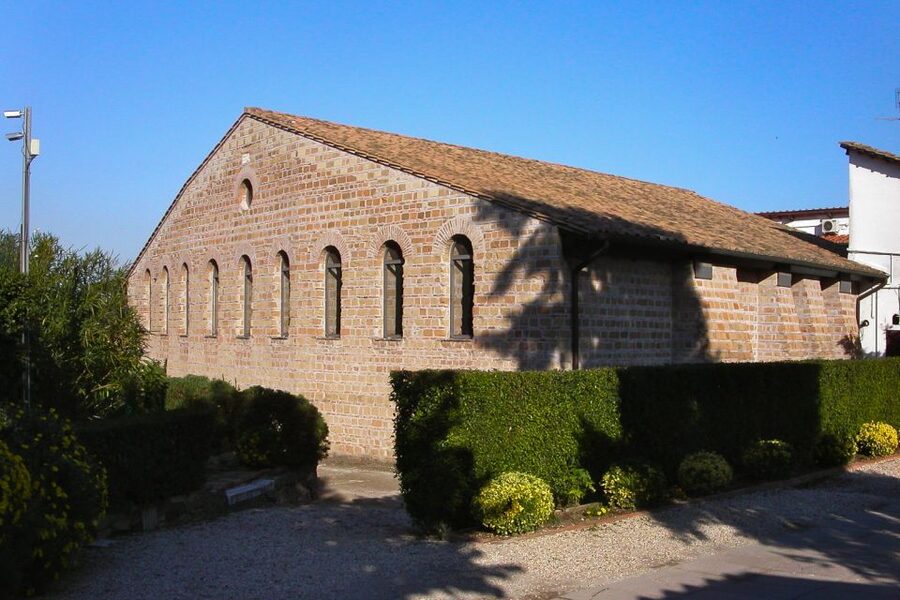
Book it if you want an intimate look at Rome’s early Christian world and you are comfortable with a short, guided visit underground. The basilica connected with Nereus and Achilleus, the mixed pagan and Christian frescoes, and the story of the catacomb’s changing use make this more than a walk through dark corridors.
Skip it if you need accessible facilities, want to take photographs, or prefer a longer tour with a broad range of rooms. For the right visitor, the $16 cost is fair because it combines admission with a guide who can make a complex site understandable. Arrive early, check the language, and think of the visit as a focused historical stop rather than a full exploration of Rome’s underground network.
FAQ
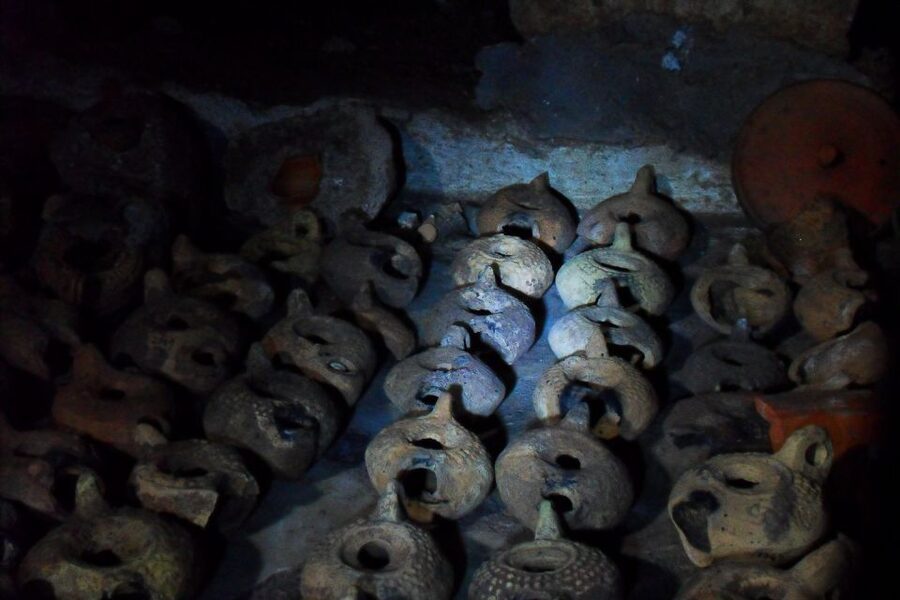
Where are the Catacombs of Domitilla located?
They are located on Via delle Sette Chiese in Lazio, Italy.
How long does the guided tour last?
The scheduled tour lasts 30 minutes.
What is included in the ticket?
The tour guide and entrance fee are included.
Which languages are available?
The listed tour languages are Italian and English. German and Polish tours have also been available on individual dates, so check the specific departure when booking.
How large is the tour group?
The group is limited to 10 participants.
Can I take photographs inside?
No. Photography is not allowed inside the catacombs.
Is the tour suitable for wheelchair users?
No. The experience is not suitable for wheelchair users or people with mobility impairments.
Where should I meet the guide?
Go directly to the ticket office of the Catacombs of Domitilla and show your reservation at least 10 minutes before the scheduled tour.
Just added around Rome
- St. Peter’s Basilica and Vatican Grottoes Tour★ 4.9 · 120 reviews
- St. Peter’s Basilica Full Guided Tour with Vatican Grottoes★ 4.6 · 286 reviews
- Rome: St Peter’s Basilica Express Tour & Grottoes★ 4.3 · 126 reviews
- Rome: Tour of St. Clement’s Basilica Underground Temples★ 4.8 · 242 reviews
- Rome underground hidden temples, ruins, and secret basilicas★ 3.7 · 21 reviews
- Rome: Underground Trastevere Guided Walking Tour★ 4.8 · 87 reviews
- Rome: Appian Way, Aqueducts, & Catacombs E-Bike Guided Tour★ 4.9 · 54 reviews
- Rome: Trevi Fountain District Underground Tour and Ice Cream★ 4.5 · 356 reviews
Catacombs & Underground City Tours, compared.
Catacombs of San Gennaro Entry Ticket & Guided Tour
Read the review →
Capuchin Crypts and Catacombs Tour with Transfers
Read the review →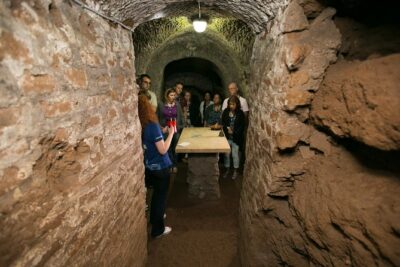
The Original Roman Crypts and Catacombs Tour with Transfers
Read the review →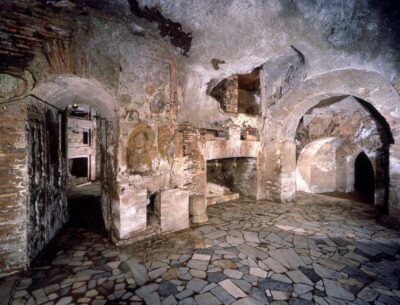
Catacombs of St. Callixtus Entry Ticket & Guided Tour
Read the review →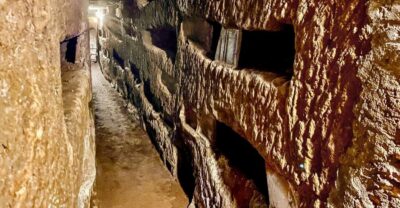


Rome EBike Tour: Appian Way, Catacombs & Roman Aqueducts
Read the review →