Review · CATACOMBS & UNDERGROUND CITY TOURS
Rome: Catacombs of Priscilla Entry Ticket & Guided Tour
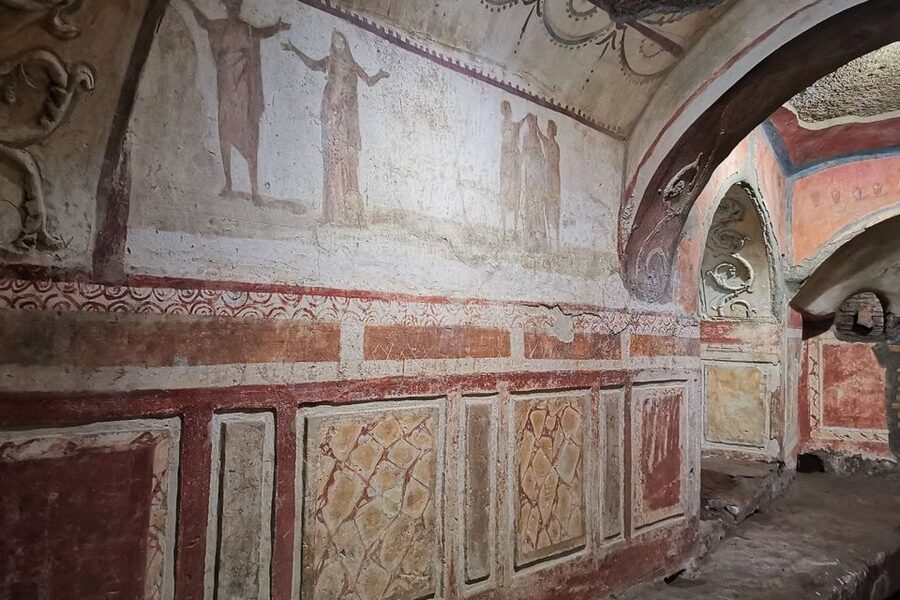
The most striking thing here is not a grand Roman monument, but the quiet world below Via Salaria. The Catacombs of Priscilla hold narrow galleries, old burial niches, and Christian paintings made roughly 1,700 years ago. You get a close look at how an early Christian community honored its dead.
I like the small groups of up to 10 and the guide-led explanation, which gives meaning to otherwise dark corridors. I also like the 45-minute length: long enough to see the important areas, short enough for a cool break from Rome’s heat without feeling trapped underground. The main drawback is that the visit is brief, and the catacombs are outside the main ancient center, so you need to plan transport.
Key points to know before booking
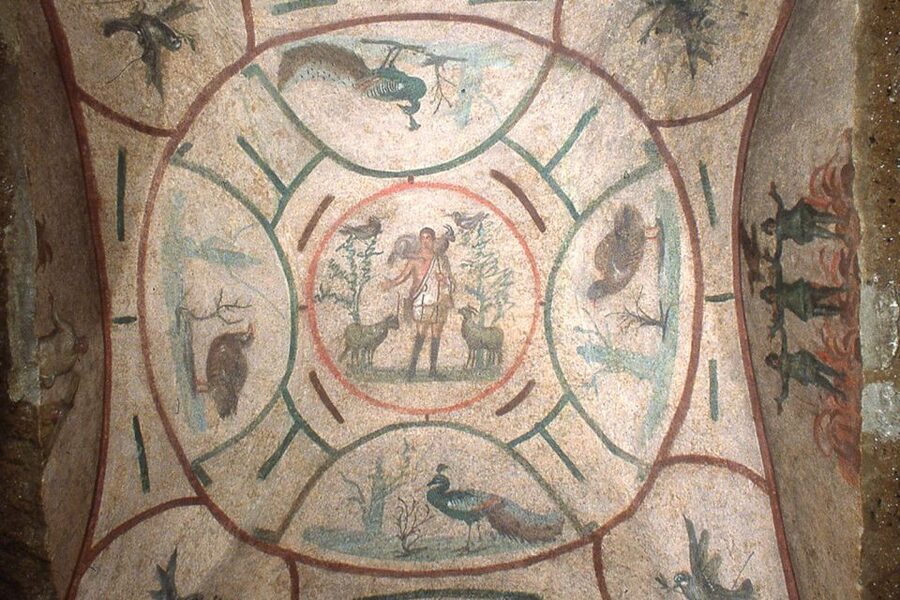
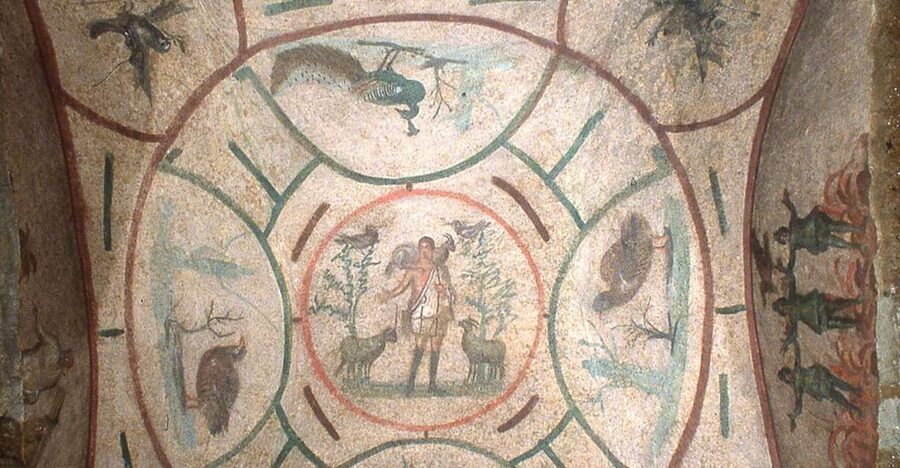
- Ancient Christian art: See some of Rome’s oldest Christian paintings, including the image of Mary and Jesus often highlighted as one of the earliest known examples.
- Two underground levels: The catacomb began as an abandoned sand quarry and later developed into burial galleries, family tombs, and connected chambers.
- A serious historical site: The catacombs are still being studied, and the visit feels more like a working archaeological place than a polished theme attraction.
- Short, focused tour: The scheduled visit lasts 45 minutes, with some tours running longer when the guide has extra time for questions.
- English, Italian, and Spanish: Guides have included Sister Lydia, Lidia, Alexandra, and Clara, depending on the departure.
- Plan for the setting: Strollers are not allowed, photography is forbidden inside, and the underground paths are not suitable for people with mobility impairments.
Why Priscilla offers a different side of Rome
Rome gives you the Colosseum, the Trevi Fountain, and the Vatican. Those places are essential, but they also bring crowds, queues, and plenty of noise. Priscilla gives you something quieter and more personal: a look at how ordinary members of an early Christian community buried their dead and expressed their beliefs.
The catacomb is on Via Salaria, north of the historic center. It is not a monument you simply stumble across while walking between major sights. That distance is part of the appeal, but it also affects your day. Allow time to reach the site, and do not schedule the tour too tightly between central Rome attractions.
You will meet at the catacomb ticket office, not at a hotel or central departure point. Show your reservation at least 10 minutes before the scheduled start. Transportation and hotel pickup are not included. A bus is a practical option, and the site has also been described as reachable on foot from central areas, though the walk may not suit every itinerary.
More Catacombs and Underground City Tours in Italy
- Rome: Capuchin Crypts and Catacombs Tour with Transfers
★ 4.6 · 6,456 reviews - The Original Roman Crypts and Catacombs Tour with Transfers
★ 4.5 · 4,896 reviews - Rome: Catacombs of St. Callixtus Entry Ticket & Guided Tour
★ 4.6 · 3,037 reviews
From abandoned quarry to Christian burial place
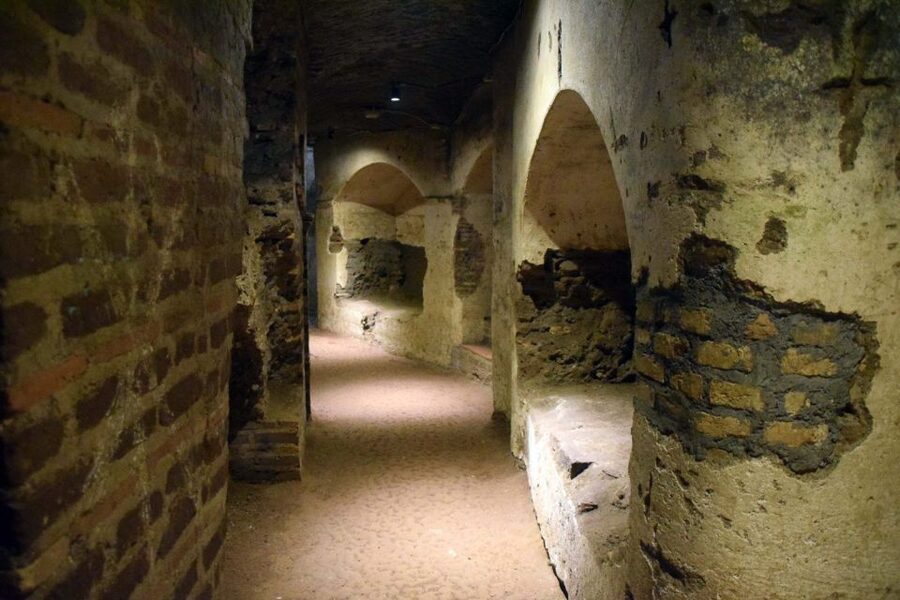
Priscilla did not begin as a purpose-built Christian cemetery. The underground area was first an arenarium, a place connected with extracting sand, then it was abandoned. Christians began adapting its large, uneven galleries around the start of the third century.
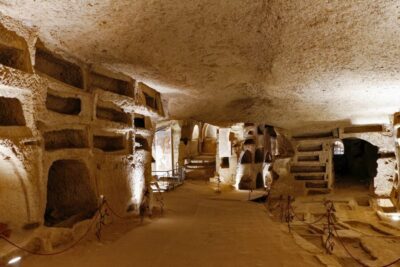
That origin helps explain why the catacomb does not feel like a neat underground grid. The passageways vary in shape, and the spaces were altered over time. Along the first floor, Christians built about 20 larger niche tombs and cut hundreds of smaller burial spaces into the walls.
Your guide helps you read these features rather than simply walk past them. Without explanation, a wall full of openings can look repetitive. With context, each niche becomes evidence of a community making use of an existing underground place, adding burial spaces as its needs grew.
The name Priscilla probably comes from a woman of the Acili senatorial family. Her name appears in an inscription found in the hypogeum of the Acili, another important area connected with the site. This link gives the catacomb a useful connection to Rome’s upper social ranks, even as the galleries also tell the story of a wider Christian community.
What you see during the 45-minute visit
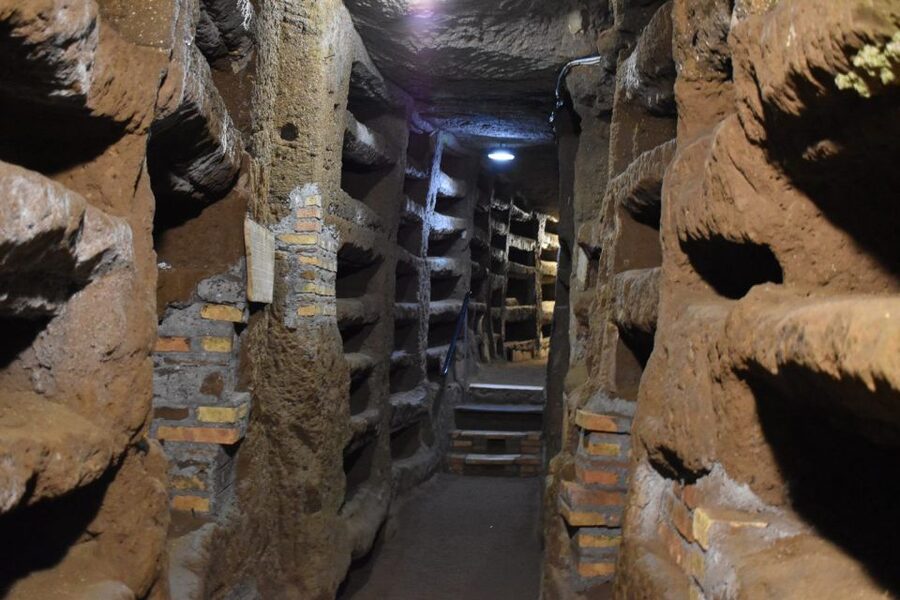
The route focuses on the accessible, important areas rather than attempting to cover every section of this extensive underground complex. You move through galleries and burial spaces while the guide explains the architecture, customs, and beliefs connected with them.
Expect close quarters in places. The corridors can feel narrow, and a group of 10 is much easier to manage than a large crowd. The guide generally needs to pause at specific points so everyone can see a painting, inscription, or tomb feature. One benefit of the small format is that you can usually ask questions without losing the thread of the tour.
The scheduled time is 45 minutes. That is a sensible length for most people. One person found the experience short but wished it had continued, while another appreciated not spending more than 45 minutes in an underground cemetery. Some guides have added extra time for questions, but you should treat the listed duration as the reliable plan.
The tombs are empty today. The bodies were moved, so you are looking at burial chambers and memorial spaces rather than human remains. That may matter to you if you expect an active crypt with bones. The historical value is in the spaces, inscriptions, art, and evidence of burial practice.
The Greek Chapel and the Acili family hypogeum
One adjacent section includes a cryptoporticus, the Greek Chapel, and a larger underground room that began as a noble family burial area. It was later connected with the catacomb.
The Greek Chapel is among the places where the guide can show how early Christian decoration and ritual developed in an underground setting. The point is not simply to admire painted walls. You are seeing religious images created in a period when Christian communities were still forming their public identity within the Roman world.
The hypogeum of the Acili has another story. It began as a water cistern, and inscriptions connected with the Acili family were found there. Those inscriptions are now displayed inside the site. This is a good reminder that underground Roman spaces were often reused and adapted. A chamber that served one practical purpose could later become a family tomb and then part of a larger burial complex.
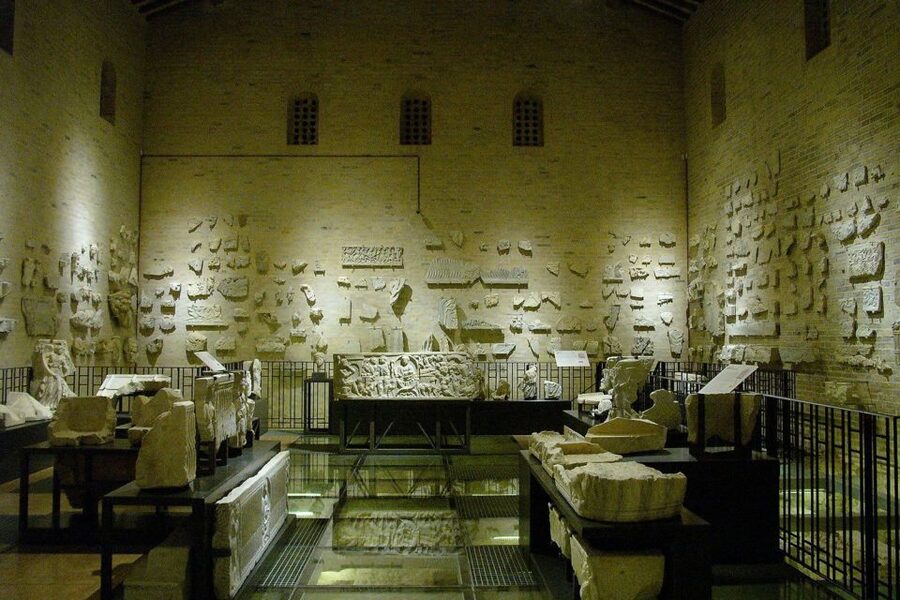
You will not see every item associated with the catacomb during this short tour. A museum near the basilica contains hundreds of sarcophagus fragments found during excavations in the area. The basilica itself, inside Villa Ada, was built by Pope Saint Sylvester over the tomb associated with Felice and Filippo. These nearby features add context, but they are not the main 45-minute underground route.
More Catacombs and Underground City Tours in Rome
- Rome: Guided Roman Catacombs Tour with Transfers
★ 4.6 · 1,830 reviews - Rome: Catacombs Guided Tour with Transfer
★ 4.2 · 1,808 reviews - Rome EBike Tour: Appian Way, Catacombs & Roman Aqueducts
★ 5.0 · 1,766 reviews - Rome: Catacombs and Capuchin Crypt Guided Tour with Transfer
★ 4.6 · 1,606 reviews
Frescoes that make the visit worthwhile
The art is the chief reason I would choose Priscilla over a more general underground tour. Several paintings date to the early Christian period, and the preserved images give you something direct to look at rather than a lecture made up of dates and names.
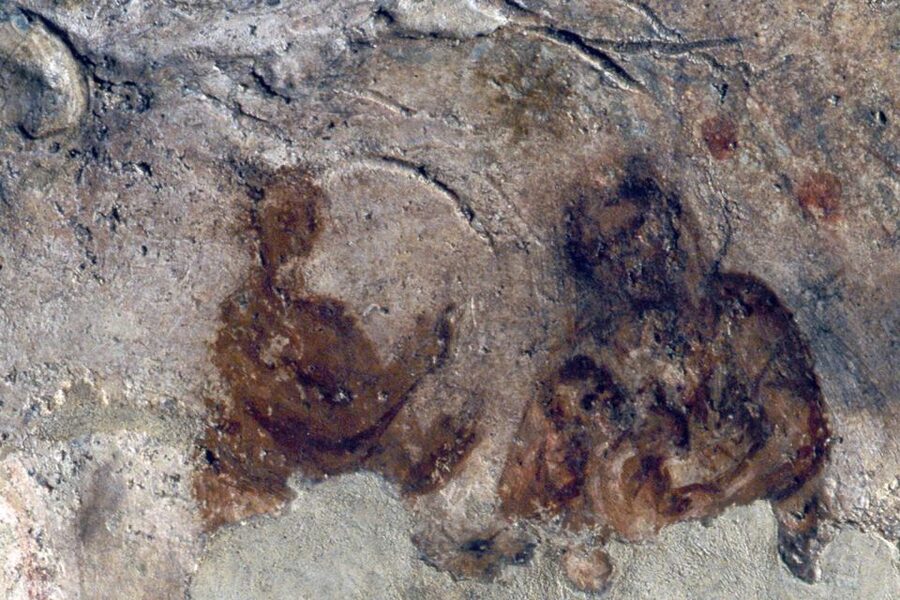
A famous image of Mary with the infant Jesus is a highlight for many visitors. It is often presented as the oldest known depiction of the Virgin Mary and Child. The catacomb also contains early Christian frescoes associated with the period around 240 to 280 AD, according to the information shared during the experience.
The paintings have survived for centuries in protected underground conditions, though you should not expect bright, newly restored color. Their importance comes from their age and subject matter. A guide can point out how the images reflect Christian beliefs, burial customs, and the way early communities remembered the dead.
Photography is not allowed inside. That can be disappointing, especially when you see art you would like to study later. Postcard reproductions have been available at the site, including inexpensive prints of some artwork. Bring your attention rather than your camera, and listen closely while the guide explains what you are seeing.
Martyrs and seven buried popes
Priscilla is linked with several early Christian martyrs. The brothers Felice and Filippo were reportedly killed, probably under Diocletian, along with their mother, Saint Felicita, and five other brothers: Alessandro, Marziale, Vitale, Silano, and Gennaro.
The story adds a human dimension to the corridors. You are not only looking at anonymous holes in a wall. You are learning how particular people and families became part of Christian memory.
Several popes were also buried at Priscilla: Marcellino, Marcello, Silvestro, Liberius, Siricius, Celestino, and Vigilius. Their dates range from the late third century to the sixth century. A guide can help you place these burials within the changing history of Christianity in Rome.
Do not expect a large visible collection of papal tombs. The burial spaces are not presented like a grand church interior, and the remains are no longer there. The interest lies in the site’s role and in the stories tied to it.
The guides shape the experience
This is a guide-dependent visit. The corridors themselves are atmospheric, but the facts can blur together without a clear explanation. The strongest tours use the art and architecture to explain early Christian life rather than simply recite names and dates.
Guides have included Sister Lydia, also referred to as Lidia, as well as Alexandra and Clara. Sister Lydia has been praised for combining archaeology, Christian faith, kindness, and humor. Alexandra has been noted for explaining the paintings clearly, while Clara has been described as patient with questions and willing to add extra time.
The listed languages are English, Italian, and Spanish. English delivery can vary by guide, so if precise historical explanation matters greatly to you, keep your expectations practical. The overall experience has been especially well suited to guides who invite questions and make sure everyone can see the features in the narrow passages.
The small group limit of 10 matters here. It reduces crowding and gives you a better chance to hear the guide. It also means the group may need to stop often so everyone can gather around a particular wall or chamber.
Price, timing, and who gets good value
At $16 per person, this is one of the more affordable guided history experiences in Rome. The ticket covers entry and the guided tour, but not transportation. I consider the price fair if you care about ancient history, Christian art, archaeology, or unusual Roman sites.
The value comes from interpretation. You could enter an underground space and see walls and niches, but the guide explains why the galleries exist, who was buried there, and what the paintings mean. That makes the ticket more useful than simple admission.
The tour works well after you have seen the standard Roman sights. It gives you a different pace and a different kind of evidence. It is also a practical summer choice because the underground temperature is cooler than the streets, though you should bring a light layer since the chambers can feel chilly.
I would recommend it most strongly to adults, older children, and teenagers who can listen and handle a serious subject. Two teenagers aged 15 and 18 found the visit engaging, and the short duration helps families avoid a long, tiring museum stop.
Practical limits to keep in mind
The catacombs are not suitable for people with mobility impairments. Baby strollers are not allowed. The narrow, underground setting can also be uncomfortable if you dislike enclosed spaces, although no medical or accessibility details beyond these restrictions are provided.
The location requires planning. Some people find it walkable from the center, while others see it as a trip away from old Rome. A bus can be a cheap and timely way to reach Via Salaria. Check your route before leaving, and arrive at the ticket office at least 10 minutes early.
Do not count on taking pictures. The no-photography rule protects the site, but it also means you should pay attention to the guide’s descriptions. If you want a visual reminder, ask about the postcard prints available at the site.
Free cancellation is available up to 24 hours before the scheduled tour for a full refund. That gives you some flexibility if your Rome plans change, but it does not remove the need to arrive on time.
Should you book the Catacombs of Priscilla?
Book it if you want ancient Rome beyond the famous monuments. The best reasons are the early Christian frescoes, the Mary and Jesus image, the unusual burial galleries, and the chance to hear the site explained by a guide who knows both its archaeology and religious meaning.
Skip it if you want a grand, visually packed attraction or dislike dark, narrow underground spaces. There is not a dramatic final reveal, and the 45-minute route covers a limited part of a much larger complex.
For $16, I think Priscilla is a strong choice for a first catacomb visit, especially after the Colosseum and Vatican. Go with modest expectations, allow time for the ride out, and you will get a thoughtful look at Rome’s early Christian communities rather than another crowded checklist sight.
FAQ
Where are the Catacombs of Priscilla?
They are located on Via Salaria in Rome, in the Lazio region of Italy.
How long does the guided tour last?
The scheduled tour lasts 45 minutes. Some guides may spend additional time answering questions, but the listed duration is 45 minutes.
What is included in the price?
The $16 price includes the entrance ticket and guided tour of the Catacombs of Priscilla.
Which languages are available?
Guided tours are available in Italian, English, and Spanish.
How large is the group?
The tour is limited to 10 participants.
Is transportation included?
No. Hotel pickup, hotel drop-off, and transportation to the catacombs are not included.
Can I take photographs inside?
No. Photography is not allowed inside the catacombs. Postcard prints of the artwork may be available at the site.
Is the tour suitable for people with mobility impairments or baby strollers?
No. The experience is not suitable for people with mobility impairments, and baby strollers are not allowed.
Just added around Rome
- St. Peter’s Basilica and Vatican Grottoes Tour★ 4.9 · 120 reviews
- St. Peter’s Basilica Full Guided Tour with Vatican Grottoes★ 4.6 · 286 reviews
- Rome: St Peter’s Basilica Express Tour & Grottoes★ 4.3 · 126 reviews
- Rome: Tour of St. Clement’s Basilica Underground Temples★ 4.8 · 242 reviews
- Rome underground hidden temples, ruins, and secret basilicas★ 3.7 · 21 reviews
- Rome: Underground Trastevere Guided Walking Tour★ 4.8 · 87 reviews
- Rome: Appian Way, Aqueducts, & Catacombs E-Bike Guided Tour★ 4.9 · 54 reviews
- Rome: Trevi Fountain District Underground Tour and Ice Cream★ 4.5 · 356 reviews
Catacombs & Underground City Tours, compared.
Catacombs of San Gennaro Entry Ticket & Guided Tour
Read the review →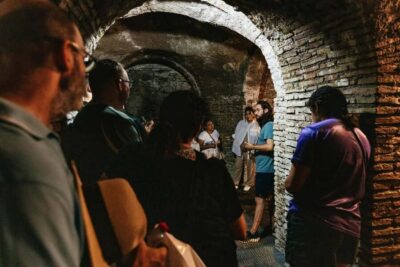
Capuchin Crypts and Catacombs Tour with Transfers
Read the review →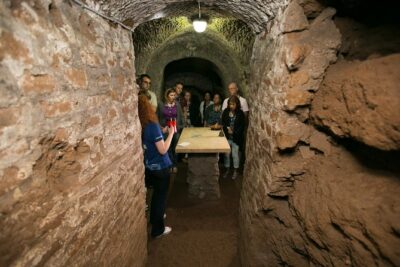
The Original Roman Crypts and Catacombs Tour with Transfers
Read the review →
Catacombs of St. Callixtus Entry Ticket & Guided Tour
Read the review →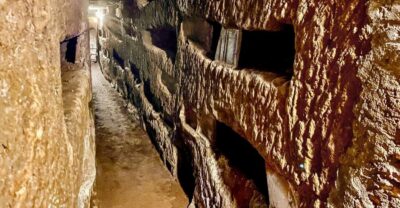


Rome EBike Tour: Appian Way, Catacombs & Roman Aqueducts
Read the review →