Review · CATACOMBS & UNDERGROUND CITY TOURS
Rome: Catacombs Skip-the-Line Tour in English
Rome’s ancient world is not only above ground. Beneath the city’s southern edge, the Catacombs of San Domitilla lead you into a quieter, stranger chapter of Roman life, with narrow passages, burial chambers, and some of the earliest Christian art still visible in Rome. The tour also puts Roman burial customs and the rise of Christianity into a wider story.
I like two things especially: the small-group attention and the way the guides build a timeline instead of merely pointing at walls. Guides including Sean, Mike, Divan, Peter, and Heather are praised for strong storytelling, humor, and clear answers to questions. The skip-the-line ticket is another practical plus.
The main consideration is that this is not a casual sightseeing stop. You need comfortable shoes, a jacket, weather-appropriate clothing, and a strong level of English. Photography is not allowed inside, and the underground setting is not suitable for wheelchair users.
Key points to know before you book
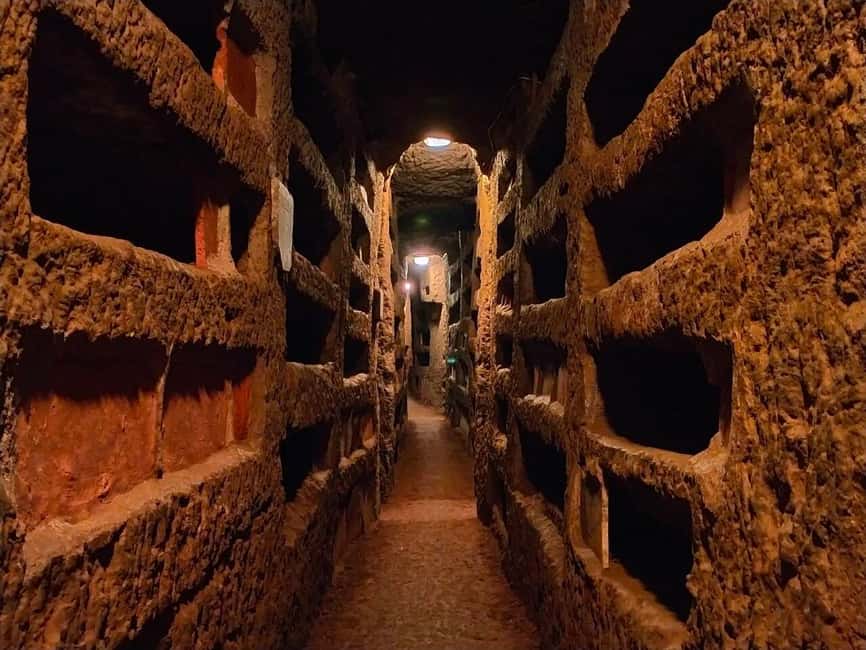
- San Domitilla is one of Rome’s largest catacomb systems: You enter part of a tunnel network said to extend for more than 180 miles beneath the city and its outskirts.
- The tour connects pagan Rome to Christian Rome: Burial rites, persecution, art, and changing religious customs are explained as part of one story.
- You see the tombs of Nereus and Achilleus: These are among the most important named burial sites included on the route.
- The guide makes a major difference: Sean, Mike, Divan, Peter, Heather, and other English-speaking guides are praised for humor, energy, and well-structured explanations.
- The tour lasts two hours: That is long enough for context and questions, but short enough to fit into a busy Rome day.
- You have free time by the Appian Way afterward: Transfers are not included, so plan how you will reach the meeting point and continue your day.
Why San Domitilla adds a different side of Rome
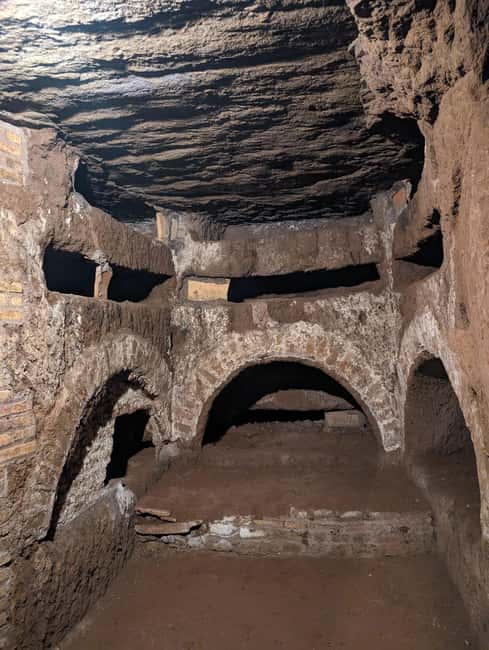
Most first visits to Rome focus on grand public monuments: the Colosseum, the Roman Forum, the Pantheon, and the Vatican. San Domitilla offers something more private and subdued. Instead of looking at temples, arches, and palaces, you see how ordinary Roman society dealt with death, memory, and belief.
The catacombs were underground burial places outside Rome’s city walls. Here, the setting helps explain the practical and religious choices made by ancient communities. The tour focuses on the transition from pagan religious customs to early Christian practice, so the tunnels are not treated as a collection of spooky corridors. They become a way to understand how Roman society changed.
That context matters. Without it, the catacombs can feel like a short walk through dark passageways. With it, the walls, inscriptions, burial areas, and early Christian images have a clearer purpose. You learn how beliefs about death and burial fit into the larger story of Rome.
The scale is also striking. The experience introduces you to a small portion of an underground network described as stretching more than 180 miles. You will not see that entire system, of course, but the idea gives the visit a useful sense of proportion. These are not isolated crypts. They are part of a vast underground world created over generations.
More Catacombs and Underground City Tours in Italy
- Rome: Capuchin Crypts and Catacombs Tour with Transfers
★ 4.6 · 6,456 reviews - The Original Roman Crypts and Catacombs Tour with Transfers
★ 4.5 · 4,896 reviews - Rome: Catacombs of St. Callixtus Entry Ticket & Guided Tour
★ 4.6 · 3,037 reviews
Meeting at Via delle Sette Chiese
The tour begins at Via delle Sette Chiese, 282. Look for the meeting area in the garden, near the picnic tables and the white gazebo or umbrellas. This is a useful detail because the meeting point is not described simply as a museum entrance or a major landmark.
Take a moment to find the group before the start time. The tour does not include transfer, so you are responsible for getting to the meeting point and returning from it. Build in enough time to arrive calmly, especially if you are coming from central Rome.
The location also places you near the Appian Way area, one of Rome’s historic roads. The listed plan includes free time by the Appian Way after the catacomb visit, but the supplied details do not specify transport or the length of that free period. Treat it as an opportunity to continue exploring rather than as a fully guided second stop.
Entering the Catacombs of San Domitilla
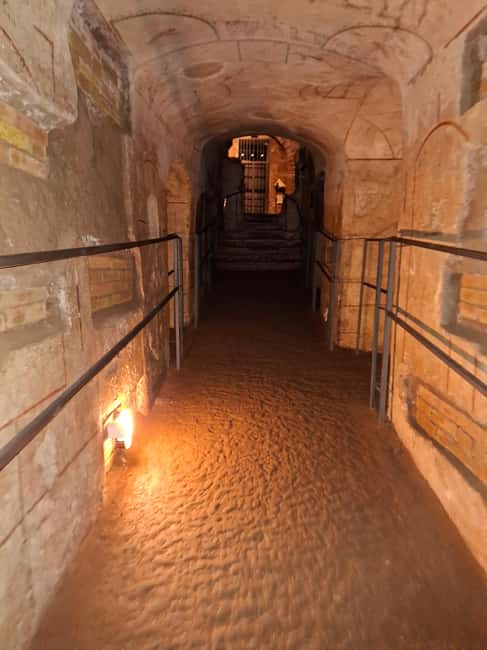
The central part of the experience is a guided visit lasting about two hours. Your guide leads you below ground and explains the burial spaces, the tunnels, and the historical changes that shaped them.
The phrase skip the line has real value here because the ticket is included. You do not have to sort out admission separately at the entrance, and you can focus on meeting the guide and joining the group. It does not mean every part of the visit is rushed or that you bypass the guided experience. It simply removes one small layer of waiting and ticket handling.
The passages are the main physical experience. You might find the underground setting narrow, dim, and solemn, so this is best approached as a historic site rather than an entertainment attraction. The jacket recommendation is sensible, even when Rome is warm above ground. Comfortable shoes also matter because the visit takes place on foot.
The guide helps you understand what you are seeing. Expect explanations of burial rites and rituals, the reasons catacombs developed outside the city walls, and the way early Christians lived and worshipped within Roman society. The story also includes religious persecution and the gradual movement toward a Christian Roman world.
Photography is not allowed inside. That may disappoint anyone hoping to record the artwork or tunnel walls, but it also helps keep the visit quiet and respectful. Go in ready to look carefully and listen rather than manage a camera.
The tombs of Nereus and Achilleus
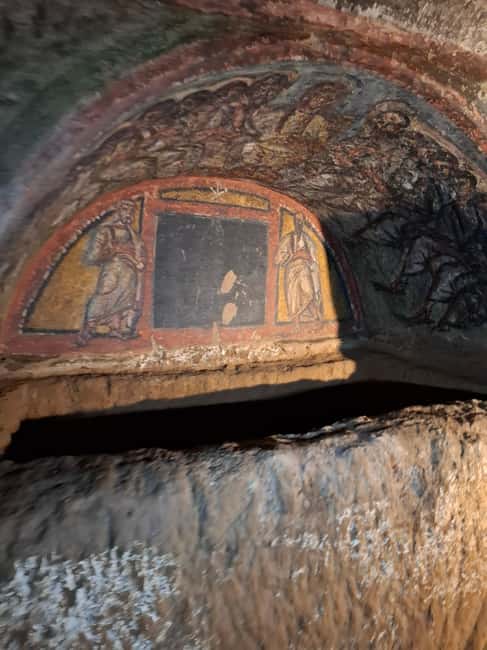
A key feature of the visit is the tombs of Nereus and Achilleus. Their names give the guide a concrete way to connect the site to people, traditions, and early Christian memory.
Named tombs can make an underground burial site feel less anonymous. Instead of thinking only in terms of carved chambers and corridors, you begin to see the catacombs as a place connected to particular figures and religious traditions. The guide’s explanation is important here because the meaning of the tombs is not always obvious from the stonework alone.
This is also where a strong guide can turn a short stop into a memorable one. Several guides praised for this experience use stories and humor to keep the group involved, while still respecting the serious nature of the site. Divan, for example, is repeatedly described as passionate and good at making history feel like a story. Sean is praised for building a vivid picture of Roman life, and Mike for mixing detailed explanations with a light touch.
Guide assignments can vary, so you should not book expecting a specific person. Still, the repeated praise for guides such as Divan, Sean, Mike, Peter, Heather, Andy, and Alan suggests that the experience depends heavily on the quality of the individual leading your group.
More Catacombs and Underground City Tours in Rome
- Rome: Guided Roman Catacombs Tour with Transfers
★ 4.6 · 1,830 reviews - Rome: Catacombs Guided Tour with Transfer
★ 4.2 · 1,808 reviews - Rome EBike Tour: Appian Way, Catacombs & Roman Aqueducts
★ 5.0 · 1,766 reviews - Rome: Catacombs and Capuchin Crypt Guided Tour with Transfer
★ 4.6 · 1,606 reviews
Early Christian art underground
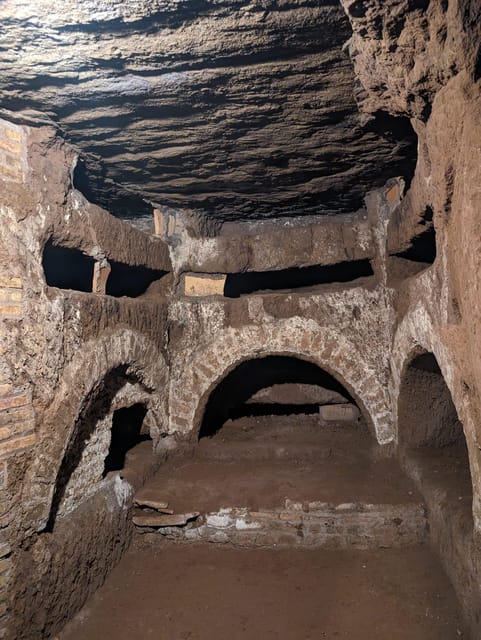
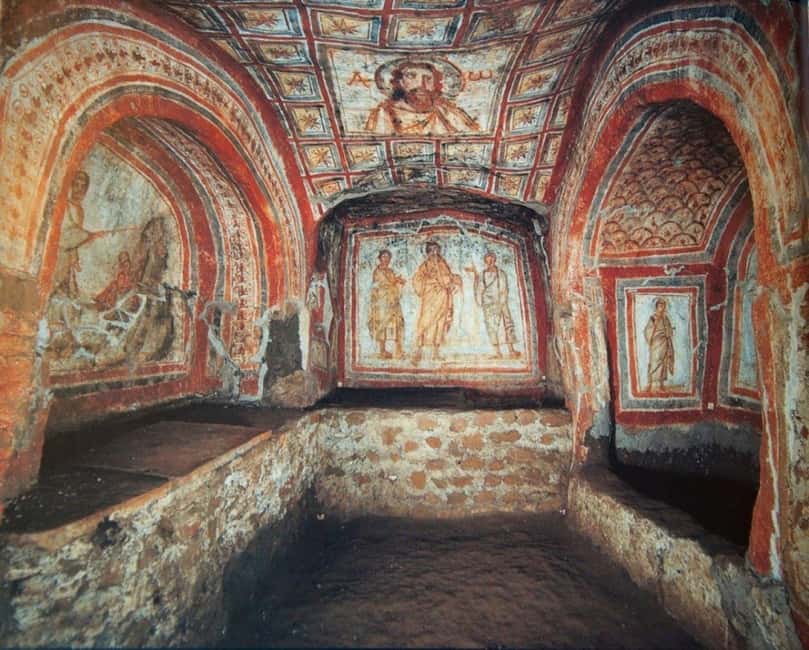
The catacombs contain some of the earliest Christian artworks available to see in Rome. This is one of the strongest reasons to choose San Domitilla if you want more than an underground walk.
The art is valuable because it shows how early Christians expressed belief before Christian Rome became the dominant public identity of the empire. The guide places the images within the changing religious setting, helping you see them as part of a developing tradition rather than as isolated decorations.
You should not expect the bright, polished spectacle of a major church interior. The attraction here is age, setting, and meaning. The artwork is viewed in the same underground environment where early Christian burial and memory took place.
The ban on photography means you will need to pay attention in the moment. I find that a useful discipline at sites like this. You are less likely to hurry through an image while trying to frame a picture, and more likely to remember the guide’s explanation of what you are seeing.
How the guides shape the experience
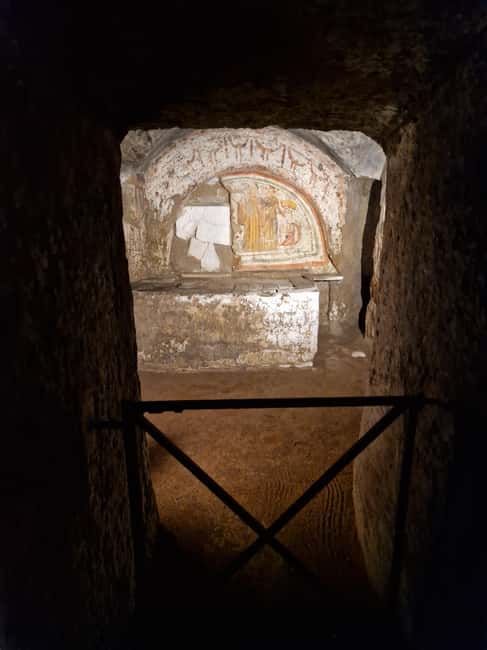
The strongest pattern in the feedback is the guide’s role. The tour is not built around a self-guided audio route. It depends on an English-speaking person explaining the site, answering questions, and connecting individual details to the wider history of Rome.
The descriptions of Sean, Mike, Divan, Peter, Heather, and others point to three useful qualities: clear English, strong command of the subject, and an ability to keep the group engaged. Several guides use humor, including jokes and informal storytelling, but the better comments also note that the tone remains respectful in a burial site.
You should be ready for a history-focused tour. The provider specifies that a strong level of English is needed, and that is worth taking seriously. The subject includes religious change, ancient customs, persecution, and Roman society. If you are comfortable listening to a detailed English explanation for two hours, you will get much more from the visit.
Questions are welcome. The guides are praised for making room for them, and the small-group format makes that easier than it would be in a large crowd. If you prefer to move silently at your own pace, this may feel more structured than you want. If you like a good story and want the site explained, the format works well.
The Appian Way after the underground visit
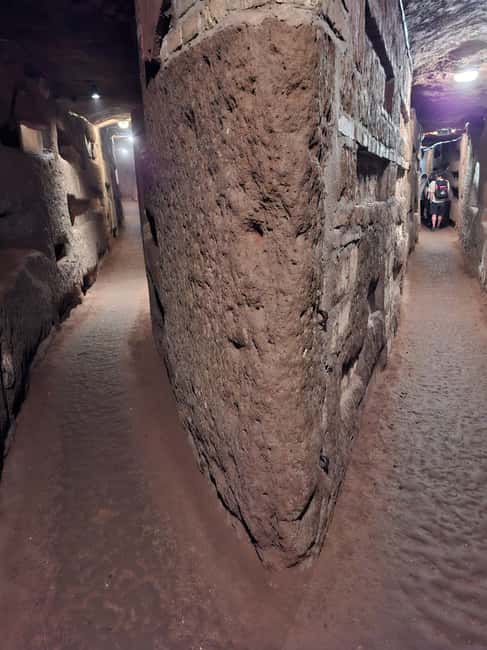
The listed itinerary includes free time at the Appian Way after the guided catacomb visit. This gives you a chance to remain in the same historic area rather than immediately returning to central Rome.
Keep your expectations clear. The catacombs portion is the guided activity. The Appian Way time is listed as free time, and no transfer is included. You should check the practical details for your chosen departure time and decide how you will continue afterward.
The combination works well for a half-day plan because the underground visit gives you focused interpretation, while the outdoor time lets you pause and take in the setting at your own pace. The supplied information does not promise a guided walk along the Appian Way, so do not assume that a second full tour is included.
Is $56 a fair price?
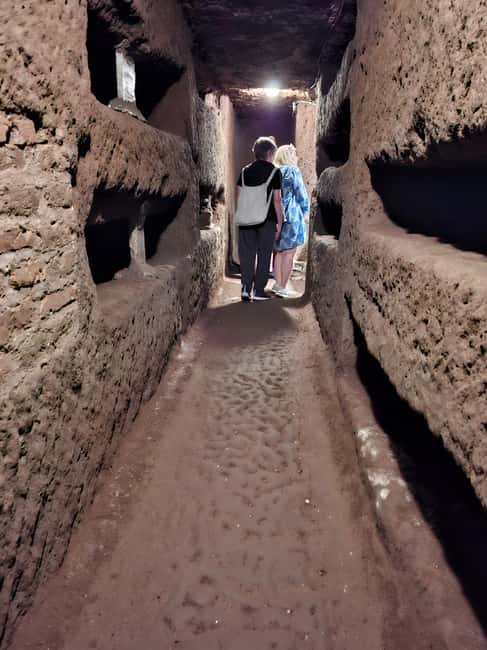
At $56 per person, the price is reasonable if you value a guide who adds substantial historical context. Your ticket and English-speaking guide are included, and the skip-the-line arrangement saves you from handling admission separately.
The value is less about the number of tunnels you see and more about understanding them. A self-guided visit could show you the same general underground setting, but it would not necessarily explain the shift from pagan burial customs to Christian practices, the role of persecution, or the importance of the early artwork.
The two-hour length also helps the price make sense. It is a focused experience rather than an all-day commitment. You can place it alongside other Rome sights without giving up an entire day, then use the Appian Way free time to continue your own plans.
The price does not cover transfer. If you are staying in central Rome, include the cost and time of reaching Via delle Sette Chiese, 282 in your plans. That is the main extra logistical factor.
Who will enjoy this tour most
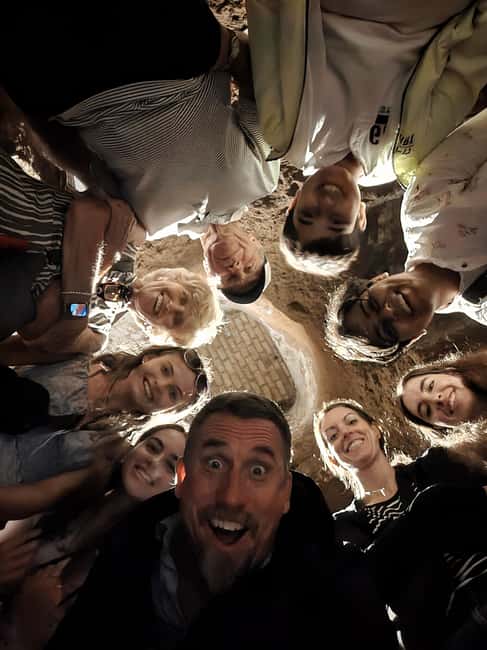
I would choose this experience if you have already seen some of Rome’s famous above-ground monuments and want a less familiar side of the city. It is also a strong choice for anyone interested in early Christianity, Roman burial practices, archaeology, or the way religious customs change over time.
Families can enjoy it if children are comfortable with a dark underground setting and a history-heavy explanation. One particularly enthusiastic account describes a 15-month-old accompanying the group, but that does not mean every young child will find the tunnels easy. Parents should consider the setting, walking, and no-photography rule.
The tour also suits people who normally dislike large guided groups. The format is described as small-group or private, and one group was as small as seven people. Group size can vary, but the structure is intended to allow more direct attention than a mass tour.
I would hesitate if you use a wheelchair, since the activity is not suitable for wheelchair users. I would also think twice if you want a relaxed outdoor stroll, a photographic outing, or a tour in a language other than English.
Wear comfortable shoes and bring a jacket. Arrive at the garden meeting point near the picnic tables and white gazebo or umbrellas. Since cancellation is free up to 24 hours before the activity and payment can be made later, you have some useful flexibility when arranging a Rome itinerary.
Should you book the San Domitilla catacombs tour?
Book it if you want Rome explained through its underground burial world rather than only through famous monuments. The combination of included admission, a two-hour English tour, early Christian art, the tombs of Nereus and Achilleus, and time near the Appian Way gives you a focused and unusual addition to a Rome visit.
I would make this a priority for history lovers and for anyone who values a guide’s storytelling. The repeated praise for Divan, Sean, Mike, Peter, Heather, and other guides is important because their role shapes the experience.
Skip it if you need full accessibility, dislike confined spaces, or prefer to explore without a set explanation. For the right person, though, San Domitilla offers a serious, atmospheric look at how Romans buried their dead and how the city moved from pagan traditions toward Christianity.
FAQ
Where does the tour meet?
The meeting point is at Via delle Sette Chiese, 282. Meet in the garden at the picnic tables near the white gazebo or umbrellas.
How long does the tour last?
The activity lasts about two hours. You should check the available starting times when booking.
What is included in the price?
The price includes the skip-the-line ticket and an English-speaking guide.
Is transportation included?
No. Transfer is not included, so you need to arrange your own transportation to the meeting point and afterward.
Is the tour conducted in English?
Yes. The tour includes a live English-speaking guide, and a strong level of English is recommended.
Can I take photographs inside the catacombs?
No. Photography is not allowed inside.
What should I bring?
Bring comfortable shoes, a jacket, and clothing suited to the weather.
Is the tour suitable for wheelchair users?
No. The activity is not suitable for wheelchair users.
Skip-the-line tickets within reach of Rome
- Skip the Line Chichen Itza Private Tour, Sacred Cenote & Lunch
★ 5.0 · 1,089 reviews - Chichen Itza skip the line – Cenote – Izamal from Valladolid
★ 5.0 · 97 reviews
Just added around Rome
- Private Guided Tour of Colosseum Underground OR Arena and Forum★ 5.0 · 111 reviews
- Private Tour of Catacombs and Ancient Appian Way (hotel pick up)★ 4.5 · 120 reviews
- Hidden Gems & Rome Catacomb Semi Private Tour by golf cart★ 5.0 · 114 reviews
- Ancient Rome and Colosseum Private Tour with Underground Chambers and Arena★ 4.5 · 184 reviews
- Rome Catacombs & Capuchin Crypts VIP Group Tour with Transfers★ 4.5 · 652 reviews
- Rome: Appian Way & Catacomb Sunset E-bike Tour with Aperitif★ 4.5 · 682 reviews
- Rome: Catacombs of St. Sebastian Entry Ticket & Guided Tour★ 4.6 · 669 reviews
- Rome Catacomb & Appian Way Small-Group Tour by Golf Cart★ 5.0 · 681 reviews
Catacombs & Underground City Tours, compared.
Catacombs of San Gennaro Entry Ticket & Guided Tour
Read the review →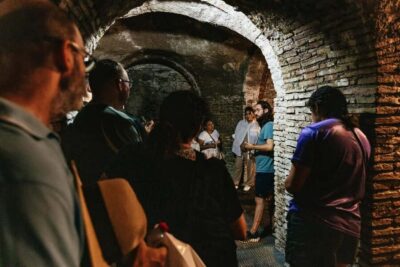
Capuchin Crypts and Catacombs Tour with Transfers
Read the review →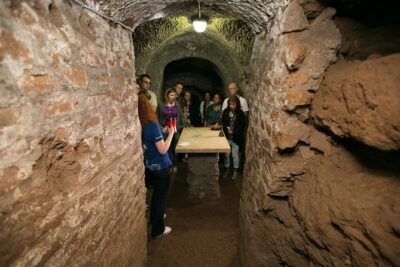
The Original Roman Crypts and Catacombs Tour with Transfers
Read the review →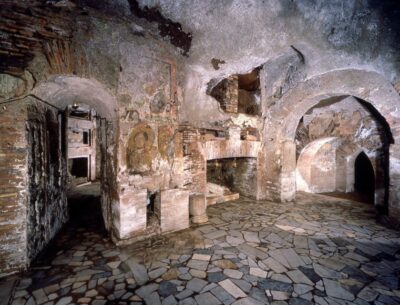
Catacombs of St. Callixtus Entry Ticket & Guided Tour
Read the review →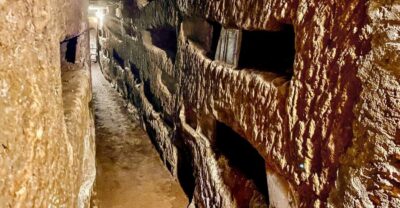


Rome EBike Tour: Appian Way, Catacombs & Roman Aqueducts
Read the review →