
Review · CATACOMBS & UNDERGROUND CITY TOURS
Montreal: Discover Reso – The Underground City
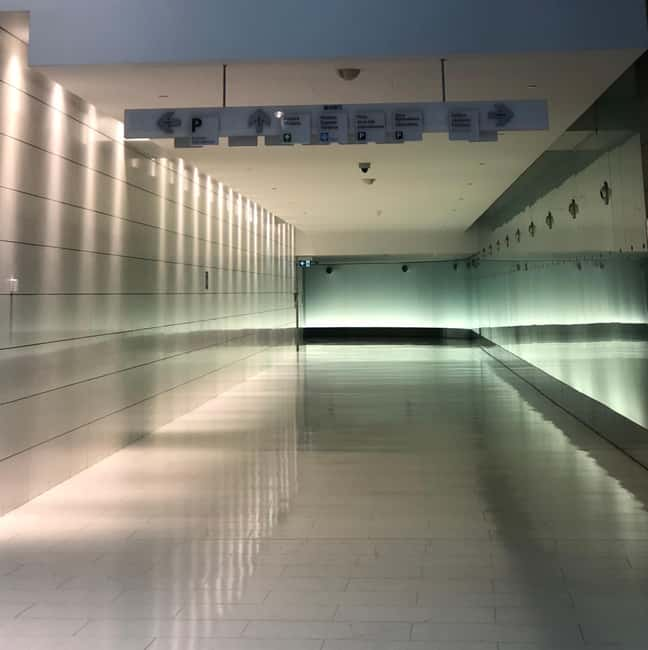
Montreal’s RESO is not one underground hallway. It is a sprawling indoor network linking shopping centers, office towers, restaurants, hotels, transit stations, art displays, and public spaces across downtown. A tour with Misha, a Montreal native, gives you the map, the stories, and the confidence to use it instead of wandering in circles.
I like two things here: the small group of no more than 10 and the practical Metro 101 lesson followed by a short ride. Misha also builds in plenty of photo stops, from the Berlin Wall at the World Trade Centre to the Barbie Expo and the giant Ring sculpture above ground. The catch is simple: this is a walking tour with stairs, and two hours may feel brisk if you want to linger at every stop.
Key points to know
- Start at Complexe Desjardins: Meet by the large fountain in the main atrium, beside the food court, cafés, and restrooms.
- Learn the RESO system: Misha explains how the connected passages work and helps you read the network with more confidence.
- See unusual downtown sights: Look for a piece of the Berlin Wall, the God of the Sea statue, a historic bank café, and the year-round indoor ice rink.
- Use the metro: A short Metro 101 lesson and ride add real value for anyone new to Montreal’s public transport.
- Expect many photo stops: The Ring, Barbie Expo, Les Cours Mont-Royal, and the indoor spaces all offer strong picture opportunities.
- Plan for a lot of walking: Comfortable shoes matter, and the route is not suitable for wheelchair users, strollers, or people with low fitness.
Why Montreal’s RESO is easier with a guide
Montreal’s Underground City is often described as a 33-kilometre indoor oasis. That sounds like a single attraction, but it is really a web of connected buildings and passages. The links can change in character from polished shopping arcade to transit corridor to office complex, and the signs are not always obvious to a first-time visitor.
That is where this tour earns its price. Misha does not simply point out stores. She shows you how the pieces connect, explains what you are looking at, and gives you a working sense of direction. Several stops are easy to miss if you are following only a standard downtown sightseeing route.
I especially like that the tour treats the RESO as part of daily Montreal life. It is useful in winter, during a rainstorm, and on very hot days, but it is not just a weather escape. The route also reveals public art, architecture, restaurants, shopping areas, and transit links that help you plan the rest of your stay.
More Catacombs and Underground City Tours in Canada:
- Montreal RESO Underground City + Downtown Tour by MTL Detours
★ 5.0 · 254 reviews - Montreal: RESO Underground City and Downtown Walking Tour
★ 4.8 · 236 reviews - Naples: Catacombs of San Gennaro Entry Ticket & Guided Tour
★ 4.6 · 7,941 reviews
Meeting Misha at the Complexe Desjardins fountain
The tour begins inside Complexe Desjardins at 175 René-Lévesque Boulevard West. Once inside, go downstairs to the main atrium and look for the large circular fountain. Benches nearby give you a place to wait, while the food court area provides cafés and restrooms before you start walking.
This is a smart meeting point, especially in fall and winter. You do not have to stand outside in the cold while searching for the group, and the fountain is a clear landmark inside a large complex.
Give yourself enough time to find the atrium. Complexe Desjardins is an indoor public space, not a small storefront, and a first visit can feel confusing. The meeting instructions are specific, so use the fountain rather than waiting near an exterior entrance.
Complexe Desjardins and the first taste of the network
The opening section helps you see why the RESO is more than a mall. Complexe Desjardins is a major indoor gathering place, with a large atrium and a food court that gives the network some everyday energy.
This is also a practical orientation point. Misha starts showing you how the underground connections are arranged, which matters because the RESO does not always feel like one continuous route. You may move through different buildings, each with its own look and set of signs.
A local guide is useful here because the value is not just in seeing the atrium. It is in learning how to recognize where you are and how to continue toward the next section.
A souvenir shop and a bank turned café
The route includes a local souvenir shop, which gives you a quick look at the kind of retail spaces tucked into the network. It is a small stop, but it helps show how the RESO serves both residents and people browsing downtown.
More unusual is the historic bank turned café. The appeal is the change of purpose: a former financial space now used for coffee and a break. You get a bit of architecture and local atmosphere without leaving the connected indoor route.
Food and drinks are available for purchase at several points, but they are not generally included in the $29 tour price. A quick coffee, espresso, or fresh juice stop is built into the experience as a recharge point, so bring a little spending money if you want to take advantage of it.
More Cave Tours in Canada:
- Niagara Underground Tour: Power Station and Tunnel Under Falls
★ 4.5 · 239 reviews - Vancouver Island Multi-Cave Experience
★ 5.0 · 235 reviews - Lake Louise Moraine Lake Banff Gondola Cave Basin Bow Falls
★ 5.0 · 156 reviews - Banff: Lake Louise, Moraine Lake, Gondola, Cave & Basin Tour
★ 4.9 · 114 reviews
Berlin Wall history and the God of the Sea
At the World Trade Centre of Montreal, you will see a section of the Berlin Wall and the God of the Sea statue. These are the kind of sights that make a guided walk worthwhile. They are not necessarily the first things you would seek out while shopping or trying to reach a metro station.
The Berlin Wall fragment adds an international historical note to the route. The God of the Sea statue provides a strong visual centerpiece and a good photo opportunity. Misha connects these sights to the spaces around them, giving you more than a quick stop for a picture.
This part also shows the range of the tour. It moves from practical city navigation to art and public history without requiring a separate museum visit.
Metro 101 and a short ride through Montreal
One of the most useful sections is the quick Metro lesson. Misha explains how the system works and then takes the group on a short ride. For anyone unfamiliar with Montreal’s transit, this can remove a lot of hesitation.
That lesson has value beyond the two-hour route. You learn enough to start using the metro for other parts of your visit, and several people have found it helpful for reaching places such as the farmers market, botanical gardens, and Insectarium after the tour.
Pay attention to the instructions rather than treating the ride as a break. The goal is to help you find your way around Montreal independently. It is a practical skill, especially if you would otherwise rely on taxis or ride-hailing services for every trip.
The 1000 de la Gauchetière ice rink
The 1000 de la Gauchetière building contains an indoor ice rink that operates year-round. Seeing an ice rink below the downtown streets is one of the route’s more unexpected moments.
Check the rink schedule in advance if skating is important to you. The tour includes a visit to the rink, but the supplied information does not promise a skating session during every tour. Treat it as a stop and photo opportunity unless your booking details confirm otherwise.
The rink also makes a good example of how Montreal uses indoor space. You are not simply walking through a tunnel system. The route passes through places with their own activities and identities.
Central Station and the Cathcart Terrace stop
Central Station is Montreal’s main transit hub, and seeing it on this route helps connect the underground passages with the city above. It is a useful stop if you plan to return by train or want to understand how downtown transit areas fit together.
The route also reaches Cathcart Terrace, a stylish restaurant and Biergarten. You can see the space and get a sense of its food and social scene, but meals and drinks are not included in the tour price.
I would not book this experience expecting a restaurant tour. These stops are part of the wider RESO story, showing how dining, shopping, offices, and transit all meet underground. If a particular café or restaurant interests you, note it for a return visit after the tour.
The Ring and 200 years of downtown history
The route briefly goes outside to see The Ring, a large sculpture framing downtown views and more than 200 years of Montreal history. This change of setting is welcome after time indoors.
The Ring is especially useful for photographs because it gives you a strong foreground for the city behind it. It also reminds you that the RESO is not a separate city below Montreal. It is tied closely to the streets, buildings, and public spaces above.
Depending on the day’s pace, this may be a quick photo stop rather than a long talk. Keep your camera ready and listen for Misha’s suggestions about the best angle.
Les Cours Mont-Royal and the Barbie Expo
Les Cours Mont-Royal brings a more elegant architectural note to the route. The building’s design gives the tour a change of mood from the practical corridors and transit spaces earlier in the walk.
Then comes the Barbie Expo, one of the most playful parts of the experience. It is a natural stop for anyone who enjoys colorful displays, fashion, pop culture, and photography. Calling it a selfie zone is fair, but it is also a reminder that the RESO includes attractions beyond conventional sightseeing.
You will not have unlimited time at each location. If you are especially interested in the Barbie Expo or architectural details at Les Cours Mont-Royal, ask Misha how much time the group has before moving on.
Eaton Centre, Time Out Market, and Place Montreal Trust
The route includes the Eaton Centre, including Time Out Market, along with Place Montreal Trust. These locations help you understand the commercial scale of the underground network.
You will find shopping, food, and places to pause, but the tour is not designed as a shopping afternoon. Misha uses these spaces to help you navigate and to show how several downtown destinations connect below street level.
The included shopping route map and instructions are useful after the tour. I would keep them handy if you plan to return on your own. The biggest practical benefit is knowing which complex you are in and which direction to take next.
What the two-hour pace feels like
Two hours is enough to cover a wide portion of the RESO, but it is not enough to inspect every shop, read every display, or stop for a full meal. The itinerary covers many locations, so expect a steady walking pace with short explanations and photo breaks.
You may walk longer than the stated two hours on a particularly full outing, as one tour time has been described as closer to two and a half hours. Still, plan for the advertised two hours and avoid booking another activity immediately afterward.
There are stairs and changes in temperature. The underground spaces can feel warm in one section and cooler in another, so dress in layers. Comfortable shoes are more important than stylish footwear here.
Why the $29 price can be good value
At $29 per person, the tour is priced as a guided orientation rather than a ticketed attraction. There is no major admission included, and you pay separately for food, drinks, and personal purchases.
The value comes from the route, the small group, the local explanations, and the Metro lesson. If you tried to locate the Berlin Wall fragment, the rink, the Ring, the shopping complexes, the Barbie Expo, and the right transit links alone, you could spend a large part of your day getting lost or backtracking.
It is strongest value when taken early in your Montreal visit. You can return to the places that interest you, use the metro with more confidence, and choose indoor routes during bad weather. If you already know the RESO well, the price may be harder to justify.
Who should book this experience
I would recommend it to first-time Montreal visitors, people visiting in winter, and anyone who likes city orientation mixed with art, architecture, shopping, and local stories. It is also useful for visitors who want to learn the metro rather than depend on cars.
The tour suits adults and older children who can manage a lot of walking and stairs. It is not suitable for children under five, wheelchair users, unaccompanied minors, or people with low fitness. Baby strollers and large bags are not allowed, so arrive with only what you can comfortably carry.
English and French are available. The group limit of 10 keeps the format personal, and Misha’s warm, lively approach is a major part of the experience. She also takes photos and helps you find good angles, which is useful if you want more than ordinary corridor snapshots.
Should you book Misha’s RESO tour?
Book it if you want a practical introduction to Montreal’s underground network, especially near the start of your stay. The Berlin Wall, ice rink, Barbie Expo, Ring, and historic café add variety, while the Metro lesson gives the tour lasting use beyond the afternoon.
Skip it if you dislike indoor shopping areas, cannot manage stairs and extended walking, or prefer to explore at your own slow pace. For most first-time visitors, $29 is a fair price for a small-group orientation that turns a confusing downtown network into something you can use confidently.
Free cancellation is available up to 24 hours before the experience, and you can reserve now and pay later. Check the available starting time, wear comfortable shoes, and bring a camera.
FAQ
Where does the Montreal Underground City tour begin?
Meet inside Complexe Desjardins at 175 René-Lévesque Boulevard West. Go downstairs to the main atrium near the large fountain, where Misha will be waiting.
How long does the tour last?
The advertised duration is two hours. The route covers many stops, so allow extra time afterward rather than scheduling another activity immediately.
What languages does Misha speak?
The tour is available in English and French.
Is food included in the $29 price?
No. Meals, drinks, personal expenses, and purchases are not included. Food and drinks are available to buy at various stops, including cafés and restaurants along the route.
Is the tour suitable for wheelchair users or strollers?
No. The experience is not suitable for wheelchair users, baby strollers, or people with a low level of fitness. Large bags and luggage are also not allowed.
Can I skate at the 1000 de la Gauchetière rink?
The route includes a visit to the indoor rink, which is open year-round. Check the rink schedule in advance if you want to skate, since a skating session is not guaranteed as part of every tour.
Just added around Canada
- Canyons and caves in the Rockies: Explore with us; From Calgary★ 5.0 · 27 reviews
- Lake Louise Moraine Lake Banff Gondola Cave Basin Bow Falls★ 5.0 · 156 reviews
- Day Tour to Banff Gondola Johnston Canyon Hiking Cave Basin★ 5.0 · 28 reviews
- Grotto Canyon Icewalk★ 4.5 · 49 reviews
- Toronto: Experience PATH – A 32km/24mile underground walkway★ 4.9 · 66 reviews
- Saint John: Guided Kayaking Tour of St. Martins Sea Caves★ 4.8 · 38 reviews
- Banff: Grotto Canyon Icewalk★ 5.0 · 23 reviews
- Banff: Gondola Cave Basin, Johnston Canyon & Lake Minnewanka★ 4.9 · 30 reviews
Catacombs & Underground City Tours, compared.
Catacombs of San Gennaro Entry Ticket & Guided Tour
Read the review →
Capuchin Crypts and Catacombs Tour with Transfers
Read the review →
The Original Roman Crypts and Catacombs Tour with Transfers
Read the review →
Catacombs of St. Callixtus Entry Ticket & Guided Tour
Read the review →
Rome EBike Tour: Appian Way, Catacombs & Roman Aqueducts
Read the review →
Catacombs and Capuchin Crypt Guided Tour with Transfer
Read the review →Browse the lists this tour appears in